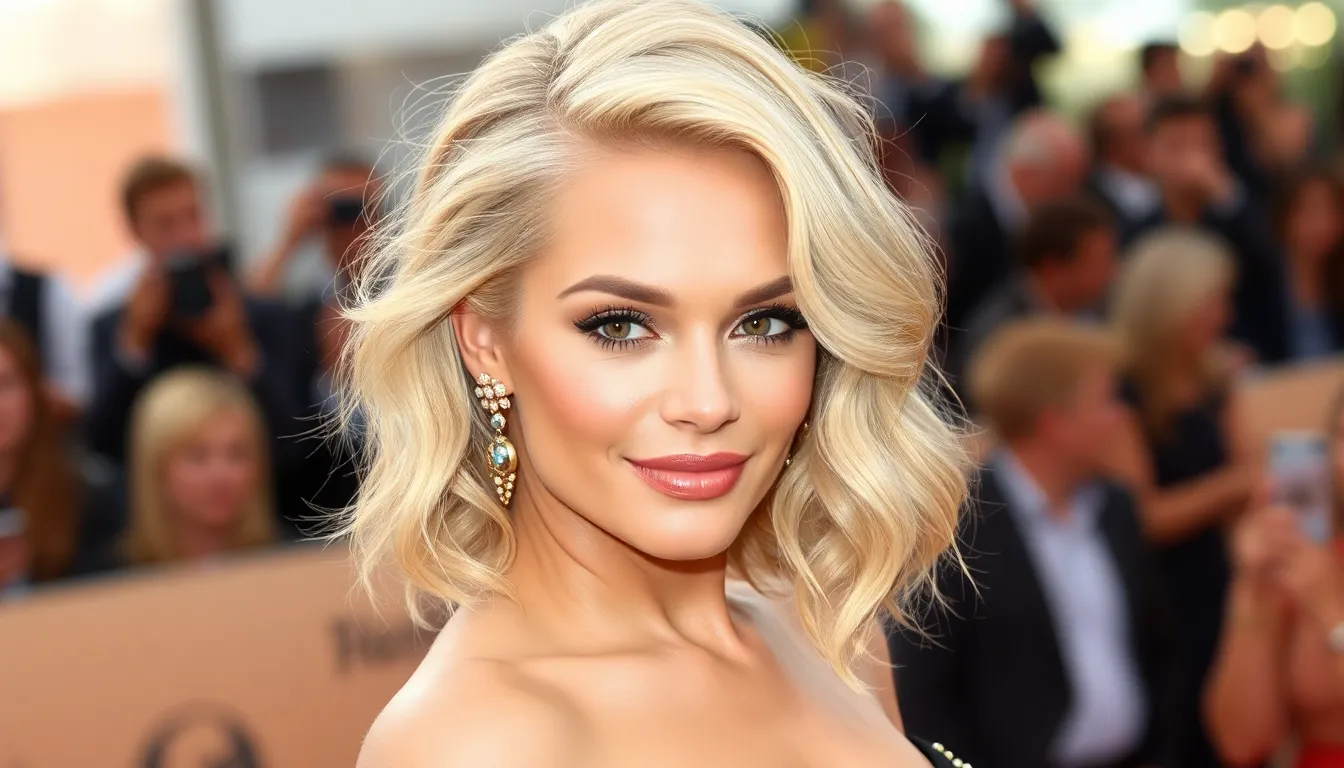
Transitioning from light blonde to platinum hair requires lifting the hair's natural or existing pigment from a Level 8 or 9 to a clean Level 10 (pale yellow), followed by precise violet-based neutralizing (toning). Utilizing low-volume developers (10 or 20 Volume) alongside bond-building technology ensures maximum pigment removal with minimal structural hair damage.
Understanding Hair Color Levels: Moving from Level 8/9 to Level 10
In professional cosmetology, hair color is measured on a standardized scale from Level 1 (darkest black) to Level 10 (lightest natural blonde/platinum). Light blonde hair typically sits at a Level 8 (yellow-gold) or Level 9 (yellow). Transitioning to a true platinum requires lifting the hair structure to a Level 10 (pale yellow), which resembles the shade of the inside of a banana peel.
Level 8 (Yellow-Gold) ---> Level 9 (Yellow) ---> Level 10 (Pale Yellow) ---> Platinum (Toned)
Bleaching alone does not create platinum hair. Lightening chemicals remove internal warmth, but the remaining natural pigment inevitably leaves behind residual pheomelanin—the underlying warm pigment responsible for yellow tones. The objective of the lifting phase is not to strip the hair until it looks pure white while dry, as doing so dissolves the keratin structure entirely. Instead, the goal is reaching an even, raw Level 10 pale yellow background, providing the clean canvas necessary for deposit-only toners to cancel out yellow hues.
When working with light blonde hair, the lift distance is short compared to lifting dark brown or black hair. However, because light blonde hair has often undergone prior chemical services or natural sun oxidation, its cuticle layer is more porous. Recognizing the distinction between Level 8, Level 9, and Level 10 ensures you do not over-process the hair fiber while striving for maximum clarity.
Chemistry and Preparation: Essential Tools and Hair Integrity
Lifting previously lightened or naturally blonde hair to platinum requires gentle chemical formulations. Using high-strength developers on light blonde hair accelerates lipid loss, weakens structural disulfide bonds, and leads to severe breakage.
Selecting Lightener and Developer
- Powder vs. Cream Lighteners: Cream lighteners contain lipid-rich emollients that cushion the hair shaft, making them ideal for scalp applications and delicate light blonde hair. Dust-free powder lighteners offer faster processing speed and strong lift, making them suitable for resistant hair segments.
- Developer Strength: Limit developer strength to 10 Volume (3% hydrogen peroxide) or 20 Volume (6% hydrogen peroxide). Higher developers, such as 30 or 40 Volume, swell the cuticle too rapidly on light blonde bases, melting internal keratin bonds before lifting pigment evenly.
- Bond Builders: Incorporating a bond-multiplying additive (such as bis-aminopropyl diglycol dimaleate or maleic acid complexes) directly into the lightener mixture mitigates structural damage. These compounds reconnect broken disulfide bonds caused by oxidation, preserving structural elasticity.
Assessing Porosity and Elasticity
Before applying chemical mixtures, conduct a wet strand test to evaluate elasticity and porosity:
- Spray a small, discreet section of hair with water until fully damp.
- Gently stretch a single hair strand. If it stretches slightly and returns to its original length, elasticity is healthy.
- If the strand stretches extensively without snapping back, or if it feels gummy and breaks instantly, the hair lacks structural integrity. In this state, perform protein and moisture treatments before attempting chemical lifting.
Step-by-Step Guide to Lifting Light Blonde Hair to Platinum
Executing a platinum transition requires systematic application, precise timing, and continuous visual monitoring.
Step 1: Sectioning and Zone Preparation
Divide dry, unwashed hair into four distinct quadrants: two in front of the ears and two behind. Secure each section with non-metallic clips. Working in clean, thin sub-sections (no thicker than 1/8 inch) guarantees complete lightener saturation. Uneven lightener application leads to splotchy, uneven yellow banding.
Step 2: Lightener Application
Begin application in the areas displaying the most warmth or resistance (typically the mid-lengths if root growth is present). Keep lightener application 1/16 inch away from the scalp initially if lifting roots, as body heat causes scalp applications to process faster than hair shafts.
- Apply the lightener generously; the hair must be thoroughly saturated, not lightly painted.
- Avoid overlapping lightener onto previously over-processed white-blonde ends to prevent localized breakage.
Step 3: Visual Processing and Monitoring
Allow the lightener to process at room temperature without applying external heat. External thermal sources degrade the hair protein faster than the pigment lifts. Check the lift progress every 5 to 10 minutes by wiping a small section of hair clean with a damp towel to inspect the raw underlying tone. Once the entire section reaches a uniform Level 10 pale yellow, processing is complete. Maximum processing time should not exceed 45 minutes.
Step 4: Rinsing and Neutralizing
Rinse the hair thoroughly with lukewarm water for at least 3 minutes to remove all active chemical residue. Wash once with a gentle, sulfate-free chelating or acid-balancing shampoo to clear residual lightener and return the hair closer to its natural pH level (4.5–5.5). Do not use heavy conditioners or silicone-based masks at this stage, as they seal the cuticle and block the subsequent toner from penetrating evenly.
Decentering Warmth: The Science of Toning to Platinum
Toning is the chemical phase where raw Level 10 pale yellow hair converts into an icy, silver, or cool platinum shade. Color theory dictates that complementary colors on the color wheel neutralize one another. Because yellow is directly opposite violet, violet-based toners neutralize yellow undertones.
Complementary Color Wheel Dynamics: Raw Level 10 Yellow + Violet Base Toner = Neutral Cool Platinum
Choosing the Right Toner Base
- Violet Base (V): Ideal for pale yellow (Level 10) hair. Cancels pure yellow to create a clean, natural platinum finish.
- Blue-Violet Base (BV): Best if residual gold/orange (Level 9) remains in localized spots. Neutralizes yellow-gold hues.
- Titanium / Silver Base (T/A): Contains ash micro-pigments that yield a cool metallic or steel-platinum tone.
Application and Developer Selection
Always mix platinum toners with a low-volume developer (6 Volume (1.8%) or 10 Volume (3%)). High-volume developers cause the natural background pigment to lift further, creating uneven "hot" spots.
Apply the toner rapidly to damp hair from roots to ends. Process visually—platinum toners work fast, often requiring only 5 to 20 minutes depending on hair porosity. Rinse thoroughly with cold water the moment the desired cool tone is achieved. Over-processing results in an unwanted dark purple or murky slate-gray cast.
Technical Comparison: Light Blonde vs. Platinum Hair
Understanding the structural differences and processing demands between standard light blonde and true platinum helps frame expectations for long-term care and maintenance.
| Parameter | Light Blonde (Level 8–9) | Platinum Blonde (Level 10 Toned) |
|---|---|---|
| Underlying Pigment | Yellow-Gold / Yellow | Pale Yellow / Inside of Banana Peel |
| Developer Needed for Lift | 10 Vol to 20 Vol | 10 Vol to 20 Vol (Low & Slow) |
| Target Color Neutralizer | Blue-Violet / Soft Ash | Pure Violet / Pearl / Titanium |
| Hair Cuticle Porosity | Moderate | High |
| Internal Disulfide Bond Loss | Minimal to Moderate | Moderate to Significant |
| Toning Maintenance Frequency | Every 4 to 6 weeks | Every 2 to 3 weeks |
| Ideal Hydro-Lipid Balance | Standard Moisturizing | Acidic pH + Protein & Bond Repair |
Post-Color Care and Long-Term Maintenance
Maintaining platinum hair requires active effort to keep the cuticle closed, prevent tone fading, and restore essential lipids.
Maintaining the Acidic pH Balance
Natural hair has an acidic pH of 4.5 to 5.5. Bleaching raises the hair pH above 9.0, swelling the cuticle scales and leaving them open. To seal the cuticle after chemical services:
- Use an acidic post-color sealing treatment (pH 3.5 to 4.5) immediately after toning.
- Wash hair strictly with sulfate-free, low-pH shampoos to prevent structural color leaching.
Purple Shampoo Protocol
Purple/violet depositor shampoos maintain cool tones between professional salon visits. However, overuse leads to dull, dry, and violet-stained hair strands.
- Use purple shampoo only once every 7 to 10 days or every third wash.
- Alternate purple shampoo with a deeply hydrating, color-safe moisture shampoo.
- If hair begins to absorb too much violet pigment, pause purple shampoo applications and use a clear clarifying treatment.
Balancing Protein and Moisture
Platinum hair lacks structural structural density due to oxidation. Rotate between structural repair treatments and moisture masks:
- Bond Maintenance/Protein (Weekly): Apply bond-building formulations containing active amino acid chains to rebuild structural integrity.
- Lipid Moisture Masks (Bi-Weekly): Use masks rich in natural oils (such as argan or jojoba oil) and ceramides to replace lost natural lipids and improve softness.
Environmental and Heat Defense
Level 10 keratin degrades rapidly when exposed to high temperatures or environmental oxidizers.
- Set thermal styling tools to a maximum of 160°C to 180°C (320°F to 350°F). Always apply a silicone or polymer heat protectant before blow-drying or flat-ironing.
- Protect hair from hard water minerals (calcium, copper, iron) by installing a shower filter. Mineral deposits oxidize pale hair, turning icy platinum brassy green or orange.
Troubleshooting Common Transition Challenges
Transitioning to platinum hair can present technical challenges. Addressing these issues systematically preserves hair health and color accuracy.
Banding and Uneven Warmth
If rings of darker yellow appear across sections of the hair shaft (often caused by uneven prior color applications), do not re-bleach the entire head. Perform a targeted "spot application" using low-volume developer (10 Volume) and lightener mixed with a bond builder, painting strictly on the dark yellow bands while avoiding the surrounding hair.
Over-Toned (Purple or Gray) Hair
If the toner remains on high-porosity hair for too long, it may absorb excess violet pigment, turning lavender or dull slate gray. Wash the hair immediately with a deep clarifying shampoo and warm water. If excess tone remains, apply an unheated deep-conditioning treatment; the emollients will push out the excess surface pigment over 20 minutes.
Hot Roots
Scalp heat accelerates lightener, causing the first 1/2 inch of hair near the root to lift faster and appear lighter yellow than the mid-lengths. Correct this by applying a slightly deeper, soft ash or violet-based root shadow (Level 9 demi-permanent) to blend the scalp seamlessly into the icy platinum lengths.
Next Steps for Your Platinum Transformation
To transition from light blonde to platinum hair cleanly and safely, take the following direct actions:
- Perform a Wet Elasticity Test: Confirm your current light blonde hair can withstand lightener without snapping or feeling gummy.
- Gather Technical Supplies: Obtain a cream lightener, 10 Volume or 20 Volume developer, a bond-repair additive, and a violet-based (V or BV) liquid demi-permanent toner.
- Run a Strand Test: Process a small section of hair to determine how quickly your hair reaches a raw Level 10 pale yellow background.
- Execute Sectioned Application: Apply lightener systematically in thin sub-sections, rinsing immediately when the pale yellow shade is reached.
- Tone and Seal: Apply your chosen violet toner with a 6 Vol or 10 Vol developer, monitor visually for 5–20 minutes, rinse, and finish with a pH-balancing sealer.
- Establish an Aftercare Routine: Schedule weekly bond-repair treatments and limit thermal styling to maintain cuticle integrity over time.
Frequently Asked Questions
Can I achieve platinum hair without using bleach if I am already light blonde?
No, high-lift tint colors generally lack the lifting capacity to remove deep pheomelanin down to a clean Level 10 pale yellow without leaving warm undertones. Even on light blonde hair, lightener (bleach) is required to dissolve remaining warmth before applying a violet toner.
How long does a platinum toner last on lightened hair?
A demi-permanent platinum toner typically lasts between 2 to 4 weeks, depending on wash frequency, water quality, and hair porosity. Using cool water, sulfate-free shampoos, and a weekly purple conditioning mask extends toner longevity.
What developer volume should I use to move from light blonde to platinum?
Use 10 Volume (3%) or 20 Volume (6%) developer. Higher developer strengths, such as 30 or 40 Volume, process too quickly on light blonde hair, raising the risk of severe cuticle damage and uneven lifting.
Why did my platinum toner turn my hair purple or gray?
This occurs when high-porosity hair absorbs toner pigments too rapidly or when the toner processes longer than necessary. High-porosity hair absorbs cool micro-pigments aggressively; rinsing the toner earlier or choosing a sheerer formulation prevents over-pigmentation.
How frequently should I touch up platinum roots?
Root touch-ups should occur every 4 to 6 weeks (roughly 1/2 inch of new growth). Allowing root growth to exceed 1/2 inch makes even processing difficult due to the loss of scalp heat benefit, resulting in yellow banding.