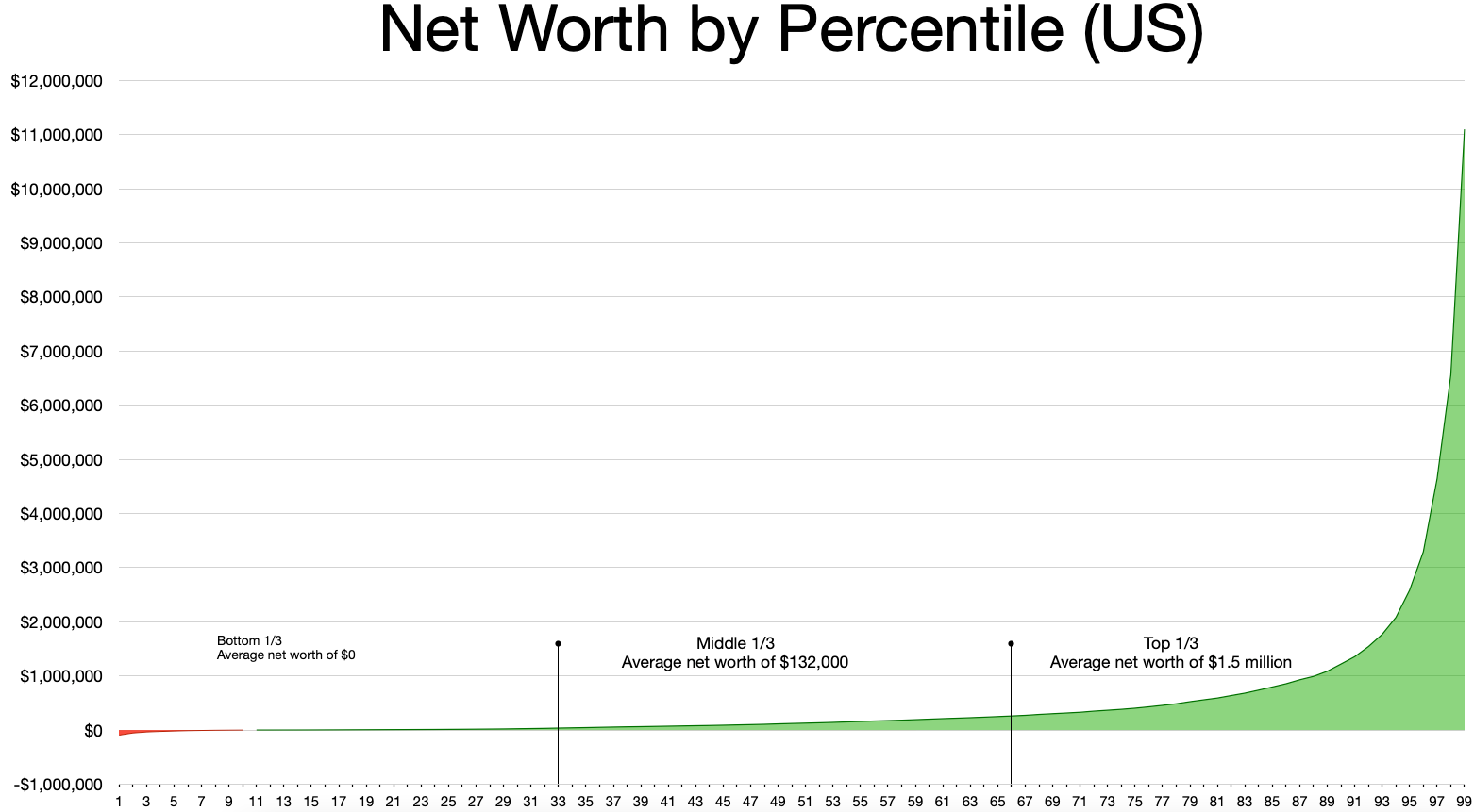
Achieving a significant net worth through accelerated wealth-building strategies requires a disciplined integration of aggressive income scaling, high-yield asset allocation, and rigorous tax optimization. In 2026, the most effective path involves maximizing the velocity of your capital by shifting from passive saving to strategic, high-growth investing and leveraging modern financial tools.
Achieving a high net worth is not a matter of luck but a result of a mathematical formula: Net Worth = Total Assets - Total Liabilities. To accelerate this process, one must widen the gap between earned income and cost of living while ensuring that every surplus dollar is deployed into vehicles that compound faster than inflation. The 2026 economic landscape, characterized by high-speed digital markets and evolving tax structures, provides unique opportunities for those who understand how to navigate technical financial frameworks.
Establishing the Foundation: The Net Worth Framework
Before implementing "fast" strategies, it is essential to understand the mechanics of net worth. Your net worth is the ultimate scorecard of your financial health. Assets include everything you own that has monetary value—cash, brokerage accounts, real estate, retirement funds, and ownership in businesses. Liabilities are your debts—mortgages, student loans, credit card balances, and personal loans.
To build wealth fast, you must focus on two levers: increasing the value of your assets and aggressively reducing your liabilities. However, in an accelerated model, the emphasis shifts toward asset growth. While debt reduction provides a guaranteed "return" equal to the interest rate of the debt, high-growth investments often yield higher long-term results.
In 2026, the "velocity of money" is a critical concept. This refers to how quickly your capital is put to work, earns a return, and is then reinvested. Stagnant cash in a low-interest savings account is a liability in an inflationary environment. To build wealth fast, your capital must be constantly moving into higher-yielding environments.
Accelerating Income Through High-Value Skill Acquisition
The most potent engine for building wealth fast is your primary income. While investment returns compound over time, a significant increase in your "top-line" revenue provides the raw material needed for those investments. In 2026, the labor market heavily rewards specialized technical skills and high-level cognitive output.
- Skill Arbitrage: Identify sectors where the demand for talent outstrips supply. This includes areas like artificial intelligence integration, specialized renewable energy engineering, and high-ticket digital consulting.
- Performance-Based Compensation: To build wealth quickly, move away from flat salaries toward roles that offer equity, commissions, or performance bonuses. This aligns your income with the value you create rather than the hours you work.
- Side Equity Ventures: Beyond a primary career, building or investing in "micro-SaaS" (Software as a Service) or content-driven businesses can provide high-margin secondary income streams that can be automated.
By scaling your income to 2x or 3x the national median, you create an "investable surplus." This surplus is the fuel for all subsequent wealth-building strategies.
Strategic Asset Allocation for Accelerated Growth
Once you have established a surplus, where you place that money determines the speed of your net worth growth. A traditional 60/40 stock-bond split is often too conservative for those looking to build wealth fast. In 2026, a more aggressive allocation is typically required to outperform the market.
Equities and Index Funds
The bedrock of most high-net-worth portfolios remains the stock market. However, rather than picking individual stocks, which carries high idiosyncratic risk, sophisticated investors use "tilted" index funds. This involves a core holding in a total market index, with additional allocations to small-cap value or technology sectors that historically offer higher returns over compressed timeframes.
Real Estate and Fractional Ownership
Real estate remains a premier wealth builder due to its inherent leverage. In 2026, investors are increasingly using fractional ownership platforms to gain exposure to commercial real estate without the need for millions in liquid capital. This allows for diversification across multiple geographic locations and property types (industrial, multi-family, retail), reducing risk while maintaining high yield potential.
Alternative Assets and Private Equity
For those seeking to truly accelerate their net worth, a portion of the portfolio is often dedicated to alternative assets. This includes private equity, venture capital, and digital assets. These investments often have higher volatility but provide the "alpha" (excess return) necessary to shave years off a wealth-building timeline.
The Role of Tax Optimization in Wealth Preservation
It is not what you earn, but what you keep. Tax optimization is perhaps the most overlooked component of building wealth fast. In 2026, tax brackets and regulations remain complex, and failing to plan for them can result in losing 30-40% of your gains to the government.
- Maximized Retirement Accounts: Utilizing 401(k) matches is the only guaranteed 100% return on investment. Beyond the match, contributing to Roth IRAs or Backdoor Roth IRAs allows for tax-free growth, which is significantly more valuable than tax-deferred growth for long-term net worth.
- Tax-Loss Harvesting: This involves selling investments at a loss to offset capital gains taxes. Automated platforms in 2026 handle this daily, ensuring that your tax liability is kept to an absolute minimum.
- Asset Location Strategy: Keep high-tax assets (like REITs or high-turnover funds) in tax-advantaged accounts, while keeping tax-efficient assets (like index funds) in taxable brokerage accounts.
By reducing your effective tax rate, you essentially grant yourself an annual "bonus" that can be reinvested to further accelerate the compounding process.
Leveraging "Good Debt" to Multiply Returns
While "bad debt" (high-interest consumer debt) destroys wealth, "good debt" is a tool used by the wealthy to accelerate growth. Leverage allows you to control a large asset with a small amount of your own capital.
For example, using a mortgage to buy a $500,000 property with only $100,000 down means that if the property appreciates by 5%, your actual return on invested capital is 25% (minus interest and fees). In 2026, savvy investors use low-interest margin loans or real estate leverage to amplify their gains. However, this strategy requires strict risk management. If the asset value drops, leverage can work against you just as quickly, potentially wiping out your net worth.
Comparative Analysis of Wealth-Building Vehicles (2026 Data)
The following table compares different asset classes based on their potential to build wealth fast versus their inherent risk profiles.
| Asset Class | Potential Annual Return | Risk Level | Liquidity | Primary Benefit |
|---|---|---|---|---|
| Broad Index Funds | 7–10% | Moderate | High | Consistent long-term compounding |
| Direct Real Estate | 8–15% (w/ leverage) | Moderate/High | Low | Tax benefits and rental income |
| Growth Equities/Tech | 12–20% | High | High | Rapid capital appreciation |
| Private Equity/SaaS | 20%+ | Very High | Very Low | Exponential growth potential |
| High-Yield Cash/CDs | 3–5% | Very Low | High | Capital preservation/Emergency fund |
Note: Returns are projections based on historical 2020-2025 performance and 2026 economic forecasts. Past performance is not indicative of future results.
Common Mistakes That Sabotage Net Worth Growth
Even with the best strategies, certain behaviors can derail wealth-building efforts. Avoiding these pitfalls is as important as choosing the right investments.
- Lifestyle Creep: As income increases, many people increase their spending proportionally. This keeps the "investable surplus" stagnant. To build wealth fast, you must maintain a "wealth-building gap" where your expenses remain flat even as your income rises.
- Chasing "Moonshots": In an attempt to get rich "overnight," many investors over-allocate to speculative assets. While high-risk assets have a place, they should not comprise the majority of a portfolio.
- Emotional Investing: Markets in 2026 are volatile. Selling during a downturn or buying at the peak of a bubble are the most common ways to destroy net worth. A systematic, algorithmic approach to investing usually outperforms human emotion.
- Neglecting Insurance: A single medical emergency or lawsuit can wipe out years of wealth building. Having appropriate health, disability, and umbrella insurance is a prerequisite for protecting your net worth.
FAQ: Achieving Net Worth Goals
How much of my income should I invest to build wealth fast?
To see significant movement in your net worth within a 3-5 year window, you should aim to invest at least 30-50% of your gross income. While the standard advice is 10-15%, "fast" wealth building requires a more aggressive savings rate to take advantage of the early stages of compounding.
Is it better to pay off my mortgage or invest the extra cash?
In 2026, this depends on your mortgage interest rate. If your rate is below 4% and the market is yielding 7-9%, you are mathematically better off investing the surplus. However, if your interest rate is high or you value the psychological security of a debt-free home, paying down the mortgage provides a guaranteed return.
What is the "Fastest" way to reach a $1 million net worth?
The fastest path is typically through equity ownership in a high-growth business or specialized career scaling. Starting with a $100k salary and a 50% investment rate into growth equities can theoretically get an individual to $1M in approximately 10-12 years. To do it faster, one must achieve "liquidity events" such as selling a business or receiving significant stock options.
Are digital assets like cryptocurrency still viable for net worth growth in 2026?
Digital assets have matured into a recognized asset class. While they offer high growth potential, they should generally not exceed 5-10% of a diversified portfolio due to their extreme volatility. They serve as a "kicker" to the portfolio rather than its foundation.
How often should I calculate my net worth?
Calculating your net worth once a month or once a quarter is ideal. This frequency is enough to track trends and make adjustments without becoming obsessed with daily market fluctuations. Use automated fintech tools to aggregate your accounts for an accurate, real-time view.
Recommended Next Actions for 2026
To begin achieving a higher net worth immediately, follow these three steps:
- Audit Your Current Net Worth: List every asset and liability you currently have. Use a 2026-standard financial tracking app to link your accounts and establish your baseline.
- Optimize Your "Investable Surplus": Look at your last three months of spending. Identify 10-15% in discretionary costs that can be redirected into a brokerage account. Simultaneously, negotiate a raise or identify a new high-value skill to increase your income.
- Automate Your Asset Allocation: Set up automatic transfers to your investment accounts that occur the same day you receive your paycheck. By removing the manual decision-making process, you ensure consistency, which is the most critical factor in long-term wealth building.
Disclaimer: This article provides financial information for educational purposes and does not constitute professional investment, legal, or tax advice. Financial markets involve risk, and past performance does not guarantee future results. Consult with a certified financial planner or tax professional before making significant financial decisions.