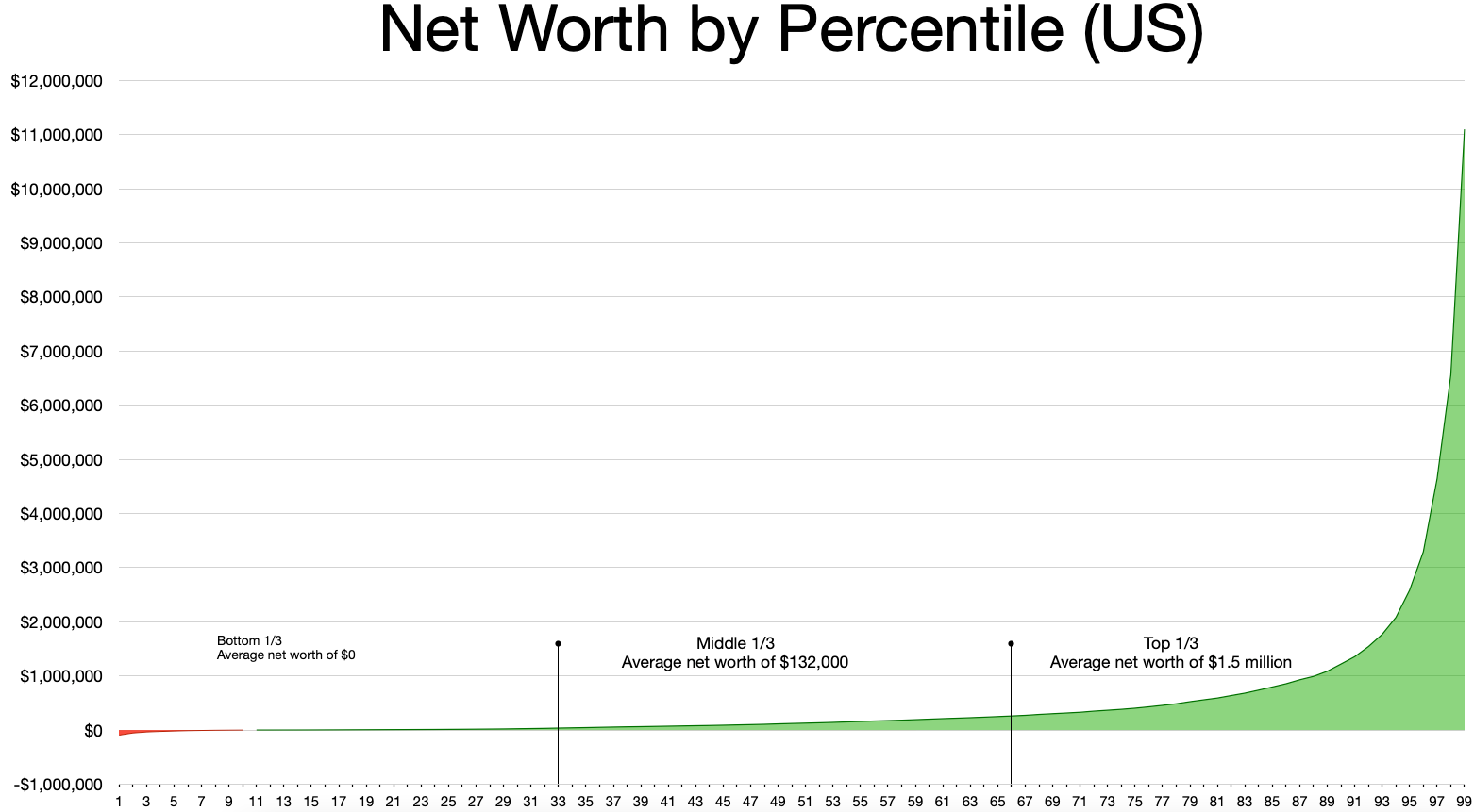
To reach the 95th net worth percentile in 2026, a United States household typically requires a net worth between $2.9 million and $3.3 million. Achieving this involves a disciplined combination of high-income generation, a sustained savings rate exceeding 30%, strategic asset allocation in equities and real estate, and rigorous tax optimization over two decades.
Defining the 95.0 Percentile Benchmark in 2026
Net worth is the most comprehensive measure of financial health, calculated by subtracting total liabilities from total assets. Assets include primary residences, brokerage accounts, retirement funds, business equity, and liquid cash, while liabilities encompass mortgages, student loans, and consumer debt. In 2026, the threshold for the 95th percentile—representing the top 5% of the population—has shifted upward due to several years of equity market growth and inflationary pressures on real estate values.
While the "millionaire next door" was once the gold standard, the 95th percentile now represents a tier of "multi-millionaires." This group is distinct from the "Top 1%" (who generally hold upwards of $13 million), but they possess significantly more financial security than the median household. Reaching this level provides a "critical mass" of capital where investment returns can often outpace annual labor income, leading to perpetual wealth growth.
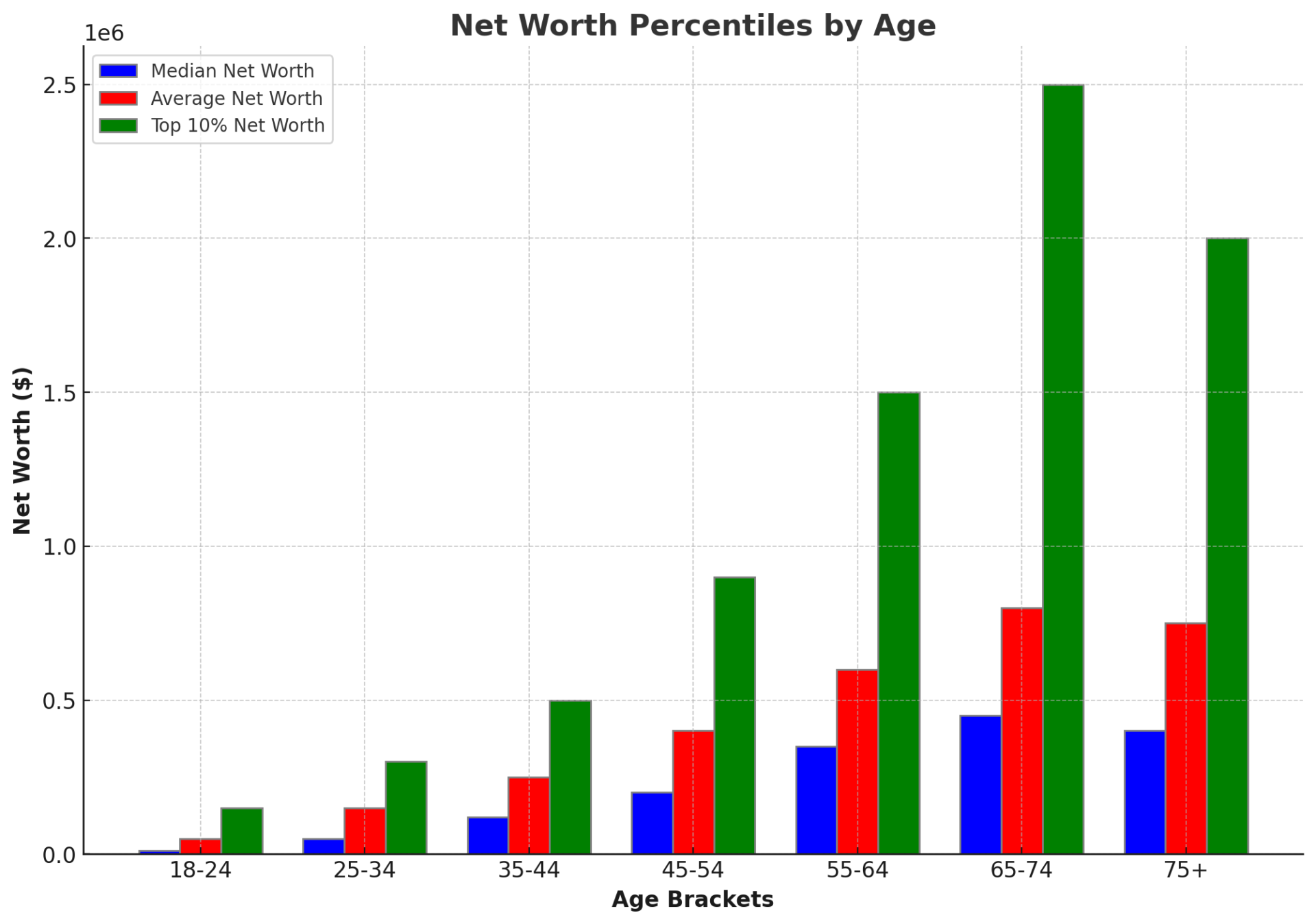
It is vital to distinguish between general population percentiles and age-stratified percentiles. A 35-year-old with a net worth of $1 million may already be in the 95th percentile for their specific age bracket, whereas a 65-year-old would likely need over $3.5 million to claim the same status among their peers. Understanding where you stand relative to your lifecycle stage is essential for setting realistic accumulation targets.
Foundational Pillars of High-Net-Worth Accumulation
Building wealth to the 95th percentile is rarely the result of a single "lucky" investment. Instead, it is the product of three foundational pillars working in tandem: the income engine, the savings gap, and the compounding timeline.
The Income Engine
While it is theoretically possible to save your way to wealth on a modest salary, the 95th percentile is dominated by households with high "earned income" or "business income." To accelerate the journey, individuals must focus on increasing their market value through specialized skills, leadership roles, or entrepreneurship. In 2026, high-growth sectors like artificial intelligence, renewable energy infrastructure, and specialized healthcare continue to provide the income floors necessary to fuel aggressive investment.
The Savings Gap
Income is merely the raw material; wealth is what you keep. The "savings gap" is the difference between what you earn and what you spend. Households in the top 5% typically avoid "lifestyle creep"—the tendency to increase spending as income rises. By maintaining expenses at a level far below their means, they maximize the capital available for the markets. A savings rate of 30% to 50% of after-tax income is often the catalyst that separates the affluent from the high-income-but-broke.
The Compounding Timeline
Time is the most powerful coefficient in the wealth equation. Reaching the 95th percentile is a marathon. According to data from the Federal Reserve Survey of Consumer Finances, the vast majority of high-net-worth individuals reach their peak wealth in their late 50s or early 60s. Starting the investment process in one's 20s allows compound interest to do the heavy lifting, reducing the total amount of "out-of-pocket" capital required to hit the multi-million dollar mark.
Asset Allocation Strategies for the Top 5%
The composition of wealth for the 95th percentile differs significantly from the general public. While the bottom 50% of households hold most of their wealth in used vehicles or small bank accounts, the top 5% focus on "appreciating assets."
Public Equities and Indexing
The backbone of most 95th-percentile portfolios is the stock market. In 2026, the strategy of low-cost index tracking remains the most efficient path for most. By owning a broad swath of the total market via ETFs (Exchange Traded Funds), investors capture the growth of the global economy without the idiosyncratic risk of individual stock picking. Diversification across large-cap, small-cap, and international equities ensures that the portfolio is not overly dependent on a single sector or geography.
Real Estate and Equity Build-up
Real estate serves as both a lifestyle asset and a wealth accelerator. For many in the 95th percentile, a primary residence accounts for 20% to 30% of their net worth. However, the top 5% often augment this with residential or commercial investment properties. Real estate offers unique advantages, such as depreciation for tax purposes and the ability to use leverage (mortgages) to control a large asset with a relatively small down payment. Over decades, the combination of mortgage pay-down and property appreciation creates a massive equity cushion.
Alternative Assets and Private Equity
As households approach the $3 million mark, they often gain access to "accredited investor" opportunities. This includes private equity, venture capital, and hedge funds. While these carry higher risk and lower liquidity, they can provide non-correlated returns that protect the portfolio during traditional market downturns. In 2026, many investors also include a small allocation (1-3%) to digital assets or tokenized commodities as a hedge against currency volatility.
Net Worth Benchmarks by Age: 2026 Projections
The following table outlines the estimated net worth required to reach the 95th percentile across different age groups in 2026. These figures assume a standard inflationary environment and historical market returns.
| Age Group | 95th Percentile Net Worth (Est.) | Primary Asset Focus | Recommended Savings Strategy |
|---|---|---|---|
| 25–29 | $350,000 | Human Capital / Equities | Maximize 401(k) & HSA |
| 30–34 | $725,000 | Equities / First Home Equity | Aggressive Brokerage Funding |
| 35–39 | $1,250,000 | Real Estate / Diversified Stocks | Backdoor Roth / Tax Optimization |
| 40–44 | $1,950,000 | Retirement Accounts / Business Equity | Debt Elimination / Sector Diversification |
| 45–49 | $2,600,000 | Mixed Portfolio / Investment Property | Catch-up Contributions |
| 50–54 | $3,150,000 | Balanced Portfolio / Fixed Income | Asset Protection / Estate Planning |
| 55–59 | $3,800,000 | Multi-Asset / Low Leverage | Sequence of Returns Risk Management |
| 60–64 | $4,200,000 | Income-Generating Assets | Tax-Efficient Withdrawal Planning |
Tax Optimization and Legal Structures
High net worth is often a target for high taxation. Reaching the 95th percentile requires a sophisticated approach to minimizing the "tax drag" on your investments. Wealth is built in three buckets: Taxable (Brokerage), Tax-Deferred (Traditional 401k/IRA), and Tax-Free (Roth/HSA).
Strategic use of the Internal Revenue Code allows wealthy individuals to keep more of their gains. For example, utilizing a Health Savings Account (HSA) provides a triple tax advantage: contributions are tax-deductible, growth is tax-free, and withdrawals for medical expenses are tax-free. In 2026, the "Mega Backdoor Roth" strategy remains a popular vehicle for high earners to move up to $69,000 or more into tax-free environments annually, depending on employer plan availability.
Furthermore, tax-loss harvesting in taxable brokerage accounts allows investors to offset capital gains with capital losses, effectively lowering their annual tax bill. For those with significant real estate holdings, the 1031 Exchange remains a vital tool for deferring capital gains taxes when selling one investment property and purchasing another. Without these strategies, an investor might lose 20% to 37% of their growth to federal and state taxes, significantly delaying their entry into the 95th percentile.
Avoiding the Wealth Erosion Traps
The path to the 95th percentile is littered with "wealth killers" that can derail even the highest earners. Recognizing and mitigating these risks is as important as picking the right stocks.
- Lifestyle Creep: As income increases, there is a natural urge to upgrade cars, homes, and vacations. Every dollar spent on a depreciating luxury item is a dollar that cannot compound. The top 5% often live "stealth wealth" lifestyles, prioritizing financial independence over outward displays of status.
- High-Interest Debt: Carrying credit card balances or high-interest personal loans is a mathematical emergency. The interest paid on these debts is almost always higher than the returns earned in the market. Wealth builders must eliminate consumer debt before focusing on aggressive investing.
- Excessive Investment Fees: A 1% management fee might seem small, but over 30 years, it can strip away hundreds of thousands of dollars in potential wealth. According to FINRA's investment guidance, keeping expense ratios low (ideally under 0.15%) is a hallmark of the successful long-term investor.
- Emotional Reactivity: The 95th percentile is reached by those who stay the course during market crashes. Selling during a downturn locks in losses and misses the eventual recovery. Successful wealth builders view market volatility as a sale on assets, not a reason to panic.
Frequently Asked Questions
How is net worth calculated accurately?
To calculate net worth, list all assets (cash, investments, home value, cars, jewelry) and subtract all liabilities (mortgage, car loans, student loans, credit card debt). It is recommended to use conservative estimates for personal property like vehicles or jewelry, as these often depreciate rapidly and are less "liquid" than financial assets.
Does a primary residence count toward the 95th percentile net worth?
Yes, the standard definition of net worth used by the Federal Reserve and most economists includes "home equity" (the market value of your home minus the remaining mortgage balance). However, many financial planners also track "Investable Assets" or "Liquid Net Worth," which excludes the primary residence, as you cannot easily spend your home's value without selling it or taking a loan.
Can I reach the 95th percentile on a single moderate income?
While a single moderate income makes the journey longer, it is possible through extreme frugality and early, aggressive investing. However, most households in the 95th percentile are either dual-income professional households or include at least one high-earner (top 10% of earners). Increasing your "human capital" and earning potential is usually a more effective strategy than cutting expenses to the bone.
What is the difference between net worth and liquid net worth?
Net worth includes all assets, including "illiquid" ones like real estate, private business interests, and retirement accounts that may have age-related withdrawal penalties. Liquid net worth refers to assets that can be converted to cash within 24–48 hours without significant loss of value, such as savings accounts, money market funds, and taxable brokerage accounts.
Is the 95th percentile the same as being "Wealthy"?
"Wealthy" is a subjective term. While the 95th percentile indicates significant financial success compared to the general population, many in this bracket still feel "middle class" in high-cost-of-living areas like San Francisco, New York, or London. True wealth is often defined as having enough passive income to cover all desired lifestyle expenses indefinitely.
Building Your Wealth: The Next 12 Months
If your goal is to achieve 95th percentile status, your focus for the next 12 months should be on structural optimization rather than speculative gains. First, perform a comprehensive audit of your current net worth to establish your baseline. Second, automate your savings so that a minimum of 25% of your gross income is diverted to investment accounts before it ever hits your checking account.
Third, review your tax efficiency. If you are not maximizing your 401(k), HSA, and IRA options, you are essentially giving away a portion of your future net worth to the government. Finally, increase your professional value. Whether through a new certification, a promotion, or a side business, increasing your "top-line" income is the fastest way to increase the capital available for the compounding machine. Wealth is not a sprint; it is the inevitable result of consistent, intelligent actions repeated over time.