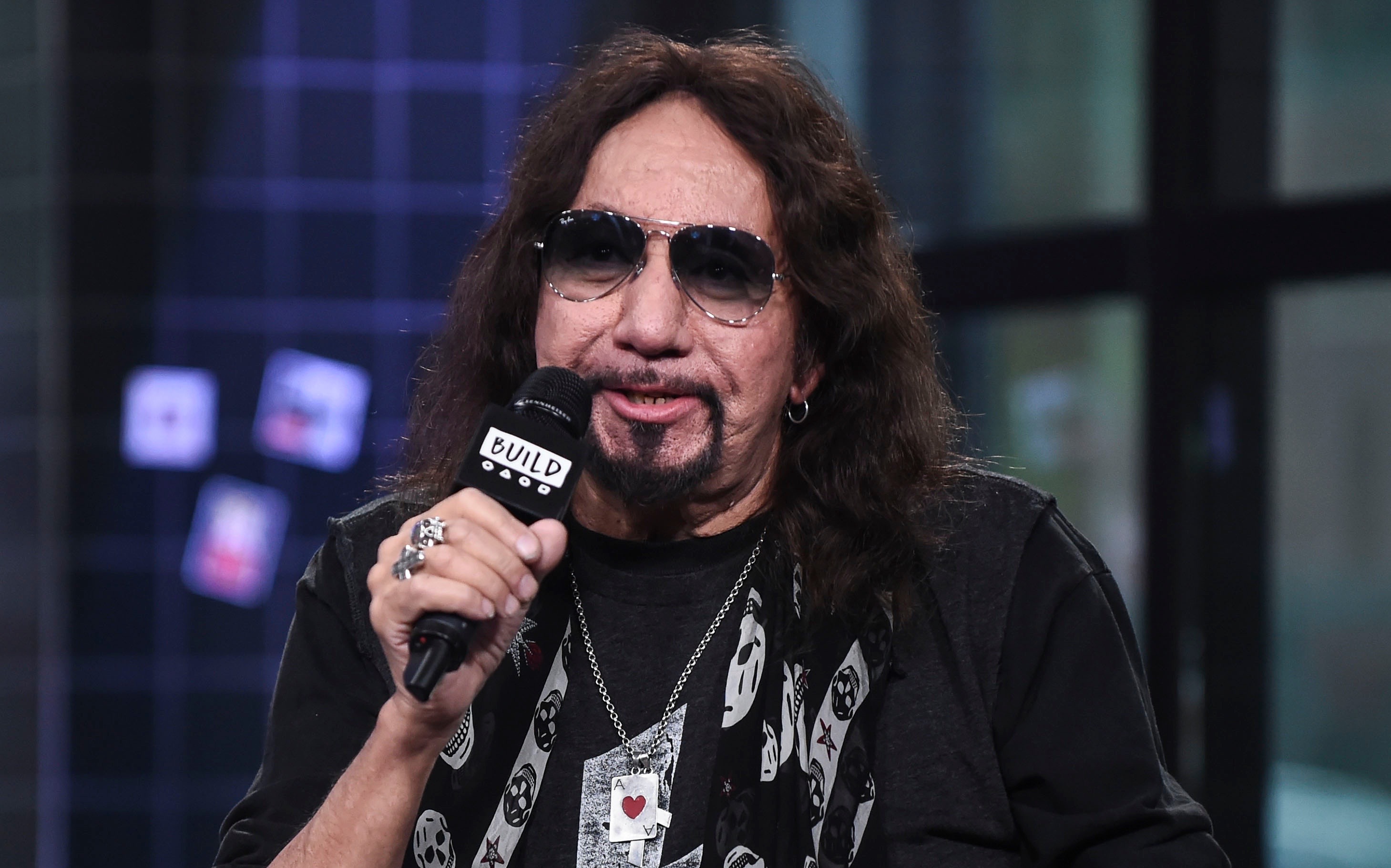
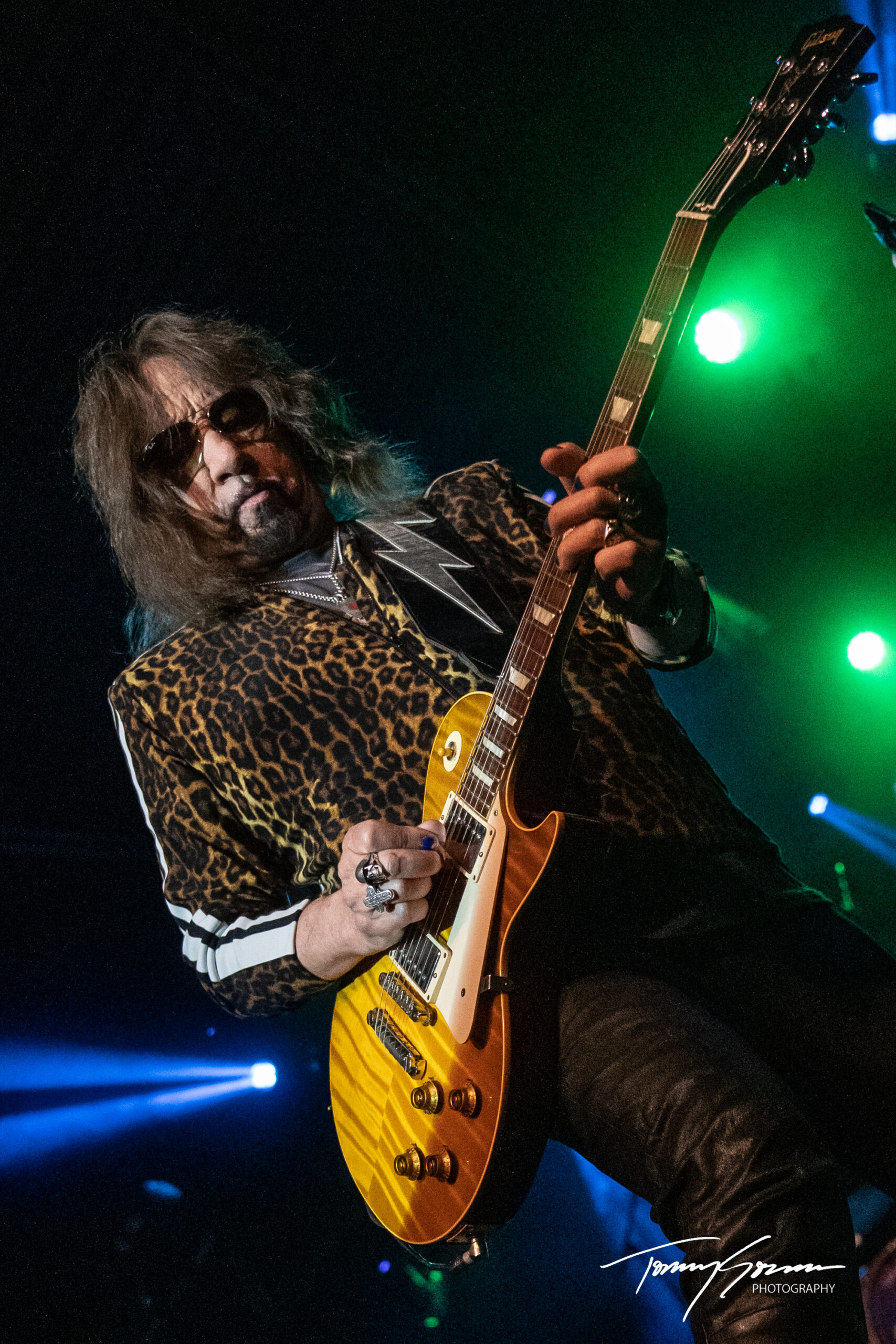
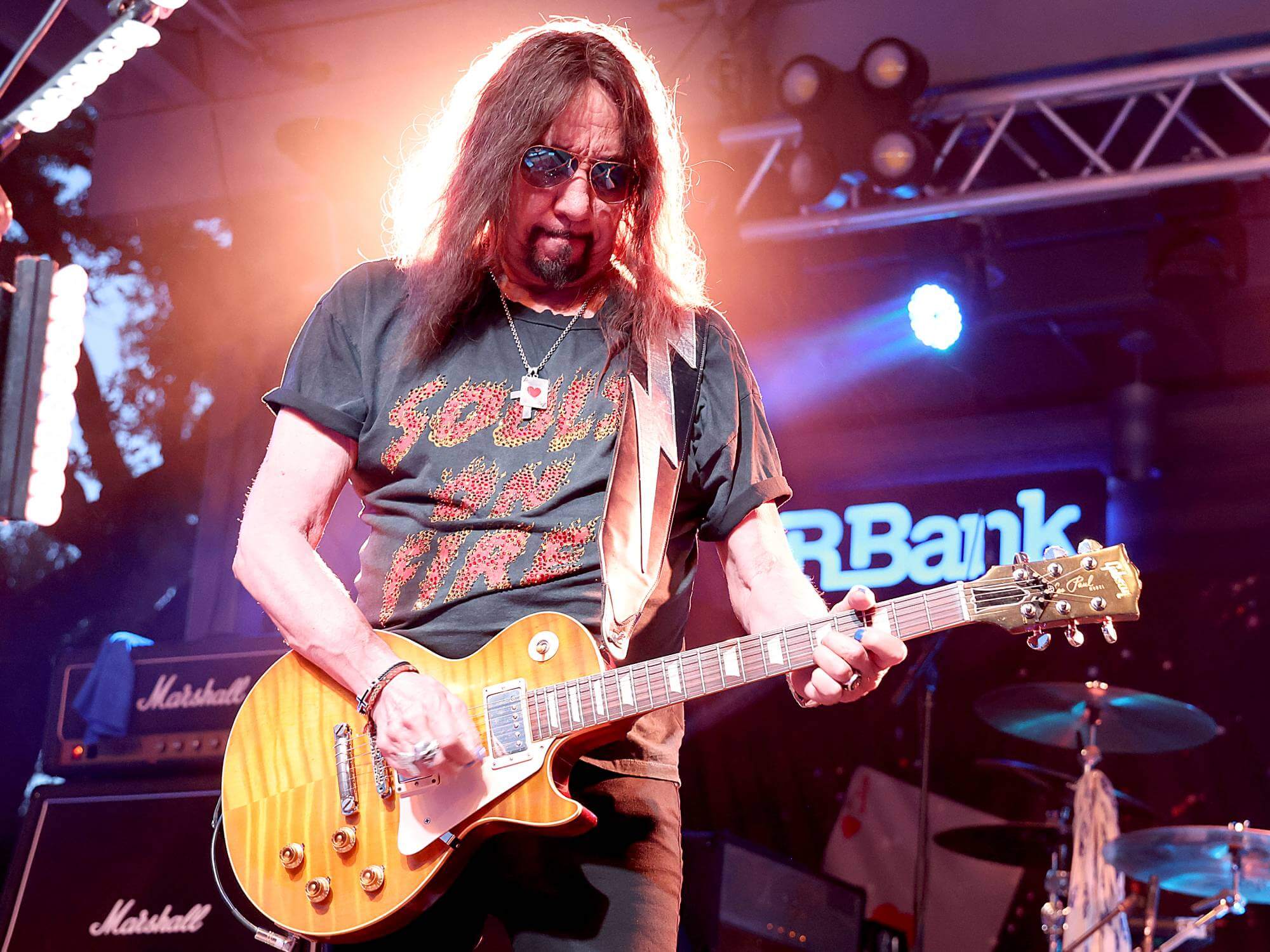
Ace Frehley is the legendary founding lead guitarist of KISS, recognized globally for his "Spaceman" persona and raw, blues-based hard rock style. Since 1973, he has influenced generations of musicians through his work with KISS and a prolific solo career, highlighted by his 2024 comeback album 10,000 Volts and continued 2026 touring.
The Genesis of the Spaceman: From the Bronx to KISS
Born Paul Daniel Frehley in the Bronx, New York, in 1951, the guitarist who would become "Ace" grew up in a musical household. However, it was the raw energy of British Invasion bands like The Rolling Stones, Led Zeppelin, and The Who that shaped his sonic identity. Frehley was largely self-taught, developing a style that relied more on intuition and "feel" than formal theory. This lack of academic constraint allowed him to create the unconventional, slightly "behind the beat" phrasing that became his trademark.
The pivotal moment in Frehley’s career occurred in late 1972 when he answered an advertisement in The Village Voice for a "lead guitarist with flash and ability." Arriving at the audition with one red sneaker and one orange sneaker, Frehley’s appearance was as eccentric as his playing was explosive. He joined Paul Stanley, Gene Simmons, and Peter Criss to form KISS, a band that would revolutionize the spectacle of rock and roll.
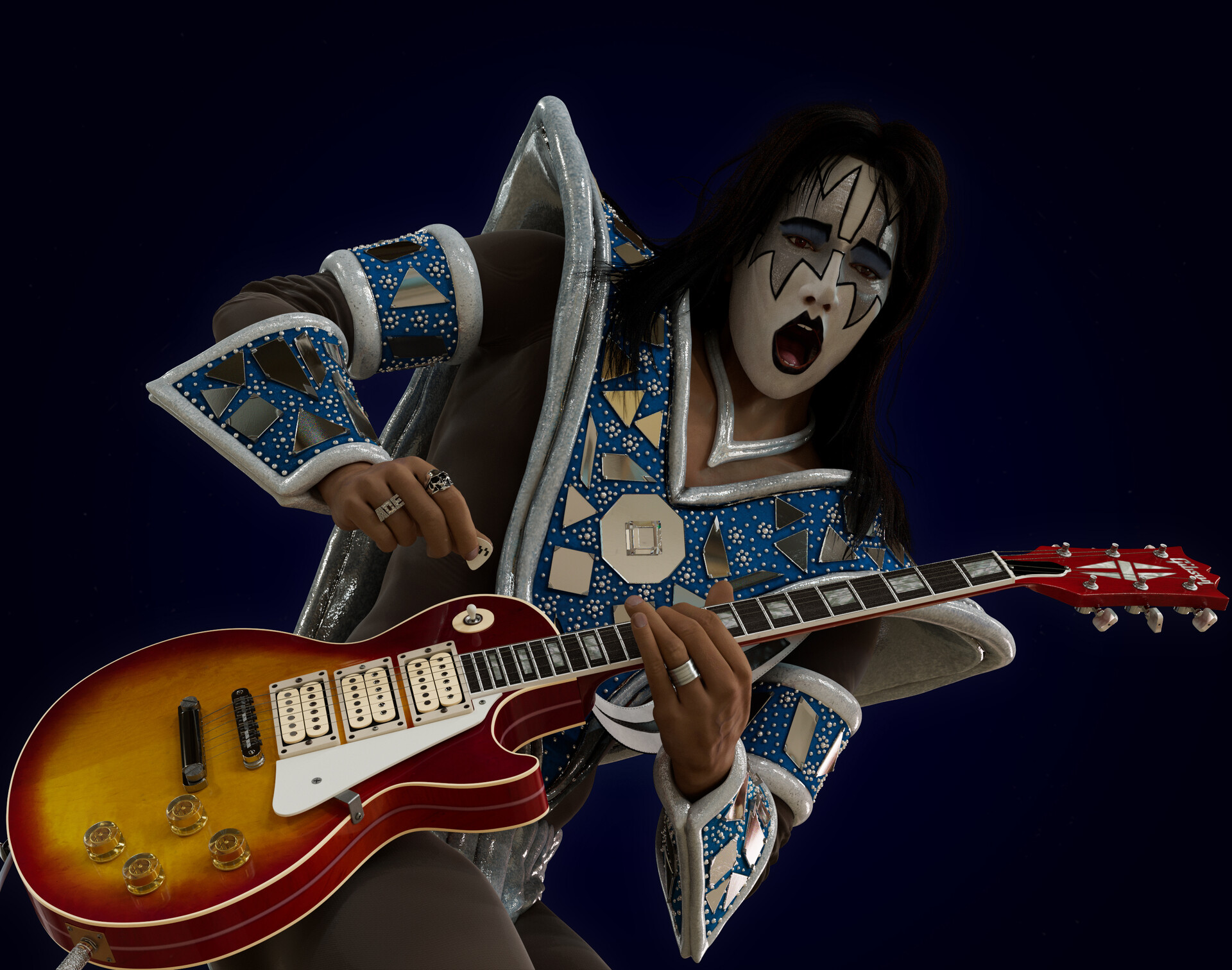
Within KISS, Frehley adopted the "Spaceman" persona, complete with silver face paint and futuristic costumes. His contribution to the band’s early success cannot be overstated. While Stanley and Simmons were the primary songwriters, Frehley’s melodic yet aggressive solos provided the musical "teeth" for classic albums like KISS, Hotter Than Hell, and Dressed to Kill. His riffs on tracks like "Parasite," "Cold Gin," and "Shock Me" are considered essential study material for hard rock guitarists.
The 1978 Solo Album and the Peak of KISS Mania
By 1978, internal tensions and the sheer exhaustion of "KISSmania" led the band to release four individual solo albums on the same day. While marketing experts feared this move, it provided the definitive proof of Frehley’s standalone power. His self-titled solo album, Ace Frehley, was the most commercially successful and critically acclaimed of the four.
Produced by Eddie Kramer, the album featured the hit single "New York Groove," a cover of a Hello track that reached the Top 20 on the Billboard charts. The record showcased Frehley’s ability to blend pop-rock sensibilities with heavy, driving guitar work. More importantly, it established him as a viable solo artist outside the KISS machine. Songs like "Rip It Out" and "Snow Blind" highlighted a harder, leaner sound that many fans preferred over the increasingly disco-influenced direction KISS would take with 1979’s Dynasty.
Despite this success, Frehley’s dissatisfaction with the band’s creative direction and his escalating personal struggles led to his departure in 1982. Although he appeared on the cover of Creatures of the Night, he did not perform on the album, marking the end of his first tenure with the group he helped build.
Technical Mastery: The "Ace Frehley" Sound and Gear
Ace Frehley’s influence on the guitar community is rooted in his "less is more" philosophy. Unlike the shredders who emerged in the 1980s, Frehley focused on heavy vibrato, wide bends, and pentatonic-based patterns that were instantly hummable. He made the Gibson Les Paul synonymous with hard rock power, often using the bridge pickup to achieve a biting, treble-heavy tone.
Signature Theatricality and Innovation
Frehley was also a pioneer in guitar-based stage effects. He is famous for the "Smoking Guitar" effect, originally achieved by placing smoke bombs inside the control cavity of his Les Paul. Later iterations utilized a more sophisticated lighting system that made the guitar appear to be glowing or melting. He also popularized the "Light Guitar," a custom instrument filled with hundreds of chasing LEDs.
Essential Gear Specifications
For decades, Frehley’s tone has been built on a specific foundation of high-output hardware. In 2026, collectors and players still seek out his signature specifications:
| Component | Specification | Purpose / Effect |
|---|---|---|
| Primary Guitar | Gibson Les Paul Custom | Provides the sustain and "weight" central to his sound. |
| Bridge Pickup | DiMarzio Super Distortion | Delivers the high-output, aggressive gain needed for 70s rock. |
| Amplification | Marshall JMP / JCM800 | Creates the classic British crunch and mid-range punch. |
| Strings | .009 - .046 Gauge | Allows for the wide, expressive bends typical of his solos. |
| Technique | Rapid Hammer-ons/Pull-offs | Used in his signature "cascading" solo runs. |
The Solo Journey and the Reunions
Following his departure from KISS, Frehley formed Frehley’s Comet, a project that leaned into the 1980s melodic metal sound. The band’s 1987 debut was a moderate success, featuring the hit "Rock Soldiers," a biographical track about his recovery and survival. However, the pull of his legacy was too strong to ignore indefinitely.
In 1996, the original KISS lineup donned the makeup for the Alive/Worldwide tour, which became the top-grossing tour of the year. This era reaffirmed Frehley’s status as a global icon, but the old frictions eventually resurfaced. He left for a final time in 2002 after the "Farewell Tour," choosing to focus on his sobriety and a renewed solo career.
His solo output in the 21st century has been remarkably consistent. Albums like Anomaly (2009), Space Invader (2014), and Origins Vol. 1 & 2 showed a guitarist who had rediscovered his passion for the instrument. In 2024, Frehley released 10,000 Volts, an album produced by Steve Brown of Trixter. The record was hailed by critics as his best work since 1978, reaching high positions on the rock charts and proving that the Spaceman remained a force in the industry even as he approached his mid-70s.
Impact and Cultural Legacy
The "Ace Frehley Effect" is a recognized phenomenon in the music world. Countless guitarists, including Dimebag Darrell (Pantera), Mike McCready (Pearl Jam), and Slash (Guns N' Roses), have cited Frehley as the reason they first picked up a guitar. His influence is not just about technical proficiency; it is about the "mythology" of the rock star.
Frehley represented the rebellious, "cool" factor of KISS. His persona was the most relatable to fans—the space-traveling outsider who spoke through his instrument. In 2014, his contributions were formally recognized when he was inducted into the Rock and Roll Hall of Fame as a member of KISS.
Even as KISS retired from the stage following their final show at Madison Square Garden in late 2023, Frehley has continued to carry the torch of the original KISS sound. In 2026, his live performances remain a celebration of the 1970s hard rock aesthetic, focusing on the raw, non-digital energy that modern music often lacks.
Why Frehley Matters in 2026
In an era dominated by digital modeling and AI-generated music, Frehley’s approach is a reminder of the importance of human imperfection. His solos often feature slight "scratches" and aggressive attacks that give the music its soul. As he continues his 2026 tour cycle, his setlists remain a bridge between the classic era of stadium rock and the modern audience’s desire for authentic, high-voltage performances.
Common Misconceptions About Ace Frehley
Many casual listeners assume that Frehley’s success was purely a byproduct of the KISS marketing machine. However, a deeper analysis of his solo work reveals a musician with a keen ear for melody and production. He was often the member most interested in the technical aspects of the recording studio, experimenting with layering and different guitar textures long before it was standard for hard rock bands.
FAQs About Ace Frehley
Why did Ace Frehley leave KISS in 1982?
The primary reasons were creative differences and personal health. Frehley was unhappy with the band's shift toward pop and disco on Unmasked and the experimental Music from "The Elder". Additionally, his struggles with substance abuse at the time made the rigorous KISS schedule untenable.
What is Ace Frehley's most famous guitar?
While he has used many, his most iconic is the 1974 Gibson Les Paul Custom "Budokan" model, which featured three pickups (though only the bridge pickup was usually active) and a cherry sunburst finish.
Did Ace Frehley play on the final KISS tour?
No. Despite heavy fan speculation and invitations from Paul Stanley and Gene Simmons, Frehley did not perform during the "End of the Road" tour. He cited contractual disagreements and his focus on his solo career as the primary reasons for his absence.
Is Ace Frehley still releasing new music in 2026?
Yes, following the success of 10,000 Volts in 2024, Frehley has remained active in the studio and on the road. He continues to perform his "Greatest Hits" set, which includes both KISS classics and solo favorites.
How did Ace Frehley get his nickname?
The nickname "Ace" was given to him by friends in high school because of his ability to "ace" his way into getting his friends dates or helping them out of tough situations. The name stuck and eventually became his professional moniker.
Essential Next Steps for Fans and Researchers
To fully appreciate the scope of Ace Frehley’s contribution to music, it is recommended to listen to the 1978 Solo Album in its entirety, as it represents the purest distillation of his creative vision. For those interested in the technical side of his playing, studying the isolated guitar tracks for "Shock Me" or "Detroit Rock City" provides insight into his unique phrasing.
If you are a guitarist looking to replicate his tone, focus on the "mid-range" of your amplifier and avoid over-saturating the distortion. Frehley's sound is surprisingly "cleaner" than many realize, relying on the natural tube breakup of a Marshall amp rather than modern high-gain pedals. Lastly, for a biographical deep dive, his 2011 autobiography, No Regrets, offers a candid look at his life within and outside the world of KISS.