For an accountant, a target net worth should ideally reach 1 to 2 times your annual salary by age 30 and 8 to 12 times your peak salary by retirement. In 2026, a mid-career CPA should aim for a net worth between $500,000 and $1.5 million, depending on their specialization and geographic location.
Understanding the Net Worth Formula for Accounting Professionals
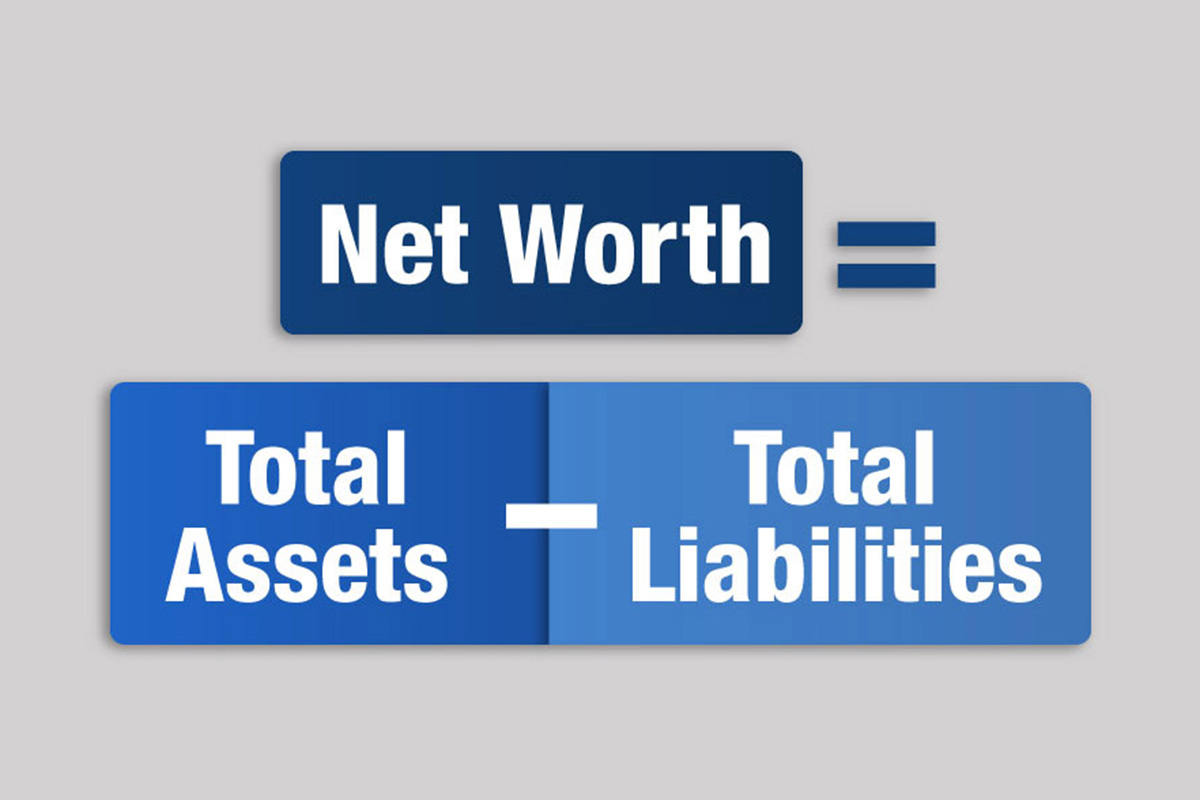
Net worth is the most accurate barometer of financial health because it accounts for what you own (assets) minus what you owe (liabilities). For accounting professionals, this calculation is more than just a personal exercise; it is a reflection of the financial principles they apply to clients every day. While your salary represents your "top-line" revenue, your net worth represents your "retained earnings" or the wealth you have actually managed to keep.
In 2026, the components of an accountant’s net worth typically include retirement accounts (401(k), IRA), brokerage accounts, home equity, and potentially equity stakes in a firm. Liabilities often include student loans—particularly for those who pursued a Master’s in Accounting to meet the 150-hour requirement—mortgages, and professional certification costs.
Accountants are uniquely positioned to build high net worths due to their high financial literacy and stable income paths. However, many fall into the trap of being "Under-Accumulators of Wealth" (UAWs), a term coined in The Millionaire Next Door. Because accountants often work in high-pressure environments surrounded by affluent clients, the pressure to maintain a certain lifestyle can lead to high consumption rather than high investment. Aiming for a specific net worth milestone requires balancing professional image with aggressive saving and tax-advantaged investing.
Average Net Worth Benchmarks by Career Level in 2026
Setting a net worth goal requires looking at your specific career trajectory. An accountant in public accounting at a Big Four firm will have a different wealth accumulation curve than one working as a controller for a mid-sized private company.
Entry-Level and Staff Accountants (0–3 Years)
At this stage, most accountants are focused on passing the CPA exam and managing entry-level debt. In 2026, entry-level salaries have stayed competitive to combat talent shortages, but high living costs in financial hubs like New York or Chicago can eat into savings.
- Target Goal: $0 to $50,000.
- Focus: Eliminating high-interest student debt and establishing an emergency fund. Even a "neutral" net worth (assets equaling liabilities) is a victory at age 23 or 24.
Senior Accountants and Managers (5–10 Years)
By the five-to-ten-year mark, the "compounding effect" should begin to take hold. Most professionals in this bracket have achieved their CPA or CMA designation, leading to significant salary bumps.
- Target Goal: $150,000 to $400,000.
- Focus: Maximizing employer-matching retirement contributions and potentially purchasing a first home. At this stage, your net worth should ideally equal at least 1.5 times your annual salary.
Senior Managers and Directors (12–20 Years)
This is the "wealth acceleration" phase. Salaries often move into the mid-six-figure range.
- Target Goal: $750,000 to $2,000,000.
- Focus: Diversifying investments outside of traditional retirement accounts. Many directors begin investing in real estate or private equity to minimize tax exposure.
Partners and CFOs (20+ Years)
For those who reach the upper echelons of the profession, net worth targets shift significantly upward due to profit-sharing, equity buy-ins, and performance bonuses.
- Target Goal: $3,000,000 to $10,000,000+.
- Focus: Estate planning and capital preservation. At this level, a significant portion of net worth may be tied up in the firm's equity, which requires a strategic exit plan.
The Impact of CPA Certification on Long-Term Wealth
The Certified Public Accountant (CPA) designation remains the gold standard for wealth building in the accounting field. Data from the American Institute of Certified Public Accountants (AICPA) consistently shows that CPAs earn 10% to 15% more than their non-certified peers. Over a 40-year career, this "CPA premium" can account for over $1 million in additional lifetime earnings.
Beyond the salary, the CPA license provides "career insurance." During economic downturns, certified professionals are often the last to be laid off because their signatures are required for regulatory compliance and audits. This stability allows for consistent investment through market cycles, which is the most reliable way to build a high net worth. In 2026, the demand for CPAs has increased due to the complexity of global tax laws and the integration of AI in financial reporting, making the designation more valuable than ever for personal wealth accumulation.
Public Accounting vs. Private Industry: Wealth Accumulation Paths
One of the most frequent dilemmas for accountants is choosing between the high-ceiling, high-stress world of public accounting and the more stable environment of private industry. Each has a different impact on how you should calculate your net worth goals.
Public Accounting: The path to Partner is a marathon. Early years feature lower pay relative to hours worked, but the "Partner payoff" is immense. A partner’s net worth is often heavily weighted toward their capital account within the firm. If you are on this path, you should aim for a higher liquidity ratio early on to fund the eventual "buy-in" required to become a partner.
Private Industry: Working as a Corporate Controller or CFO often offers a more balanced wealth-building path. In 2026, many tech-adjacent accounting roles offer Restricted Stock Units (RSUs) or stock options. For these accountants, net worth is often tied to the company's performance. The goal here should be to diversify away from company stock as soon as it vests to avoid "concentration risk."
| Career Stage | Typical Age | Recommended Net Worth Range (2026 USD) | Key Wealth Driver |
|---|---|---|---|
| Staff Accountant | 22–25 | $10k – $50k | Debt reduction & 401(k) match |
| Senior Accountant | 26–30 | $75k – $200k | Professional certification raises |
| Accounting Manager | 31–38 | $250k – $600k | Home equity & market compounding |
| Director / Controller | 39–50 | $750k – $1.8M | Bonus reinvestment & tax planning |
| Partner / CFO | 50+ | $3M – $10M+ | Equity stakes & profit sharing |
Key Factors Influencing Your Personal Financial Targets
While benchmarks are useful, your "ideal" net worth is highly individual. Several variables in 2026 can shift your target numbers higher or lower.
- Geographic Cost of Living (COL): An accountant in a "Low Cost of Living" (LCOL) area with a $500,000 net worth may be wealthier in real terms than a peer in London or New York with $1 million. If you work in a high-COL area, your housing equity may inflate your net worth, but your liquid assets (cash and stocks) are what will actually fund your lifestyle.
- The "Millionaire Next Door" Formula: A classic rule of thumb is: (Age x Pre-tax Annual Household Income) / 10. If you are 40 years old and earn $150,000, your target net worth by this formula is $600,000. For "Prodigious Accumulators of Wealth," you should aim to double that number.
- Financial Independence, Retire Early (FIRE): Many young accountants in 2026 are pursuing the FIRE movement. If your goal is to retire by 45, your net worth target should be 25 times your annual expenses, regardless of your age or career stage.
- Student Loan Burdens: With the cost of education continuing to rise, many accountants start their careers with a negative net worth. It is essential to subtract these liabilities accurately. A "successful" net worth for a 26-year-old might simply be reaching $0 after paying off $60,000 in loans.
Common Pitfalls and Wealth-Building Strategies for Accountants
Accountants often suffer from "analysis paralysis." Because they see the risks in every investment, they may keep too much cash on hand, missing out on the compounding returns of the equity markets. In 2026, with inflation-hedging becoming more critical, an overly conservative portfolio can actually hinder net worth growth.
Another common mistake is Lifestyle Creep. As accountants move from Senior to Manager, their income jumps significantly. Many choose to upgrade their vehicle or home immediately, which increases their "burn rate" rather than their net worth. To combat this, many successful professionals use the "50/50 Rule": whenever you receive a raise or bonus, 50% goes toward increasing your lifestyle, and 50% goes directly into investments.
Finally, accountants should leverage their knowledge of the tax code. Maximizing Health Savings Accounts (HSAs), utilizing "Backdoor" Roth IRAs, and understanding the tax implications of different asset classes can add 1% to 2% to your net wealth growth annually. Over decades, this "tax alpha" results in hundreds of thousands of dollars in additional net worth.
FAQ
What is a good net worth for a 30-year-old accountant?
In 2026, a 30-year-old accountant should aim for a net worth of approximately $100,000 to $200,000. This assumes they have spent several years in the workforce, attained their CPA or equivalent, and have begun aggressively paying down student debt while contributing to retirement accounts. If you live in a high-cost area, this number might be higher due to home equity, but liquid assets should still represent a significant portion of the total.
Does a CPA significantly increase your net worth?
Yes, a CPA designation is one of the most reliable drivers of net worth in the profession. Statistically, CPAs earn significantly more over their careers than non-certified accountants. This increased income, combined with the higher-level roles CPAs qualify for (such as Partner or CFO), allows for a much higher ceiling for wealth accumulation.
Should I include my home equity in my net worth calculation?
While technically part of your net worth, many financial experts recommend tracking "Net Worth excluding Primary Residence." Your home is a place to live, not a liquid asset that can pay for groceries in retirement. For a realistic view of your financial independence, focus on your "investable net worth"—the total of your stocks, bonds, cash, and investment properties.
Is $1 million enough for an accountant to retire in 2026?
For most accountants retiring in 2026, $1 million is likely insufficient to maintain a middle-class lifestyle due to the cumulative effects of inflation and rising healthcare costs. Based on the 4% rule, a $1 million portfolio only provides $40,000 in annual income. Most accounting professionals aim for a retirement net worth of at least $2.5 million to $5 million to ensure a comfortable transition.
How do I calculate my net worth if I have a firm buy-in?
If you are a partner in a firm, your capital account is a major asset. However, it is often illiquid. You should value this at the amount you would receive if you were to leave the firm today, after any applicable penalties or vesting schedules. Treat this as a "concentrated asset" in your portfolio and balance it with more liquid investments like index funds.
Recommended Actions for Growing Your Net Worth
To reach your net worth targets by 2026 and beyond, you must move from being a "recorder" of wealth to a "creator" of wealth. Start by automating your savings so that your "investment expense" is paid before you spend any discretionary income. This replicates the discipline you apply to corporate budgets.
Next, conduct a "personal audit" every six months. As an accountant, you have the skills to create a detailed personal balance sheet and income statement. Analyze your "operating margin"—the percentage of your income you keep after all expenses. Aiming for a 30% to 50% savings rate is the fastest way to leapfrog the standard benchmarks and achieve a prodigious net worth.
Finally, focus on career ROI. If your current role does not offer a path to a significantly higher net worth, use 2026 as the year to pivot. Whether that means moving from audit to consulting, or transitioning from public accounting to a high-growth startup with equity upside, your "human capital" is your most valuable asset. Maximize its value early, and the net worth benchmarks will follow naturally.