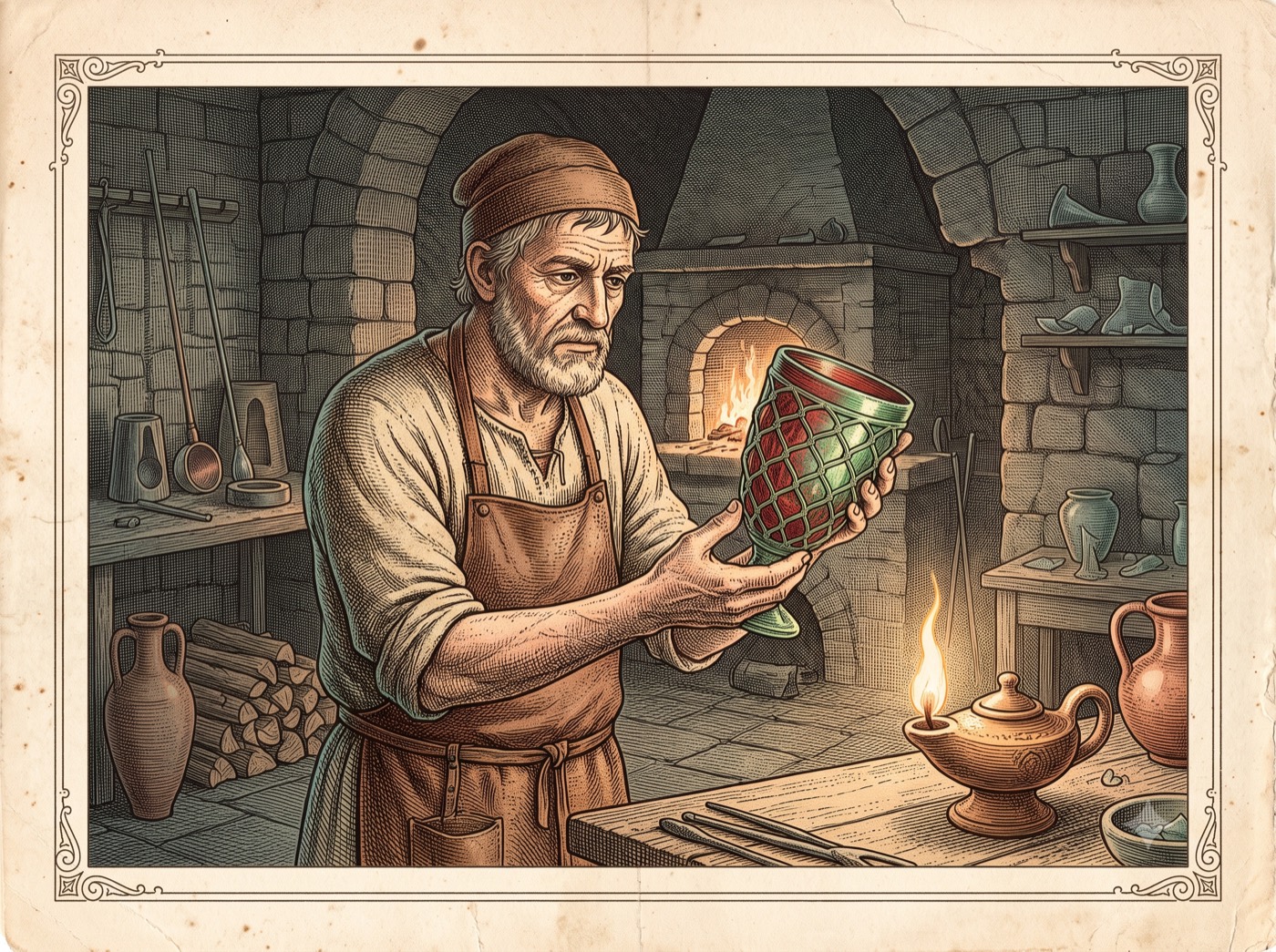
The story of the "accidentally trod on cup" primarily refers to the 2006 incident at the Fitzwilliam Museum in Cambridge, where visitor Nick Flynn tripped on his untied shoelaces. He "trod" on his lace, falling into three 300-year-old Qing Dynasty vases—vessels often described as large cups—shattering them into hundreds of pieces.
The Infamous Trip: How an Untied Shoelace Smashed History
In January 2006, one of the most significant accidental destructions in museum history occurred not due to a heist or a protest, but because of a loose shoelace. Nick Flynn, a 42-year-old visitor to the Fitzwilliam Museum in Cambridge, was walking down a staircase when he accidentally trod on his own shoelace. The resulting stumble sent him careening into a window sill where three massive 17th-century Chinese porcelain vases were on display.
The impact was catastrophic. The vases, which had sat undisturbed on that same windowsill for decades, were knocked to the floor. Because they were made of delicate Qing Dynasty porcelain, they didn't just break; they disintegrated into a sprawling field of ceramic shards. Initial reports suggested there were over 400 pieces, though the final count during restoration exceeded 600 fragments.
Flynn’s story became a global sensation, embodying every museum visitor’s worst nightmare. He was initially arrested on suspicion of criminal damage, though no charges were ultimately filed as the incident was deemed a genuine, albeit exceptionally clumsy, accident. The museum eventually banned Flynn, but the story sparked a worldwide debate on museum security and the precarious nature of displaying priceless artifacts without protective glass.
Identifying the Artifacts: Qing Dynasty Vases and the "Cup" Confusion
While many search for the "smashed cup story," the artifacts in the Fitzwilliam incident were technically large vases from the reign of the Emperor Kangxi (1662–1722). However, the confusion in terminology often stems from two factors:
- Vessel Classification: In ceramic history, large vases of this shape are often referred to as "vessels" or "covered jars," which are colloquially conflated with large cups or urns.
- The Hecht Museum Parallel: In 2024, a very similar viral story occurred at the Hecht Museum in Haifa, Israel. A 4-year-old boy accidentally tipped over a 3,500-year-old Bronze Age jar. This artifact, which lacked handles and had a tapered base, looked remarkably like a modern oversized cup or beaker.
The Fitzwilliam vases were exceptionally rare examples of "famille verte" porcelain. This style is characterized by a dominant green enamel overglaze, often featuring intricate motifs of birds, flowers, and landscapes. Before the accident, the set was valued at approximately £500,000 (roughly $880,000 at the time). By 2026, the historical value of these items has only increased, not just for their age, but for their now-famous "biography" of destruction and rebirth.
The Conservation Miracle: Piecing Together 600 Fragments
The restoration of the Fitzwilliam vases remains one of the most celebrated feats in the field of ceramic conservation. Led by senior conservator Penny Bendall, the project took over a year of meticulous labor. The process provides a fascinating look into how museums handle "total loss" scenarios.
The Mapping Phase
Before a single drop of adhesive could be applied, the conservation team had to sort the hundreds of shards. They used the patterns of the "famille verte" decoration—the specific placement of a bird’s wing or a flower petal—to determine which fragment belonged to which of the three vases. This was essentially the world’s most expensive and fragile 3D jigsaw puzzle.
Adhesive Selection and Application
In 2026, conservation standards emphasize reversibility. The team used a specialized conservation-grade resin (often Paraloid B-72) that is incredibly strong but can be dissolved with specific solvents if the vase needs to be disassembled in the future. Each piece was held in place with medical-grade tape while the resin cured.
Aesthetic Reintegration
The final step involved "filling" the tiny gaps where the porcelain had turned to dust upon impact. Conservators used a mix of resins and pigments to match the original white porcelain body and the vibrant green and gold glazes. If you view the vases today at the Fitzwilliam, the repairs are nearly invisible to the naked eye, though they remain detectable under ultraviolet light—a standard practice to ensure the history of the repair is preserved.
Notable Accidental Artifact Destructions
The Fitzwilliam incident is part of a broader "hall of fame" of museum accidents. The following table compares several high-profile incidents where visitors accidentally destroyed or damaged priceless artifacts.
| Year | Location | Artifact | Cause of Damage | Outcome |
|---|---|---|---|---|
| 2006 | Fitzwilliam Museum | 3 Qing Dynasty Vases | Trod on shoelace and tripped | Fully restored; on display |
| 2010 | Metropolitan Museum of Art | Picasso's "The Actor" | Visitor lost balance and fell | Repaired; valued at $130M |
| 2015 | Taipei Art Exhibition | "Flowers" by Paolo Porpora | 12-year-old boy tripped with a drink | Restored; hole patched |
| 2017 | Hirshhorn Museum | Kusama "Infinity Room" Gourd | Visitor stepped on sculpture while taking a selfie | Replaced by artist |
| 2023 | Bel-Air Fine Art | Koons "Balloon Dog" | Visitor tapped the sculpture | Shattered; insured |
| 2024 | Hecht Museum | 3,500-Year-Old Jar | Child (4) tugged the vessel | Restored; child invited back |
Liability and the "Clumsy Visitor" Legal Protocol
A common question arising from the "accidentally trod on cup" story is: Who pays? In most jurisdictions, including the UK and the US, the legal principle of negligence applies. However, museums rarely sue their visitors for genuine accidents for several reasons.
- The Duty of Care: Museums have a "duty of care" to protect their collections. If a museum displays a £500,000 item on a windowsill near a staircase without a barrier, a court may find the museum partially responsible for the "contributory negligence" of placing the item in a high-risk area.
- Insurance Coverage: Major museums carry comprehensive insurance policies. In the case of the Fitzwilliam vases, the insurance covered the cost of the restoration.
- Public Relations: Suing a visitor—especially one who made a human error like tripping—is a PR disaster. Most museums, like the Hecht Museum in 2024, choose to use the event as an educational moment rather than a legal battle.
For Nick Flynn, although he was "banned for life" (a ban that was eventually discussed with a degree of humor by the museum later), he was never held financially liable for the half-million-pound damage.
Museum Security and Protection Standards in 2026
By 2026, the technology used to prevent such "trod on" accidents has advanced significantly. The Fitzwilliam incident changed how many mid-sized museums approach open displays.
- Virtual Perimeters: Many galleries now use "invisible" laser barriers. If a visitor's foot or arm crosses a plane too close to an artifact, a localized, soft chime alerts them to step back before physical contact is made.
- Haptic Floor Pressure Mats: In 2026, sensors beneath the floorboards can detect if a visitor is standing too close to a pedestal or if they have fallen.
- Advanced Glazing: Non-reflective, "invisible" glass (like Optium Museum Acrylic) is now standard for items previously left in the open. This glass is so clear that visitors often don't realize it's there, but it is strong enough to withstand a human fall.
The Fitzwilliam Museum itself has updated its display protocols, ensuring that while the vases are back on their famous windowsill, they are no longer at the mercy of a stray shoelace.
Frequently Asked Questions
Did Nick Flynn have to pay for the broken vases?
No. Nick Flynn was not held financially liable for the damage. The museum’s insurance policy covered the restoration costs. In the UK, proving that a simple trip constitutes "gross negligence" or "criminal intent" is a high legal bar that the museum chose not to pursue.
Are the smashed Fitzwilliam vases still on display?
Yes. Following a massive restoration project that concluded in late 2007, the vases were returned to public display. They are considered a testament to modern conservation science. While they are back on the same windowsill where the accident occurred, they are now much better protected.
What happened to the boy who smashed the jar in 2024?
In the August 2024 incident at the Hecht Museum, the 4-year-old boy who accidentally smashed the 3,500-year-old jar was not punished. Instead, the museum invited the family back for a guided tour and used the restoration process as a public educational exhibit to show how archaeologists piece history back together.
Why wasn't the art behind glass in the first place?
Museums often balance "accessibility" with "security." Curators believe that seeing an object without the glare of glass allows for a deeper aesthetic and historical connection. However, following the 2006 and 2024 incidents, "open display" is now largely reserved for items that are less fragile or are placed well out of reach of foot traffic.
Avoid Accidental Damage: A Practical Recommendation
If you are visiting a museum or gallery in 2026, the best way to avoid becoming the next "viral story" is to adhere to the "Three-Foot Rule." Always maintain at least one meter (about three feet) of distance from any unshielded artifact. Additionally, ensure all footwear is securely fastened—Nick Flynn's story remains the definitive proof that a single loose shoelace can result in the destruction of centuries of history. If you are traveling with children, look for "touch-friendly" or "family-focused" exhibits where artifacts are specifically housed in reinforced cases or are replicas intended for interaction.