An accidental firearm injury is any unintentional harm resulting from the discharge of a gun, typically caused by improper handling, inadequate storage, or mechanical failure. These incidents are largely preventable through rigorous adherence to safety rules, the use of secure storage technologies, and comprehensive community education. In 2026, reducing these injuries remains a critical public health and safety priority.
The Landscape of Unintentional Firearm Injuries in 2026
As of 2026, accidental firearm injuries continue to be a significant public health concern, though increased adoption of safety technology and legislative mandates have begun to flatten the curve of preventable incidents. Unlike intentional gun violence, which is often driven by criminal intent or self-harm, accidental injuries are characterized by the absence of intent. These incidents frequently occur in domestic environments where a firearm is present but not properly secured.
Demographic data indicates that children and adolescents remain the most vulnerable population regarding unintentional shootings. According to the Centers for Disease Control and Prevention (CDC), a substantial percentage of firearm-related deaths among minors are classified as unintentional. These often occur when a child discovers an unsecured, loaded firearm while playing or exploring. In 2026, the focus has shifted toward "safe storage" as a primary intervention rather than just "safe handling," recognizing that human error is harder to eliminate than environmental risk.
The psychological impact of these injuries extends far beyond the physical trauma. Victims and their families often suffer from long-term Post-Traumatic Stress Disorder (PTSD), survivor's guilt, and financial instability due to high medical costs. Addressing this issue requires a multifaceted approach that combines technological innovation, legal accountability, and trauma-informed medical response.
Primary Causes of Accidental Firearm Discharge
Understanding why accidental discharges occur is the first step toward prevention. Most incidents are not the result of "freak accidents" or mechanical malfunctions, but rather a failure to observe fundamental safety protocols.
Human Error and Handling Mistakes
The most common cause of accidental injury is the "unloaded gun" myth. Many incidents occur when a handler believes a firearm is empty, unaware that a round remains in the chamber. This frequently happens during:
- Cleaning: Neglecting to double-check the chamber before beginning maintenance.
- Show-and-Tell: Displaying a firearm to friends or family without verifying its status.
- Obstructions: Attempting to clear a jam or "squib load" (a bullet stuck in the barrel) without following proper safety procedures.
Inadequate Storage
When firearms are left loaded and accessible, the risk of an accident increases exponentially. In many cases, owners keep a firearm "ready" for self-defense in a bedside drawer or under a car seat. However, without a rapid-access safe, these weapons are easily discovered by children or unauthorized users. The lack of a physical barrier is the single greatest contributor to pediatric firearm injuries.
The Phenomenon of Negligent Discharge
In technical terms, safety experts often distinguish between "accidental" and "negligent" discharges. A truly accidental discharge involves a mechanical failure of the firearm, such as a "slam-fire" where a round ignites upon the bolt closing. A negligent discharge occurs when a finger enters the trigger guard and applies pressure when the handler did not intend to fire. In 2026, modern firearm engineering has made mechanical failures exceedingly rare, meaning the vast majority of "accidents" are legally and practically classified as negligence.
Preventive Measures: The Hierarchy of Safe Storage
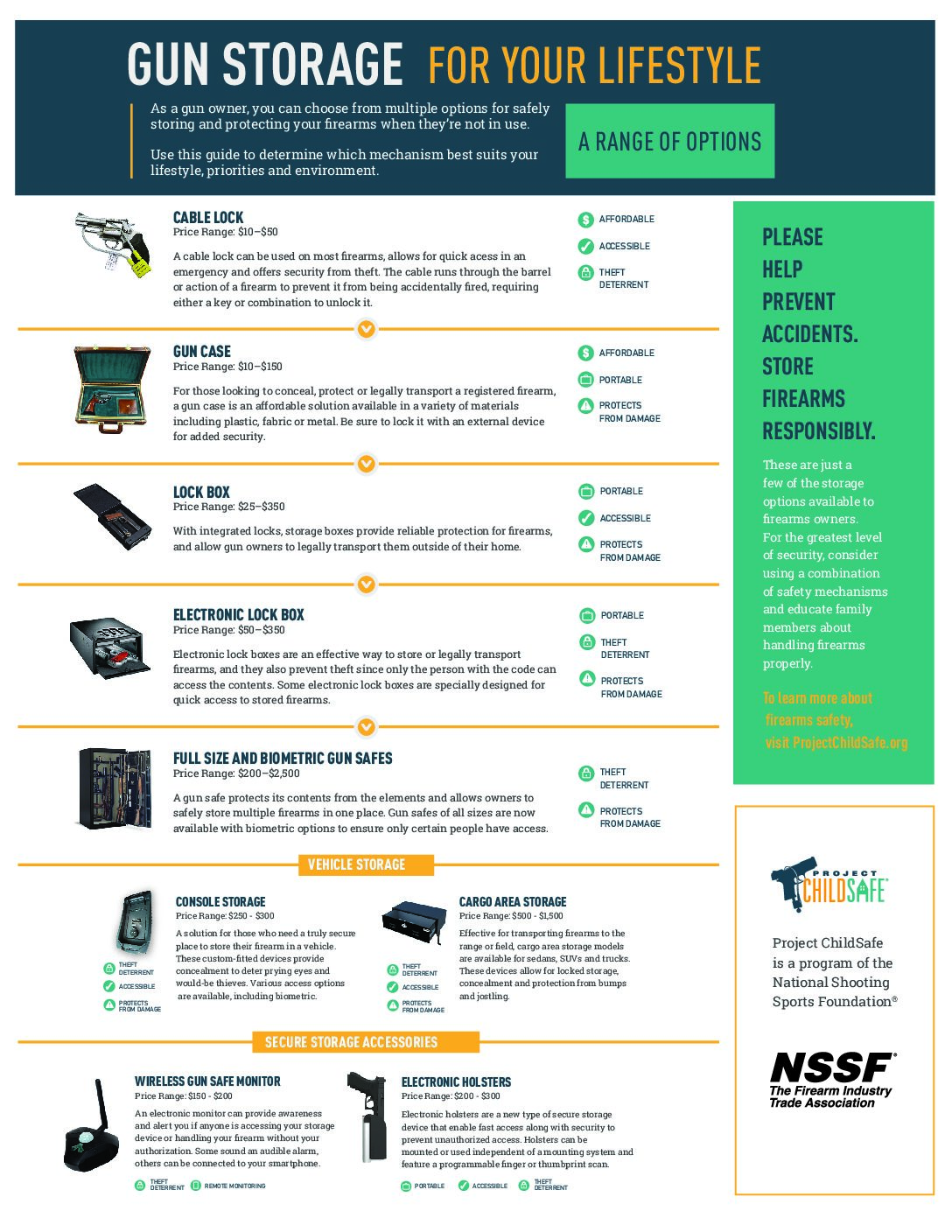
The most effective way to prevent accidental injuries is to ensure that unauthorized persons cannot access a firearm. In 2026, storage solutions have evolved to offer a balance between security and the need for quick access during an emergency.
| Storage Method | Security Level | Access Speed | Ideal Use Case |
|---|---|---|---|
| Trigger/Cable Locks | Low | Moderate | Temporary storage or transport. |
| Biometric Handgun Safes | High | Very Fast | Home defense; prevents child access. |
| Heavy-Duty Floor Safes | Maximum | Slow | Long-term storage of multiple firearms. |
| Smart Gun Technology | Maximum | Instant (User) | Personalized protection; prevents unauthorized use. |
| Locked Hard Cases | Moderate | Moderate | Transport and legal compliance. |
Implementing the "Rule of Four"
Firearm safety is built on four non-negotiable rules. Adherence to these virtually eliminates the possibility of an accidental injury even if a discharge occurs:
- Treat every firearm as if it is loaded. Never assume a gun is empty based on someone else's word or a quick glance.
- Never point the muzzle at anything you are not willing to destroy. This is the concept of "muzzle discipline."
- Keep your finger off the trigger until your sights are on the target. Most negligent discharges happen because the finger is "resting" on the trigger.
- Be sure of your target and what is beyond it. This prevents injuries from bullets that pass through walls or targets.
Emergency Response: First Aid for Firearm Trauma
Disclaimer: The following information is for educational purposes and does not replace professional medical training. In the event of a shooting, always call emergency services (911) immediately.
When an accidental shooting occurs, the speed of the medical response determines the outcome. Ballistic trauma causes rapid blood loss and internal organ damage that can be fatal within minutes.
Immediate Steps to Save a Life
The priority in any firearm injury is to Stop the Bleed. The American College of Surgeons maintains the Stop the Bleed program, which provides essential guidelines for bystanders:
- Ensure Scene Safety: Do not approach the victim until the firearm is secured and the area is safe.
- Apply Direct Pressure: Use a clean cloth or gauze to apply firm, steady pressure directly onto the wound.
- Use a Tourniquet: For life-threatening bleeding from an arm or leg, apply a commercial tourniquet (like a CAT or SOFTT-W) two to three inches above the wound. Tighten it until the bleeding stops completely.
- Chest Seals: If the injury is to the torso (chest or back), a "sucking chest wound" may occur. Cover the wound with an airtight seal, such as a specialized chest seal or plastic wrap taped on three sides, to prevent lung collapse.
Understanding Ballistic Trauma
Firearm injuries are complex because bullets do not just create a hole; they create a "temporary cavity" caused by the shockwave of the projectile. This can shatter bone and rupture blood vessels far from the actual path of the bullet. Internal bleeding is often more severe than it appears from the entry wound. Professional medical intervention at a Level 1 Trauma Center is usually required for survival.
Legal and Liability Considerations
In 2026, the legal landscape surrounding accidental firearm injuries is more stringent than in previous decades. Gun owners are increasingly held civilly and criminally liable for injuries resulting from their failure to secure a weapon.
Child Access Prevention (CAP) Laws
Many jurisdictions have enacted CAP laws, which hold adults accountable if a minor gains access to an unsecured firearm. These laws vary by state but generally fall into two categories:
- Negligent Storage Laws: Criminal liability is triggered if a child accesses the gun, regardless of whether an injury occurs.
- Reckless Endangerment: Liability is triggered only if the child uses the gun to cause harm or display it in a threatening manner.
Organizations like the Giffords Law Center track these legislative changes. In 2026, homeowners' insurance policies also frequently include clauses related to firearm storage. An accidental discharge in a home where the owner did not use a locking device may result in the denial of liability coverage, leaving the owner personally responsible for medical judgments and legal fees.
The Role of Education and Community Programs
Safety education is the final pillar of prevention. Programs like Project ChildSafe, sponsored by the National Shooting Sports Foundation (NSSF), provide millions of free firearm safety kits and cable locks to gun owners across the country.
Community-based interventions often focus on:
- The "Ask" Campaign: Encouraging parents to ask if there are unlocked guns in the homes where their children play.
- Eddie Eagle Program: Teaching young children a simple four-step mantra if they find a gun: "Stop! Don’t touch. Run away. Tell a grown-up."
- Medical Screening: In 2026, many pediatricians include questions about firearm storage during routine wellness checks, treating gun safety as a standard part of household "child-proofing," similar to pool safety or chemical storage.
Technology Trends in 2026
The year 2026 has seen a rise in "Smart Gun" technology. These firearms utilize biometric sensors (fingerprint scanners) or RFID chips (embedded in a ring or watch worn by the owner) to ensure the gun can only be fired by its authorized user. While controversial among some enthusiasts, these tools provide an additional layer of protection against accidental use by children or unauthorized individuals who might find a misplaced weapon.
Frequently Asked Questions
What should I do if my child finds a gun?
If a child finds a gun, they should be taught to never touch it, immediately leave the area, and inform a trusted adult. As an adult, you should secure the firearm by engaging the safety (if possible) and placing it in a locked container or safe immediately. Do not leave the firearm unattended until it is secured.
Can a gun go off if it is dropped?
While most modern firearms (manufactured after the 1980s) are designed with "drop safeties" that prevent the firing pin from striking the primer unless the trigger is pulled, older firearms or poorly maintained weapons can still discharge upon impact. This is known as being "drop-safe." Always handle a firearm as if it could discharge if dropped, and never attempt to catch a falling gun; let it hit the floor to avoid accidentally pulling the trigger mid-air.
Are airsoft or BB guns considered firearms in the context of accidental injury?
Technically, most legal definitions do not classify airsoft or BB guns as "firearms," but they are capable of causing significant accidental injury, including permanent blindness or skin penetration. The same safety rules (muzzle discipline and trigger finger placement) should always be applied to non-powder guns to instill safe habits and prevent trauma.
Does homeowners' insurance cover accidental firearm injuries?
Most standard homeowners' insurance policies provide personal liability coverage that may include accidental shootings, provided the incident was truly unintentional. However, many policies exclude "intentional acts" or "criminal acts." If the owner is found to be in violation of local safe-storage laws, the insurance company may argue that the negligence constitutes a criminal act, potentially leaving the owner without coverage.
How often should I check the safety of my firearm storage?
You should inspect your firearm storage solutions at least twice a year. Check the batteries in biometric or electronic safes, ensure that cable locks have not become corroded or jammed, and verify that no one else in the household has discovered your access codes or keys.
Taking Action for Household Safety
To effectively prevent accidental firearm injuries, homeowners must move beyond passive awareness and take active steps to secure their environment. The primary action is the immediate purchase and use of a California-approved (or equivalent standard) locking device for every firearm in the home.
If you own firearms, conduct a "safety audit" of your home today. Ensure that ammunition is stored in a separate locked container from the firearms themselves. For those who do not own firearms but have children, normalize the conversation about gun safety with neighbors and relatives. By treating firearm safety as a communal responsibility rather than a private hobby, we can continue to reduce the incidence of accidental injuries through the remainder of 2026 and beyond.