An accident investigation is a systematic process used to uncover the facts surrounding an unplanned event, identify its root causes, and implement corrective actions to prevent recurrence. Beyond mere fault-finding, a professional investigation analyzes systemic failures in equipment, environment, and management to improve overall safety and operational resilience.
The Core Objectives of Accident Investigation
The fundamental goal of any accident investigation is prevention, not prosecution. While legal and insurance requirements often mandate these inquiries, the most successful organizations use them as a tool for continuous improvement. In 2026, the focus has shifted significantly toward "Safety-II" principles, which examine not only what went wrong but also how the system usually functions correctly and why it failed on a specific occasion.
Accident investigations serve several critical functions within an organization:
- Fact-Finding: Establishing a clear, chronological sequence of events based on evidence rather than hearsay.
- Root Cause Identification: Distinguishing between the immediate "proximate" cause (e.g., a worker slipped) and the underlying "root" cause (e.g., a leaking valve was not maintained due to budget cuts).
- Legal and Regulatory Compliance: Meeting the reporting standards set by bodies such as the Occupational Safety and Health Administration (OSHA) or the Health and Safety Executive (HSE).
- Risk Mitigation: Identifying previously unrecognized hazards and implementing controls to reduce future liability.
By treating every incident as a learning opportunity, companies can transform a negative event into a catalyst for cultural change and technical upgrades.
Immediate Post-Accident Response and Evidence Preservation
Before a formal investigation begins, certain prerequisites must be met to ensure the integrity of the data and the safety of the personnel. The first hour following an incident—often called the "Golden Hour"—is critical for evidence preservation.
Securing the Scene
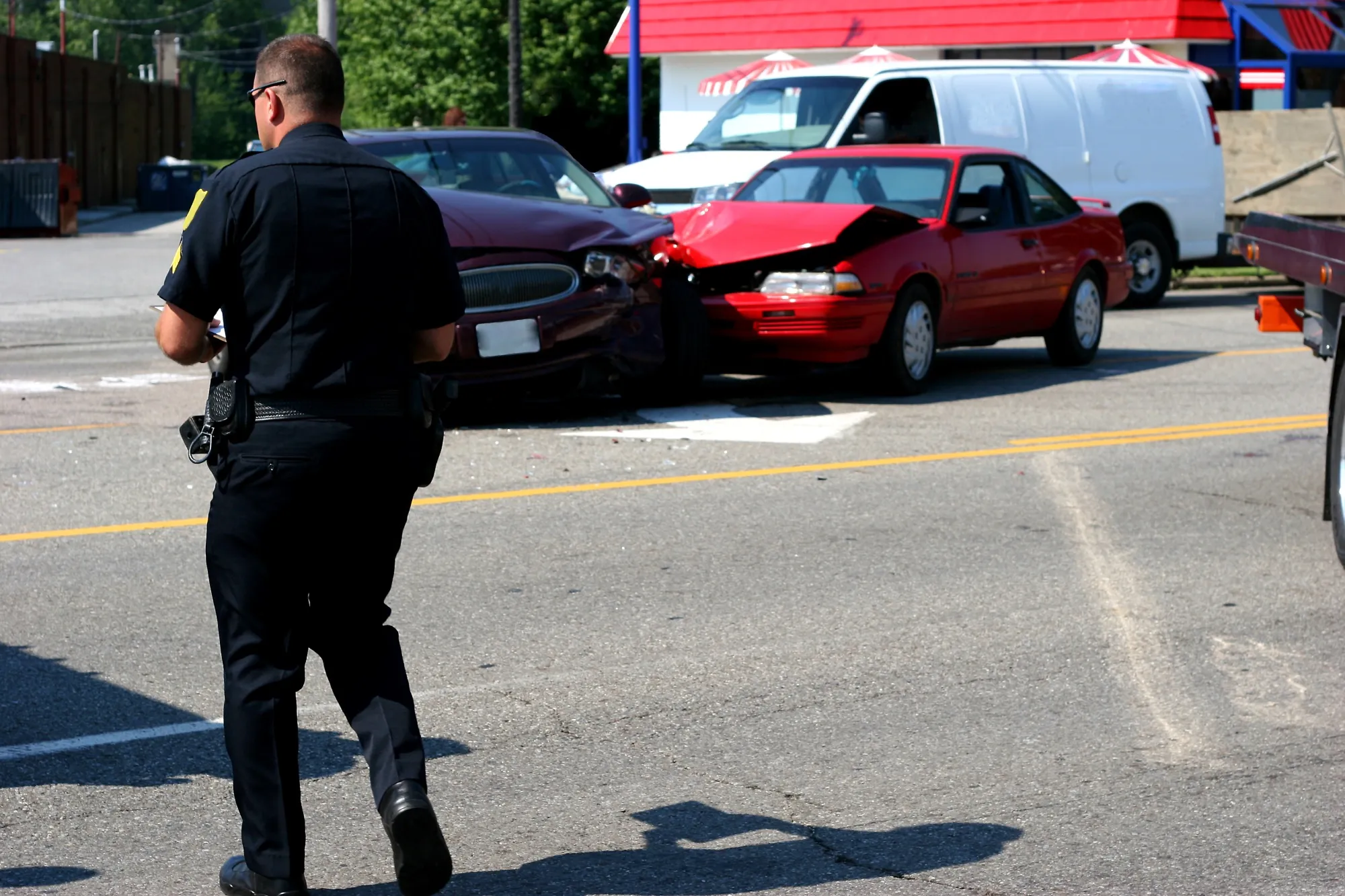
The physical environment of an accident is highly volatile. Witnesses leave, equipment is moved, and environmental conditions change. Investigators must secure the perimeter immediately to prevent the contamination of physical evidence. This involves cordoning off the area and ensuring that no "clean-up" occurs until the preliminary data is captured. In 2026, many sites utilize rapid 3D laser scanning or drone-based photogrammetry to create a digital twin of the scene before anything is touched.
Initial Documentation
Documentation should begin as soon as the scene is safe. This includes high-resolution photography from multiple angles, video footage, and sketches. Investigators look for "transient evidence"—items that might disappear quickly, such as odors, liquid spills, weather conditions, or digital readouts on machinery that might reset.
Witness Identification and Management
Witnesses should be identified and separated as quickly as possible. When individuals discuss the event before being interviewed, their memories can inadvertently merge or align, a phenomenon known as "memory conformity." Brief, preliminary statements should be taken immediately, with more in-depth interviews scheduled for a later time.
The Systematic Investigation Process
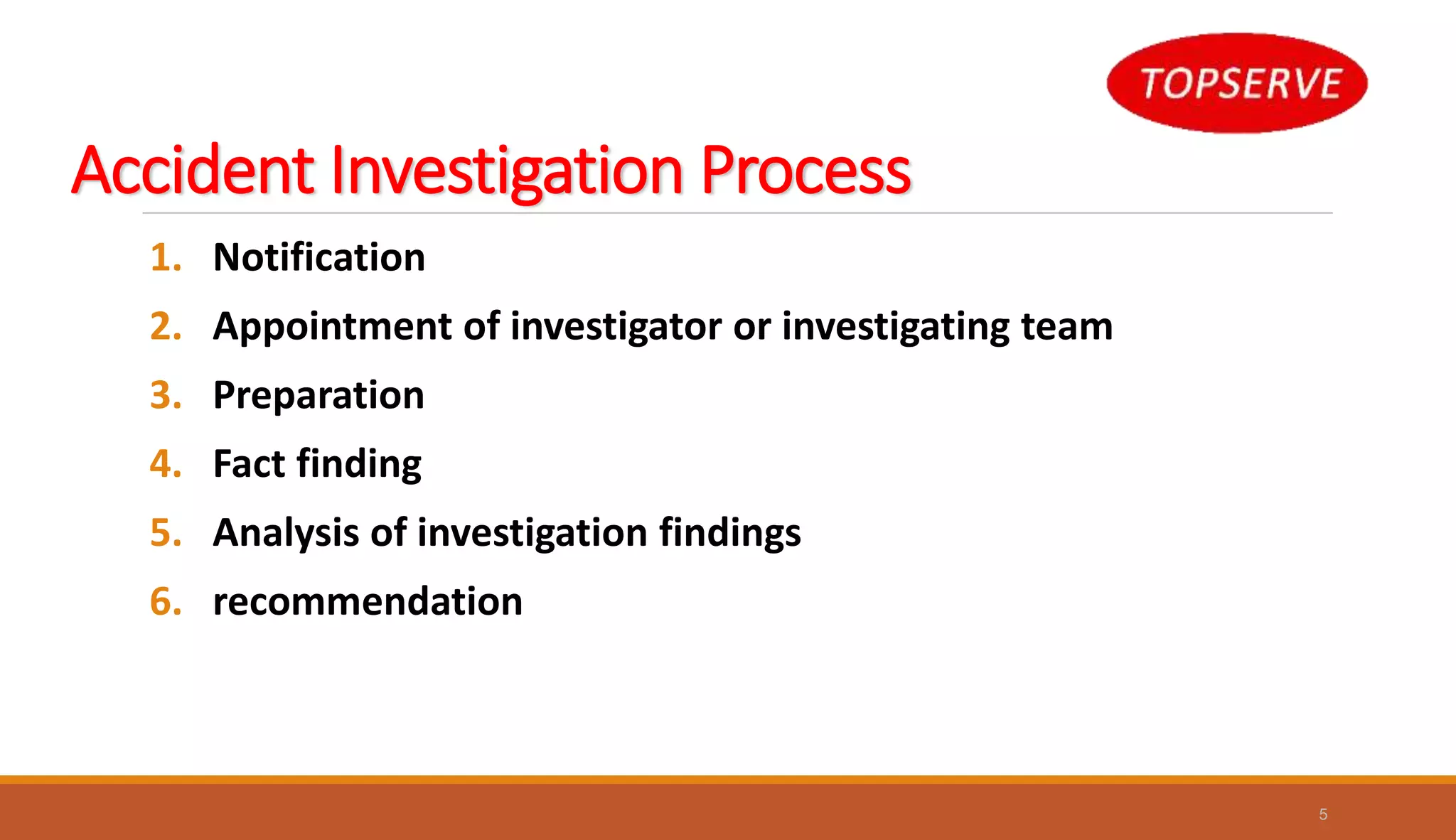
A professional accident investigation follows a structured lifecycle to ensure no detail is overlooked. This process is generally divided into four distinct phases: Data Collection, Analysis, Reporting, and Follow-up.
Phase 1: Data Collection (The Four Ps)
A common framework used by investigators is the "Four Ps" of evidence:
- People: Statements from victims, witnesses, and supervisors.
- Parts: Physical components, failed equipment, and PPE.
- Position: The physical layout of the scene and the location of individuals/tools at the time of the event.
- Paper/Pixels: Training records, maintenance logs, standard operating procedures (SOPs), and digital sensor data (IoT logs).
Phase 2: Analyzing the Evidence
Once the data is gathered, the investigator must piece together the timeline. This involves cross-referencing witness statements with physical data. If a witness claims a machine was turned off, but the digital log shows it was drawing power, the investigator must resolve this discrepancy. This phase requires an objective mindset; investigators must guard against "confirmation bias," where they only look for evidence that supports their initial theory.
Phase 3: Root Cause Analysis (RCA)
This is the most technical aspect of the investigation. RCA seeks to identify the "latent conditions" within the organization. For example, if a driver crashed a vehicle, the proximate cause might be "speeding," but the root cause might be a "scheduling policy that incentivizes unsafe speeds to meet delivery targets."
Phase 4: Corrective and Preventive Actions (CAPA)
The final stage of the investigation is the development of an action plan. These actions must be specific, measurable, and timed. They are typically prioritized according to the Hierarchy of Controls, favoring elimination and substitution over administrative controls or personal protective equipment (PPE).
Methodologies for Root Cause Analysis
Different types of accidents require different analytical depths. Organizations often choose a methodology based on the complexity of the event and the industry standards applicable in 2026.
The 5 Whys Technique
Developed by Sakichi Toyoda and used extensively in Lean manufacturing, this method involves asking "Why?" repeatedly (usually five times) until the underlying systemic failure is revealed. While simple and effective for minor incidents, it can be too linear for complex systemic failures involving multiple variables.
The Fishbone (Ishikawa) Diagram
This visual tool categorizes potential causes into groups such as Manpower, Methods, Machines, Materials, Measurement, and Mother Nature (Environment). It helps investigation teams brainstorm all possible contributing factors in a non-linear fashion.
The Swiss Cheese Model
Proposed by James Reason, this model suggests that accidents happen when "holes" (failures) in multiple layers of defense (barriers) align. An investigation using this model looks for failures in organizational influences, unsafe supervision, preconditions for unsafe acts, and the unsafe acts themselves.
Comparison of Investigation Methodologies
| Methodology | Best Used For | Complexity | Key Strength |
|---|---|---|---|
| 5 Whys | Simple incidents / Linear failures | Low | Easy to learn and quick to implement. |
| Fishbone Diagram | Brainstorming multiple factors | Medium | Visualizes relationships between causes. |
| Swiss Cheese Model | Complex, systemic organizational failures | High | Identifies latent management weaknesses. |
| TapRooT® | High-consequence/Regulated industries | Very High | Uses a standardized expert system to reduce bias. |
| SCAT (Chart) | Industrial and loss control | Medium | Links causes directly to management system gaps. |
Legal Requirements and Reporting Standards
In 2026, accident investigation is heavily governed by both national laws and international standards. Failure to conduct a thorough investigation can result in significant legal exposure, including "willful violation" citations which carry heavy financial and criminal penalties.
Regulatory Reporting (OSHA/HSE)
Most jurisdictions require immediate reporting of fatalities, hospitalizations, or amputations. For example, OSHA 1904.39 requires employers to report a fatality within 8 hours. The investigation report generated by the company is often the first document requested by a government inspector during a follow-up visit.
ISO 45001:2018 Standards
Many global organizations adhere to ISO 45001, the international standard for Occupational Health and Safety Management Systems. Clause 10.2 specifically outlines how organizations must react to incidents, evaluate the need for corrective action, and review the effectiveness of those actions.
Legal Privilege and Confidentiality
In high-stakes investigations, companies may conduct investigations "under the direction of legal counsel" to maintain Attorney-Client Privilege. This is common when litigation is anticipated. However, safety professionals must balance the need for legal protection with the need to share safety lessons across the organization to prevent a repeat event.
Note: This article is for informational purposes and does not constitute legal advice. Always consult with a qualified legal or safety professional regarding specific jurisdictional requirements.
Common Pitfalls in Accident Investigations
Even experienced investigators can fall into traps that undermine the validity of their findings. Awareness of these pitfalls is essential for maintaining the integrity of the process.
- Blaming the Individual: Focusing on "human error" as the conclusion rather than the starting point. Human error is usually a symptom of a poorly designed system, not the cause.
- Hindsight Bias: The tendency to view an event as predictable after it has happened. Investigators must evaluate the situation based on what the person knew at the time, not what is known now.
- Single-Cause Fallacy: Assuming there is only one root cause. Most accidents are the result of a "perfect storm" of multiple contributing factors.
- Incomplete Implementation: Identifying the root cause but failing to follow through on corrective actions. If the recommendations are not implemented and verified, the investigation has failed its primary purpose.
Frequently Asked Questions
Who should be on an accident investigation team?
A diverse team typically includes a supervisor, a safety professional, and an employee who is familiar with the work process but was not involved in the accident. Including a peer-level worker helps provide "ground-level" reality to the investigation and increases the credibility of the findings among the workforce. For highly technical failures, an external subject-matter expert or forensic engineer may be required.
How long should an investigation take to complete?
A preliminary report is usually expected within 24 to 48 hours to satisfy immediate management and regulatory needs. However, a full root cause analysis and final report may take weeks, depending on the complexity and the need for lab testing of failed parts. The priority should be accuracy over speed, though momentum is necessary to ensure evidence is not lost.
What is the difference between a "Near Miss" and an "Accident"?
A "near miss" (or "close call") is an unplanned event that did not result in injury, illness, or damage—but had the potential to do so. An "accident" results in actual loss. From an investigation standpoint, near misses are "free lessons" because they allow the organization to identify and fix systemic weaknesses before a tragedy occurs. Leading companies in 2026 investigate near misses with the same rigor as actual accidents.
Should we interview witnesses together or separately?
Witnesses should always be interviewed separately. Group interviews lead to "groupthink," where individuals consciously or unconsciously align their stories to avoid conflict or fill in gaps in their own memory. Individual interviews allow the investigator to identify unique perspectives and uncover discrepancies that might point toward important evidence.
How do we handle "Human Error" in a report?
If human error is identified, the report should explain why the error made sense to the person at the time. Was the instruction ambiguous? Was the worker fatigued due to excessive overtime? Was the tool poorly designed? By answering these questions, "human error" becomes a technical or organizational issue that can be fixed through better design or policy.
Establishing a Culture of Transparency
The most effective way to improve accident investigations is to foster a "Just Culture." This is an environment where employees feel safe reporting incidents and near misses without fear of arbitrary punishment. When people trust that the investigation is a genuine search for improvement rather than a hunt for a scapegoat, they are more likely to provide the honest, detailed information necessary to uncover the true root causes.
As a next action, organizations should review their current incident reporting forms. Ensure they are designed to capture "system factors" (like equipment age, lighting, and procedure clarity) rather than just "behavioral factors." Training supervisors in "Cognitive Interviewing" techniques can also significantly improve the quality of the testimonial evidence gathered in the early stages of an investigation.