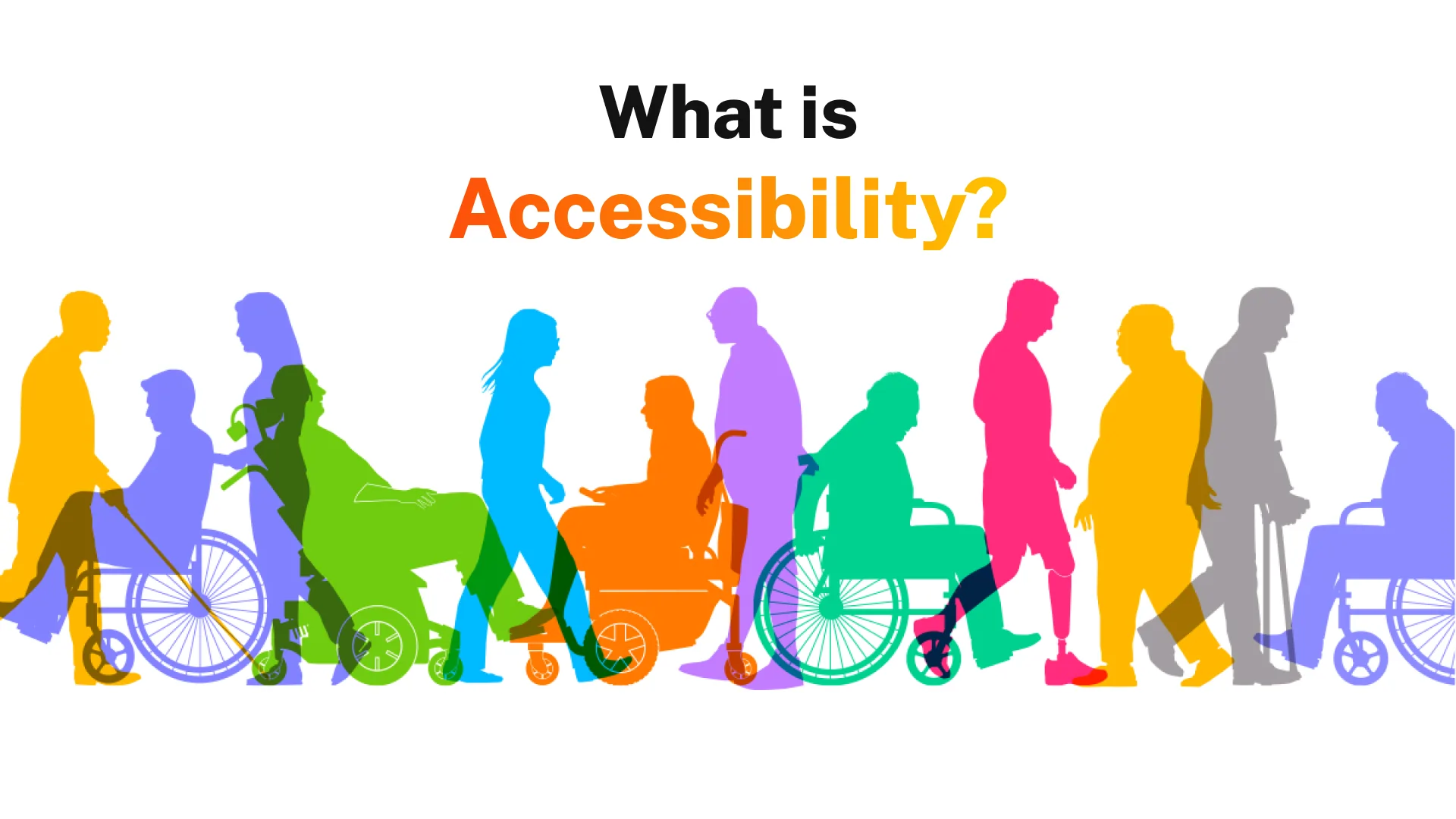
An accessibility policy is a formal public statement or internal document that outlines an organization’s commitment to providing equitable access to its services, products, and digital platforms for people with disabilities. It serves as a strategic roadmap for maintaining compliance with global legal standards, such as the Americans with Disabilities Act (ADA) and the European Accessibility Act (EAA), while providing users with clear channels for feedback and support.
Why Your Organization Needs an Accessibility Policy
In 2026, an accessibility policy is no longer a discretionary "add-on" for corporate social responsibility; it is a fundamental requirement for legal risk management and market inclusion. As digital transformation has reached every sector, the definition of "public accommodation" has expanded globally to include almost all web-based and mobile interfaces. Failure to maintain a clear, actionable policy can lead to significant litigation risks and the alienation of a massive global demographic.
Beyond legal necessity, a robust policy enhances the user experience for everyone. Accessibility features—such as high-contrast modes, clear navigation structures, and video captions—often improve usability for non-disabled users, including those in low-light environments, individuals with temporary injuries, or the aging population. From a business perspective, accessibility expands your total addressable market. Estimates consistently show that people with disabilities, along with their families and advocates, represent trillions of dollars in global disposable income. By articulating a clear policy, you signal to this demographic that their business is valued.
Furthermore, an accessibility policy acts as an internal governance tool. It provides employees, developers, and content creators with a unified standard to follow. Without a centralized policy, accessibility efforts tend to be fragmented, leading to "accessibility debt" where organizations must spend significantly more to retroactively fix issues that could have been prevented during the design phase.
Essential Components of a Modern Accessibility Policy
A comprehensive accessibility policy should be transparent, easy to find, and written in plain language. While the specific details may vary based on your industry and jurisdiction, certain core elements are non-negotiable for a professional-grade document in 2026.
1. Statement of Commitment
This section should clearly define the organization’s philosophy toward inclusion. It should not merely state that you "strive" for accessibility but rather that you are committed to ensuring that all users, regardless of ability, can access the same information and perform the same tasks. This commitment should be signed or endorsed by senior leadership to demonstrate that accessibility is a high-level organizational priority.
2. Specific Technical Standards
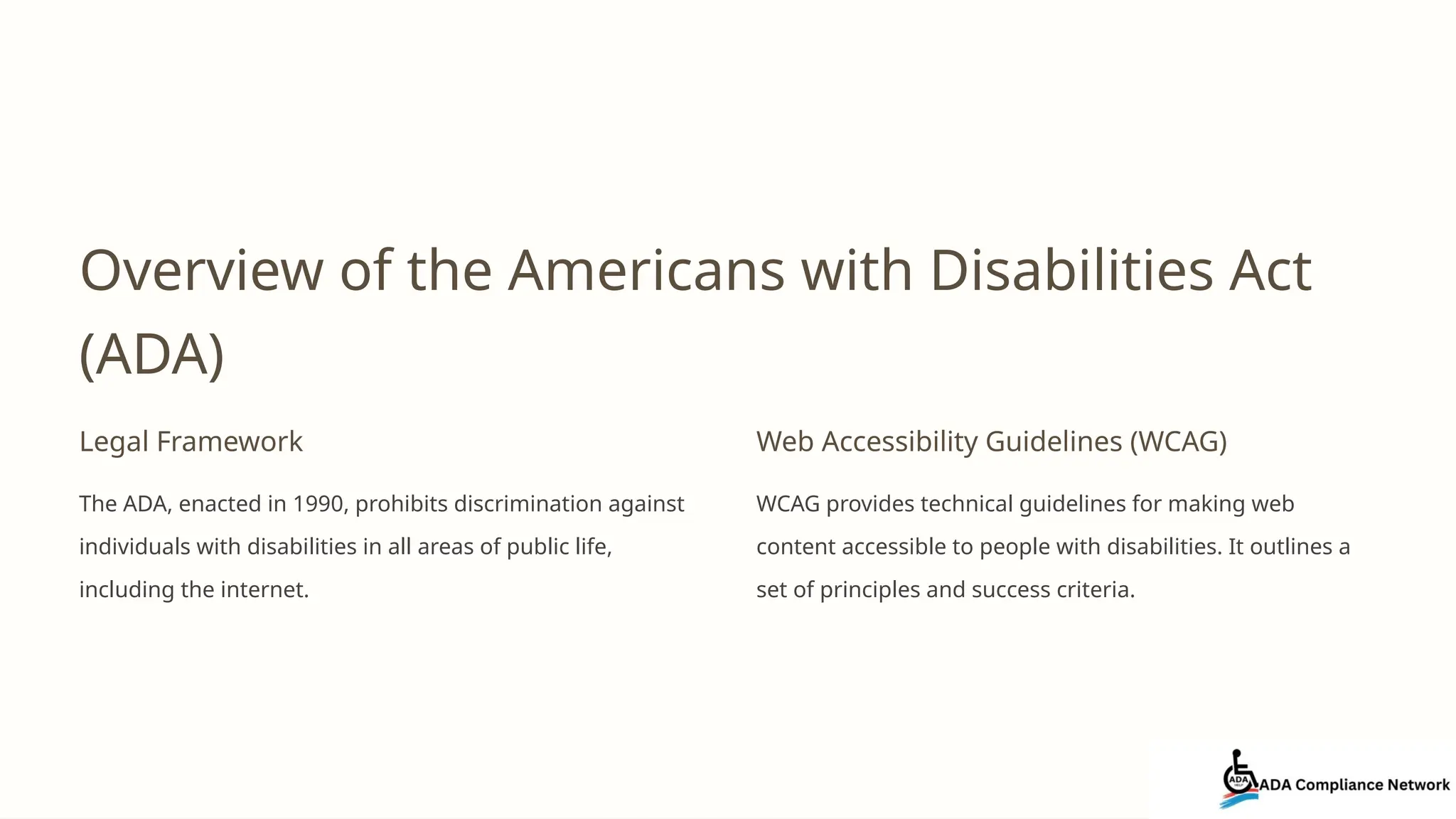
Your policy must identify the exact technical benchmarks the organization adheres to. In 2026, the global gold standard is the Web Content Accessibility Guidelines (WCAG) 2.2. You should specify which level of compliance you are targeting—usually Level AA, which is the standard required by most regulatory bodies. Mentioning specific standards provides a measurable metric against which your performance can be audited.
3. Scope of the Policy
It is crucial to define where the policy applies. This typically includes your primary website, mobile applications, third-party integrations, and digital documents (like PDFs). If there are specific areas where you are currently working toward compliance but have not yet reached the standard, it is better to be transparent about these limitations than to claim universal compliance that does not exist.
4. Contact Information and Feedback Mechanism
One of the most important parts of a policy is providing a way for users to report barriers. This should include a dedicated email address, a phone number, and potentially a web form. The policy should also outline the expected response time. Providing a direct line of communication can often resolve a user’s issue before it escalates into a formal legal complaint.
Global Regulatory Frameworks and Compliance Requirements
The legal landscape regarding accessibility has tightened significantly over the last several years. Organizations operating internationally must navigate a complex web of regional laws that mandate digital and physical accessibility.
- The Americans with Disabilities Act (ADA): In the United States, Title II and Title III of the ADA have been interpreted by the Department of Justice and the courts to apply to websites. By 2026, the specific requirements for state and local government entities have set a high bar that many private-sector companies follow to minimize litigation risk.
- The European Accessibility Act (EAA): Following the 2025 enforcement deadline, the EAA is now in full effect across the European Union. It mandates that a wide range of products and services—including e-commerce, banking, and electronic communications—must meet strict accessibility requirements. Non-compliance can result in heavy fines and the forced withdrawal of services from the EU market.
- Section 508 of the Rehabilitation Act: This applies to all federal agencies in the U.S. and any organization receiving federal funding. It requires that electronic and information technology be accessible to people with disabilities.
- The Accessibility for Ontarians with Disabilities Act (AODA): A pioneering piece of legislation in Canada that mandates specific timelines for organizations to reach WCAG 2.0 Level AA compliance, with significant reporting requirements.
Comparison of Major Accessibility Standards (2026)
| Regulation | Primary Jurisdiction | Target Standard | Key Enforcement |
|---|---|---|---|
| ADA (Title III) | United States | WCAG 2.1/2.2 AA (De Facto) | Civil Litigation / DOJ |
| EAA | European Union | EN 301 549 (WCAG 2.1/2.2) | Market Surveillance Authorities |
| Section 508 | U.S. Federal | WCAG 2.0 (Level AA) | Federal Procurement/Contracting |
| AODA | Ontario, Canada | WCAG 2.0 Level AA | Government Audits / Fines |
| IS 5568 | Israel | WCAG 2.0 Level AA | Regulatory Oversight |
Steps to Implement and Maintain an Accessibility Policy
Drafting the policy is only the beginning. Successful implementation requires a lifecycle approach that integrates accessibility into the DNA of the organization.
Step 1: Initial Audit and Gap Analysis
Before publishing a policy, you must know where you stand. Conduct a comprehensive audit of your digital assets using a combination of automated testing tools and, more importantly, manual testing by accessibility experts and users with disabilities. This "gap analysis" will identify the distance between your current state and your target compliance level (e.g., WCAG 2.2 AA).
Step 2: Drafting and Legal Review
Work with your legal team and accessibility consultants to draft the policy. Ensure the language is proactive and provides clear instructions for users who encounter barriers. The policy should be reviewed periodically to ensure it reflects changes in technology and law.
Step 3: Training and Integration
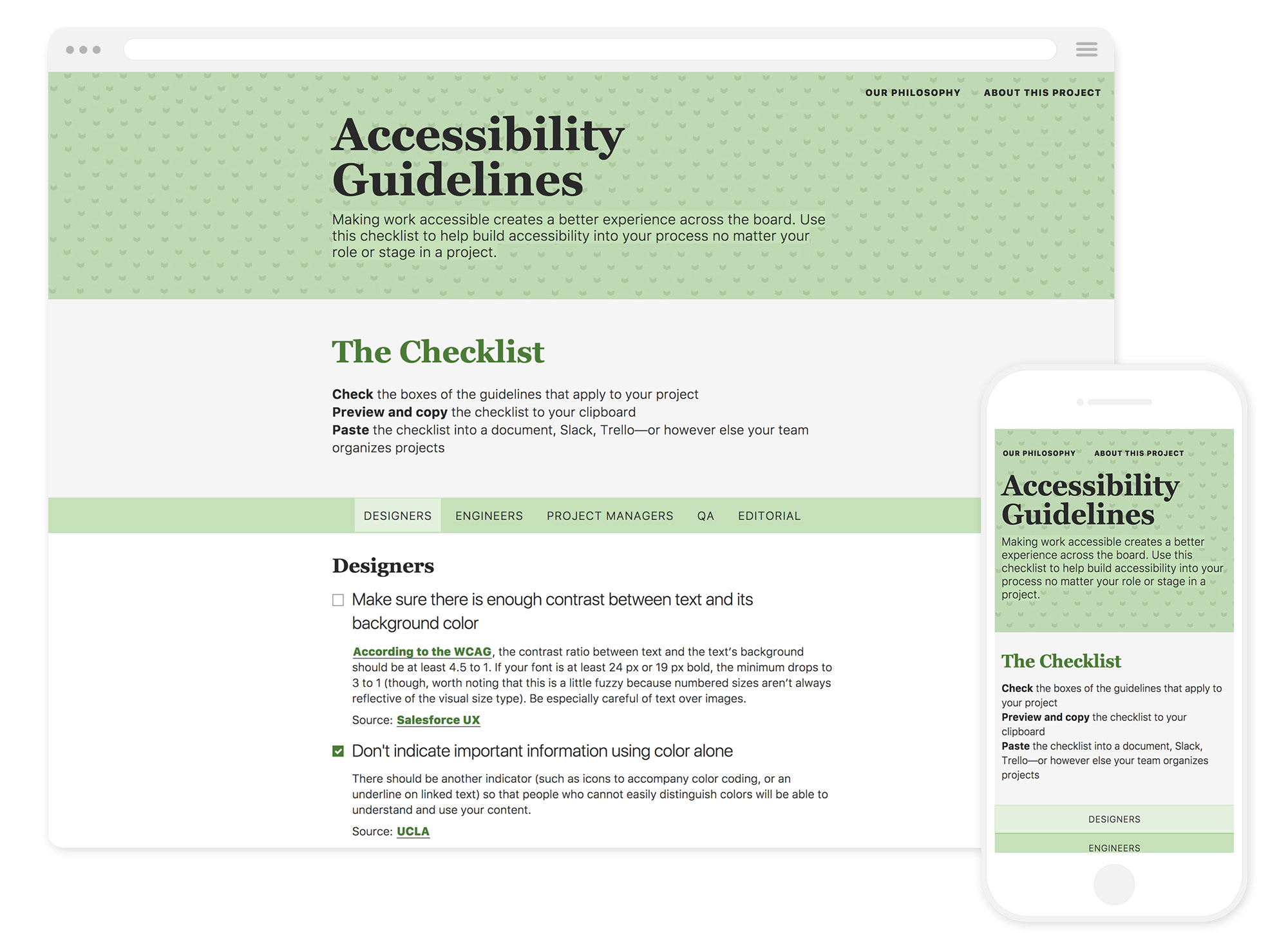
An accessibility policy is useless if your developers, designers, and content creators do not know how to implement it. Provide regular training on accessible coding practices, alt-text requirements for images, and how to create accessible documents. Accessibility should be a "definition of done" for every project.
Step 4: Continuous Monitoring
Accessibility is not a one-time project; it is a continuous state of maintenance. As new content is added and software updates are pushed, new accessibility barriers can emerge. Utilize automated monitoring services that scan your site regularly, but schedule annual or bi-annual manual audits to catch complex issues that automated tools often miss, such as logical reading order or keyboard trap nuances.
Common Mistakes and How to Avoid Them
Even well-intentioned organizations often fall into traps that undermine their accessibility efforts.
One of the most frequent errors is the use of accessibility overlays or widgets. These are third-party scripts that claim to fix accessibility issues automatically. In 2026, the consensus among the disability community and accessibility experts remains that overlays often make the experience worse for screen reader users and do not provide true legal protection. A genuine accessibility policy should focus on fixing the underlying source code rather than applying a superficial layer.
Another mistake is failing to update the policy. A policy written in 2022 that references WCAG 2.0 will appear outdated and may not satisfy modern legal requirements in a 2026 environment. Ensure your policy includes a "Last Updated" date and a commitment to annual reviews.
Finally, many organizations neglect third-party content. If your website relies on third-party plugins, video players, or payment gateways that are not accessible, your organization may still be held liable. Your policy should state that you are working with vendors to ensure their products meet your accessibility standards, and where possible, you should prioritize vendors who provide Voluntary Product Accessibility Templates (VPATs).
Frequently Asked Questions
What is the difference between an accessibility statement and an accessibility policy?
An accessibility statement is usually the public-facing page on a website that tells users about the site's accessibility features and how to get help. An accessibility policy is often a broader internal document that outlines the organization’s rules, responsibilities, and long-term strategy for maintaining those standards.
Does a small business need an accessibility policy?
Yes. In many jurisdictions, including the US under the ADA, there is no "small business exception" for digital accessibility. While the resources available for implementation may vary, the legal obligation to provide accessible services remains. A clear policy is a critical first step in demonstrating "good faith" effort toward compliance.
How often should we update our accessibility policy?
It is best practice to review your accessibility policy at least once a year. However, you should also update it immediately following any major website redesign, the adoption of new software standards (like a move from WCAG 2.1 to 2.2), or significant changes in regional legislation such as the EAA.
What should I do if someone reports an accessibility barrier?
Your policy should have a defined workflow for this. First, acknowledge the report immediately. Then, provide an alternative way for the user to access the information or service while you work on a permanent fix. Finally, track the issue through to resolution and inform the user once the barrier has been removed.
Is WCAG 2.2 Level AAA required for compliance?
Generally, no. Level AA is the standard required by almost all global laws. Level AAA is the highest level of accessibility and is often difficult to achieve for all content (such as complex data visualizations or certain types of video). While organizations are encouraged to meet AAA standards where possible, AA remains the legal benchmark in 2026.
Next Steps for Your Organization
To ensure your organization is fully protected and inclusive in 2026, you should immediately designate an Accessibility Lead or a dedicated committee. This individual or group should be responsible for overseeing the transition from a static policy to a living accessibility program.
Start by publishing your updated Accessibility Statement in a prominent location, such as your website footer. Simultaneously, initiate a formal audit of your most high-traffic digital paths—such as the checkout process or account registration—to ensure they meet WCAG 2.2 AA standards. By taking these proactive steps, you move beyond mere "checkbox compliance" and build a resilient digital presence that serves all users equally.