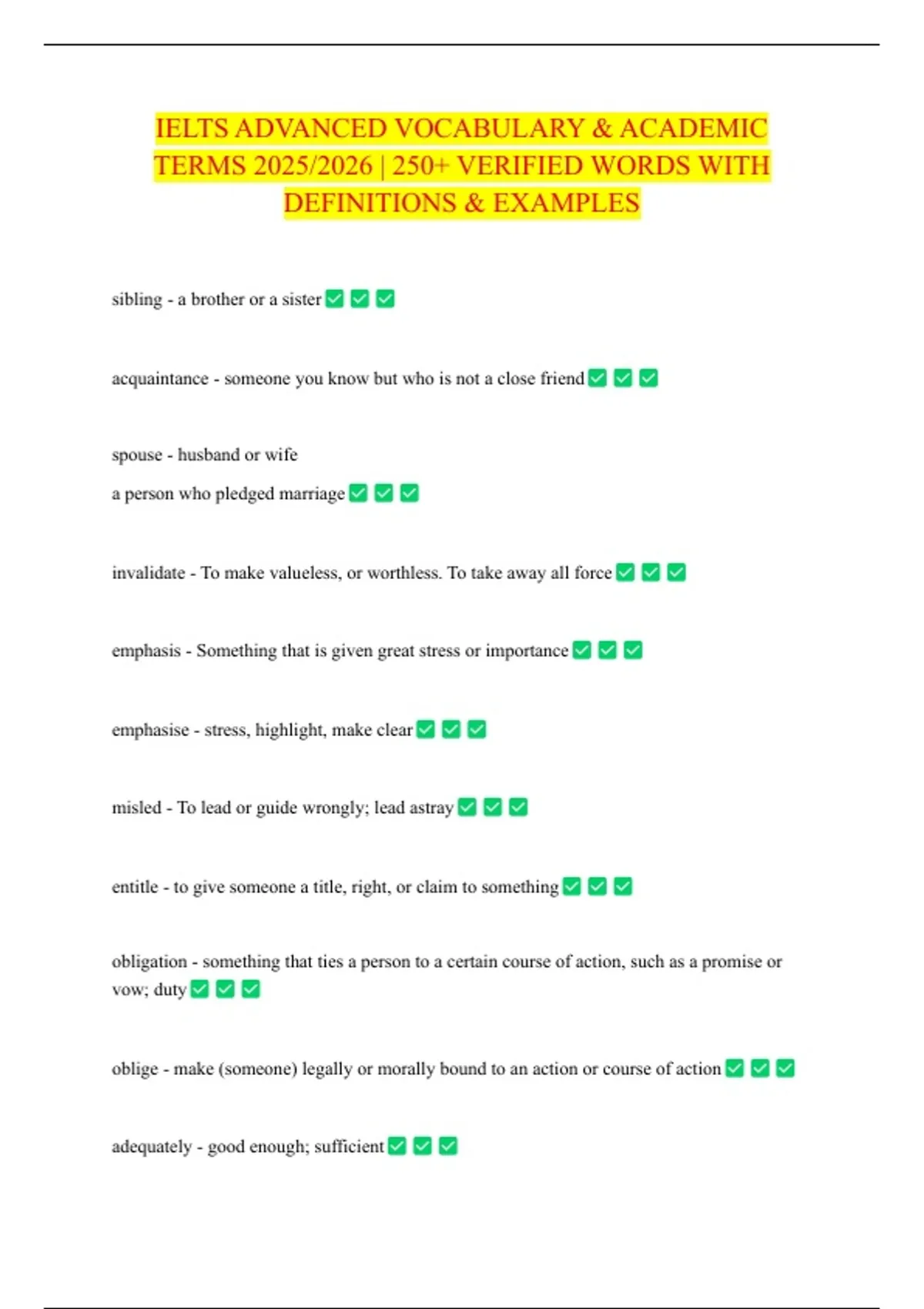
Academic terms encompass the specialized vocabulary, jargon, and methodological labels used across higher education and scholarly research. Mastering this lexicon allows students, researchers, and professionals to read literature critically, communicate complex concepts precisely, and navigate institutional frameworks effectively without ambiguity.
Understanding the Structure of Scholarly Language
Scholarly language serves as a precise tool for researchers to communicate intricate ideas, methodologies, and findings across specialized disciplines. Unlike conversational language, which relies on context and shared cultural assumptions, academic terms are deliberately designed to minimize ambiguity. They carry strict, historically situated definitions that remain consistent within a given field of study. When an economist refers to "liquidity" or a literary theorist discusses "hegemony," they invoke precise theoretical frameworks that shape how evidence is interpreted and evaluated.
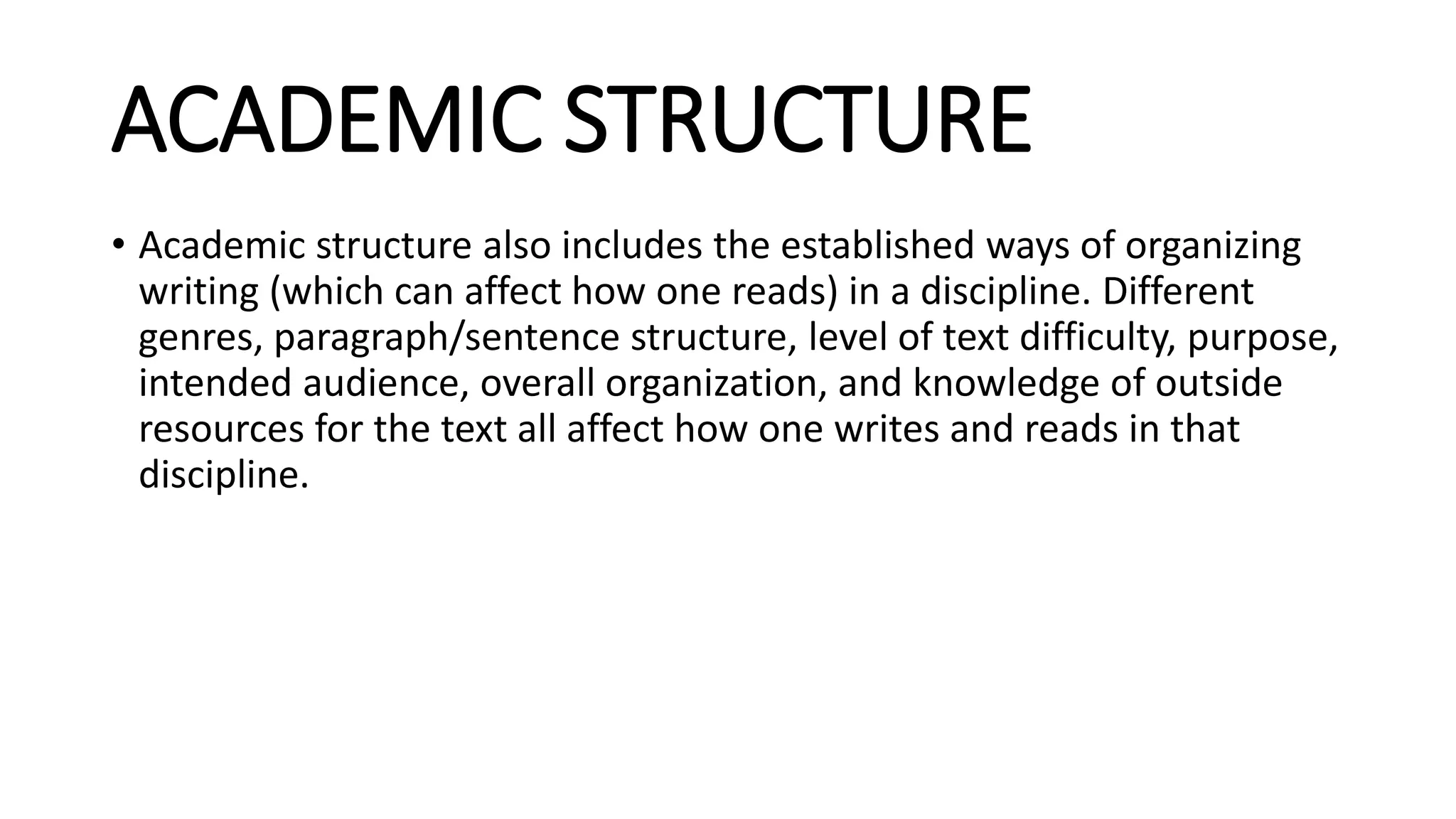
This linguistic precision is essential for peer review and academic integrity. By utilizing standardized terminology, researchers can build upon existing literature without having to redefine basic concepts in every paper. However, this specialized lexicon often creates a barrier to entry for newcomers. Transitioning into higher education or a new research domain requires learning not just new facts, but an entirely new mode of expression. Recognizing the etymology, context, and precise function of these terms is the first step toward true academic literacy.
Core Categories of Academic Vocabulary
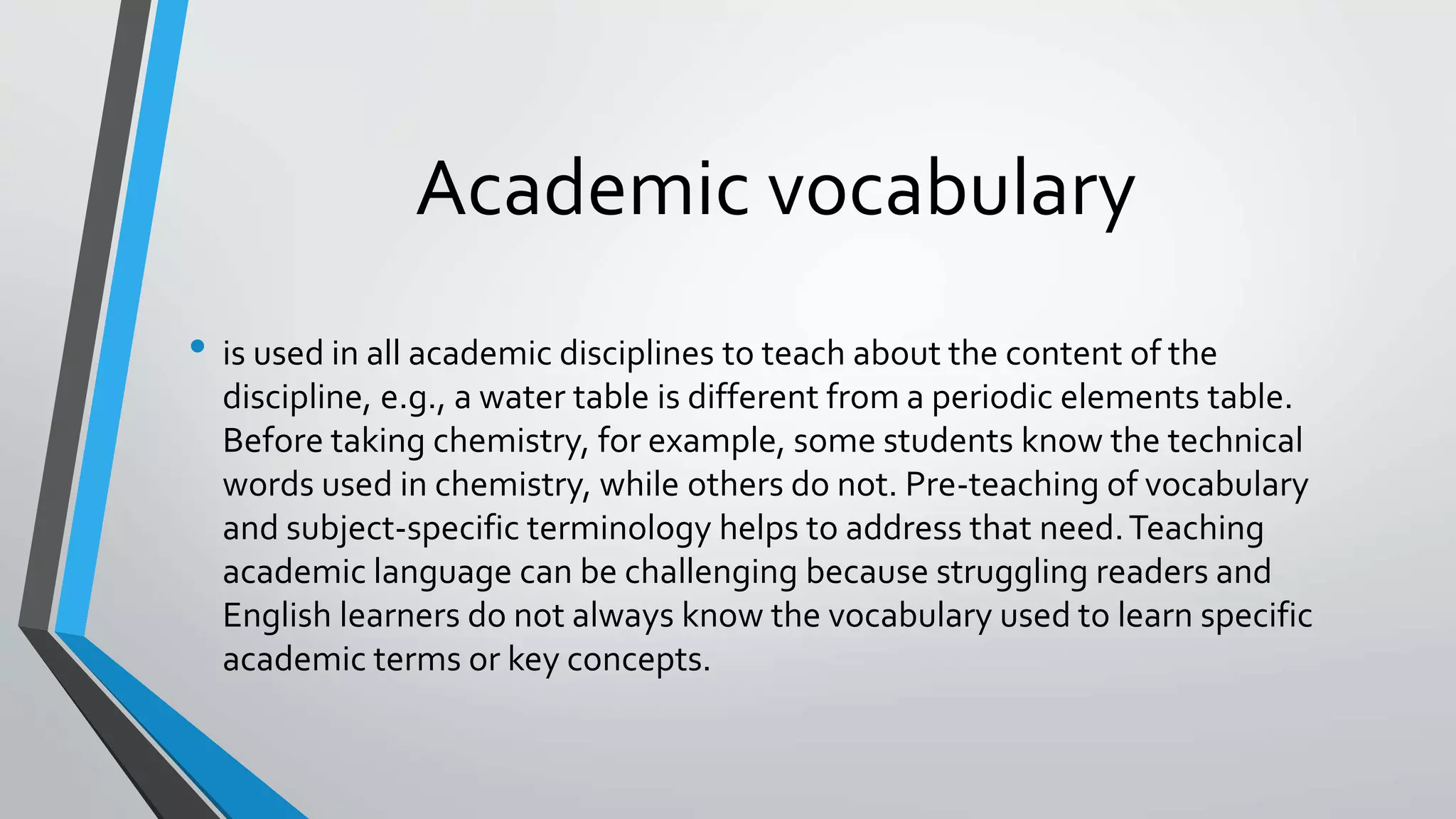
To navigate scholarly literature effectively, it helps to categorize academic terms into functional groups based on their usage. These groups typically span epistemological stances, methodological designs, rhetorical devices, and institutional structures. Understanding these categories prevents confusion when encountering unfamiliar texts across different disciplines.
Epistemological and Theoretical Concepts
Epistemological terms deal with the nature of knowledge, truth, and how we come to understand the world. Concepts such as ontology (the study of being), epistemology (the study of knowledge), and paradigm (a foundational framework or model) dictate the underlying assumptions of a research project. For instance, a quantitative study in the social sciences often operates within a positivist paradigm, assuming objective truths exist independently of the observer. Conversely, qualitative research may adopt a constructivist paradigm, arguing that reality is socially constructed and mediated through interpretation.
Methodological and Analytical Terms
Methodological vocabulary describes the tools, processes, and analytical frameworks used to gather and evaluate data. Terms in this category dictate the structural rigor of a study.
- Empirical: Based on observable, measurable evidence rather than theory or pure logic.
- Methodology: The overarching strategy and rationale for how a research project is conducted, distinct from the specific methods (e.g., surveys, interviews) used.
- Operationalization: The process of strictly defining measurable variables into measurable factors that can be observed and quantified.
- Triangulation: The practice of using multiple methods, data sources, or theoretical perspectives to corroborate research findings and enhance validity.
Rhetorical and Critical Vocabulary
Critical analysis requires a specific set of rhetorical terms designed to deconstruct arguments, identify logical fallacies, and evaluate textual evidence. Scholars use terms like juxtaposition, dichotomy, subtext, and critique not merely as stylistic flair, but as analytical instruments to expose underlying tensions within a text. A "critique," in academic terms, is not simply a negative review; it is a systematic, balanced evaluation that acknowledges both the strengths and structural limitations of a theoretical argument or empirical study.
Comparison of Common Academic and Everyday Meanings
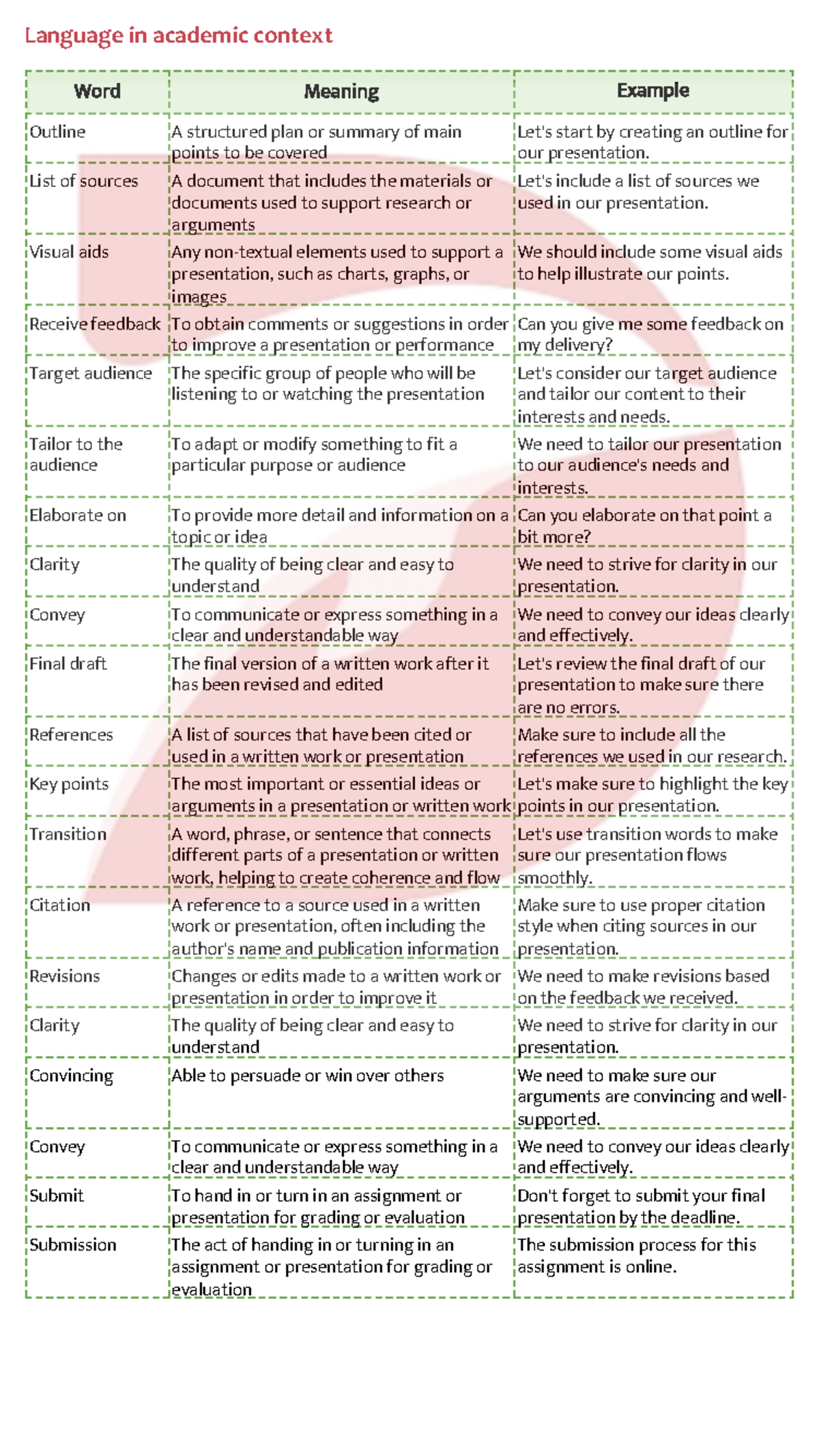
Many academic terms are borrowed from everyday language but acquire vastly different, highly constrained meanings in scholarly contexts. Misinterpreting these terms can fundamentally distort the findings of a research paper. The following table contrasts common academic terms with their everyday equivalents.
| Academic Term | Scholarly Definition | Everyday Meaning |
|---|---|---|
| Significant | Statistically meaningful; unlikely to have occurred by random chance (often denoted by $p < 0.05$). | Important, large, or consequential. |
| Theory | A well-substantiated explanation of an aspect of the natural or social world based on a body of evidence. | A hunch, guess, or unproven idea. |
| Argument | A reasoned series of propositions designed to establish a specific conclusion based on evidence. | A verbal disagreement or emotional dispute. |
| Correlation | A measurable relationship or association between two or more variables, without implying direct causation. | A direct connection or cause-and-effect link. |
| Discourse | Written or spoken communication structured by underlying power relations, ideologies, and institutions. | A casual conversation or speech on a topic. |
Methodological Terminology in Quantitative and Qualitative Research
The distinction between quantitative and qualitative research dictates an entirely separate vocabulary. Quantitative research relies heavily on mathematical, statistical, and computational techniques. Terms such as variable (independent and dependent), null hypothesis, statistical power, variance, and longitudinal study form the backbone of experimental design. A researcher must understand these terms to select appropriate statistical tests, such as ANOVA or regression analysis, and to interpret probability values correctly.
On the other hand, qualitative research focuses on understanding meaning, context, and lived experiences through non-numerical data. Its terminology reflects this interpretive orientation. Key terms include ethnography (the study of people and cultures through direct observation), phenomenology (examining lived experiences from the perspective of the subject), grounded theory (developing theory systematically from data), and saturation (the point in qualitative data collection when no new information or themes are observed). Misapplying these qualitative terms to quantitative frameworks—or vice versa—undermines the validity of a research proposal.
Navigating Institutional and Administrative Academic Terms
Beyond research and methodology, higher education operates under a distinct administrative lexicon. Navigating university structures, faculty hierarchies, and publication pathways requires fluency in institutional terminology.
- Peer Review: The evaluation of creative work or research by others working in the same field, serving as a quality-control mechanism prior to journal publication.
- Tenure: An indefinite academic appointment granted to professors after a probationary period, designed to protect academic freedom.
- Impact Factor: A scientometric metric calculated by Clarivate that reflects the yearly average number of citations to recent articles published in a specific academic journal.
- IRB (Institutional Review Board): An administrative body established to protect the rights and welfare of human research subjects recruited to participate in research activities.
Understanding these administrative processes ensures that researchers can successfully submit grant proposals, navigate human subjects protection protocols, and secure appropriate academic appointments.
Frequently Asked Questions About Academic Terms
What is the difference between primary and secondary sources in academic research?
A primary source is an original document, artifact, or data set created during the time under study, such as historical letters, raw survey data, or autobiographies. A secondary source analyzes, interprets, or synthesizes primary sources, such as scholarly monographs, review articles, and textbooks.
Why do academic writers use complex jargon instead of plain language?
Academic jargon provides a shorthand for complex theoretical concepts. When specialists communicate with one another, using precise terminology eliminates the need to re-explain foundational principles in every single sentence, thereby increasing communicative efficiency and analytical precision.
How can students effectively learn and retain unfamiliar academic vocabulary?
Students should maintain an active academic glossary, noting the etymology, disciplinary context, and practical usage of new terms encountered in course readings. Encountering terms across multiple contexts—such as lectures, primary literature, and seminar discussions—solidifies long-term comprehension.
What does peer-reviewed mean in the context of academic publishing?
Peer-reviewed means that an academic article or book manuscript has been rigorously evaluated by independent experts in the same academic discipline before publication. These reviewers assess the methodology, validity, and scholarly contribution of the work to ensure it meets rigorous academic standards.
How do I properly integrate academic terminology into my own writing without sounding pretentious?
Academic terms should be used purposefully to enhance clarity and precision, never as decorative fluff. If a simpler, everyday word communicates the exact same meaning without sacrificing nuance, it is usually preferred. Always ensure you fully understand a term's theoretical framework before deploying it in an essay or research paper.
Strategic Integration of Scholarly Vocabulary in Writing
Mastering academic terms is not merely an exercise in memorization; it is an acquisition of a professional dialect that empowers researchers to participate in global scholarly conversations. To apply these terms effectively, writers must prioritize precision, contextual appropriateness, and structural consistency. Begin by auditing your drafts for vague colloquialisms and replacing them with accurate methodological or theoretical counterparts. Consult recognized style manuals, such as the Publication Manual of the American Psychological Association (APA) or The Chicago Manual of Style, to ensure your terminology aligns with disciplinary standards. Through deliberate practice and critical reading, scholarly vocabulary transforms from an intimidating barrier into an indispensable tool for rigorous inquiry.