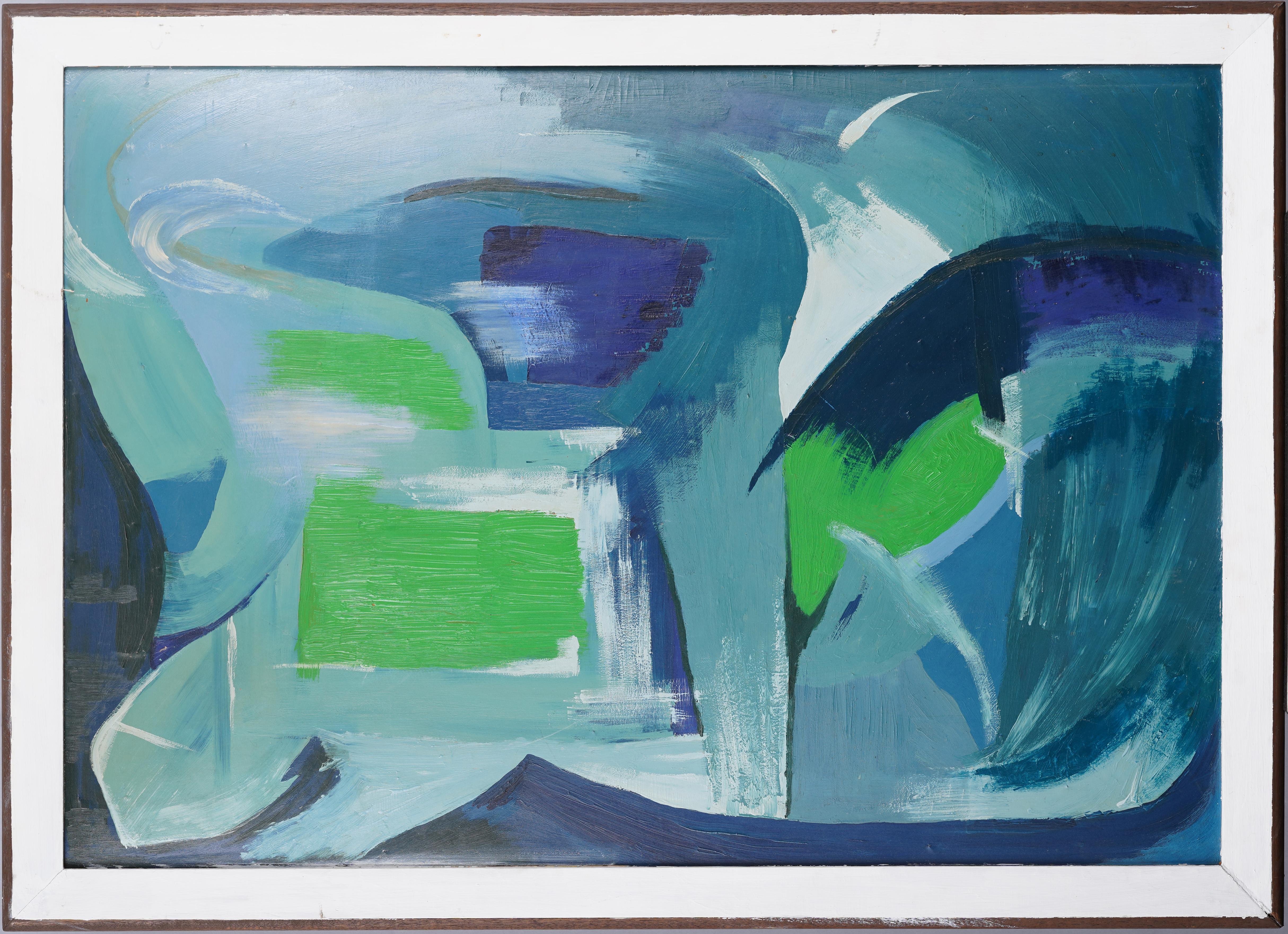
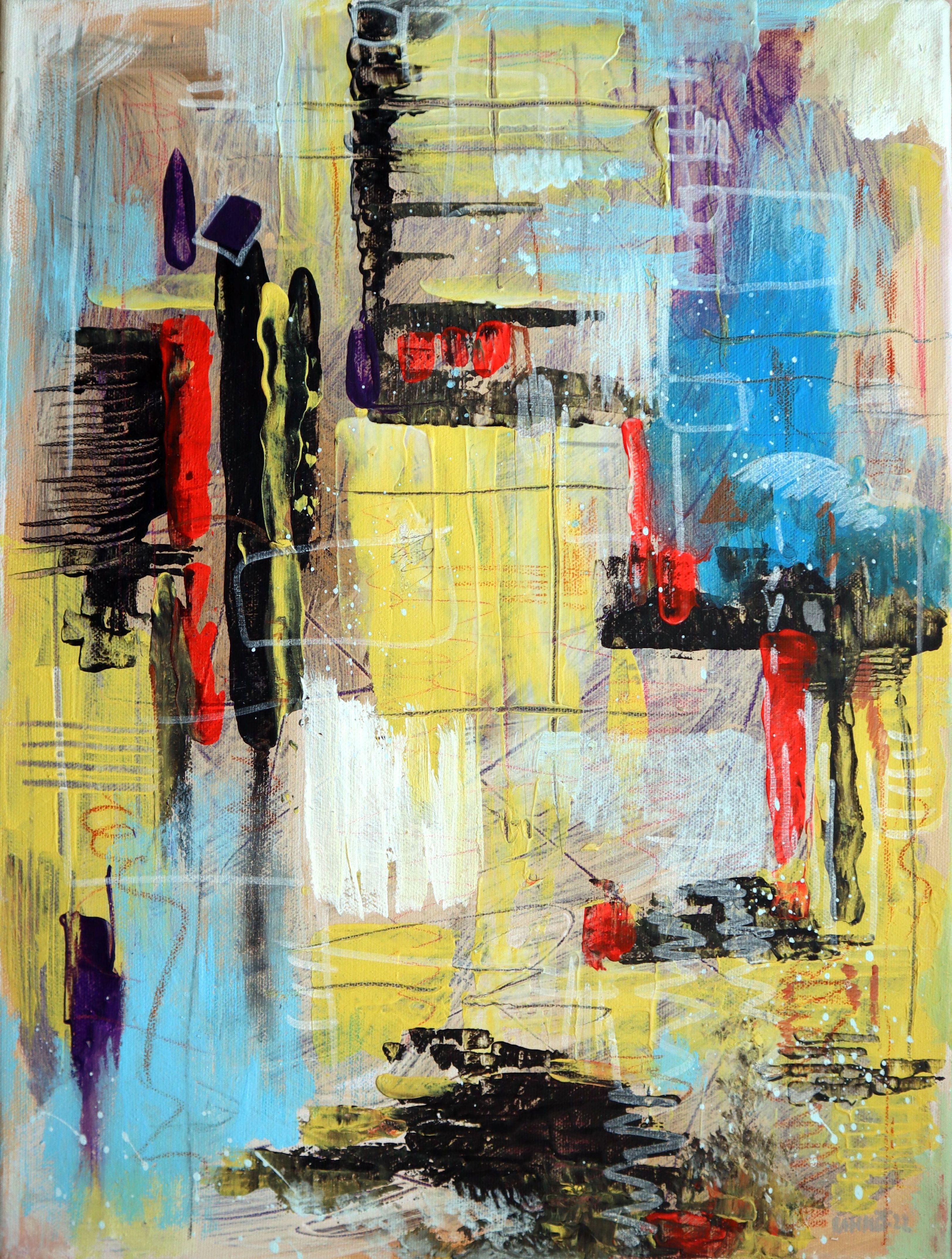
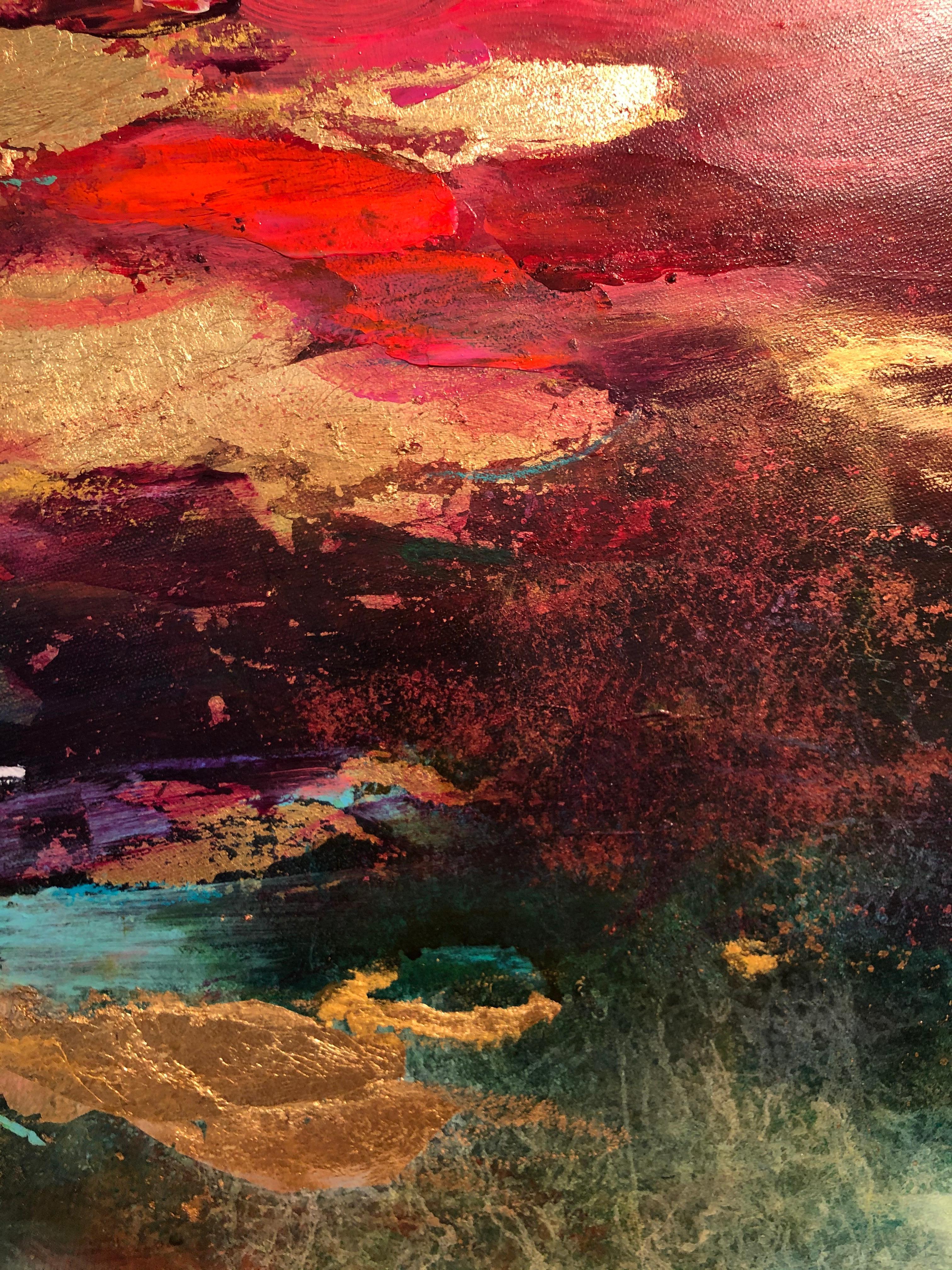
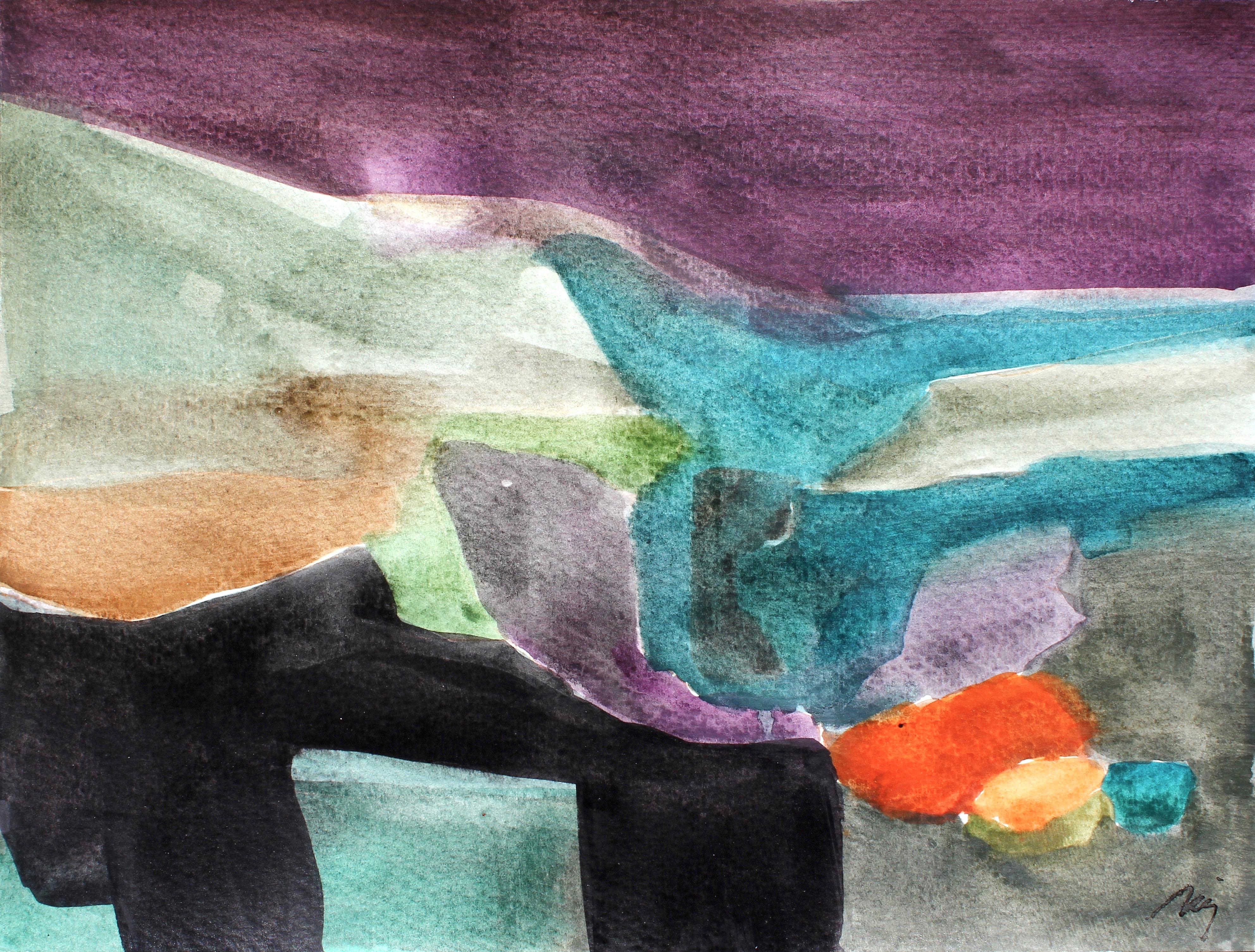
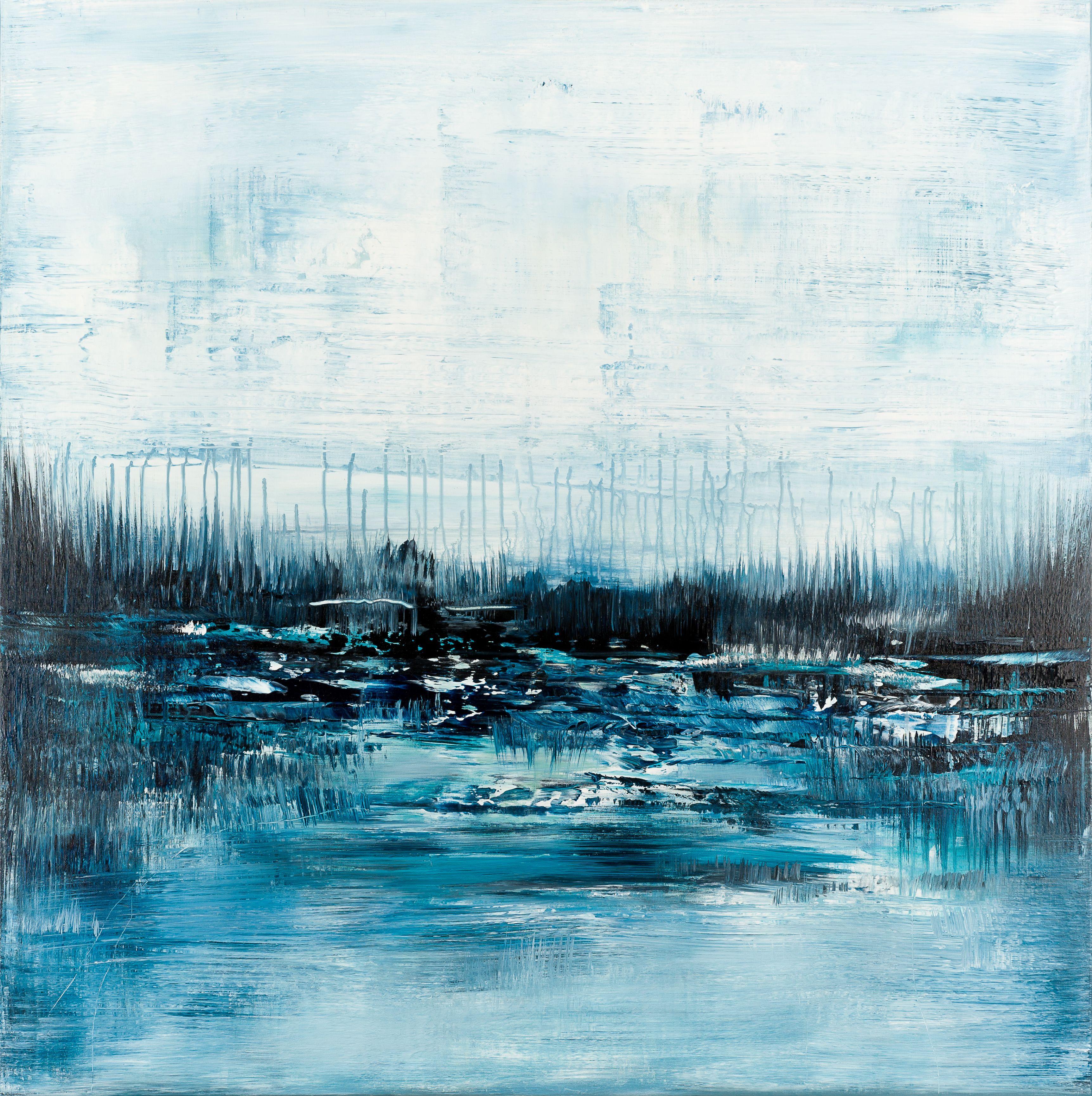
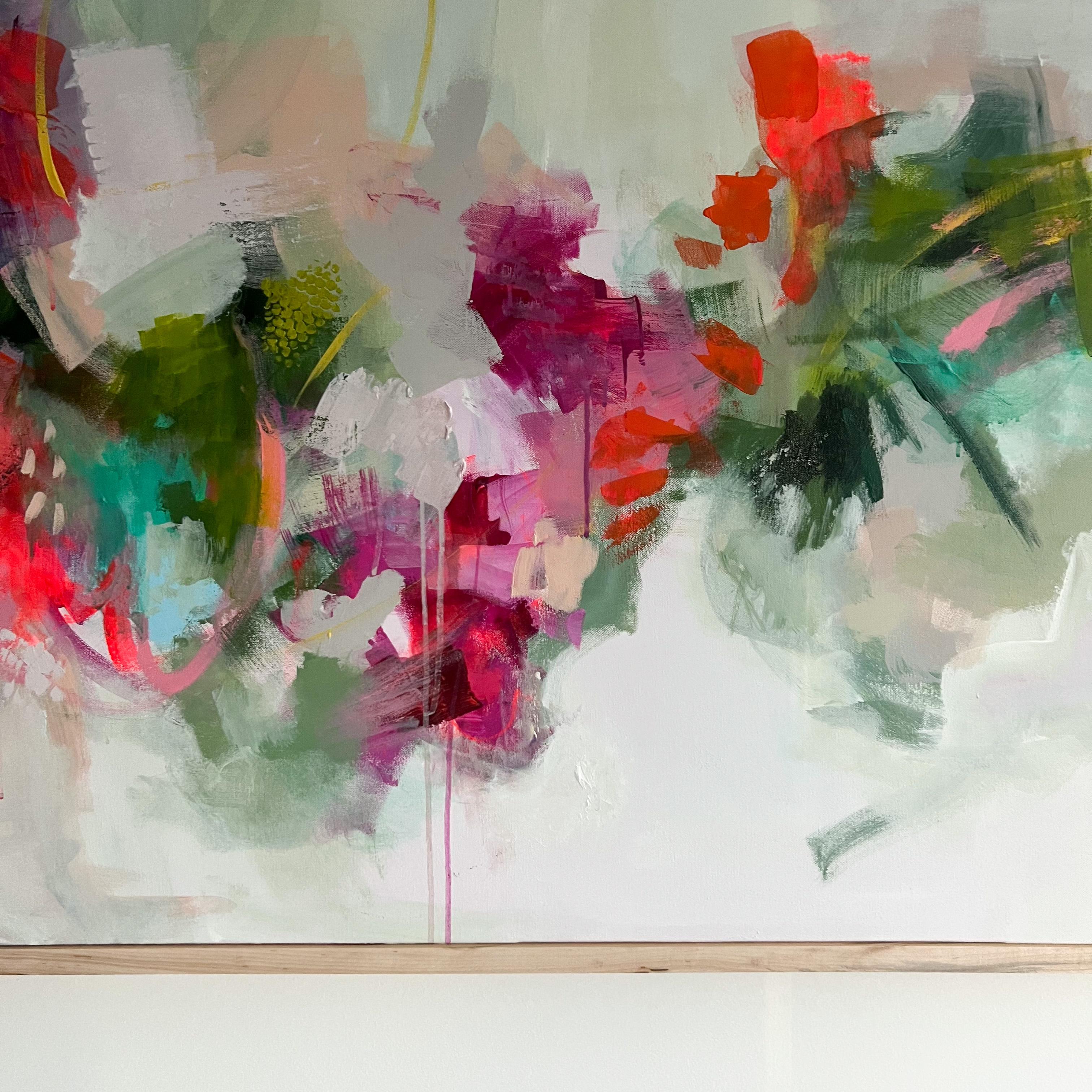
Abstract painting is a non-representational art form that uses shapes, colors, forms, and gestural marks to achieve its effect rather than depicting literal visual reality. By prioritizing emotional resonance and composition over figurative accuracy, it allows viewers to experience art through pure visual language, transcending the boundaries of traditional illustrative storytelling.
The Philosophy and Essence of Abstraction
To understand abstract painting, one must first recognize that it is not a singular "style" but rather a vast spectrum of artistic philosophies. At its core, abstraction seeks to strip away the "burden" of the object. For centuries, Western art was judged by its ability to mimic nature—a concept known as mimesis. However, the advent of photography in the 19th century relieved painters of the duty to record reality, paving the way for a revolutionary shift toward the internal world.
In 2026, the appreciation of abstract art has moved beyond the "my child could do that" skepticism of the previous century. We now view abstraction as a sophisticated dialogue between the artist’s intent and the viewer’s perception. The power of an abstract work lies in its ability to communicate through universal elements: the tension of a line, the weight of a color, and the rhythm of a brushstroke. This "universal language" allows the artwork to remain relevant across different cultures and eras because it does not rely on specific cultural symbols or recognizable figures.
There are two primary categories of abstraction that guide most discussions in the field:
- Non-objective Art: This is "pure" abstraction. It does not take its starting point from anything in the real world. The painting is about the paint, the canvas, and the geometric relationships.
- Representational Abstraction: Here, the artist begins with a subject from reality—such as a landscape or a human figure—and then simplifies, distorts, or exaggerates it until the original source is nearly unrecognizable.
Historical Foundations of the Abstract Movement
The journey toward total abstraction was a gradual process that accelerated in the early 20th century. While many credit Wassily Kandinsky with the first purely abstract painting around 1910, recent scholarship has highlighted the pioneering work of Hilma af Klint, a Swedish artist whose spiritualist paintings predated the recognized "fathers" of abstraction by several years. Her work, characterized by complex diagrams and ethereal color palettes, remained hidden from the public for decades but is now central to the history of the medium.
Following these pioneers, several distinct movements emerged that redefined the boundaries of art:
- Suprematism: Led by Kazimir Malevich, this Russian movement focused on "the supremacy of pure artistic feeling" rather than on the depiction of objects. His "Black Square" (1915) remains one of the most radical statements in art history.
- Abstract Expressionism: Emerging in New York after World War II, this movement shifted the art world’s epicenter from Paris to the United States. Artists like Jackson Pollock introduced "action painting," where the physical act of applying paint became the subject itself, while Mark Rothko explored "Color Field" painting to evoke deep, meditative emotions.
- Minimalism: In the 1960s and 70s, artists like Agnes Martin and Donald Judd stripped art down to its most basic elements, often using industrial materials and repetitive geometric forms to eliminate any trace of the artist's hand or emotional "theatrics."
By 2026, these movements are seen not as historical relics but as foundational frameworks that modern contemporary artists continue to deconstruct and recombine.
Technical Specifications and Mediums in Abstract Painting
The physical creation of an abstract work requires a deep understanding of material science and formal composition. Unlike figurative painting, where the subject might guide the composition, abstract painting relies entirely on the artist's command of technical elements.
Color Theory and Pigment Load
In abstraction, color is often the primary conveyor of meaning. Professional-grade paints are characterized by their pigment load—the ratio of pure pigment to binder (like linseed oil or acrylic polymer). High pigment loads allow for "vibrancy" and "lightfastness," ensuring the colors do not fade over time. Artists in 2026 frequently utilize synthetic organic pigments that offer neon-like intensities or metallic finishes that were unavailable to the early modernists.
Texture and Impasto
The "body" of the paint is crucial. Many abstract artists use impasto techniques, applying thick layers of paint that create a three-dimensional surface. This adds a tactile quality to the work, where shadows cast by the paint itself become part of the composition. Additives such as pumice, sand, or molding pastes are often mixed with the paint to vary the texture from glass-smooth to ruggedly architectural.
Gestural Marks and Tooling
The tools used in abstract painting extend far beyond the traditional brush. To achieve specific effects, artists may use:
- Squeegees: Popularized by Gerhard Richter to create "smeared" layers that reveal underlying colors.
- Palette Knives: For sharp, geometric applications and scraping.
- Pouring Mediums: To create fluid, "organic" shapes that look like biological or geological processes.
- Airbrushes: For seamless gradients and a "digital" or ethereal aesthetic.
Comparing Major Styles of Abstraction
The following table outlines the differences between the most prominent branches of abstract painting as they are categorized by collectors and curators in 2026.
| Style | Primary Focus | Key Visual Element | Notable Technique |
|---|---|---|---|
| Gestural Abstraction | The artist's physical movement | Energetic brushstrokes and drips | Action painting, rapid application |
| Geometric Abstraction | Order, logic, and mathematics | Clean lines, circles, and squares | Hard-edge painting, taping |
| Color Field | Emotional immersion | Large expanses of single colors | Soaking/staining canvas, thin layers |
| Lyrical Abstraction | Poetic and fluid expression | Soft, organic shapes and glows | Wet-on-wet blending, glazing |
| Tactile/Material | The physical nature of paint | Heavy texture and mixed media | Impasto, scraping, adding grit |
How to Interpret and Evaluate Abstract Works
Interpreting an abstract painting can be daunting for those accustomed to finding "the story." However, the goal of abstraction is often to bypass the analytical mind and speak directly to the subconscious. When viewing an abstract piece, consider the following three-step approach:
- The Formal Analysis: Look at the "building blocks." Is the composition balanced or intentionally chaotic? Are the colors harmonious (adjacent on the color wheel) or dissonant? Does the texture suggest violence or tranquility? These physical traits are the artist's vocabulary.
- The Emotional Response: Pay attention to how you feel in front of the work. Large-scale Color Field paintings often evoke a sense of awe or "the sublime," while sharp, jagged geometric works might create a sense of tension or urgency. There is no "wrong" emotion; the painting acts as a mirror to the viewer’s current state.
- The Contextual Background: While the work should stand on its own, knowing the artist's intent can provide deeper layers. For instance, an artist might be reacting to a political event or exploring a specific scientific concept like entropy or quantum mechanics.
In the current 2026 art market, "critical merit" is often tied to how an artist pushes the boundaries of these three steps, integrating traditional techniques with contemporary themes like digital fragmentation or environmental sustainability. More information on the evolution of these interpretations can be found through the Museum of Modern Art (MoMA).
The Economics of Abstract Art in 2026
The market for abstract painting remains robust in 2026, driven by both its decorative appeal and its status as a store of value. Unlike figurative art, which can fall out of fashion if the subject matter becomes "dated," high-quality abstraction tends to be timeless.
Valuation is typically determined by:
- Provenance: The history of ownership and exhibition.
- Material Quality: The use of archival-grade materials that ensure the painting's longevity.
- Scale: Large-scale works (over 60 inches) are often sought after for corporate lobbies and high-end residential projects, commanding significant premiums.
- Historical Significance: Whether the artist contributed a new "voice" or technique to the tradition of abstraction.
According to reports from major auction houses like Sotheby's, abstract works from the mid-20th century continue to break records, but there is a growing secondary market for contemporary "Neo-Expressionists" who bridge the gap between digital aesthetics and physical paint.
Frequently Asked Questions
What is the difference between abstract and non-objective art?
Abstract art usually takes a real-world subject and "abstracts" it, meaning it simplifies or distorts a person, place, or thing. Non-objective art does not start with a real-world reference at all; it is composed entirely of aesthetic elements like line and color for their own sake.
Why do some abstract paintings sell for millions if they look "simple"?
The value of an abstract painting often lies in its historical importance, the innovation of the technique, and the "purity" of the artist's vision. A "simple" painting like a Rothko is valued for its specific color vibrations and the way it revolutionized the viewer’s relationship with the canvas, not just the difficulty of the labor.
Can anyone learn to create abstract art?
While anyone can apply paint to a canvas, professional abstract painting requires a deep mastery of composition, color theory, and technical control. It is often more difficult than figurative painting because there are no "rules" of anatomy or perspective to hide behind; every mark must be intentional and contribute to the overall balance.
Is abstract painting still relevant in the age of AI and digital art?
Yes, and perhaps more so than ever. In 2026, the "tactile reality" of physical paint on canvas is highly valued as a counterpoint to digital perfection. The unpredictable nature of physical mediums—how oil dries, how gravity pulls a drip—provides a human element that is difficult to replicate authentically with algorithms.
How do I know when an abstract painting is finished?
Many artists describe the "finishing point" as a moment of visual equilibrium. It is the point where adding another mark would clutter the composition, and removing one would leave it feeling empty. It is a balance of tension and resolution that often comes from a deep, intuitive understanding of the medium.
Starting Your Journey with Abstract Painting
For those looking to engage more deeply with this medium—whether as a creator or a collector—the best next step is immersion. Visit contemporary galleries and focus on the physical presence of the works. Pay attention to how the light hits the texture and how the scale affects your perception. If you are an aspiring artist, start by experimenting with "limitations"—choose only two colors and one tool, and see how much variety you can create within those boundaries. This helps you understand the fundamental language of abstraction without getting overwhelmed by the infinite possibilities of the canvas.