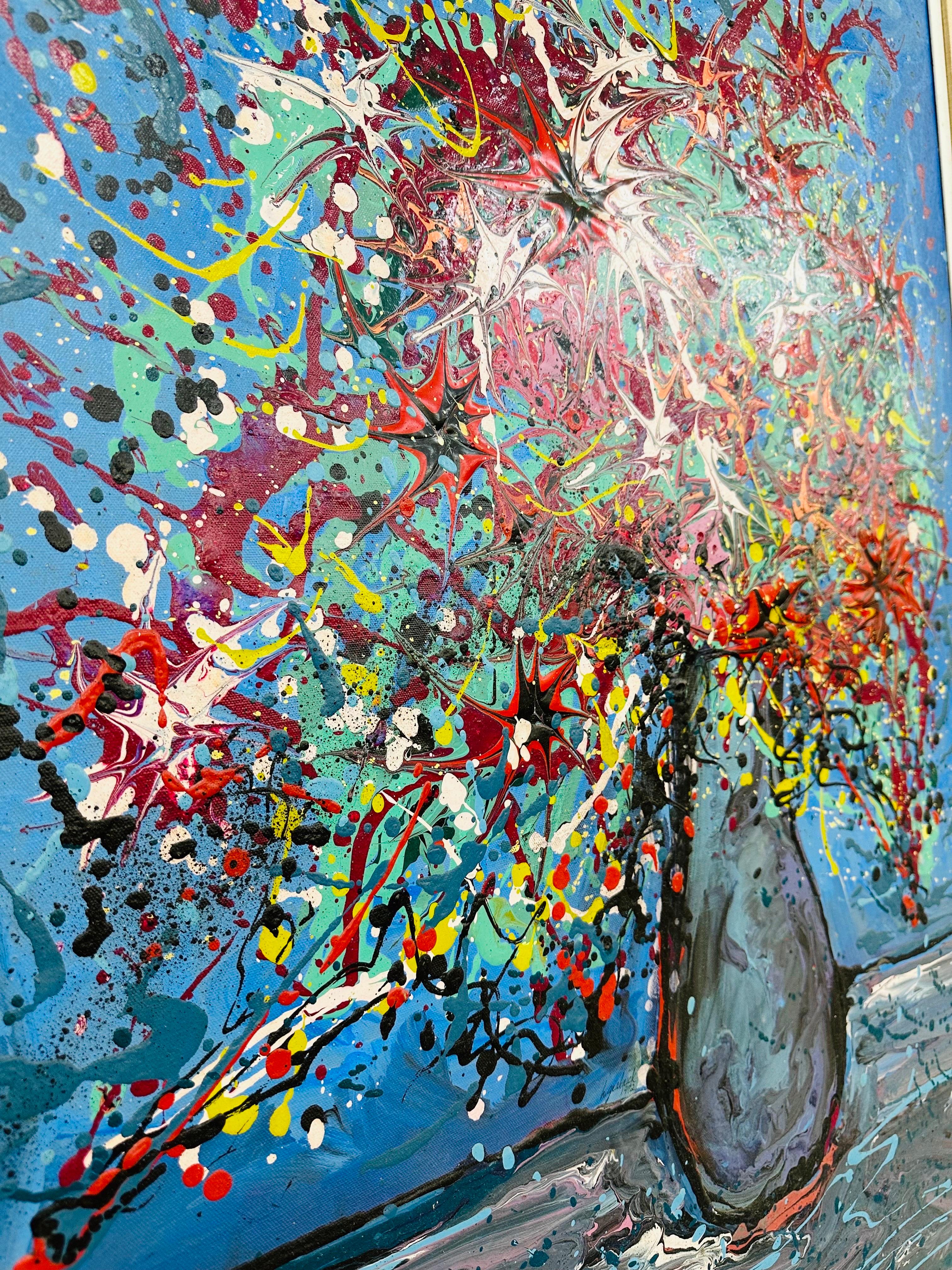
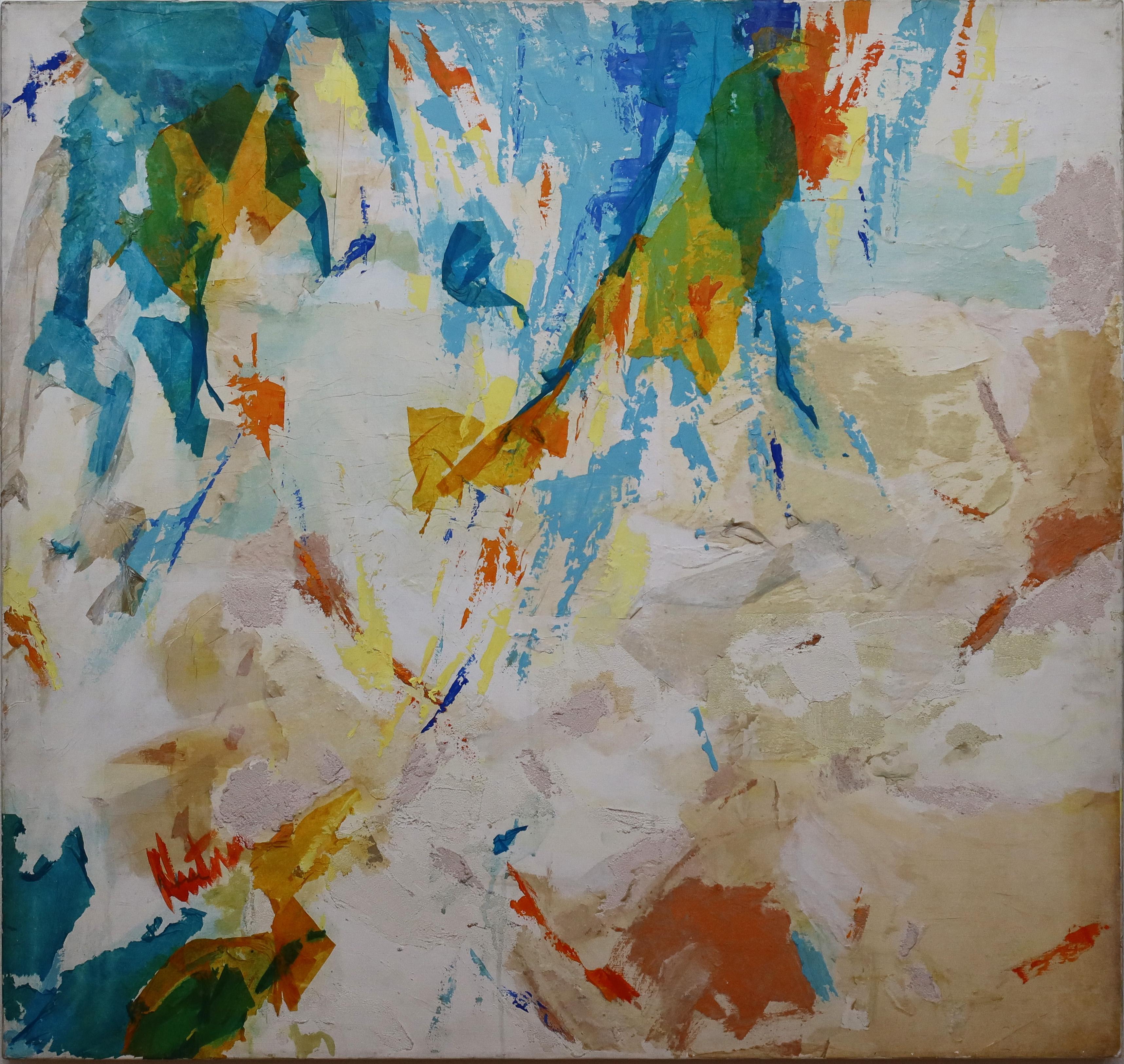
Abstract Expressionism is a post-World War II art movement characterized by its emphasis on spontaneous, subconscious creation and the use of non-representational forms to convey intense emotional or expressive content. Emerging in New York City during the 1940s, it shifted the center of the art world from Paris to the United States, introducing radical techniques like "action painting" and "color field" composition that continue to influence contemporary aesthetics in 2026.
The Historical Genesis of the New York School
The rise of Abstract Expressionism was not an isolated aesthetic event but a response to the profound global trauma of the 1930s and 1940s. Following the Great Depression and the horrors of World War II, a group of loosely associated artists in New York—later dubbed the "New York School"—sought a new visual language that could transcend traditional representation, which they felt was inadequate for expressing the modern human condition.
Several factors converged to facilitate this shift. First, the arrival of European Surrealists in New York, such as Max Ernst and André Breton, introduced American artists to the concept of automatism. This technique encouraged creators to suppress conscious control and allow the unconscious mind to guide the hand. Second, the influence of Hans Hofmann, a German immigrant and teacher, provided a formal bridge between European modernism (specifically Cubist structure) and the burgeoning American interest in color and energy.
By the mid-1940s, artists like Jackson Pollock, Willem de Kooning, and Mark Rothko began to abandon the figurative traditions of Social Realism and Regionalism. They viewed the canvas not as a window to a scene, but as an "arena in which to act," as critic Harold Rosenberg famously noted. This period marked the birth of the first specifically American movement to achieve international influence, effectively ending centuries of European dominance in the fine arts.
The Two Pillars: Action Painting vs. Color Field
While Abstract Expressionism is often treated as a monolith, it is fundamentally divided into two distinct stylistic branches: Action Painting and Color Field Painting. Understanding the technical and philosophical differences between these two is essential for any serious study of the movement.
Gestural Abstraction (Action Painting)
Action Painting emphasizes the physical act of creation. For artists like Jackson Pollock and Franz Kline, the process of applying paint was as significant as the finished product. Pollock’s "drip" technique involved laying a canvas on the floor and rhythmically pouring, splashing, and gesturing with industrial paints. This method broke the "easel" tradition, allowing the artist to engage with the work from all sides. The resulting textures—thick impasto, tangled lines, and visible drips—serve as a permanent record of the artist's physical movements and emotional state at the time of creation.
Chromatic Abstraction (Color Field)
In contrast, Color Field painters like Mark Rothko, Barnett Newman, and Clyfford Still focused on the expressive power of color and scale. Rather than aggressive, gestural marks, these artists used large, flat planes of color to create a sense of the "sublime." Rothko’s signature works, featuring rectangular bands of luminous color with soft, blurred edges, were intended to envelop the viewer in a meditative, even spiritual, experience. The goal was not to record a physical action, but to evoke a fundamental human emotion—tragedy, ecstasy, or doom—through pure optical sensation.
Key Figures and Their Radical Contributions
The movement was propelled by a core group of artists, each of whom brought a unique psychological and technical approach to the canvas. In 2026, their works remain among the most sought-after and analyzed pieces in global collections.
- Jackson Pollock: Often considered the face of the movement, Pollock’s "all-over" compositions eliminated a central focal point. This forced the viewer's eye to wander across the entire surface, creating a democratic distribution of visual weight that was revolutionary for the time.
- Willem de Kooning: Unlike Pollock, de Kooning often retained a vestigial connection to the human figure. His "Woman" series utilized violent, jagged brushstrokes and a garish palette to deconstruct the female form, blending traditional subject matter with the raw energy of abstraction.
- Mark Rothko: Rothko’s contribution was the democratization of spirituality. By removing recognizable symbols, he believed he could communicate directly with the viewer’s soul. He insisted that his paintings be hung low and in dim lighting to maximize their immersive quality.
- Helen Frankenthaler: A pivotal figure in the transition to late-period abstraction, Frankenthaler developed the "soak-stain" technique. By thinning oil paint with turpentine, she allowed the pigment to soak directly into the raw canvas, creating fluid, watercolor-like effects that influenced the next generation of Color Field painters.
- Lee Krasner: Despite being overshadowed by her husband (Pollock) for decades, Krasner was a formidable force in her own right. Her work is noted for its rhythmic, calligraphic quality and a sophisticated understanding of botanical and biological forms.
Technical Specifications and Comparative Analysis
The shift from traditional oils to industrial materials was a hallmark of the movement. Artists frequently utilized household gloss paint, aluminum paint, and large-scale industrial canvases to achieve effects that were impossible with standard artist supplies.
| Characteristic | Action Painting (Gestural) | Color Field (Chromatic) |
|---|---|---|
| Primary Goal | Recording physical energy/process | Evoking emotional "sublime" |
| Key Artists | Pollock, de Kooning, Kline | Rothko, Newman, Still |
| Application Style | Splashing, dripping, vigorous brushing | Thin washes, large flat planes, staining |
| Visual Texture | Thick impasto, tangled layers | Smooth, luminous, atmospheric |
| Canvas Orientation | Often worked on the floor | Typically worked on the wall |
| Viewer Relationship | Analysis of movement and rhythm | Immersive, meditative experience |
The Philosophy of the Unconscious and Existentialism
To understand Abstract Expressionism, one must look beyond the paint to the intellectual climate of the mid-20th century. The movement was deeply influenced by Jungian psychology and Existentialist philosophy.
Many artists in the New York School were fascinated by Carl Jung’s theory of the collective unconscious. They sought to tap into universal archetypes—symbols and myths that reside in the human psyche—to create art that was universally relatable despite its lack of literal imagery. Barnett Newman’s "zips" (vertical lines of color), for instance, were intended as symbols of human presence and the act of creation itself.
Simultaneously, the existentialist writings of Jean-Paul Sartre and Albert Camus resonated with these artists. In a world that seemed increasingly absurd and fragmented, the act of painting became an assertion of individual existence. Each mark on the canvas was a choice, a manifestation of the "self" in the face of nothingness. This explains the often-solemn, high-stakes tone of the movement; for these painters, art was not decoration, but a matter of life and death.
Identifying Authentic Abstract Expressionist Works
For collectors and students in 2026, identifying the hallmarks of the movement requires an eye for both formal elements and historical context. Authentic works from this era typically exhibit several key traits:
- Scale: Most Abstract Expressionist paintings are large-scale. This was intended to overwhelm the viewer’s peripheral vision, ensuring that the painting was an environment rather than just an object.
- Surface Integrity: Whether through the thick, sculptural layers of a de Kooning or the stained fibers of a Frankenthaler, the physical reality of the canvas and paint is never disguised. There is no attempt at "trompe l'oeil" or illusionistic depth.
- Spontaneity vs. Control: While the works appear spontaneous, they are rarely accidental. Most artists spent hours or days contemplating a single move. Look for the balance between raw impulse and compositional rigor.
- Absence of Center: The "all-over" composition style means the edges of the painting are just as important as the middle. This was a radical departure from the centered compositions of the Renaissance and Baroque periods.
Legacy and Contemporary Relevance in 2026
As of 2026, Abstract Expressionism remains a cornerstone of the global art market and academic study. Its legacy is visible in the work of contemporary artists who use digital tools to mimic gestural fluidity, as well as in the continued high valuation of original works at major auction houses like Sotheby's and Christie's.
The movement’s greatest contribution was the liberation of the artist’s hand. It established that art did not have to "look like" something to be "about" something. By prioritizing the emotional and the experiential over the literal, Abstract Expressionism paved the way for every major movement that followed, from Minimalism and Process Art to the Neo-Expressionism of the 1980s and the immersive digital installations of the 2020s.
Frequently Asked Questions
What is the most famous example of Abstract Expressionism?
Jackson Pollock's "Autumn Rhythm (Number 30)," painted in 1950, is widely considered the quintessential example of the movement. It perfectly illustrates the "drip" technique, the all-over composition, and the monumental scale that defined the era. The work is currently housed at the Metropolitan Museum of Art.
Is Abstract Expressionism still relevant for new artists today?
Yes. Many contemporary artists in 2026 use the "process-oriented" approach of the New York School to explore new mediums. While the historical movement ended in the late 1950s with the rise of Pop Art, its core philosophy—that the medium itself can be the subject—remains the foundation of much of today's non-representational art.
Did the movement include female artists?
Absolutely. While historical narratives once focused almost exclusively on men like Pollock and Rothko, contemporary art history has rightfully elevated women like Lee Krasner, Helen Frankenthaler, Joan Mitchell, and Elaine de Kooning. These women were central to the movement’s development and contributed critical technical innovations like the "soak-stain" method.
How did the Cold War affect the movement?
There is significant evidence that the U.S. government, particularly the CIA, promoted Abstract Expressionism internationally as a symbol of American freedom and intellectual creativity. This was used as a cultural counterpoint to the "Socialist Realism" mandated by the Soviet Union, which was seen as rigid and propagandistic.
Where can I see major collections of Abstract Expressionist art?
The most comprehensive collections are located in New York City at the Museum of Modern Art (MoMA), the Solomon R. Guggenheim Museum, and the Whitney Museum of American Art. Internationally, the Tate Modern in London and the Centre Pompidou in Paris hold significant works from the movement.
Recommendation for Further Engagement
To truly appreciate Abstract Expressionism, one must experience the works in person. The scale and texture of a Rothko or a Pollock cannot be accurately conveyed through a screen or a printed page. If you are beginning your journey into this movement, start by visiting a major regional museum and standing within three feet of a large-scale abstract work. Allow your eyes to lose focus slightly and notice how the colors or lines begin to shift and vibrate. This "active looking" is precisely what the artists intended—it moves the experience from a passive observation to a personal, emotional encounter.