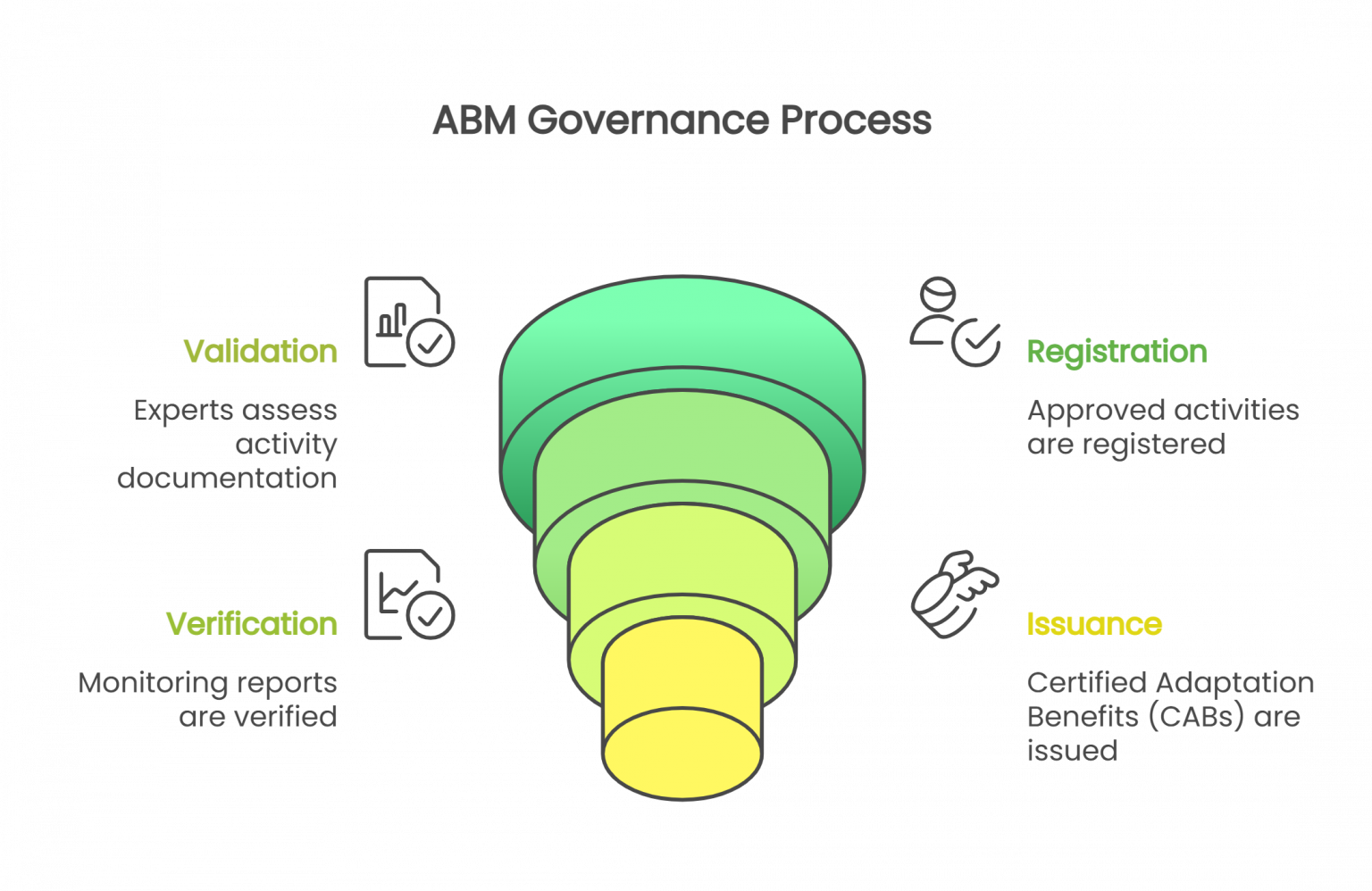
ABM execution is the process of coordinating personalized marketing and sales efforts to engage specific high-value accounts. It involves identifying an Ideal Customer Profile (ICP), selecting target accounts, and deploying tailored multi-channel campaigns designed to build relationships and accelerate the sales cycle within those defined organizations.
Defining the Core Components of ABM Execution
The execution phase of Account-Based Marketing (ABM) is where strategic planning meets operational reality. While the concept of targeting specific accounts has existed for decades, modern ABM execution in 2026 relies on the seamless integration of high-fidelity data, automated orchestration, and human-led sales outreach. It is not merely a marketing tactic but a revenue-centric philosophy that requires total alignment between marketing, sales, and customer success teams.
To execute effectively, a firm must move away from "lead generation"—which prioritizes quantity—toward "account penetration," which prioritizes the quality and depth of engagement within a buying committee. A typical B2B buying committee now averages 11 to 20 stakeholders, according to recent industry benchmarks. Execution, therefore, involves identifying these stakeholders and delivering specific messages that address their unique pain points, departmental goals, and psychological triggers.
Successful execution is characterized by orchestration. This means that a display ad, a direct mail piece, and a sales professional’s LinkedIn message are not disparate events; they are timed and sequenced to create a unified brand experience. Without this orchestration, ABM efforts often devolve into expensive, fragmented campaigns that fail to move the needle on pipeline velocity.
Establishing the Foundation: ICP and Target Account Selection
Before any campaign can be launched, the execution must be anchored in a robust Ideal Customer Profile (ICP). In 2026, an ICP is no longer just a list of industries and revenue brackets. It incorporates technographic data (what software they use), intent signals (what they are searching for), and firmographic shifts (recent mergers or leadership changes).
The transition from an ICP to a Target Account List (TAL) is a critical execution step. This list should be tiered based on the potential lifetime value (LTV) and the probability of conversion.
- Tier 1 Accounts: These receive "One-to-One" treatment. Execution involves bespoke research, custom-built landing pages, and personalized gift-giving or executive briefings.
- Tier 2 Accounts: These follow a "One-to-Few" model. Execution groups accounts by specific sub-industries or shared pain points, allowing for "templated personalization."
- Tier 3 Accounts: These are "One-to-Many." Execution utilizes programmatic advertising and automated email sequences that still feel personalized through dynamic content insertion.
Execution fails most often when the TAL is too large for the available resources. A common rule of thumb for 2026 is that a single Account Executive (AE) should focus on no more than 10-15 Tier 1 accounts at any given time to maintain the necessary depth of engagement.
Orchestrating Multi-Channel Campaigns for Maximum Impact
Effective ABM execution requires a multi-touch, multi-channel approach. B2B buyers rarely convert after a single interaction; they require a "surround sound" effect where your brand appears across various platforms in a non-intrusive, helpful manner.
The first layer of orchestration is usually IP-based programmatic advertising. By targeting the specific IP ranges of a target company, marketing can ensure that only employees of that company see their digital ads. This minimizes waste and builds "air cover" for the sales team. As the account shows increased engagement, the execution shifts to more direct channels.
Direct Mail and Gifting have seen a resurgence in 2026 as digital channels become increasingly crowded. Executing a direct mail campaign involves sending a physical item—such as a high-quality industry report, a personalized book, or a useful tech gadget—to a key decision-maker. This is most effective when the physical item is synchronized with a digital follow-up. For instance, an automated alert is sent to the salesperson the moment the package is marked as "delivered," prompting a timely phone call or email.
Social Selling is the final, human layer. Marketing supports this by providing sales teams with "pre-approved" but customizable content to share on platforms like LinkedIn. This ensures the messaging remains consistent with the broader campaign while allowing the salesperson to build a personal rapport with the prospect.
Leveraging AI and Real-Time Intent Data in 2026
By 2026, the use of Artificial Intelligence (AI) and Machine Learning (ML) has become the backbone of ABM execution. Intent data—which tracks the digital footprints of organizations across the web—allows teams to prioritize accounts that are actively in a "buying window."
Execution is now "triggered" rather than "scheduled." For example, if three different directors at a target account visit a specific pricing page or download a whitepaper within 48 hours, the ABM platform automatically triggers a Tier 1 play. This might include:
- Increasing ad spend for that specific account.
- Notifying the dedicated Account Executive via Slack or CRM.
- Deploying an automated "highly relevant" email sequence to the mid-level managers at that firm.
AI also assists in Predictive Personalization. Instead of marketing teams guessing which content will resonate, AI models analyze historical data to suggest the specific case study or ROI calculator most likely to influence a particular stakeholder based on their role and the account's previous behavior. This level of precision reduces the "content waste" that traditionally plagued B2B marketing.
Content Strategy: Moving Beyond Generic Personalization
In the context of ABM execution, content is the fuel. However, generic content will stall a high-value campaign. The shift must move from "What we do" to "What we do for YOU."
Execution involves mapping content to the Account Journey. At the awareness stage, content should focus on industry-wide challenges and thought leadership. As the account moves into the consideration phase, content must become highly specific. For a Tier 1 account, this might mean creating a personalized video where a product expert discusses how their solution integrates with the prospect’s current tech stack (identified through technographic data).
One of the most effective execution tactics is the creation of Value-Based Hubs or personalized microsites. These are dedicated web pages built for a single target account containing resources specifically curated for their needs. This provides a central location for the buying committee to share information internally, making it easier for them to build a business case for your solution.
Measuring Performance: Beyond Leads to Revenue Impact
The execution of ABM requires a different set of metrics than traditional demand generation. Because the goal is account-level success, measuring "clicks" or "individual leads" provides an incomplete picture.
The primary KPI for ABM execution is Account Engagement. This is a composite score that measures how many stakeholders from a target account are interacting with your brand, how frequently, and at what depth. A high engagement score from multiple departments (e.g., IT, Finance, and Operations) is a much stronger indicator of a pending sale than a single "hot lead" from a junior manager.
Pipeline Velocity is another critical metric. ABM is designed to shorten the sales cycle by aligning marketing and sales early in the process. If execution is successful, the time it takes for an account to move from "Qualified" to "Closed-Won" should decrease. Additionally, ABM accounts typically yield a higher Average Contract Value (ACV) because the personalized approach allows for better positioning of premium features and services.
| ABM Execution Tier | Target Account Volume | Personalization Level | Primary Channels | Typical Resource Investment |
|---|---|---|---|---|
| Strategic (1:1) | 1 - 50 | Completely Bespoke | Exec Briefings, Custom Direct Mail, Dedicated Microsites | High (Significant Man-Hours) |
| ABM Lite (1:Few) | 50 - 500 | Moderately Tailored | Industry Webinars, Segmented Ads, Personalized Email | Moderate (Blend of Auto/Manual) |
| Programmatic (1:Many) | 500 - 5,000+ | Dynamically Generated | IP-Targeted Ads, Automated Sequences, Dynamic Web Content | Low to Moderate (Tech-Driven) |
Avoiding Common Execution Failure Points
Even the best-planned ABM strategies can fail during the execution phase due to a few common pitfalls. The most frequent is a Data Silo issue. If the sales team is using one data source and marketing is using another, the execution will be disjointed. Successful teams utilize a "Unified Revenue Profile" where all interactions—from ad clicks to sales calls—are recorded in a single source of truth.
Another failure point is Over-Automation. While AI and automation are essential for scale, relying too heavily on them for Tier 1 accounts can make the brand feel robotic. Human intervention—a handwritten note, a thoughtful comment on a prospect's recent article, or a tailored executive-to-executive outreach—remains the most powerful tool in the ABM arsenal.
Lastly, many teams fail to account for Sales Follow-Up. Marketing can spend thousands of dollars warming up an account, but if the sales team does not have the capacity or the context to follow up when the "intent signals" are high, the execution chain is broken. This is why weekly "Account Progress" meetings between marketing and sales are non-negotiable for high-performing ABM teams.
FAQ
How do I start ABM execution if I have a small team?
Focus on a "Pilot Program" with a very small list of accounts (e.g., 5-10). Execute a 1:1 strategy for these few accounts using manual research and personalized outreach. This allows you to prove the ROI of the approach before investing in expensive ABM orchestration software.
What is the difference between ABM and lead generation?
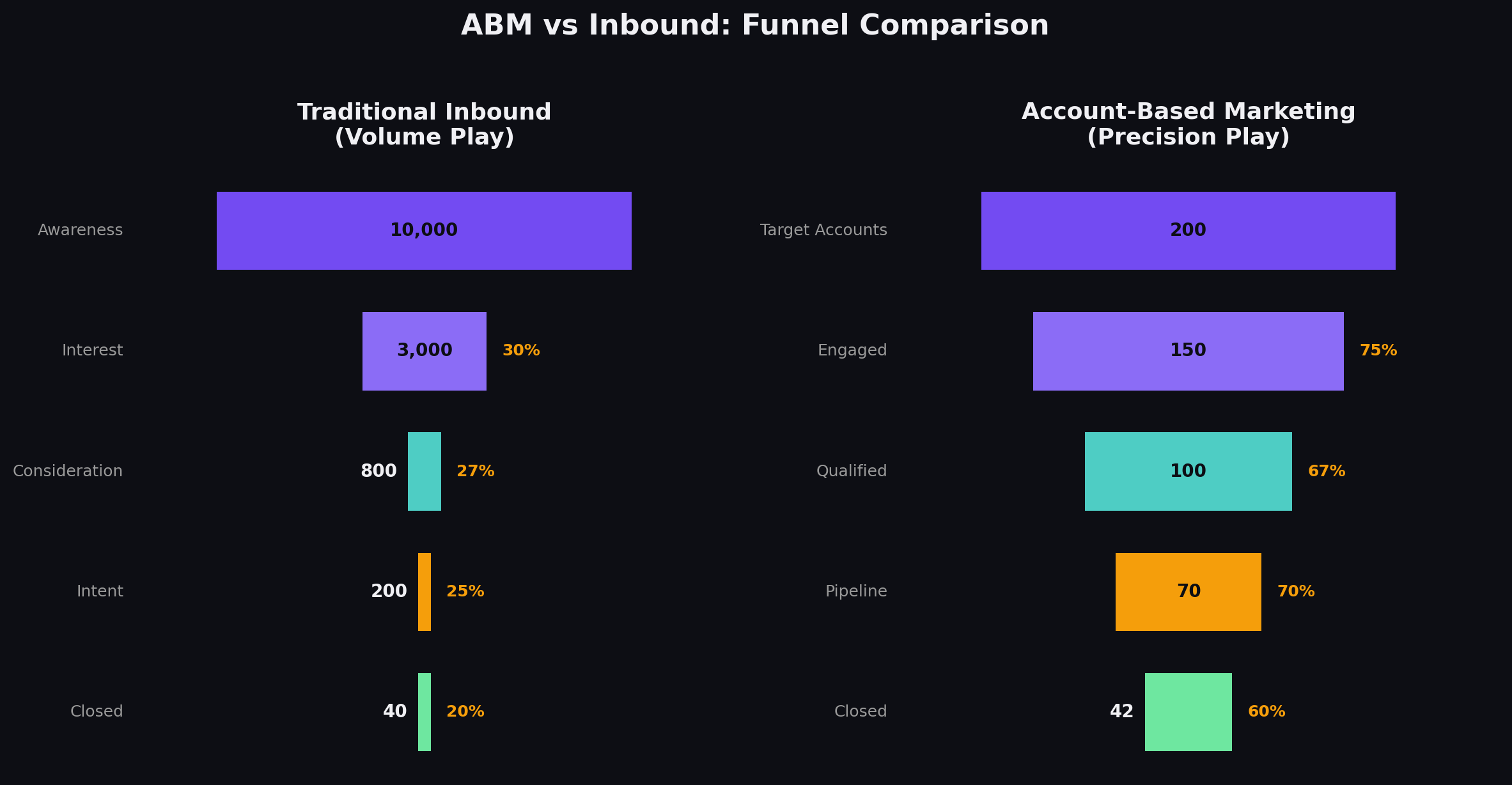
Traditional lead generation focuses on attracting a high volume of individual contacts through broad content. ABM execution focuses on identifying the specific companies you want to win and then proactively reaching out to all relevant stakeholders within those companies with tailored messaging.
How long does it take to see results from ABM execution?
Because ABM typically targets larger, more complex accounts, the results may take longer to materialize than traditional lead gen. However, you should see "leading indicators" such as increased account engagement and meetings booked within the first 3-6 months.
Do I need a specific tech stack for ABM?
While specific platforms like 6sense or Demandbase facilitate execution at scale, the core of ABM is strategy. At its most basic level, you can execute ABM using a standard CRM, LinkedIn, and a well-aligned sales and marketing team.
How do I get Sales to buy into the ABM execution process?
Involve Sales in the Target Account Selection phase. If Sales helps choose the accounts, they are more likely to be committed to the follow-up. Show them how ABM provides "warm" accounts with deep insights, making their job of closing deals significantly easier.
Developing an Operational ABM Roadmap
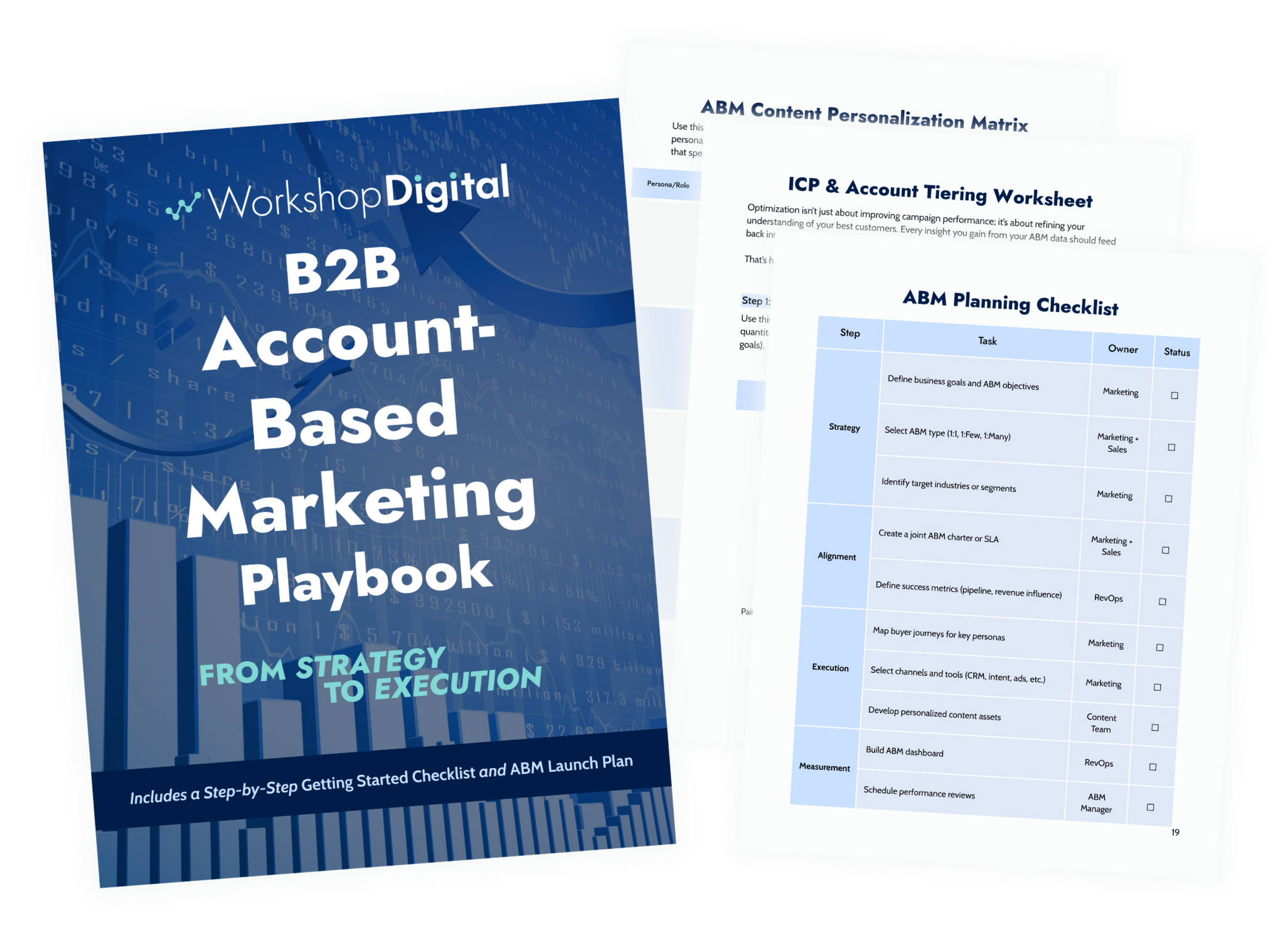
The transition to effective ABM execution is an iterative process. To move forward, start by conducting an Audit of your current Data Quality. Accurate contact data and firmographic insights are the prerequisites for any targeting efforts. If your data is outdated, your ads will reach the wrong people and your direct mail will be sent to empty offices.
Next, formalize the Sales-Marketing Service Level Agreement (SLA). This document should explicitly define what constitutes an "Engaged Account" and exactly what steps the sales team must take once that threshold is reached. By removing the guesswork from the handoff process, you ensure that no high-value opportunity is lost due to internal friction.
Finally, prioritize Continuous Optimization. Use your account engagement data to identify which tactics are resonating and which are being ignored. ABM execution is not a "set it and forget it" strategy; it requires constant refinement based on the evolving needs of your target accounts and the shifting landscape of your industry.