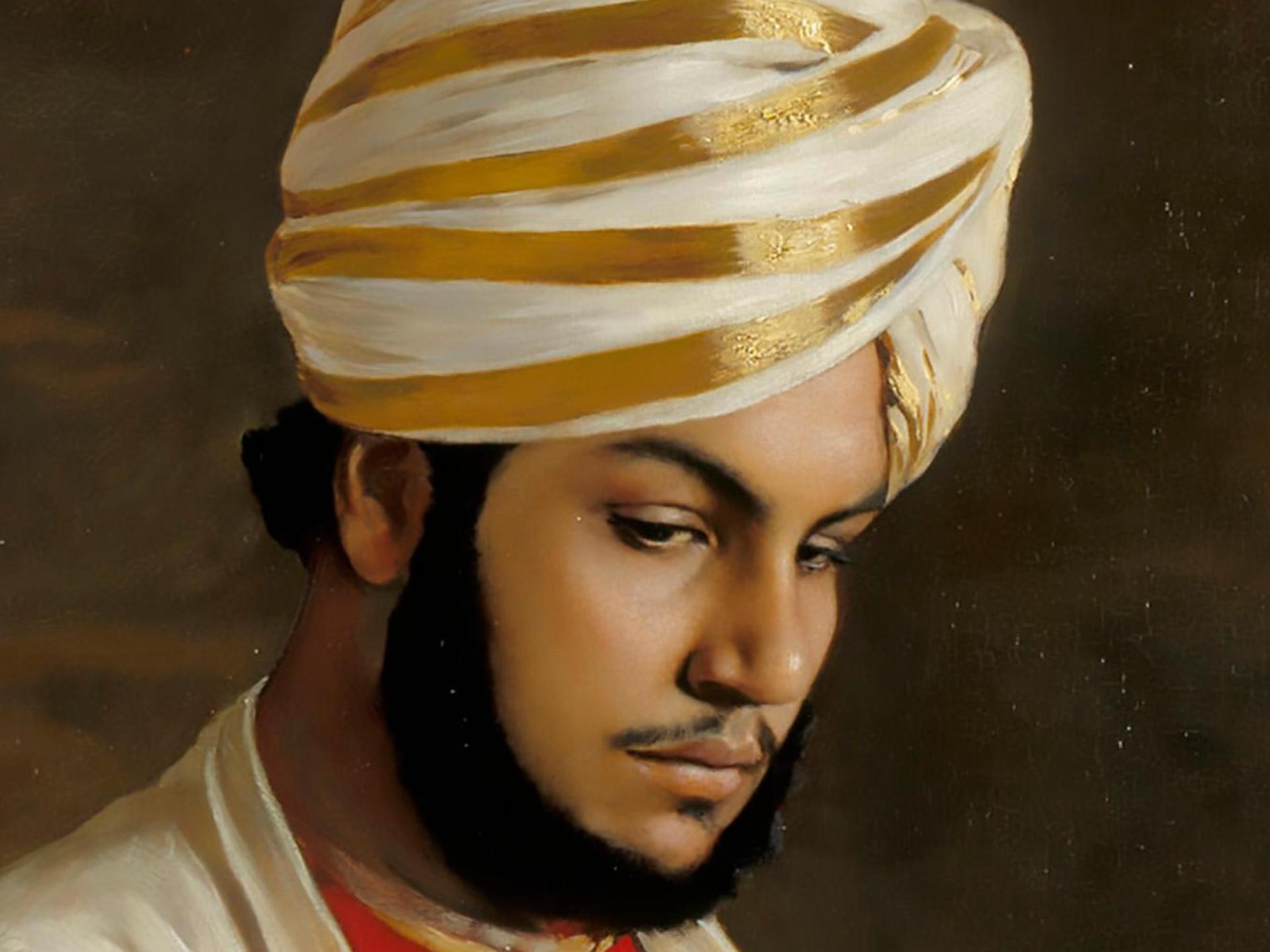
Abdul Karim, also known as "The Munshi," was an Indian attendant who served as a personal secretary and Hindustani teacher to Queen Victoria during the final fourteen years of her reign. His presence in the British Royal Household fundamentally shifted the Queen’s perspective on India and triggered a decade of intense racial and political friction within the court.
While several historical figures share the name Abdul Karim, including the late 20th-century counterfeit specialist Abdul Karim Telgi, the primary search intent and historical significance of the name center on Hafiz Mohammed Abdul Karim. As of 2026, his story remains a cornerstone of Indo-British historical studies, representing a complex intersection of imperialism, personal companionship, and systemic prejudice within the Victorian era.
From Agra to Windsor: The Origins of a Royal Servant
Hafiz Mohammed Abdul Karim was born in 1863 in Lalitpur, near Jhansi, in what was then British India. His father worked as a hospital assistant in the Central India Horse, a British cavalry regiment. Karim’s upbringing was characterized by a modest level of education; he was taught Persian and Urdu, which later became the foundation of his unique relationship with the Queen.
Karim’s journey to the heart of the British Empire began in 1887, the year of Queen Victoria's Golden Jubilee. Dr. John Tyler, the superintendent of the Agra Jail, was tasked with selecting two Indian attendants to serve as "orderlies" at the Jubilee festivities. Karim was chosen alongside Mohamed Buksh. Before departing for London, Karim was given basic training in English etiquette and courtly manners.
The Queen, who had been Empress of India since 1876, had a long-standing fascination with her Indian territories but had never visited the subcontinent. The arrival of Karim and Buksh at Windsor Castle in June 1887 provided her with a direct, personal link to the culture she had only observed through official dispatches and colonial reports. Victoria’s initial impressions, recorded in her journals, described Karim as tall, handsome, and possessed of a serious, dignified bearing.
The Transformation from Servant to "The Munshi"
What was intended to be a temporary assignment as a "khitmagar" (table servant) rapidly evolved into a position of significant influence. Within a year of his arrival, Karim moved from waiting tables to teaching the Queen Hindustani (now referred to as Urdu and Hindi). This pedagogical relationship earned him the title of The Munshi, a Persian word meaning teacher or clerk.
The Queen’s interest in learning Hindustani was not merely a hobby; it was a symbolic gesture of her devotion to her Indian subjects. Karim instructed her in the nuances of the language, and she eventually became proficient enough to write short notes in the script. However, the Munshi’s role expanded far beyond the classroom. He became a trusted confidant, advising the Queen on Indian affairs, religious matters, and the socio-political climate of the Raj.
By 1889, Victoria had promoted Karim to the rank of "Munshi and Indian Secretary," a title that provided him with a generous salary, his own carriage, and private residences at royal estates including Windsor, Balmoral, and Osborne House. This promotion was unprecedented for an Indian of his background and social standing, marking the beginning of a deep-seated resentment within the Royal Household.
The "Munshi Affair" and Court Opposition
The rise of Abdul Karim was met with visceral opposition from the Queen’s family and her staff. This conflict, often referred to by historians as the "Munshi Affair," was driven by a volatile mix of classism and institutional racism. The Royal Household, including the Queen's private secretaries Sir Henry Ponsonby and later Sir Arthur Bigge, viewed Karim as a low-born interloper who was manipulating an aging monarch.
The opposition focused on several key points of contention:
- Social Status: The court was appalled that a man who had begun as a servant was now being treated as a gentleman and an equal. They frequently attempted to dig into his family history in India to prove he was of "humble" origin.
- Security Concerns: Members of the government and the Viceroy of India, Lord Lansdowne, feared that Karim was leaking sensitive information to Indian political circles or that his presence compromised the Queen’s neutrality.
- Racial Prejudice: The Victorian court was a bastion of Eurocentric hierarchy. The idea of an Indian man holding such a close proximity to the Queen’s person was intolerable to many.
Despite the pressure, Queen Victoria remained Karim’s most fierce protector. When her physician, Sir James Reid, and her children threatened to resign or protest his presence, she accused them of "race prejudice" and "unjustifiable temper." She defended Karim’s integrity and dismissed reports from the Indian government that questioned his background. In her view, Karim was a loyal friend who provided companionship in her lonely widowhood, a role previously held by John Brown.
Official Titles and Honors Bestowed
The Queen’s favor was manifested in a series of official honors and awards that further incensed the court. These titles were not merely honorary; they signaled Karim’s high standing in the imperial hierarchy.
| Date | Title / Honor | Significance |
|---|---|---|
| 1888 | Munshi | Recognized as the Queen’s personal teacher of Hindustani. |
| 1889 | Indian Secretary | Elevated to a formal administrative role within the household. |
| 1894 | C.I.E. (Companion of the Order of the Indian Empire) | A high-ranking order of chivalry for services to the Empire. |
| 1899 | C.V.O. (Commander of the Royal Victorian Order) | A personal gift from the Queen, recognizing personal service to the Sovereign. |
| 1900 | Grant of Land (Agra) | The Queen secured a large estate (Karim Lodge) for his retirement in India. |
In addition to these honors, Karim was permitted to carry a sword and wear medals in royal processions. He was also granted the right to have his father, a retired hospital assistant, treated with the honors of a high-ranking official when visiting.
The Great Erasure: Post-Victorian Legacy
The death of Queen Victoria in January 1901 marked the immediate end of Abdul Karim’s influence in the British court. Within days of her funeral, the new King, Edward VII, took swift action to minimize Karim’s historical footprint.
Edward VII, who had long harbored a deep dislike for the Munshi, ordered that all correspondence between the Queen and Karim be seized. Most of these letters and notes—thousands of documents written over 14 years—were burned in a bonfire at Frogmore, in the presence of Karim himself. The King then ordered Karim to be deported back to India, allowing him only a brief window to pack his belongings.
Karim returned to his estate in Agra, Karim Lodge, where he lived a quiet and secluded life. He died in 1909 at the age of 46. For nearly a century, his story was largely forgotten, preserved only in the biased memoirs of former court officials who painted him as an opportunistic sycophant. His name was scrubbed from many official records, and the depth of his relationship with the Queen was treated as a scandalous footnote rather than a significant historical event.
Modern Rediscovery and Cultural Impact
The narrative of Abdul Karim underwent a dramatic revival in the early 21st century. In 2010, the historian Shrabani Basu discovered the Munshi’s private diaries, which had been hidden for generations by his descendants in Karachi. These diaries, along with the Queen’s own Hindustani journals, provided a firsthand account of their relationship that contradicted the negative portrayals left by the Victorian court.
Basu’s book, Victoria & Abdul: The True Story of the Queen’s Closest Confidant, served as the basis for the 2017 film Victoria & Abdul, starring Judi Dench and Ali Fazal. This rediscovery has led to a re-evaluation of Queen Victoria’s later years. As of 2026, historians view the relationship not just as a personal friendship, but as a lens through which to examine:
- Imperial Dynamics: The tension between the Queen’s theoretical role as "Mother of India" and the practical racism of her government.
- Cultural Exchange: The Queen’s genuine attempt to engage with Indian culture, which was rare for the time.
- Social Mobility: The unique, albeit friction-filled, ascent of an Indian national within the most rigid social hierarchy in the world.
FAQ: Common Questions About Abdul Karim
Was there a romantic relationship between Queen Victoria and Abdul Karim?
No. Historical evidence and the diaries discovered in 2010 suggest that the relationship was one of a teacher and a student, or a maternal figure and a devoted subordinate. While the Queen expressed deep affection and used terms like "your loving mother," this was a common Victorian expression for close personal staff. The Queen was in her 70s and 80s during their time together, and her devotion to Karim was a form of companionship that filled the emotional void left by the deaths of Prince Albert and John Brown.
Did Abdul Karim have children?
No, Abdul Karim did not have any children of his own. He lived with two wives in England and later in India. After his death in 1909, his estate passed to his family members. During the partition of India in 1947, his descendants migrated to Pakistan, taking his personal diaries and artifacts with them, which remained hidden until 2010.
Why did the Royal Household hate him so much?
The hostility was rooted in a combination of class snobbery and racism. The household was a strictly stratified environment where everyone had a "place." An Indian servant bypassing the traditional ranks to become a confidential secretary—and receiving honors like the CIE—was seen as an affront to the social order. Furthermore, his influence over the Queen’s opinions on Indian policy threatened the authority of the Cabinet and the Viceroy.
What happened to "Karim Lodge" in Agra?
Karim Lodge still exists in Agra, though it has changed significantly over the decades. After Karim’s death and the subsequent migration of his family, the property was confiscated by the Indian government as evacuee property. Today, it remains a site of historical interest for those tracing the Munshi’s life, though it is not a formal museum.
How much of the film "Victoria & Abdul" is historically accurate?
The film is broadly accurate regarding the timeline and the nature of the court's opposition. However, like many biographical dramas, it takes creative liberties with specific dialogues and the sequence of some events to heighten the emotional stakes. The central premise—that Karim taught the Queen Hindustani and that the court attempted to oust him—is entirely factual.
Verifying the Munshi's Historical Impact
For those interested in exploring the primary sources related to Abdul Karim, the most authoritative records are maintained by the Royal Collection Trust and the British Library. Researchers can view digitized versions of Queen Victoria’s Hindustani exercise books, which contain her handwritten notes in the script and Karim's corrections.
As of 2026, the study of Abdul Karim is no longer seen as a peripheral curiosity but as a critical component of understanding the nuances of the British Empire. To understand the Munshi is to understand the frictions of the Victorian era—a time of immense global power often undermined by local prejudices.