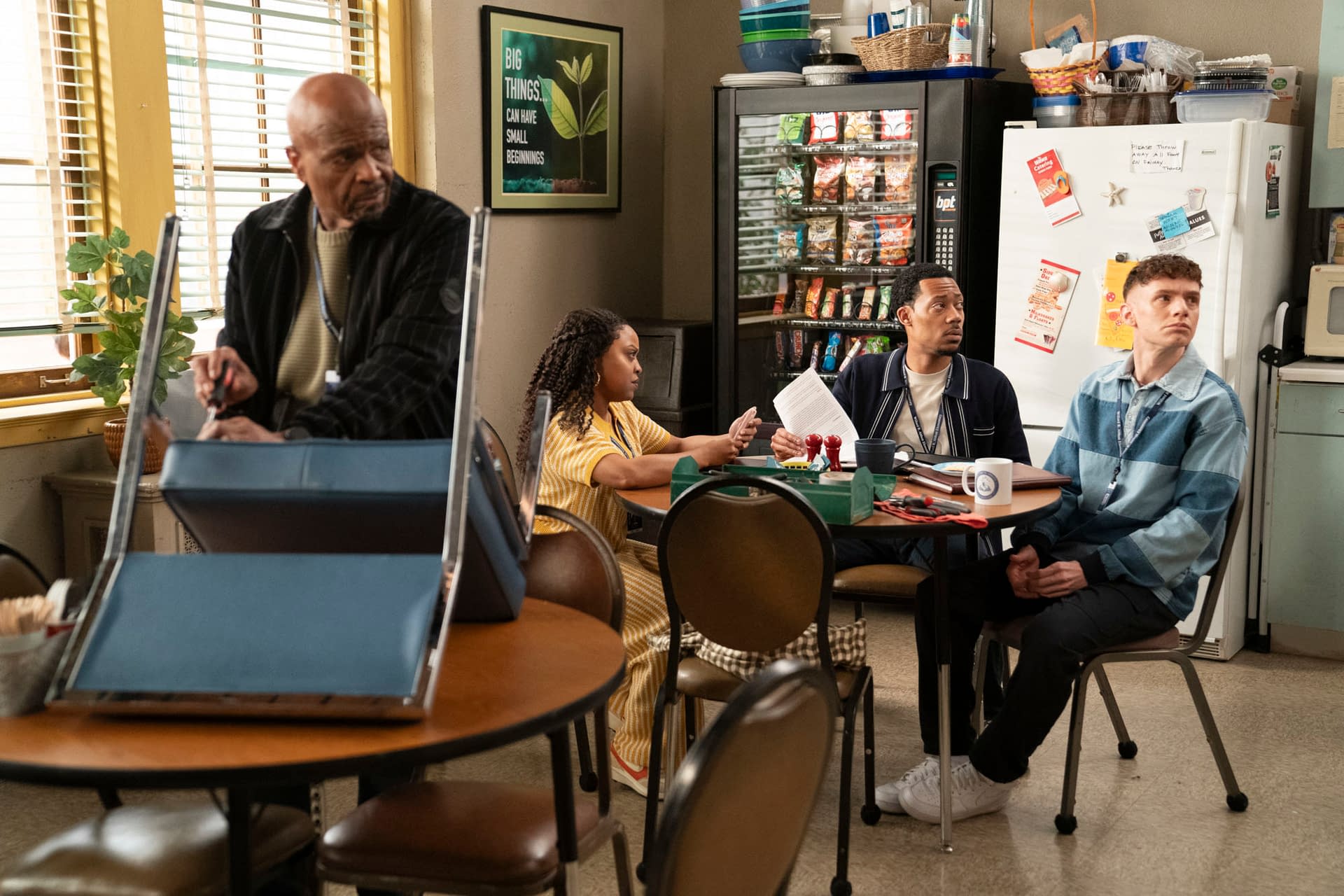
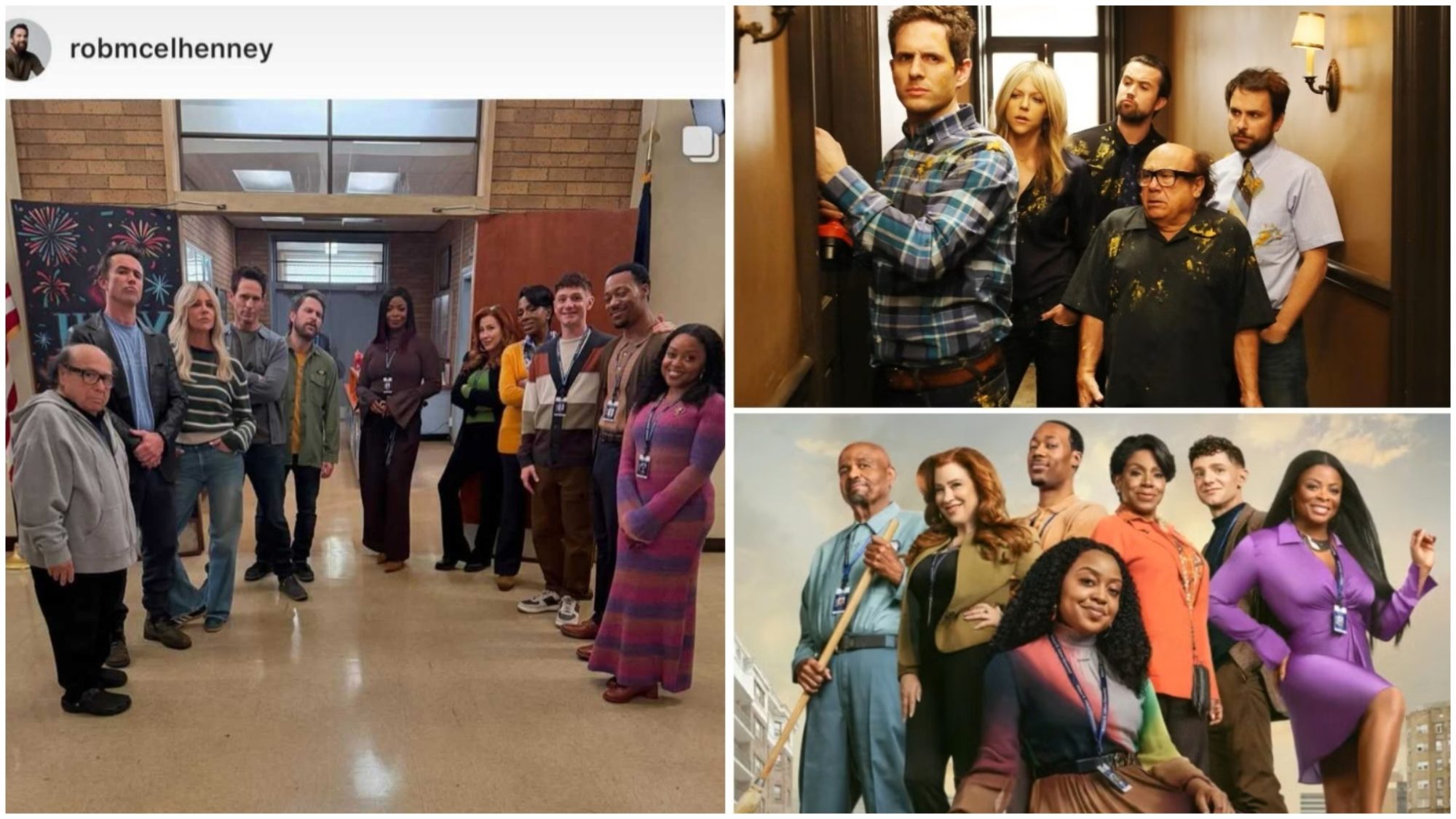
The crossover between Abbott Elementary and It’s Always Sunny in Philadelphia bridges two fundamentally different comedy styles set in the same city. Made possible by shared corporate parentage under Disney, the event successfully merged Abbott’s heart-driven mockumentary tone with Paddy’s Pub’s chaotic cynicism through strict content boundaries, clever character pairings, and shared Philadelphia geography.
The Shared Universe: Why a Philadelphia Crossover Made Sense
On paper, Abbott Elementary and It’s Always Sunny in Philadelphia sit at opposite ends of the television sitcom spectrum. Abbott Elementary, created by Quinta Brunson, is a warm, optimistic broadcast mockumentary following underfunded public school teachers working in West Philadelphia. It’s Always Sunny in Philadelphia, created by Rob McElhenney and Glenn Howerton, is a dark, cynical basic cable comedy centered on five self-absorbed, sociopathic narcissists running an unsuccessful South Philadelphia Irish pub.
Despite these stark tonal contrasts, both series share a crucial narrative foundation: the city of Philadelphia itself. Neither show treats Philadelphia merely as a passive backdrop; instead, the city serves as a living, breathing character that shapes the personalities, idioms, and struggles of the cast.
- DISNEY TELEVISION STUDIOS
- ABC NETWORK
- Abbott Elementary (Broadcast / TV-PG/14)
- FXX NETWORK
- It's Always Sunny in... (Cable / TV-MA / R)
- PHILADELPHIA SHARED UNIVERSE (Season 4 Broadcast Crossover Event)
- ABC NETWORK
From specific local references (such as Wawa, the Eagles, and regional slang) to the stark economic realities of the city's public infrastructure, both programs draw heavily from authentic local culture. This shared geographical setting established a natural narrative bridge.
When television producers evaluate crossover potential, spatial proximity is often the hardest hurdle to clear without breaking audience suspension of disbelief. Because the teachers of Abbott and the "Gang" at Paddy’s Pub inhabit the exact same municipality, placing them in the same room required zero convoluted travel plots or contrived excuses.
Corporate Logistics: How Disney Unified ABC and FXX
Historically, major television crossovers were restricted by network rivalries and complex licensing agreements. Bringing characters from one intellectual property into another usually required both shows to reside on the same broadcast network—such as the crossover between Fox's New Girl and Brooklyn Nine-Nine.
The structural catalyst that allowed Abbott Elementary and It’s Always Sunny in Philadelphia to intersect was corporate consolidation. Following The Walt Disney Company’s acquisition of 21st Century Fox assets, both properties fell under the corporate umbrella of Disney Television Studios and 20th Television.
- Abbott Elementary airs on ABC, a primary broadcast network owned by Disney.
- It’s Always Sunny in Philadelphia airs on FXX, a basic cable network owned by FX Networks, an indirect subsidiary of Disney.
- Both series stream their back catalogs and new episodes on Hulu, consolidated under Disney’s direct-to-consumer streaming portfolio.
This alignment meant that corporate legal clearing, intellectual property rights, executive approvals, and talent negotiations could be managed within a single corporate family. When Quinta Brunson and Rob McElhenney began publicly teasing a potential collaboration, the executive infrastructure was already in place to authorize the event.
Tonal Clash: Reconciling Wholesomeness with Cynicism
The primary creative challenge of the crossover was reconciling the radically divergent moral universes of the two shows. Abbott Elementary relies on wholesome emotional stakes, civic duty, and genuine character growth. It’s Always Sunny in Philadelphia operates on complete moral decay, where characters never learn lessons, face severe long-term consequences, or demonstrate genuine empathy.
To execute the crossover without destroying the internal logic of either show, the creative teams had to establish clear boundary rules:
- Protect the Abbott Environment: The characters from Always Sunny could not commit irreversible criminal acts or introduce explicit TV-MA material into the elementary school environment that would break the reality of ABC’s broadcast standard.
- Frame the Gang as External Disrupters: Rather than integrating the Paddy’s Pub gang into the core school staff, Dennis, Dee, Mac, Charlie, and Frank were positioned as external chaotic elements—akin to extreme parent-teacher encounters or disruptive municipal bureaucrats.
- Maintain the Mockumentary Camera: The story was presented through Abbott’s documentary framing, forcing the unhinged behavior of the Sunny cast to be captured through the observational, reaction-heavy lens of the Abbott film crew.
By keeping the core values of Abbott Elementary intact while allowing the Paddy's gang to act as a catalyst for panic and confusion, the production preserved the identity of both franchises.
Structural Breakdown: Abbott vs. Always Sunny
The following table contrasts the foundational production, regulatory, and narrative parameters of both series, highlighting the operational gaps the crossover successfully navigated:
| Attribute | Abbott Elementary | It's Always Sunny in Philadelphia |
|---|---|---|
| Primary Network | ABC (Broadcast) | FXX (Basic Cable) |
| Streaming Home | Hulu / Max | Hulu |
| Parent Entity | Disney Entertainment | FX Networks / Disney Entertainment |
| Content Rating | TV-PG / TV-14 | TV-MA |
| Primary Setting | Willard R. Abbott Elementary (West Philly) | Paddy's Pub (South Philly) |
| Narrative Format | Single-camera mockumentary | Single-camera traditional sitcom |
| Core Moral Philosophy | Earnest civic idealism and community support | Nihilistic narcissism and institutional exploitation |
| Character Archetypes | Dedicated educators, idealistic mentors | Selfish schemers, chaotic hustlers |
Character Dynamics: Clashing Personalities on Screen
The comedic engine of any crossover relies on character pairings. Merging the staff of Abbott with the Paddy's gang yielded high-contrast pairings that capitalized on opposing worldviews.
Janine Teagues and Charlie Kelly
Janine’s unyielding optimism and devotion to educational bureaucracy contrast sharply with Charlie’s functional illiteracy and bizarre, subterranean survival instincts. When forced to interact, Janine attempts to mentor or assist Charlie, only to be baffled by his complete detachment from conventional logic, rat-slaying obsession, and diet of cat food and glue.
Barbara Howard and Frank Reynolds
Barbara represents deep moral integrity, traditional Christian values, and maternal authority within the school. Frank Reynolds represents unvarnished filth, corporate greed, and moral corruption. Their interaction relies on Barbara attempting to maintain professional dignity while treating Frank not with anger, but with stern, disappointed condemnation—a force Frank rarely encounters.
| Abbott Elementary Character | Always Sunny Counterpart |
|---|---|
| Janine Teagues (Earnest Idealist) | Charlie Kelly (Wildcard) |
| Barbara Howard (Moral Authority) | Frank Reynolds (Depraved) |
| Melissa Schemmenti (Street Smart) | Mac & Dennis (Schemers) |
| Ava Coleman (Narcissistic Boss) | Dennis Reynolds (Egoist) |
| Gregory Eddie (Straight Man) | Dee Reynolds (Desperate) |
Melissa Schemmenti, Mac, and Dennis
Melissa possesses deep connections to South Philadelphia's informal blue-collar economy. Unlike the idealistic Janine, Melissa immediately recognizes Mac and Dennis for what they are: low-level neighborhood hustlers. Her refusal to be intimidated or manipulated by Dennis’s narcissistic schemes undercuts his usual manipulative tactics.
Ava Coleman and Dennis Reynolds
Ava’s self-centered, opportunistic leadership style mirrors the ego-driven antics of Dennis Reynolds. However, while Dennis operates out of deep-seated insecurity and malice, Ava operates out of unbothered confidence and self-interest. Watching Dennis attempt to exert control over Ava, only to be dismissed or out-maneuvered by her sheer indifference, highlights the unique strengths of both characters.
Managing Content Ratings and FCC Broadcast Standards
One of the most complex elements of bringing the Always Sunny characters into Abbott Elementary was managing regulatory constraints. As a broadcast network operating on public airwaves, ABC is governed by the Federal Communications Commission (FCC) and strict internal Standards and Practices departments. Abbott Elementary typically targets a TV-PG or mild TV-14 rating.
Conversely, It’s Always Sunny in Philadelphia built its brand on FXX over nearly two decades using explicit profanity, vulgarity, illegal drug use, and dark themes rated TV-MA.
To resolve this restriction without diluting the characters, the writers employed classic broadcast censorship techniques:
- Implied Chaos over Explicit Acts: Rather than showing the Gang engaging in illegal acts on screen, their chaotic actions occurred off-camera or were described secondhand through panic-stricken reactions from the school staff.
- Bleeping and Cutoffs: Profanities characteristic of the Paddy's gang were cut off by door slams, camera pivots, or intentional audio bleeps framed as part of the mockumentary editing process.
- Misdirected Motives: The Gang's schemes within the school were reframed around absurd, PG-appropriate misunderstandings—such as court-ordered community service, a misinterpretation of public funding rules, or a botched local publicity stunt.
This approach preserved the illusion that the Gang was behaving with their usual lack of ethics, while ensuring ABC remained fully compliant with broadcast regulatory standards.
Implications for Modern Television Franchises
The successful execution of the Abbott Elementary and It’s Always Sunny in Philadelphia crossover sets a vital precedent for modern television production in an era dominated by media consolidation.
Historically, television crossovers were designed as promotional gimmicks between identical formats—such as procedural dramas crossing over with other procedurals (Chicago Fire and Law & Order: SVU). The Abbott/Sunny event proves that modern audiences possess the narrative literacy to enjoy crossovers between radically different genres, tones, and content ratings.
Key lessons established by this event include:
- IP Leverage Across Cable and Broadcast: Media conglomerates can successfully cross-pollinate viewers between linear broadcast (ABC) and basic cable/streaming (FXX/Hulu) without damaging either brand.
- Tone Mismatch as a Feature: Rather than attempting to blend the tones into a neutral middle ground, amplifying the tonal clash creates fresh comedic tension for long-running series.
- Mockumentary Flexibility: The mockumentary format serves as an ideal container for external crossovers, as the camera crew acts as a proxy for the audience's disbelief when outlandish characters enter the frame.
How Creators Should Approach Cross-Format Sitcom Events
For writers, showrunners, and network executives analyzing the mechanics of major sitcom crossovers, successful execution requires a strict procedural approach to character protection and narrative structure:
- Establish the Host Rules First: The visiting characters must adapt to the physical and regulatory space of the host show. The host show's core reality must never be permanently shattered by the guest characters.
- Utilize Shared Ground: Focus the initial narrative connection on tangible shared elements—such as regional culture, municipal laws, or shared acquaintances—rather than absurd coincidences.
- Pair Characters by Contrast, Not Similarity: Placing similar characters together often leads to redundant dialogue. Real comedic momentum comes from placing absolute opposites (e.g., devout authority vs. unhinged depravity) in enclosed spaces.
- Maintain Production Discipline: Use the visual language, editing pace, and musical scoring of the host series. Bringing external editing styles into a established format creates visual dissonance that distracts from character interactions.
By adhering to these principles, television producers can turn seemingly impossible brand collisions into memorable narrative events that respect the integrity of both properties.
Is the Abbott Elementary and Always Sunny crossover officially canon?
Yes. The crossover event is an officially licensed, fully canon storyline within the universe of Abbott Elementary Season 4, produced with the direct participation of the creators and main cast members of both series.
Which network aired the crossover episode?
The crossover episode aired on ABC as part of Abbott Elementary's fourth season broadcast schedule, subsequently streaming on Hulu. Because Abbott Elementary served as the host show, the episode fell under ABC’s broadcast jurisdiction rather than FXX.
How did the production handle the difference in content ratings between the two shows?
The production preserved ABC’s TV-PG/TV-14 broadcast standard by relying on off-camera action, clever mockumentary camera cuts, and implied profanity. The Always Sunny characters maintained their unhinged personalities, but their behavior was framed to comply with FCC guidelines.
Did Quinta Brunson or Rob McElhenney initiate the crossover idea?
The idea originated through public mutual respect between the creators. Quinta Brunson expressed admiration for It's Always Sunny in Philadelphia as a landmark Philadelphia series, while Rob McElhenney publicly welcomed the idea of bridging their shared Philadelphia settings under Disney’s corporate umbrella.
Can the characters from Abbott Elementary appear on It's Always Sunny in Philadelphia in a future episode?
While a reverse crossover onto FXX is technically possible due to shared corporate ownership under Disney, it presents greater creative hurdles. Bringing the wholesome educators of Abbott Elementary into a TV-MA cable environment risks compromising their moral standing and broadcast brand identity.