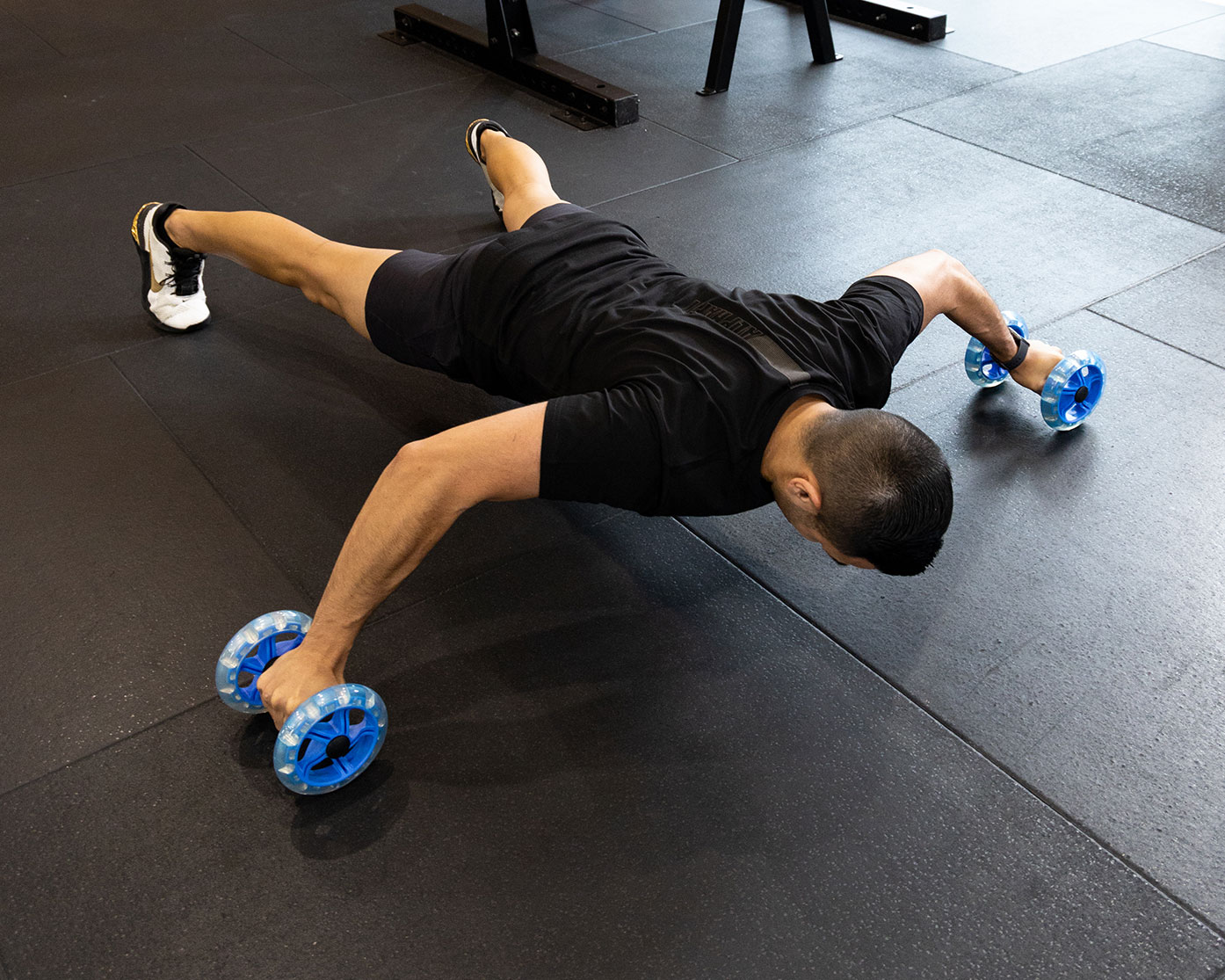
Effective ab training combines progressive overload, multi-planar movement patterns, and targeted neuromuscular engagement to build core stability and abdominal hypertrophy. Rather than relying solely on high-repetition bodyweight crunches, a comprehensive program incorporates weighted dynamic exercises alongside anti-extension, anti-rotation, and isometric stability movements performed two to four times per week.
Anatomical Foundation of the Abdominal Musculature
To structure an effective abdominal workout, it is essential to understand the functional anatomy of the anterior and lateral torso. The abdominal wall is not a single muscular slab, but rather a complex system of overlapping muscle groups designed to stabilize the spine, transfer forces between the upper and lower body, and facilitate multi-directional trunk movement.
- Rectus Abdominis: Spinal Flexion & Posterior Pelvic Tilt
- External Obliques & Internal Obliques: Rotation & Lateral Flexion
- Transversus Abdominis: Intra-Abdominal Pressure & Deep Core Stability
- External Obliques & Internal Obliques: Rotation & Lateral Flexion
Rectus Abdominis
The rectus abdominis is the long, paired muscle running vertically along the front of the abdomen. Originating at the pubic crest and inserting into the costal cartilages of ribs 5 through 7 and the xiphoid process, its primary biomechanical function is flexing the lumbar spine (drawing the ribcage down toward the pelvis) and tilting the pelvis posteriorly. Horizontal tendinous intersections divide the muscle belly, creating the distinct compartmentalized appearance commonly referred to as a "six-pack."
External and Internal Obliques
Flanking the rectus abdominis are the external and internal obliques, which control rotational and lateral movements:
- External Obliques: Positioned on the lateral sides of the abdomen, their fibers run diagonally downward and inward ("hands in pockets"). They work contralaterally to rotate the torso and ipsilaterally to flex the spine laterally.
- Internal Obliques: Situated directly beneath the external obliques, their fibers run diagonally upward and inward. They work in tandem with the external obliques to stabilize the lumbo-pelvic region and drive rotation.
Transversus Abdominis (TVA) and Deep Core Support
The transversus abdominis is the deepest muscular layer of the abdominal wall. Its horizontal fibers act like a natural anatomical corset, wrapping around the midsection. Rather than driving overt joint movement, the TVA contracts to compress the abdominal contents, increasing intra-abdominal pressure (IAP). Research published through the National Institutes of Health emphasizes that coordinated activation of the TVA and pelvic floor muscles provides segmental stiffness to the lumbar spine prior to peripheral limb movement, protecting intervertebral discs under heavy axial loading.
Mechanics of Effective Ab Training: Hypertrophy vs. Stability
Abdominal muscles are composed of a balanced mix of Type I (slow-twitch) and Type II (fast-twitch) muscle fibers. Consequently, optimizing both muscular hypertrophy (thickness and depth of the muscle bellies) and functional stability requires a dual approach using dynamic resistance and isometric loading.
- CORE TRAINING
- DYNAMIC HYPERTROPHY
- Spinal Flexion & Extension
- Progressive Weighted Load
- Full Range of Motion
- ISOMETRIC STABILITY
- Anti-Extension (Planks)
- Anti-Rotation (Pallof Press)
- Bracing & Structural Stiffness
- DYNAMIC HYPERTROPHY
Dynamic Movement and Progressive Overload
To stimulate muscular hypertrophy in the rectus abdominis and obliques, exercises must take the target muscles through a complete contraction cycle under sufficient mechanical tension. Bodyweight repetitions taken to extreme counts (e.g., 50–100 continuous crunches) primarily train local muscular endurance rather than muscle growth.
To induce hypertrophy, abdominal training should follow the same principles of progressive overload applied to the chest or quadriceps:
- External Resistance: Adding load via cables, dumbbells, or weight plates within an 8- to 15-repetition range.
- Range of Motion: Extending the muscle past neutral into slight stretch (such as over a foam roller or Swiss ball) before completing a full concentric contraction.
- Controlled Tempo: Emphasizing a two- to three-second eccentric (lowering) phase to maximize mechanical tension.
Isometric Anti-Movement Training
While dynamic flexion builds visual muscular development, the core's primary evolutionary role is resisting unwanted movement to shield the spine. The National Strength and Conditioning Association highlights the critical importance of core stabilization in athletic performance and injury mitigation. Core training protocols must therefore include three key anti-movement categories:
- Anti-Extension: Resisting lumbar hyperextension when forces try to arch the back (e.g., rollout variations, planks).
- Anti-Rotation: Resisting rotational forces acting on the torso (e.g., Pallof press variations).
- Anti-Lateral Flexion: Resisting sideways bending of the spine (e.g., single-arm suitcase carries).
Biomechanical Categorization of Abdominal Exercises
Organizing core training by biomechanical function ensures balanced muscle development and prevents structural imbalances that lead to lower back dysfunction.
| Category | Exercise Example | Primary Target | Key Biomechanical Cue | Recommended Volume / Load |
|---|---|---|---|---|
| Dynamic Spinal Flexion | Cable Standing Crunch | Upper Rectus Abdominis | Flex spine from sternum; do not hinge at hips | 3 sets of 10–12 reps (Progressive weight) |
| Reverse Flexion | Hanging Knees-to-Chest / Leg Raise | Lower Rectus Abdominis | Curl pelvis upward toward ribcage; avoid momentum | 3 sets of 8–12 reps (Add ankle weights) |
| Anti-Extension | Ab Wheel Rollout | Transversus Abdominis & Rectus Abdominis | Maintain slight posterior pelvic tilt throughout | 3 sets of 6–10 reps (Extend lever distance) |
| Anti-Rotation | Cable Pallof Press | Obliques & Transversus Abdominis | Resist trunk twisting while pressing cable outward | 3 sets of 10–12 reps per side (Slow isometric hold) |
| Dynamic Rotation | Standing Cable Woodchopper | External & Internal Obliques | Pivot back foot; drive rotation through torso, not arms | 3 sets of 12–15 reps per side |
| Anti-Lateral Flexion | Suitcase Farmer's Carry | Quadratus Lumborum & Obliques | Maintain perfectly upright posture while walking | 3–4 sets of 30–45 seconds per side (Heavy dumbbell) |
Detailed Breakdown of Top Core Movements
1. The Hanging Pelvic Raise (Lower Rectus Abdominis Focus)
Many lifters perform hanging leg raises by swinging their legs upward using momentum and hip flexors (iliopsoas). To isolate the lower portion of the rectus abdominis:
Incorrect (Hip Flexion):
- Legs swing forward
- Hips pivot
- Spine stays flat
Correct (Spinal Flexion):
- Pelvis rolls back
- Spine flexes
- Abdominals contract
Execution: Hang from a pull-up bar with an overhand grip. Engage the shoulders to depress the scapulae. Rather than raising the feet outward, concentrate on rolling the pelvis upward toward your chest.
Key Point: If the anterior angle of the pelvis does not tilt upward, the movement is being driven by the hip flexors rather than the abdominal wall.
2. The Ab Wheel Rollout (Anti-Extension Master Pattern)
The ab wheel rollout provides exceptional EMG (electromyographic) activation of the anterior core by requiring the rectus abdominis and TVA to prevent the spine from sagging into extension as the lever arm lengthens.
- Execution: Kneel on a padded surface with hands gripping the wheel directly beneath the shoulders. Tuck the pelvis into a mild posterior tilt and hollow out the abdominal wall. Roll forward slowly until the arms are fully extended overhead without letting the lower back arch. Contract the abs forcibly to pull the wheel back to the starting position.
- Safety Warning: Individuals with existing lumbar pathology should master the elevated plank and deadbug variations before progressing to full ab wheel rollouts.
3. The Cable Pallof Press (Anti-Rotation Focus)
The Pallof press isolates the obliques and deep stabilizers by introducing a lateral vector force that attempts to rotate the spine.
- Cable Stack
- Cable Tension
- Hands at Chest
- Press Outward
- Core resists rotation
- Execution: Stand perpendicular to a cable stack with a D-handle set at chest height. Hold the handle with both hands pressed against the center of your chest. Step away from the machine to create tension. Extend your arms straight out in front of you without allowing your torso, shoulders, or hips to twist. Hold for two seconds at full arm extension, then return to the chest under control.
Structuring an Effective Ab Training Program
Integrating ab training into a broader workout routine requires deliberate planning regarding volume, frequency, and exercise ordering.
Weekly Volume and Frequency Guidelines
Because the abdominal musculature works continuously during daily activities and compound exercises, it recovers relatively quickly. However, heavy loaded ab work still demands adequate rest for recovery.
- Beginner: 2 sessions per week, 6–8 total sets per week (focused on basic planks, deadbugs, and bodyweight crunches).
- Intermediate: 3 sessions per week, 10–14 total sets per week (mixing loaded dynamic exercises with anti-extension work).
- Advanced: 3–4 sessions per week, 15–20 total sets per week (utilizing heavy resistance, advanced leverage rollouts, and multi-planar loaded carries).
Workout Placement Strategy
Core training should ideally be placed at the end of a workout session or performed during dedicated core/cardio blocks. Performing intense, fatiguing abdominal work immediately prior to heavy compound lifts—such as back squats, overhead presses, or deadlifts—compromises intra-abdominal pressure regulation and lumbar stability, significantly increasing injury risk during those complex movements.
Sample Core Workout Routines
Routine A: Hypertrophy & Aesthetic Focus (Post-Upper Body Session)
- Cable Kneeling Crunch: 3 sets of 10–12 reps (2-second pause at peak contraction)
- Hanging Pelvic Raise: 3 sets of 10–15 reps
- Cable Woodchopper: 3 sets of 12 reps per side
Routine B: Functional Stability & Core Strength (Post-Lower Body Session)
- Ab Wheel Rollout: 3 sets of 8–10 reps
- Standing Cable Pallof Press: 3 sets of 10 reps (2-second hold per rep)
- Heavy Single-Arm Suitcase Carry: 3 sets of 30 meters per arm
Common Ab Training Mistakes and Corrections
1. Over-Reliance on Hip Flexors
The psoas major and iliacus originate on the lumbar spine and pelvis and insert onto the femur. When performing traditional sit-ups or leg raises, if the spine remains completely flat while the legs move, the hip flexors carry the majority of the mechanical workload. This can lead to chronic hip tighteness and excessive anterior pelvic tilt.
Correction: Focus on shortening the distance between the bottom of your sternum and your belly button. Consciously round the upper and lower back slightly during abdominal contractions to ensure spinal flexion occurs.
Incorrect (Hip Flexor Over-Dominance):
- Lumbar Spine (Straight)
- Hip Joint Hinge
- Result: High Psoas Strain
Correct (Abdominal Flexion):
- Lumbar Spine (Curved/Flexed)
- Pelvis Tilted
- Result: High Abdominal Strain
2. High-Repetition Endurance Fallacy
Performing 100 fast, uncontrolled crunches yields high metabolic fatigue and a burning sensation, but minimal mechanical stress. If the goal is muscular definition and pronounced ab ridges, the muscle fibers must experience structural mechanical overload.
- Correction: Treat abdominal exercises like any other muscle group. Use progressive resistance to fail within the 8–15 rep range.
3. Misunderstanding the Role of Fat Loss
A common misconception is that high-volume ab training burns subcutaneous fat directly off the midsection (spot reduction). Multiple exercise science studies, including clinical literature indexed by the Mayo Clinic, confirm that spot reduction is a biological impossibility.
Correction: Abdominal visibility is determined by total body fat percentage. While targeted ab training increases the thickness and density of the abdominal wall, a sustained caloric deficit—achieved through nutritional management and overall energy expenditure—is mandatory to expose the muscle layer beneath.
Visual Ab Definition
- Hypertrophy (Training)
- Builds muscle depth & ridge prominence
- Fat Loss (Nutrition)
- Reduces subcutaneous fat layer covering abs
- Hypertrophy (Training)
Frequently Asked Questions About Ab Training
Can daily ab training cause lower back pain?
Yes. Excessive abdominal training without balanced back extension work, or performing high-volume spinal flexion with poor technique, can inflame the lumbar connective tissues and shorten the anterior musculature. This can pull the pelvis out of alignment and put unnatural pressure on the lumbar discs. Rest days are necessary for tissue repair.
What body fat percentage is required to see visible abs?
Visually defined abdominals generally require a body fat percentage of approximately 10–12% or lower for men, and 18–20% or lower for women. However, individual genetic fat distribution patterns dictate whether upper or lower abdominal lines appear first.
Is dynamic spinal flexion unsafe for the spinal discs?
Controlled spinal flexion performed under manageable loads by healthy individuals is safe and adapts the intervertebral discs over time. However, rapid, loaded spinal flexion under heavy axial compression (or excessive flexion volume for individuals with active disc herniations) increases posterior disc stress and should be avoided in favor of isometric anti-movement exercises.
Are bodyweight planks enough for progressive core strength?
Static bodyweight planks are useful for beginners to learn core bracing. However, once a plank can be held with proper form for longer than 60 seconds, it shifts primarily into an endurance exercise. To build further strength and stability, progress to dynamic planks, loaded planks, or ab wheel rollouts.
Should I wear a lifting belt during ab training exercises?
No. Weightlifting belts are designed to provide an external surface for the abdominal wall to push against during heavy compound movements (like squats and deadlifts), artificially increasing intra-abdominal pressure. Direct ab exercises should be performed without a belt to allow full muscular contraction and activation.
Actionable Implementation Plan
To build a stronger, more defined core, implement this phased approach:
- Audit Your Current Routine: Eliminate high-rep, non-resisted crunches that focus purely on fatigue rather than tension.
- Select One Exercise per Movement Category: Build your weekly plan around one dynamic flexion movement (e.g., cable crunch), one anti-extension movement (e.g., ab wheel rollout), and one anti-rotation/lateral carry movement (e.g., Pallof press or suitcase carry).
- Apply Progressive Overload: Track your core training in a training log. Gradually increase resistance, extend isometric hold durations, or lengthen movement lever arms over time.
- Coordinate Nutrition with Training: If visual abdominal definition is your goal, maintain a modest caloric deficit (200–500 kcal per day) while consuming adequate protein (1.6–2.2 grams per kilogram of body weight) to retain lean tissue while dropping subcutaneous body fat.