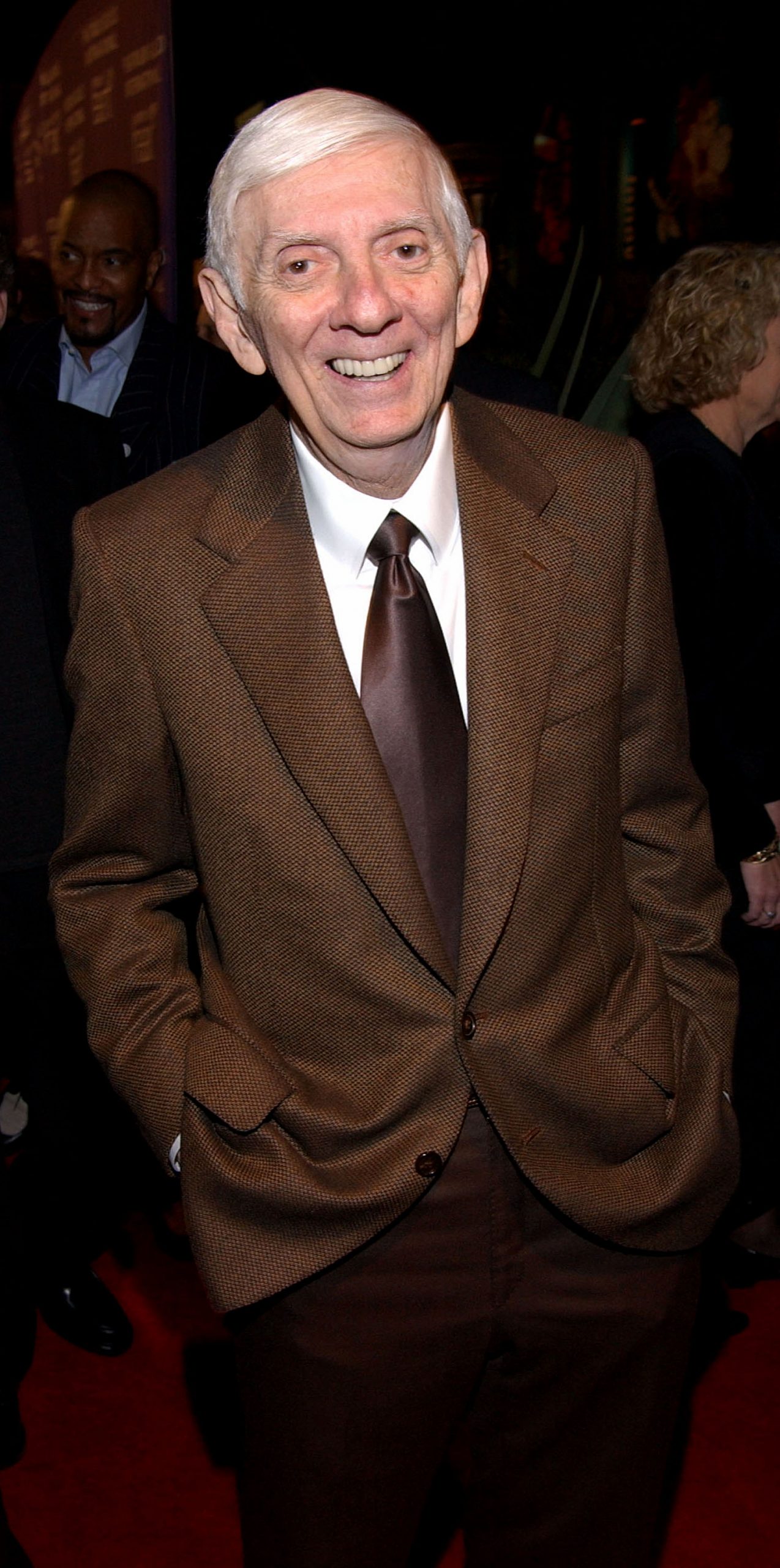
Aaron Spelling (1923–2006) was an American television and film producer who became the most prolific producer in television history. Over a career spanning five decades, Spelling produced more than 5,000 hours of television programming, shaping American popular culture through iconic series such as Charlie's Angels, Dynasty, The Love Boat, Beverly Hills, 90210, and Charmed.
Early Life, Military Service, and Education
Aaron Spelling was born on April 22, 1923, in Dallas, Texas, to David and Pearl Spelling, Jewish immigrants from Poland and Russia. Growing up in a working-class neighborhood during the Great Depression, Spelling faced anti-Semitic bullying during his youth, an experience he later cited as a major force in shaping his empathy for outcast characters in his drama series.
Spelling attended Forest Avenue High School in Dallas before enlisting in the United States Army Air Forces during World War II. Serving from 1942 to 1945, he earned a Bronze Star and a Purple Heart after being wounded in action. Upon returning to Texas, he enrolled at Southern Methodist University (SMU), where he served as cheer yelled leader and graduated in 1949 with a Bachelor of Arts degree.
During his time at SMU, Spelling directed several student plays and wrote original theatrical scripts, earning regional recognition for his stage writing. Driven by a desire to pursue playwriting professionally, he relocated to New York City and subsequently to Los Angeles in the early 1950s.
Transition to Hollywood: Actor, Writer, and Four Star Television
Upon arriving in Los Angeles, Spelling initially struggled to secure full-time writing employment. He took on minor television acting roles throughout the early 1950s, appearing in popular series such as Dragnet, I Love Lucy, and Gunsmoke. Despite landing over 50 acting credits, Spelling recognized that his primary passion and talent lay behind the camera.
Early Career Progression (1950–1965):
- Stage Playwright & Actor
- Television Scriptwriter
- Staff Producer at Four Star Television
Spelling broke into full-time television writing when he sold his first script to Zane Grey Theatre, an anthology series produced by Four Star Television. Four Star, co-founded by actor Dick Powell, subsequently hired Spelling as a staff writer and producer. Under Powell's mentorship, Spelling learned the operational fundamentals of network television production, rapid scheduling, and audience demographic engagement.
Following Powell's death in 1963, Spelling departed Four Star to form his own production entities. In 1966, he partnered with actor and comedian Danny Thomas to create Thomas/Spelling Productions. Their joint venture produced several successful titles, most notably the groundbreaking counterculture crime drama The Mod Squad (1968–1973), which featured an ethnically diverse cast targeting younger demographics.
The Golden Era of Network Dominance (1970s–1980s)
In 1972, Spelling established Aaron Spelling Productions (later reorganized as Spelling Entertainment Inc.). Throughout the late 1970s and 1980s, Spelling entered an exclusive production agreement with ABC (American Broadcasting Company). His output was so massive and dominant in primetime ratings that industry insiders jokingly referred to ABC as "Aaron's Broadcasting Company."
Spelling developed a signature aesthetic: lighthearted, highly styled, visually appealing, and emotionally accessible drama. Shows like Charlie's Angels (1976–1981), Starsky & Hutch (1975–1979), The Love Boat (1977–1986), and Fantasy Island (1977–1984) captured huge national and international audiences.
Aaron Spelling's Television Empire:
- 1970s–1980s Primetime
- Charlie's Angels
- The Love Boat
- Dynasty
- Fantasy Island
- 1990s Youth Dramas
- Beverly Hills, 90210
- Melrose Place
- 7th Heaven
- Charmed
In 1981, Spelling expanded into high-budget primetime soap operas with Dynasty (1981–1989), created alongside Richard and Esther Shapiro. Dynasty became a global cultural phenomenon, famous for its extravagant wardrobe, dramatic cliffhangers, and fierce rivalries between characters played by Joan Collins and Linda Evans. By 1985, Dynasty reached the number-one rating spot on U.S. television, cementing Spelling's position as Hollywood's premier television executive.
Key Television Productions Overview
The table below highlights Aaron Spelling's major television productions, illustrating their run dates, original network platforms, core genres, and cultural impact.
| Series Title | Run Dates | Original Network | Genre | Key Cultural Significance |
|---|---|---|---|---|
| The Mod Squad | 1968–1973 | ABC | Crime Drama | Pioneered youth counterculture police dramas with a diverse cast. |
| Starsky & Hutch | 1975–1979 | ABC | Action / Police Procedural | Popularized the modern "buddy cop" archetype in episodic television. |
| Charlie's Angels | 1976–1981 | ABC | Action / Mystery | Global pop-culture phenomenon that redefined female action leads. |
| The Love Boat | 1977–1986 | ABC | Romantic Comedy / Anthology | Standardized guest-star anthology formats in weekly primetime television. |
| Fantasy Island | 1977–1984 | ABC | Fantasy Drama | Blended escapist drama with moral fables; created iconic catchphrases. |
| Hart to Hart | 1979–1984 | ABC | Mystery / Adventure | Re-energized the sophisticated husband-and-wife detective subgenre. |
| Dynasty | 1981–1989 | ABC | Primetime Soap Opera | Defined 1980s glamour television; reached #1 in overall Nielsen ratings. |
| Beverly Hills, 90210 | 1990–2000 | FOX | Teen Drama | Established modern youth network branding and multi-season teen soap operas. |
| Melrose Place | 1992–1999 | FOX | Serial Drama | Mastered serialized melodramatic hooks targeting young adult demographics. |
| 7th Heaven | 1996–2007 | The WB | Family Drama | Became the highest-rated and longest-running family drama series on The WB. |
| Charmed | 1998–2006 | The WB | Supernatural Drama | Cultivated a massive international fan base around female-led supernatural lore. |
Reinventing Television for the 1990s: Teen and Family Dramas
As network television demographics shifted in the late 1980s, industry analysts predicted that Spelling's escapist 1980s style would struggle in the coming decade. However, Spelling pivoted rapidly by partnering with creator Darren Star to launch Beverly Hills, 90210 (1990–2000) on the fledgling FOX network.
Initial ratings for Beverly Hills, 90210 were modest, but FOX took the unconventional step of airing a special summer season during the 1991 broadcast break. The strategy worked: the show exploded in popularity, defining youth fashion, music, and pop-culture conversation throughout the decade.
Following this success, Spelling produced a spin-off, Melrose Place (1992–1999), which leaned into heightened serialization and melodramatic twists targeting young adults.
Later in the decade, Spelling expanded into family-oriented and genre programming on The WB network:
- 7th Heaven (1996–2007): A wholesome family drama centered on a minister's family, which became the longest-running series produced by Spelling's company.
- Charmed (1998–2006): A supernatural drama detailing three sisters who are good witches, establishing long-term syndication success globally.
Industrial Production Model and Business Structure
Aaron Spelling’s extraordinary volume of work relied on a disciplined, highly efficient production engine. Rather than directing or writing every script himself, Spelling excelled as an executive supervisor, talent scout, and instinctual editor.
Spelling's Production Engine:
- Concept Generation
- High-Production Visual Packaging
- Rapid Pilot Approval
- Audience-Focused Story Arc Revisions
Key Elements of the Spelling Model
- High Visual Production Values: Spelling emphasized vivid lighting, glamorous costuming, and attractive locations, ensuring that his series were visually captivating even before dialogue was considered.
- Accessible Storytelling Arc: Shows were designed to balance clear episodic resolutions with long-term melodramatic hooks, making them accessible to casual viewers while retaining weekly subscribers.
- Star-Making Casting: Spelling possessed a unique talent for recognizing screen charisma, launching or revitalizing the careers of stars such as Farrah Fawcett, John Forsythe, Heather Locklear, Luke Perry, Jason Priestley, and Alyssa Milano.
- Agile Network Adaptation: When network trends shifted from police procedurals to prime-time soaps or supernatural dramas, Spelling shifted his company's pitch pipeline faster than legacy film studios.
By the mid-1990s, Spelling Entertainment Group was acquired by Blockbuster Video, which subsequently merged into Viacom. Spelling continued operating his production division actively until the mid-2000s.
Personal Life and "The Manor"
Aaron Spelling married actress Carolyn Jones in 1953; the couple divorced amicably in 1964. In 1968, he married Carole Gene "Candy" Marer. The couple had two children:
- Tori Spelling (born 1973), an actress who starred as Donna Martin on Beverly Hills, 90210.
- Randy Spelling (born 1978), an actor and life coach who appeared on Sunset Beach.
In 1988, Spelling constructed an infamous French chateau-style mansion in the Holmby Hills neighborhood of Los Angeles. Known as "The Manor," the 56,000-square-foot residence featured 123 rooms, including specialized bowling alleys, doll museum rooms, and gift-wrapping rooms. The property became a frequent topic of real estate and pop-culture media coverage.
| Category | Aaron Spelling Biography Summary |
|---|---|
| Birth | April 22, 1923 (Dallas, Texas) |
| Military | US Army Air Forces (Bronze Star, PH) |
| Alma Mater | Southern Methodist University (1949) |
| Active Career | 1953–2006 |
| Guinness Record | Most Prolific TV Producer |
| Passed | June 23, 2006 (Los Angeles, CA) |
Spelling suffered a severe stroke at his Holmby Hills home on June 18, 2006. He died five days later, on June 23, 2006, from stroke complications at the age of 83. He was interred at Hillside Memorial Park Cemetery in Culver City, California.
Frequently Asked Questions
What is Aaron Spelling's Guinness World Record?
Aaron Spelling holds the official Guinness World Record as the most prolific producer in television history. His production companies produced over 5,000 hours of televised programming, comprising more than 4,500 individual series episodes and over 140 made-for-television movies.
Which television network was most associated with Aaron Spelling?
Spelling was most closely associated with ABC during the 1970s and 1980s. His shows were so dominant on the network's weekly schedule that industry figures frequently referred to the network as "Aaron's Broadcasting Company." In the 1990s, he built strong secondary partnerships with FOX and The WB.
Did Aaron Spelling ever win an Academy Award or Emmy?
Aaron Spelling was nominated for nine Primetime Emmy Awards throughout his career, winning the Emmy for Outstanding Drama Series in 1989 for Day One (a made-for-TV movie). He was inducted into the Television Academy Hall of Fame in 1996.
How did Aaron Spelling influence teen television in the 1990s?
Spelling redefined youth television by producing Beverly Hills, 90210 and Melrose Place. Before these shows, prime-time television rarely targeted teenage demographics with ongoing serialized dramas. Spelling proved that teen audiences could drive network ratings, merchandise sales, and pop-culture trends.
What was Spelling's military service record during World War II?
Spelling served in the United States Army Air Forces from 1942 to 1945. During his service, he sustained injuries in combat, for which he was awarded both the Purple Heart and the Bronze Star.
Studying the Legacy of Aaron Spelling
For media historians, television executives, and screenwriters, Aaron Spelling’s career offers essential lessons in audience engagement, production efficiency, and commercial storytelling.
- Analyze Story Pace and Hooks: Study early episodes of Charlie's Angels or Beverly Hills, 90210 to observe how Spelling structured visual narrative hooks within the first three minutes of a broadcast.
- Review Syndication Strategies: Examine how Spelling's long-running series (7th Heaven, Charmed, The Love Boat) were structured to achieve maximum long-term value in domestic and international syndication markets.
- Explore Archive Collections: The American Television Archive (Academy of Television Arts & Sciences) contains extensive oral history interviews and primary documentation covering Spelling's production pipeline and studio management techniques.