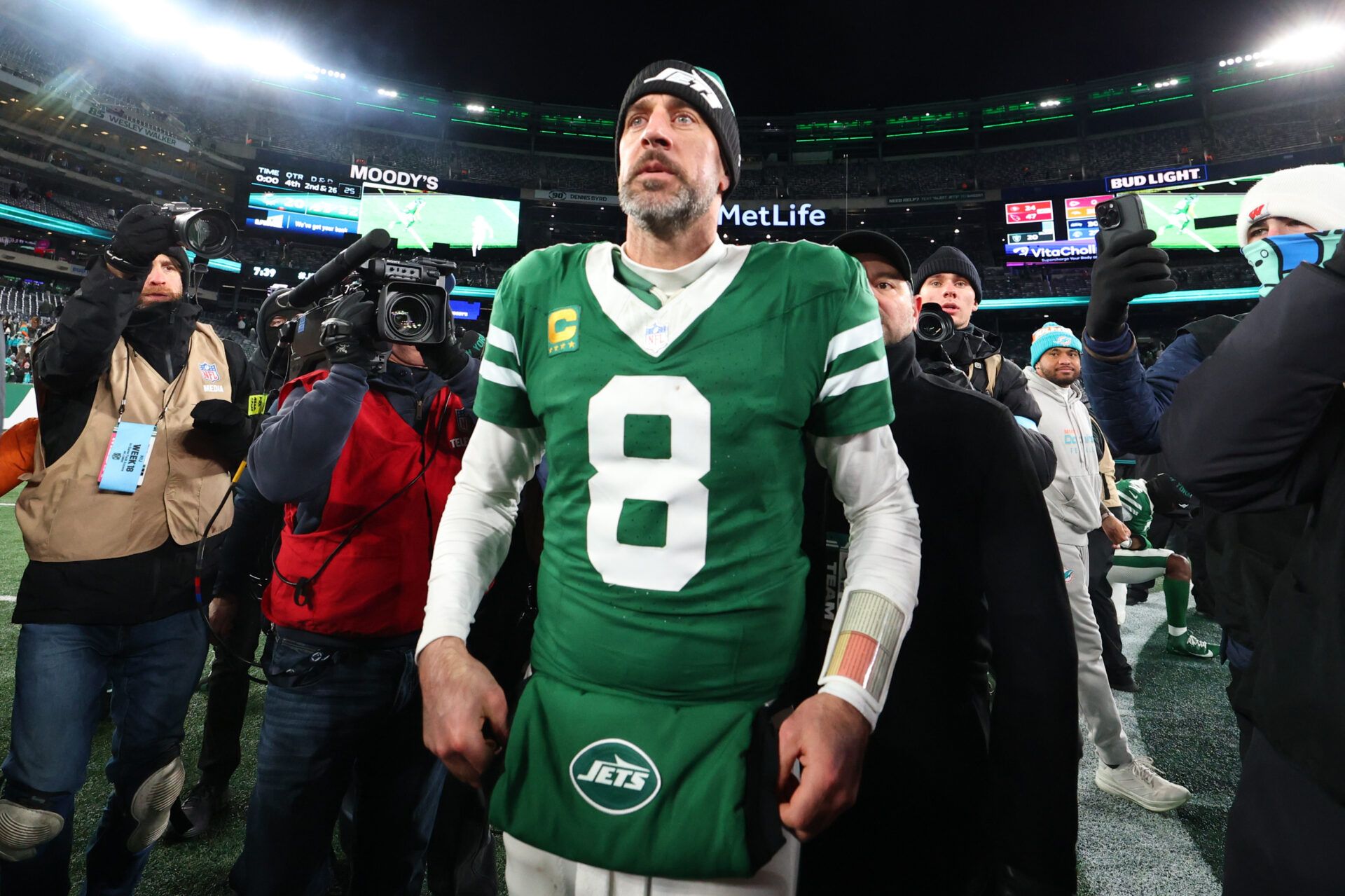
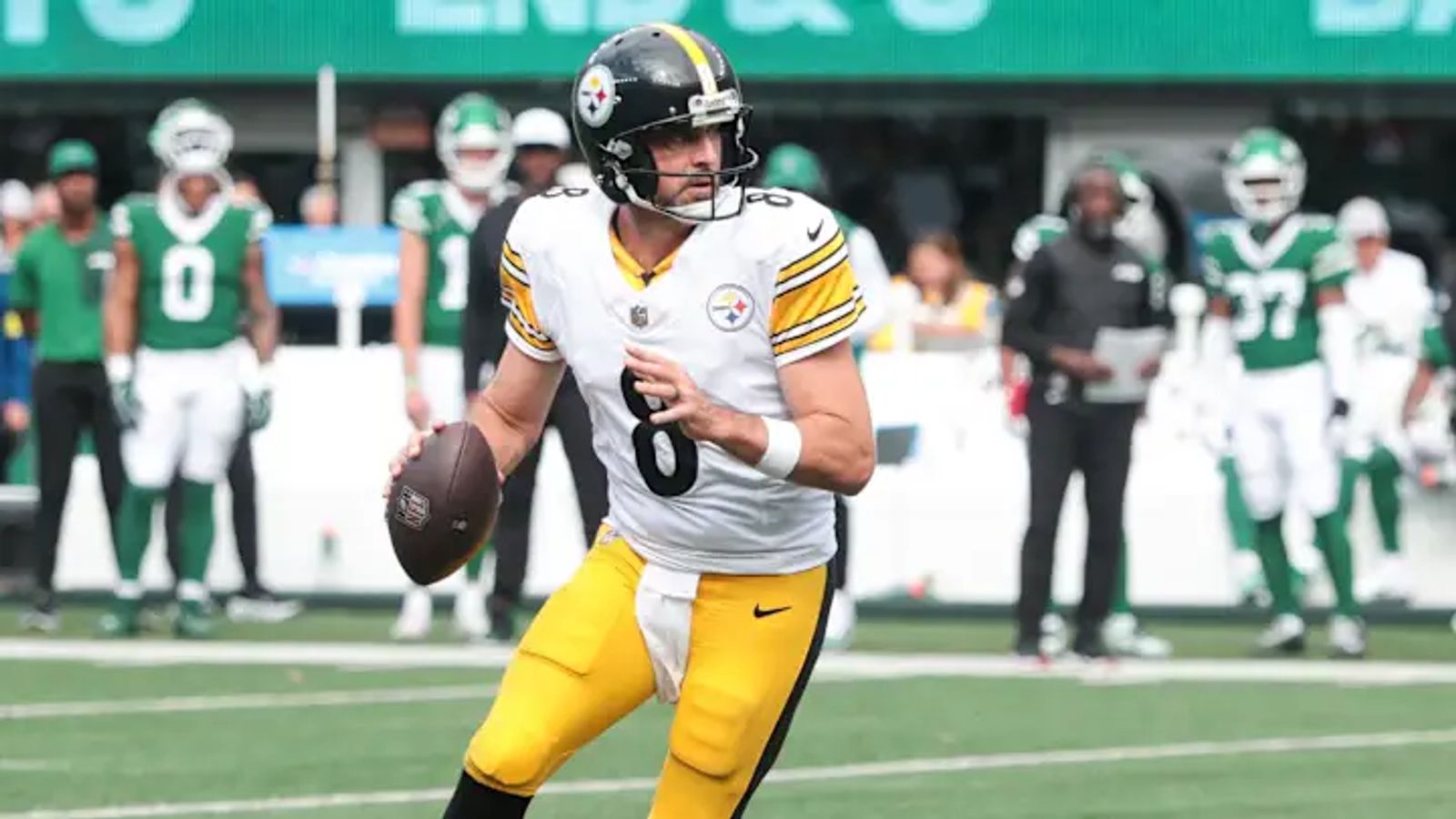
Aaron Rodgers’ current signing status remains one of the most closely watched storylines across the NFL offseason landscape. Following the conclusion of his tenure with the New York Jets, the four-time NFL Most Valuable Player entered unrestricted free agency. As teams evaluate their quarterback needs, Rodgers evaluates potential contenders while considering retirement or a new contract.
Current Contract Status and Free Agency Breakdown
Understanding Aaron Rodgers’ status requires looking at how NFL contract mechanics and free agency operate for veteran quarterbacks. After completing his contract obligations and subsequent roster adjustments with the New York Jets, Rodgers became an unrestricted free agent. This status allows him to negotiate directly with all 32 NFL franchises without draft pick compensation or right-of-first-refusal restrictions tied to restricted agents.
In the NFL, an unrestricted free agent (UFA) is any player with four or more accrued seasons whose contract has expired or been terminated before its official expiration date. Because Rodgers possesses two decades of professional experience, he is not subject to the waiver system that governs younger players. He maintains complete autonomy over his contract discussions, scheme preferences, and team selection.
- Contract Status Overview
- Unrestricted Free Agent (UFA)
- Direct Negotiations with Any NFL Team
- No Draft Pick Compensation Required
- Full Autonomy Over Contract Terms
- Unrestricted Free Agent (UFA)
While several quarterback-needy teams have explored veteran market options, a signed agreement requires alignment across multiple variables: roster fit, offensive philosophy, financial flexibility under the salary cap, and Rodgers’ personal commitment to playing another season. Until an official contract is filed with the NFL Management Council and cleared by the league office, Rodgers remains unsigned.
Aaron Rodgers' NFL Career Timeline and Transition Points
To contextualize Rodgers’ current standing, it is helpful to trace the pivotal transition points that brought him to free agency. Drafted 24th overall by the Green Bay Packers in the 2005 NFL Draft, Rodgers spent three seasons developing behind Hall of Fame quarterback Brett Favre before assuming the starting role in 2008.
Over 18 seasons in Green Bay, Rodgers established one of the most decorated individual resumes in professional football history:
- Super Bowl XLV Champion & MVP: Led Green Bay to a victory over the Pittsburgh Steelers in February 2011.
- Four-Time NFL MVP: Won the league’s highest individual honor in 2011, 2014, 2020, and 2021.
- Ten-Time Pro Bowler: Selected to ten Pro Bowl rosters and earned four First-Team All-Pro selections.
- Efficiency Records: Set the NFL single-season passer rating record (122.5 in 2011) and maintained the lowest career interception percentage in league history.
In April 2023, after extensive offseason deliberations, Green Bay traded Rodgers to the New York Jets in exchange for draft compensation, including a swap of first-round picks and future conditional selections. The trade was intended to elevate a young, talented Jets roster into immediate championship contention.
However, Rodgers’ inaugural campaign in New York ended almost immediately when he suffered a torn Achilles tendon just four snaps into his Week 1 debut against the Buffalo Bills. Following an intensive rehabilitation program, Rodgers returned to action for the 2024 season. Despite individual highlights and moments of vintage arm strength, the Jets struggled to achieve consistent team success, prompting organizational changes in the front office and coaching staff. Following the season, both parties agreed to part ways, placing Rodgers on the open market.
Financial History and Salary Cap Mechanics
Rodgers’ previous contracts illustrate the complex financial engineering modern NFL franchises use to manage high-earning quarterbacks. When Rodgers was traded to New York, he agreed to a restructured two-year, $75 million fully guaranteed contract, taking a voluntary $35 million pay cut from his previous Green Bay extension to provide the Jets with salary cap relief to sign surrounding talent.
The table below outlines the structural differences, financial figures, and cap impacts across Rodgers' major contract phases:
| Contract Phase | Primary Team | Total Value / Structure | Average Annual Value (AAV) | Key Financial Characteristics |
|---|---|---|---|---|
| Packers Extension (2022) | Green Bay Packers | 3 Years / $150.8 Million | $50.3 Million | Fully guaranteed mechanics in first two years; heavy dead-money acceleration upon trade. |
| Jets Restructure (2023–2024) | New York Jets | 2 Years / $75.0 Million | $37.5 Million | Voluntary salary reduction; heavily structured around option bonuses and void years to lower immediate cap hits. |
| Free Agency (Current) | Open Market | Negotiable | Subject to Market | Open to short-term, incentive-laden deals or veteran-minimum structures depending on target team cap space. |
When a veteran player of Rodgers’ stature enters free agency, prospective teams must account for both cash outlay and salary cap management. Modern NFL contracts frequently utilize "option bonuses" and "dummy/void years"—future contract years that automatically void before the season starts—to spread a signing bonus's cap hit across up to five league years.
For any team considering signing Rodgers, contract length and guaranteed money are the primary negotiation variables. A prospective franchise must balance offering competitive compensation against maintaining sufficient room under the NFL salary cap to sign draft picks, retain core talent, and manage in-season practice squad and injury replacements.
Evaluating Potential Landing Spots and Team Requirements
If Aaron Rodgers chooses to sign with a new team rather than retire, candidate franchises generally share a specific set of operational and structural traits. Not every team seeking a starting quarterback represents a practical fit for a future Hall of Famer in the final phase of his career.
Key Criteria for Prospective Teams
- Immediate Win-Now Roster: Rodgers is unlikely to sign with a rebuilding franchise undergoing a multi-year roster teardown. Candidate teams typically feature an established offensive line, elite skill-position talent, and a competitive defense.
- Offensive System Familiarity: Scheme alignment is critical. Systems derived from the West Coast offense or the Mike Shanahan/Matt LaFleur coaching tree offer familiar terminology and pass-protection rules that minimize learning curves.
- Organizational Autonomy: Rodgers historically operates best with head coaches and offensive coordinators who allow him wide latitude at the line of scrimmage to adjust protections, audibilize plays, and alter route concepts based on pre-snap defensive looks.
- Cap Space and Roster Flexibility: Signing a veteran quarterback requires sufficient cap space to absorb base salary and performance incentives without compromising depth at other premium positions such as edge rusher and left tackle.
Teams fitting this profile generally fall into two categories: contending teams whose young starter suffered a major injury or developmental setback, and fringe playoff teams that feel an elite veteran passer is the final missing piece for a championship run.
Retirement Considerations vs. Continuing Career
Alongside potential contract offers, retirement remains a viable option for Rodgers. Deciding whether to return for a 21st NFL season involves evaluating several interconnected physical, financial, and personal factors.
- Decision Factors for Aaron Rodgers
- Physical Health & Durability (Post-Achilles recovery, age management)
- Competitive Motivation (Chasing a second Super Bowl ring)
- Off-Field Pursuits (Media ventures, business investments, broadcasting)
- Roster Quality of Available Suitors (Win-now environment vs. rebuilding)
From a physical perspective, playing quarterback in the modern NFL imposes severe wear and tear. Managing soft-tissue recovery, joint maintenance, and pocket mobility becomes increasingly demanding for players in their 40s. While Rodgers demonstrated restored arm strength after his 2023 Achilles surgery, sustained physical performance over a 17-game regular season plus postseason demands total physical commitment.
Off the field, Rodgers has cultivated extensive business and media interests. With established platforms, commercial endorsements, and prospective broadcasting or podcasting opportunities, he does not face financial pressure to continue playing. Consequently, the decision to sign with a team comes down to competitive drive and the presence of a realistic path to competing in another Super Bowl.
Frequently Asked Questions
Has Aaron Rodgers signed a contract with a new team yet?
No, Aaron Rodgers has not officially signed a contract with a new NFL team. He remains an unrestricted free agent evaluating his options, which include signing with a contender or retiring from professional football.
Why did Aaron Rodgers part ways with the New York Jets?
The decision to part ways stemmed from a combination of organizational restructuring following the 2024 season, salary cap considerations, and a mutual recognition that the team's championship window with Rodgers had closed.
Can Aaron Rodgers sign with an NFL team at any time during the offseason?
Yes. Because Rodgers is an unrestricted free agent and not bound by franchise tags or restricted tenders, he is eligible to sign with any NFL team at any point during free agency, training camp, or the regular season.
How does Rodgers' age affect his free-agent market value?
While Rodgers' experience and elite processing speed remain major assets, his age naturally limits contract length. Prospective teams generally offer short-term, one- or two-year agreements with heavy incentive structures tied to playing time and playoff success.
What happens to a team's salary cap if Rodgers signs a incentive-heavy contract?
NFL rules classify performance incentives as either "Likely to Be Earned" (LTBE) or "Not Likely to Be Earned" (NLTBE). LTBE incentives count against the current season's salary cap immediately, while NLTBE incentives only impact the following year's cap if the performance thresholds are achieved.
What to Watch as NFL Offseason Deadlines Approach
For fans and analysts tracking Aaron Rodgers’ signing status, several key league events and administrative deadlines will dictate how his situation unfolds:
- Official League Transaction Wire: All executed contracts must be submitted to the league office and published on the daily NFL transaction wire. Until a deal appears on this wire, any reports remain unconfirmed agreements in principle.
- NFL Organized Team Activities (OTAs) and Mandatory Minicamps: Late spring practices represent a critical milestone. If a veteran quarterback intends to master a new offensive playbook and build chemistry with receivers, signing prior to mandatory minicamps is highly advantageous.
- Pre-Draft Roster Assessments: The annual NFL Draft in late April often serves as a catalyst. Teams that fail to draft a top-tier quarterback prospect frequently turn to the veteran free-agent market immediately following the draft's conclusion.
- Training Camp Deadlines: Late July marks the arrival of training camp. Quarterbacks signing after camp opens face steep challenges learning terminology and securing necessary reps with the first-team offense.
Monitoring official team communications, credentialed beat reporters, and league wire releases provides the most reliable way to verify when—and if—Aaron Rodgers signs his next NFL contract.
EDITORIAL CATEGORY METADATA: