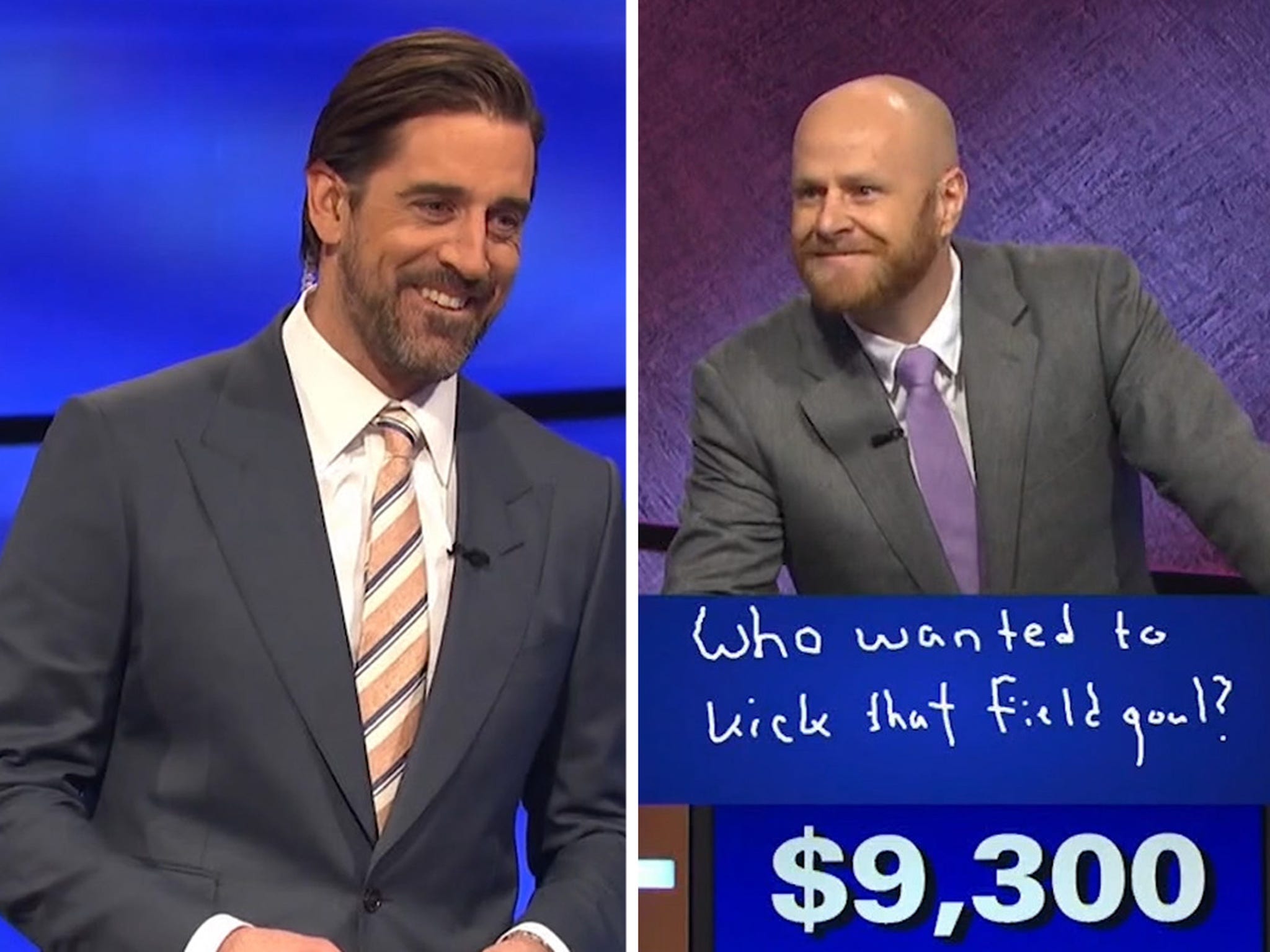
Aaron Rodgers’ legacy on Celebrity Jeopardy! is defined by a dominant 2015 tournament victory and a polarizing 2021 guest-hosting stint. While his gameplay was nearly flawless, his time as a host produced several viral "stumbles"—most notably a contestant’s pointed jab at the Green Bay Packers' postseason strategy—and a hosting style that sparked intense debate among the show’s dedicated fanbase.
As we look back from 2026, Rodgers remains one of the few professional athletes to have successfully navigated both sides of the Jeopardy! lectern. His journey with the show was not merely a celebrity cameo; it was a calculated foray into professional broadcasting that revealed both his intellectual depth and his vulnerability to public "roasting." Whether it was his methodical preparation to succeed Alex Trebek or the awkward viral moments that occurred during his two-week tenure, Rodgers' involvement with the program remains a significant chapter in the intersection of sports and entertainment history.
The 2015 Championship: A Masterclass in Celebrity Play
Before he ever held the host's microphone, Aaron Rodgers proved his intellectual mettle as a contestant. In May 2015, during Celebrity Jeopardy!’s "Power Players" week, Rodgers faced off against distinct personalities: Kevin O’Leary (of Shark Tank fame) and Mark Kelly (then a retired astronaut, now a U.S. Senator).
Rodgers’ performance was characterized by the same poise he exhibited in the pocket. He didn't just win; he commanded the board. He finished the game with $37,500, which was rounded up to a $50,000 donation for his chosen charity, the Midwest Athletes Against Childhood Cancer (MACC) Fund. Unlike many celebrity contestants who struggle with the timing of the buzzer or the phrasing of responses, Rodgers was technically sound.
The viral nature of this appearance stemmed from the contrast between his "tough guy" NFL persona and his obvious enthusiasm for trivia. Fans were surprised not just by his win, but by his encyclopedic knowledge in categories ranging from history to pop culture. This victory laid the groundwork for his eventual return to the show in a much more prominent role following the passing of the legendary Alex Trebek.
The 2021 Guest Hosting Stint: From Gridiron to Podium
Following the death of Alex Trebek in late 2020, Jeopardy! embarked on a series of guest hosts to finish out the 37th season. Aaron Rodgers was announced as a guest host for a two-week block in April 2021. This move was initially met with skepticism by the "Jeopardy! purists" who favored seasoned broadcasters like Ken Jennings or Buzzy Cohen.
Rodgers took the role with extreme seriousness, reportedly spending hours "studying film" of Trebek’s old episodes. He focused on the mechanics of the game: how to transition between clues, how to handle incorrect responses without being discouraging, and how to maintain the "flow" that Trebek had perfected over decades.
Technical Preparation and Style
Rodgers' hosting style was described as "Zen-like." He opted for a low-key, monotone delivery that some viewers found soothing and others found lacking in energy. This "stumble" in energy levels was a frequent point of critique on social media. However, his technical accuracy was high. He rarely fumbled the pronunciations of difficult names or terms, a common pitfall for other guest hosts like Dr. Mehmet Oz or Savannah Guthrie.
The Viral "Field Goal" Roast: A Shocking On-Air Moment
The most famous viral moment of Rodgers’ Jeopardy! career occurred during his very first episode as host. It was not a mistake by Rodgers himself, but rather a "stumble" in his persona caused by a contestant named Scott Shewfelt.
During the Final Jeopardy! round, the category was "Daytime TV Personalities." Shewfelt, who realized he didn't know the correct answer (which was "Who is Mister Rogers?"), used his response space to troll the host. He wrote: "Who wanted to kick that field goal?"
This was a direct reference to the Green Bay Packers’ controversial decision to kick a field goal late in the 2021 NFC Championship game against the Tampa Bay Buccaneers, rather than letting Rodgers try for a touchdown. The decision ultimately led to the Packers losing the game and missing the Super Bowl.
The Reaction Heard 'Round the Sports World
The moment went viral instantly. Rodgers, caught off guard but maintaining his composure, gave a smirk and replied, "That is a great question. Should be correct, but unfortunately, for this game, it’s incorrect." The clip garnered millions of views across Twitter (now X) and YouTube, highlighting the unique "stumble" where Rodgers' professional failures on the field followed him into the hallowed halls of a trivia show. It remains one of the most-watched clips in the show's guest-hosting era.
Critiques and "Shocking Stumbles" in Hosting Execution
While Rodgers was generally praised for his preparation, his tenure was not without its awkward moments. Fans and critics pointed to several areas where his performance faltered, often referred to as his "stumbles" behind the lectern:
- The "Lull" in Energy: Many viewers noted that Rodgers’ voice was almost too calm. In a game that requires a certain level of momentum and "pop," Rodgers’ delivery sometimes felt flat, leading to a perceived lack of excitement during high-stakes Daily Doubles.
- The Interaction Gap: One of Trebek’s skills was the "post-clue banter." Rodgers occasionally struggled to find the right words when a contestant gave a particularly funny or tragic anecdote during the interview segment. These silences were often highlighted in "cringe" compilations on social media.
- The "Packers Bias" Perception: Though Rodgers was impartial, the show’s writers leaned heavily into sports clues during his tenure. Some non-sports fans felt the show had "stumbled" away from its academic roots to cater to the host’s NFL background.
Comparative Performance: Rodgers vs. Other Guest Hosts
To understand the impact of Rodgers’ performance, it is helpful to compare his metrics and reception with other notable guest hosts from that same transitional period.
| Host | Tenure Period | Charitable Impact | Primary Criticism | Viral Highlight |
|---|---|---|---|---|
| Aaron Rodgers | April 2021 | $1 million+ | Monotone delivery | The "Field Goal" joke |
| Ken Jennings | Jan–Feb 2021 | N/A (Standard) | Fast pacing | First host post-Trebek |
| Mayim Bialik | May–June 2021 | $1 million+ | Over-enthusiasm | "The Call" controversy |
| LeVar Burton | July 2021 | $200,000+ | Nervous energy | Long-awaited fan favorite |
| Buzzy Cohen | May 2021 | $1 million+ | "Too smug" for some | Tournament of Champions |
Rodgers raised over $1 million for the North Valley Community Foundation during his stint, as the show matched the winnings of the contestants. Despite the "stumbles," his episodes saw a significant boost in ratings, particularly among the 18–49 demographic, proving that his viral moments were a net positive for the show’s visibility.
The Long-Term Impact on Rodgers’ Media Career
By 2026, we can see that Rodgers' time on Jeopardy! was a pivotal moment in his transition from "active athlete" to "media personality." The "shocking stumbles" he experienced—being roasted by contestants and facing the scrutiny of a non-sports audience—humanized him in a way that his MVP seasons did not.
His willingness to be the butt of the joke regarding the field goal decision showed a level of self-deprecation that later served him well in his recurring media appearances and his eventual move into full-time broadcasting. It also served as a "litmus test" for athletes hosting non-sports programming. Rodgers proved that while an athlete can have the "smarts" to handle the material, the "theatre" of television requires a different kind of stamina.
Frequently Asked Questions
Did Aaron Rodgers actually win Celebrity Jeopardy?
Yes, Aaron Rodgers won his episode of Celebrity Jeopardy! in 2015. He competed against Kevin O'Leary and Mark Kelly. He led for most of the game and finished with a total that resulted in a $50,000 donation to the MACC Fund.
What was the "field goal" viral moment about?
During Rodgers' first day as a guest host in 2021, a contestant named Scott Shewfelt used his Final Jeopardy response to ask, "Who wanted to kick that field goal?" This was a jab at the Green Bay Packers' coaching staff for a decision that contributed to their loss in the NFC Championship game just months earlier.
How much money did Aaron Rodgers raise as a host?
During his two-week guest-hosting stint, the total winnings of all contestants were matched by the show and donated to the North Valley Community Foundation. This amounted to over $1 million for the charity, which focuses on disaster relief and community support in Rodgers' home region of Northern California.
Why was Rodgers' hosting style considered polarizing?
Rodgers adopted a very low-key, serious tone. While many fans appreciated his respect for the game and his technical proficiency, others felt he lacked the charisma and vocal inflection necessary to keep the show's energy high, leading to accusations that his performance was "boring" or "monotone."
Did Aaron Rodgers ever want to be the permanent host?
In 2021, Rodgers openly expressed interest in becoming the permanent host of Jeopardy!, stating that he believed he could balance the job with his NFL career. While he was a top contender in terms of ratings, the show eventually moved in a different direction, first with Mike Richards and later with the rotation of Mayim Bialik and Ken Jennings.
Analyzing the Post-Jeopardy Legacy
The most significant takeaway from Aaron Rodgers' Jeopardy! journey is the evolution of the athlete-intellectual archetype. For years, the "shocking" element for many viewers was simply that a quarterback could be "that smart." However, Rodgers’ stint moved the conversation beyond his IQ and into his ability to manage a legacy brand like Jeopardy!.
For those looking to revisit these moments, the viral clips of his reactions to contestants and his "Zen" hosting style serve as a blueprint for how celebrities can navigate high-pressure, non-traditional roles. While he had his stumbles—mostly in the form of social media critiques and a few awkward silences—his tenure is largely viewed as a successful experiment that bridged the gap between the sports world and the general knowledge community.