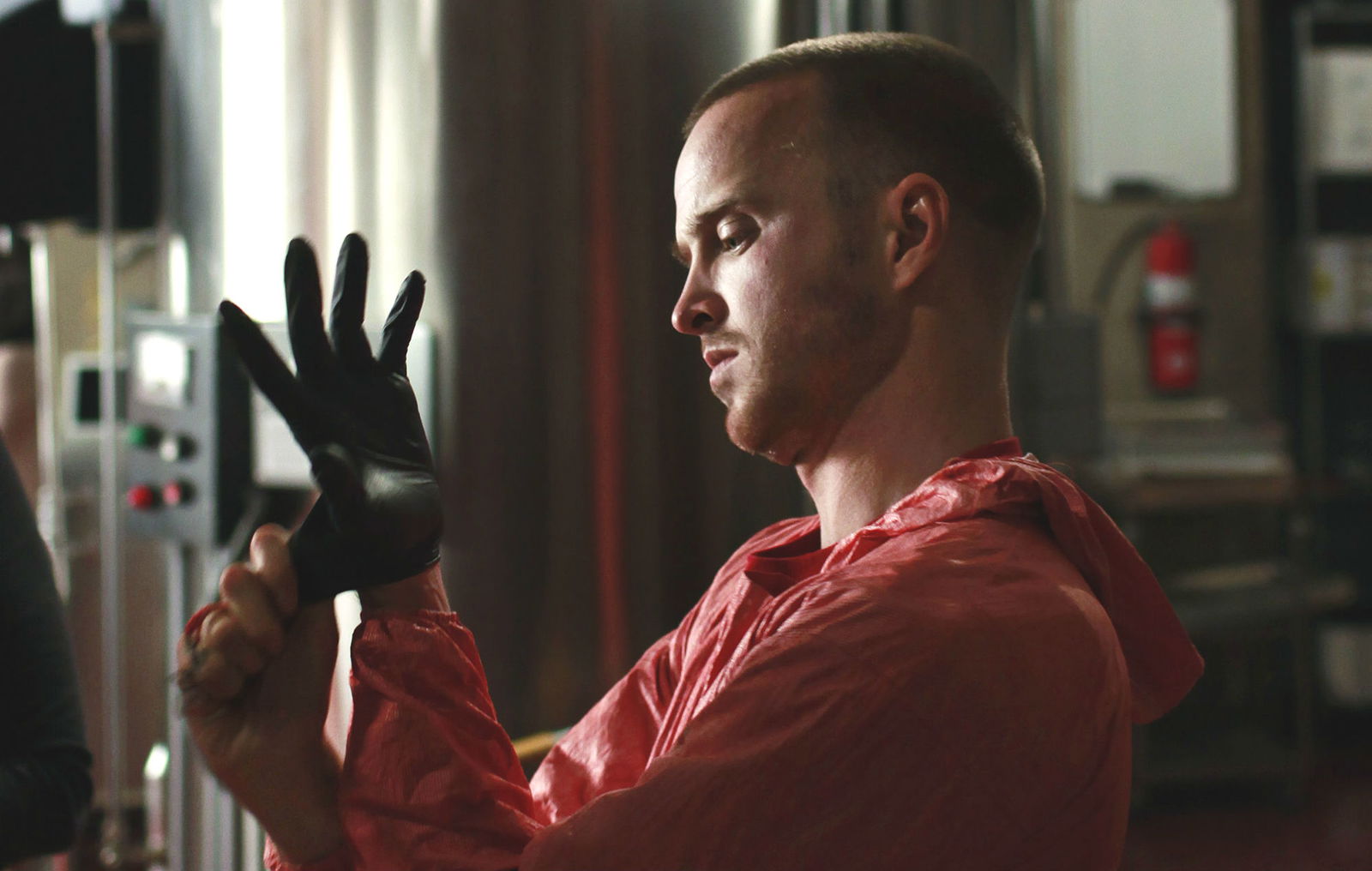
Before landing his career-defining role as Jesse Pinkman in 2008, Aaron Paul’s net worth was estimated to be below $500,000, primarily consisting of liquid assets from commercial residuals and guest-starring fees. Despite over a decade in the industry, he was famously struggling financially at the time of his Breaking Bad audition.
The trajectory of Aaron Paul (born Aaron Paul Sturtevant) offers a quintessential look at the "working actor" economy in Hollywood during the late 1990s and early 2000s. To understand his net worth before he became a household name, one must analyze the specific pay scales of SAG-AFTRA during that era, the lucrative nature of national commercial campaigns, and the volatile income associated with guest-starring roles on network television.
The Early Career Framework: 1996–2000
Aaron Paul moved to Los Angeles in 1996 with roughly $6,000 saved from a job at a Pizza Hut in Idaho. His initial years were defined by the standard entry-level milestones of a young actor. In 1996, he was a runner-up in the International Modeling and Talent Association (IMTA) competition, which provided him with the representation necessary to begin auditioning for professional SAG (Screen Actors Guild) work.
During this five-year window, his earnings were almost exclusively derived from three sources:
- National Television Commercials: This was Paul’s primary financial engine. He appeared in high-profile spots for brands like Juicy Fruit, Corn Pops, and Vanilla Coke.
- Music Videos: He appeared in videos for bands like Korn ("Thoughtless") and Everlast ("White Trash Beautiful").
- Minor Guest Spots: Short-lived appearances on shows like Beverly Hills, 90210 and Melrose Place.
While these roles do not carry high prestige, they were financially foundational. A national commercial in the late 90s could generate anywhere from $20,000 to $75,000 in residuals over its primary run, depending on how often it aired. For a young actor with low overhead, two or three successful commercial bookings a year provided a comfortable, albeit modest, middle-class income.
The Guest-Star Circuit and SAG Pay Scales (2001–2006)
By the early 2000s, Paul transitioned from commercials to "co-star" and "guest-star" roles in television procedurals. This period is critical for a breakdown of his pre-Breaking Bad earnings, as it represents the bulk of his professional resume.
During this era, the SAG "Guest Star" minimum for a half-hour or one-hour episodic show was approximately $3,000 to $5,000 per episode for a weekly contract. Aaron Paul was prolific in this niche, appearing in:
- The X-Files (2001)
- CSI: Crime Scene Investigation (2001)
- ER (2002)
- CSI: Miami (2003)
- Veronica Mars (2005)
- Criminal Minds (2005)
Understanding the "Take-Home" Reality
While a $5,000 check for a week's work sounds substantial, the "working actor" tax is significant. For every guest spot Paul booked, the gross earnings were typically reduced by the following:
- Talent Agent Commission: 10%
- Manager Commission: 10–15%
- Legal/Business Management (Optional): 5%
- Taxes (Federal and CA State): ~30–35%
Consequently, a $5,000 guest-starring fee often resulted in a net deposit of roughly $2,200. Given that guest spots are intermittent, an actor might book only five or six of these per year. When factoring in Los Angeles rent, health insurance (if not meeting SAG thresholds), and professional expenses (headshots, acting classes), Paul’s net worth remained stagnant rather than exponential during this period.
The Big Love Era: A Financial Turning Point
In 2007, a year before Breaking Bad premiered, Aaron Paul secured a recurring role on the HBO series Big Love as Scott Quittman. This was his first taste of consistent, "recurring" television income.
HBO, known for premium pay scales even for supporting talent, likely paid Paul in the range of $10,000 to $15,000 per episode for his appearances. Between 2007 and 2011, he appeared in 14 episodes. However, before the pilot of Breaking Bad was picked up, he had only filmed a handful of these. This role provided the financial stability that allowed him to remain in Los Angeles while waiting for a "series regular" opportunity, but it did not yet elevate his net worth into the millions.
The 2008 Financial Crisis and the "Broke" Narrative
There is a well-documented narrative that Aaron Paul was "broke" at the time he was cast as Jesse Pinkman. In various verified interviews, Paul has stated that he had very little money in his bank account—sometimes cited as less than $1,000—when the Breaking Bad pilot was being cast.
This "broke" status is a common phenomenon for character actors. While his total career earnings up to 2008 likely exceeded $1 million gross, the nature of the industry means that income is not distributed evenly. Long stretches between jobs (especially during the 2007–2008 Writers Guild of America strike) can deplete savings rapidly.
Furthermore, the 2008 housing market crash impacted many actors who had invested their commercial residuals into real estate. While Paul had been working for 12 years, he lacked the "Series Regular" contract that provides the high six-figure or seven-figure payouts required to build a permanent high-net-worth profile.
Comparative Earnings Breakdown: Pre-Breakout vs. Post-Breakout
The following table illustrates the shift in Paul’s earning potential based on industry standards and verified reporting from the transition into his career-defining role.
| Era | Primary Income Source | Estimated Per-Project Pay (Gross) | Annual Income Range (Est.) |
|---|---|---|---|
| Late 90s | Commercials (Juicy Fruit, Corn Pops) | $20,000 - $50,000 (Residuals) | $40,000 - $80,000 |
| Early 2000s | TV Guest Spots (CSI, ER, X-Files) | $3,000 - $7,000 | $50,000 - $100,000 |
| 2007 (Pre-BB) | Recurring Role (Big Love) | $10,000 - $15,000 | $100,000 - $150,000 |
| 2008 (BB S1) | Series Regular (Breaking Bad) | $10,000 - $20,000 (Per Episode) | $70,000 - $140,000 |
| 2013 (BB S5) | Series Regular (Lead Status) | $150,000 - $200,000 (Per Episode) | $2M - $3M |
Verification of the $500,000 Estimate
Why is the $500,000 figure cited as a ceiling for his pre-2008 net worth? In financial analysis, net worth is calculated as assets minus liabilities. While Paul may have grossed significant sums over a decade, his assets in 2008 were largely limited to his personal vehicle, home equity (if any, given the 2008 market), and modest retirement contributions through the SAG Pension & Health plan.
The "verified" aspect of his profile during this time confirms he was not a "trust fund" actor. Every dollar in his net worth was earned through labor-intensive auditioning and performance. By the time Breaking Bad began its climb to cultural dominance, Paul was essentially starting from a near-zero liquid balance, despite his tenured history in the union.
How Commercial Residuals Functioned as a Safety Net
For a "working actor" like Paul, residuals from the Juicy Fruit or Corn Pops commercials were his most consistent assets. Unlike guest spots, which pay a flat fee, a national commercial pays "session fees" (for the day of work) and "residuals" (every time the ad airs). If an ad is successful and runs for 18 months, an actor can receive quarterly checks that cover basic living expenses without needing to step onto a set. This explains how he maintained a professional presence in Los Angeles for 12 years without a secondary "survival job" like waiting tables.
Common Myths About His Early Wealth
One common misconception is that his runner-up status at IMTA in 1996 came with a cash prize that funded his early career. In reality, talent competitions like IMTA are showcases that cost participants money; the "prize" is the opportunity to be seen by agents.
Another myth is that his role in the film K-PAX (2001) alongside Jeff Bridges and Kevin Spacey provided a massive windfall. While a supporting role in a major studio film is prestigious, the pay for a non-starring role at that time was often scaled to the SAG theatrical minimum plus a small percentage, likely totaling less than $50,000 before taxes and fees.
Did the 2007 Writers Strike Affect Him?
The 2007–2008 WGA strike was a devastating period for actors of Paul’s status. Production across Hollywood halted, and guest-starring opportunities vanished for months. This timing coincided exactly with the period just before Breaking Bad was greenlit, which heavily contributed to the "financial zero" state he was in when he finally landed the role of Jesse Pinkman.
How much did Aaron Paul make for the Breaking Bad pilot?
While exact figures are rarely public, industry standards for a supporting "series regular" in a basic cable (AMC) pilot in 2008 were typically between $10,000 and $20,000. Because the show was not yet a hit and AMC was not yet a powerhouse, the initial pay was relatively modest compared to his later earnings of $150,000+ per episode.
What was his most famous commercial before Breaking Bad?
His most financially significant commercial was likely the "Juicy Fruit" spot from the late 90s. This commercial was a national mainstay and provided the residuals that allowed him to transition from a commercial actor into a television guest star.
Was Aaron Paul rich before 2008?
No. By Hollywood standards, he was a "successful working actor," which means he was able to pay his bills solely through acting, but he did not have significant wealth, luxury assets, or a high net worth. He was essentially living "check to check," albeit with higher-than-average checks.
Did he have any other jobs besides acting?
In the very beginning of his move to Los Angeles, Paul worked as an usher at the Universal Studios Movie Theatre in Hollywood. However, for the majority of the decade leading up to Breaking Bad, he worked exclusively as an actor.
Historical Perspective on Financial Persistence
Aaron Paul’s financial history before 2008 serves as a benchmark for researchers studying the economics of the entertainment industry. It highlights the distinction between "fame" and "net worth." Paul had a face that millions recognized from commercials and guest spots, yet his bank account reflected the precarious nature of gig-based labor in a high-cost-of-living city.
For those analyzing celebrity wealth trajectories, Paul’s story is a reminder that a breakout role does not just increase an actor’s net worth; it fundamentally changes their financial category from a "service-based earner" to an "asset-based earner" through syndication, backend points, and massive salary escalations.