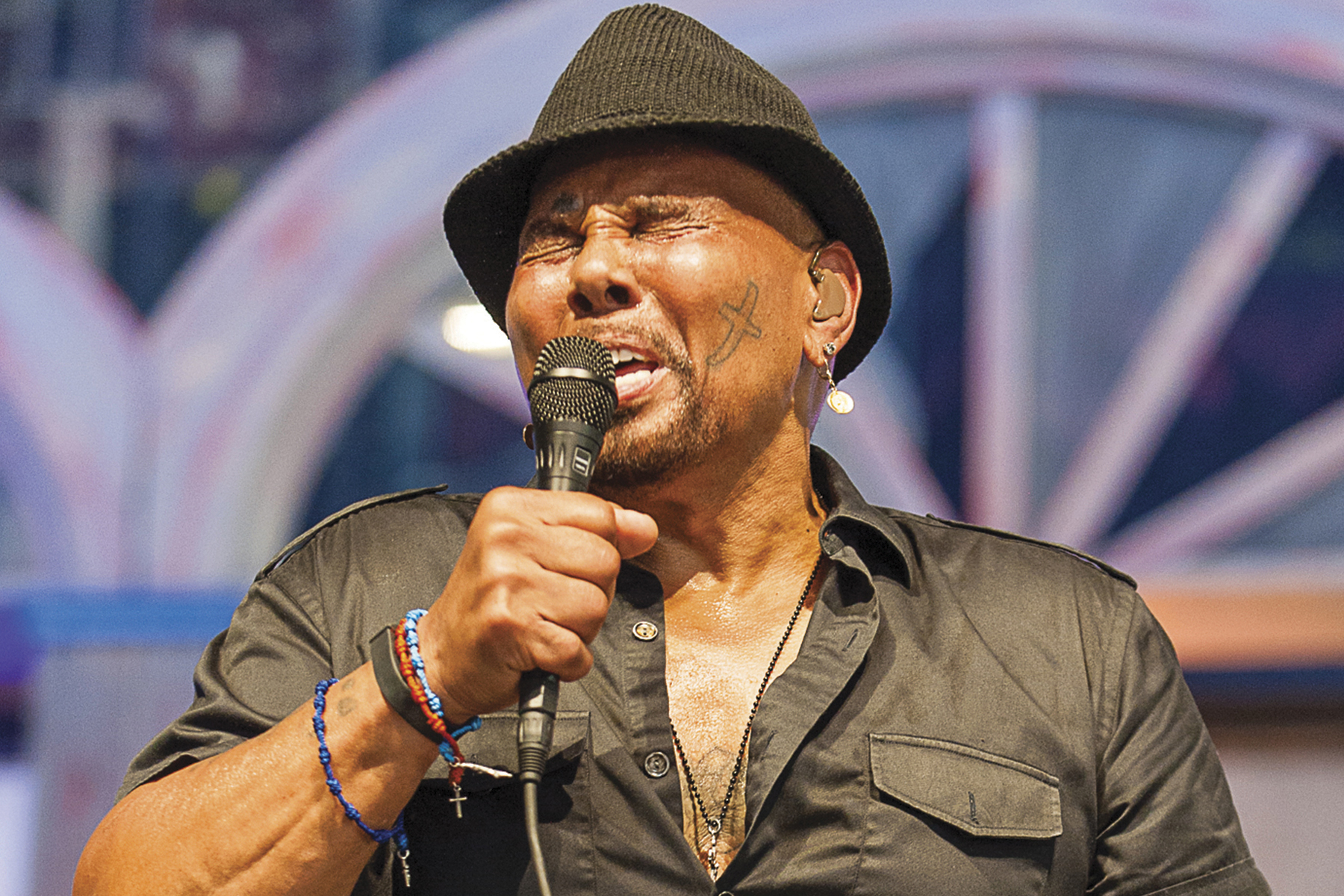
Aaron Neville is a legendary American R&B and soul singer celebrated for his unmistakable vibrato and "angelic" falsetto. Over a career spanning more than six decades, he has navigated genres ranging from gospel and country to New Orleans funk and jazz. He is best known for his 1966 hit "Tell It Like It Is," his chart-topping duets with Linda Ronstadt, and his pivotal role in the world-renowned Neville Brothers band.
The Origins of a New Orleans Icon
Born on January 24, 1941, in New Orleans, Louisiana, Aaron Neville was raised in a family where music was as essential as oxygen. Growing up in the Calliope Projects, he was immersed in a melting pot of sounds that included the sanctified music of the Black church, the street-level rhythms of the Mardi Gras Indians, and the emerging sounds of rhythm and blues. Neville’s vocal style was particularly influenced by the doo-wop groups of the 1950s and the smooth delivery of Nat King Cole, but it was his unique ability to blend high-register vulnerability with a rugged physical presence that set him apart.
In his early years, Neville worked as a longshoreman, a job that stood in stark contrast to his delicate singing voice. This duality—the "gentle giant"—became a defining characteristic of his public persona. His early recordings for local labels like Minit Records showed promise, but it was his collaboration with producer Allen Toussaint that eventually catalyzed his national breakthrough. Even in these formative years, Neville’s voice carried a spiritual weight, suggesting a depth of experience that resonated far beyond the confines of New Orleans.
"Tell It Like It Is" and the Early Solo Years
The year 1966 marked a turning point in Aaron Neville’s career with the release of "Tell It Like It Is." The song reached number one on the Billboard R&B chart and number two on the Billboard Hot 100, becoming a quintessential soul ballad. Its success was both a blessing and a challenge; while it established him as a major star, the financial complexities and contractual disputes common in the 1960s music industry meant that Neville did not immediately reap the full rewards of his success.
Following this massive hit, Neville struggled to find a follow-up of equal magnitude for several years. This period was marked by personal struggles, including bouts with drug addiction and legal issues. Despite these hurdles, he never stopped singing. His resilience during the late 1960s and 1970s is a testament to his dedication to his craft. He continued to record locally, often working with his brothers Art, Charles, and Cyril, laying the groundwork for what would become one of the most influential family acts in music history.
The Neville Brothers: Architects of New Orleans Funk
While Aaron had achieved solo stardom, the formation of The Neville Brothers in the late 1970s transformed the musical landscape of New Orleans. The band combined the diverse talents of the four brothers: Art’s keyboard prowess and founding role in The Meters, Charles’s jazz-influenced saxophone, Cyril’s percussion and reggae leanings, and Aaron’s ethereal vocals.
The group’s 1989 album, Yellow Moon, produced by Daniel Lanois, remains a landmark recording. It successfully captured the atmospheric, swampy essence of the Louisiana bayou while addressing social and political issues. The title track and "Sister Rosa" became staples of their live performances. For decades, The Neville Brothers served as the closing act for the New Orleans Jazz & Heritage Festival, solidifying their status as the city's cultural ambassadors. Their music was a masterclass in "second-line" rhythms and tight-knit vocal harmonies that bridged the gap between African traditions and modern soul.
The 1990s Commercial Revival and Duet Success
The late 1980s and early 1990s saw a massive resurgence in Aaron Neville’s solo career, largely fueled by his collaborations with Linda Ronstadt. Their 1989 duets on Ronstadt’s album Cry Like a Rainstorm, Howl Like the Wind, including "Don't Know Much" and "All My Life," were global hits. Both songs won Grammy Awards for Best Pop Performance by a Duo or Group with Vocal.
Neville capitalized on this momentum with several high-profile solo albums:
- Warm Your Heart (1991): Produced by Linda Ronstadt and George Massenburg, this album featured "Everybody Plays the Fool," a cover of the Main Ingredient’s hit that showcased Neville’s ability to modernize R&B classics.
- The Grand Tour (1993): Neville ventured into country music, proving that his soulful vibrato could translate perfectly to the storytelling nature of the genre. The title track, originally a George Jones hit, was widely acclaimed.
- The Tattooed Heart (1995): This album continued his streak of smooth adult contemporary hits, emphasizing his position as a premiere vocal stylist.
Comparison of Key Career Eras
The following table outlines the distinct phases of Aaron Neville’s career, highlighting his primary focus and notable achievements in each.
| Era | Primary Focus | Key Album/Song | Major Achievement |
|---|---|---|---|
| Mid-1960s | Solo R&B | "Tell It Like It Is" | #1 R&B Single, #2 Hot 100 |
| Late 70s - 80s | The Neville Brothers | Yellow Moon | Established the "First Family of New Orleans Music" |
| 1989 - 1995 | Pop/Adult Contemporary | Warm Your Heart | Multiple Grammy Wins; Multi-platinum sales |
| 2000s - 2010s | Gospel & Soul Standards | I Know I've Been Changed | Return to roots; Gospel Music Hall of Fame |
| 2020s (Current) | Retirement & Legacy | Tell It Like It Is (Memoir) | Literary success; preservation of musical history |
Personal Resilience: Faith, Katrina, and Retirement
Aaron Neville’s life has been defined by his deep Catholic faith and his devotion to St. Jude, the patron saint of lost causes. He is rarely seen without his St. Jude medal and a tattoo of the saint on his left arm. This spirituality provided him with the strength to overcome a decade-long heroin addiction in the 1970s, a journey he has spoken about openly to inspire others.
In 2005, Hurricane Katrina devastated New Orleans and destroyed Neville’s home and many of his personal belongings. He eventually relocated to Nashville and later to New York, but his heart remained tied to the Crescent City. The displacement caused by Katrina was a profound emotional blow, yet it also led to a renewed focus on his gospel recordings, such as the 2010 album I Know I've Been Changed.
In 2021, Neville officially announced his retirement from touring. Citing the physical toll of life on the road and a desire to focus on his health and family, he moved into a new phase of his life. However, retirement did not mean silence. In 2023, he released his widely praised memoir, Tell It Like It Is: My Story, which provided an unfiltered look at his childhood, his struggles with addiction, and the divine interventions he believes guided his career. As of 2026, he remains an active poet and occasional recording artist, frequently sharing his reflections and new verses with his audience online.
Critical Analysis of the "Neville Sound"
What makes Aaron Neville’s voice technically significant is his mastery of the tremolo and vibrato. Unlike many soul singers who rely on grit or power, Neville’s strength lies in his control and agility. His voice has often been described as "haunting," a quality achieved by his ability to jump into a high falsetto without losing the richness of his tone.
Musicologists often point to his phrasing as a bridge between jazz and soul. He often "lags" behind the beat, a common trait in New Orleans music that creates a relaxed, "behind-the-pocket" feel. This technical choice allows the emotion of the lyrics to breathe, making even simple pop songs feel like profound spiritual confessions. His influence can be heard in contemporary artists who prioritize vocal texture over raw volume, ensuring that his stylistic DNA continues to evolve in modern R&B.
Frequently Asked Questions
Why does Aaron Neville have a tattoo on his face?
The tattoo on Aaron Neville’s cheek is a small sword, which he has stated was a result of a youthful decision among friends. While he once considered having it removed, it eventually became a part of his signature look. He also famously has a tattoo of St. Jude on his arm, reflecting his lifelong devotion to the patron saint of lost causes.
Are the Neville Brothers still performing?
As a collective, The Neville Brothers effectively ceased performing regularly following their farewell show at the 2012 New Orleans Jazz & Heritage Festival and a final tribute concert in 2015. With the passing of Charles Neville in 2018 and Art Neville in 2019, the classic lineup can no longer reunite. Aaron Neville officially retired from touring in 2021.
How many Grammy Awards has Aaron Neville won?
Aaron Neville has won four Grammy Awards. These include Best Pop Performance by a Duo or Group with Vocal (twice, with Linda Ronstadt), Best Rock Instrumental Performance (with The Neville Brothers for "Healing Chant"), and Best Country Collaboration with Vocals. His wins across such diverse categories highlight his immense versatility as an artist.
What is Aaron Neville’s most famous song?
While "Don't Know Much" was a massive commercial hit, his most iconic and enduring song is "Tell It Like It Is." Released in 1966, it is considered one of the greatest soul records of all time and has been inducted into the Grammy Hall of Fame. It remains the definitive example of his unique vocal style.
Is Aaron Neville still active in music as of 2026?
While he no longer tours or performs live concerts, Aaron Neville remains creatively active in 2026 through writing and occasional studio work. Following the publication of his memoir in 2023, he has focused heavily on poetry and spoken-word projects, occasionally releasing new recordings that reflect his current spiritual and philosophical outlook.
Exploring the Neville Discography: Next Steps for Listeners
For those looking to fully appreciate the depth of Aaron Neville’s contribution to American music, a chronological listening approach is highly recommended. To truly understand his impact, start with the 1966 solo recordings to hear the purity of his early soul voice, then transition into the 1980s work with The Neville Brothers to experience the raw power of New Orleans funk. Finally, explore his later gospel and soul-standard albums to hear how his voice matured into a vessel of profound spiritual expression.
The 2023 memoir, Tell It Like It Is: My Story, serves as an essential companion piece to his music, providing the historical and personal context required to appreciate the man behind the vibrato. Whether you are a long-time fan or a newcomer to his sound, Aaron Neville’s body of work offers a unique window into the soul of New Orleans and the enduring power of the human voice to overcome adversity.