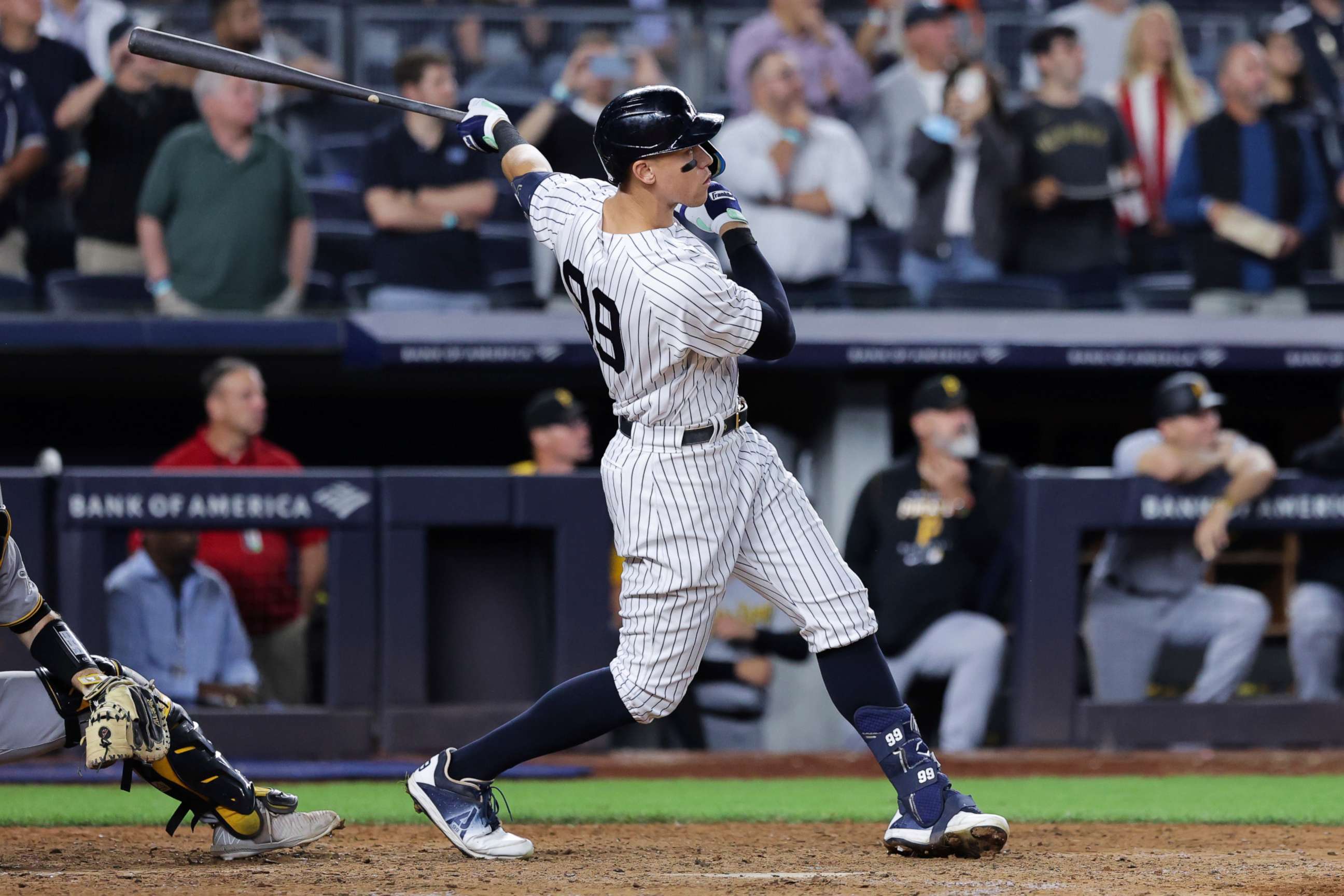
To track if Aaron Judge is on pace to break the single-season home run record, you must monitor his "home runs per game" ratio against the gold standards: 62 (American League record) and 73 (all-time MLB record). As of the 2026 season, Judge remains the most formidable power threat in baseball, requiring a consistent output of approximately one home run every 2.2 to 2.5 games to challenge these historic milestones.
The pursuit of a home run record is a grueling psychological and physical marathon that transforms every at-bat into a national event. For Aaron Judge, the captain of the New York Yankees, this pursuit is not merely about raw strength; it is a complex calculation of plate discipline, pitcher avoidance, and physical durability. When Judge is "on pace," it means he is successfully navigating the "dead zones" of the season—specifically the dog days of August—where fatigue typically saps the power of even the most elite hitters. Understanding the nuances of this chase requires looking beyond the box score to the underlying metrics that make such a feat possible in the modern era.
The Historical Benchmarks: 61, 62, and 73
When discussing Aaron Judge and home run records, there is a necessary distinction between the American League (AL) record and the Major League Baseball (MLB) all-time record. For decades, the number 61—set by Roger Maris in 1961—stood as the pinnacle of AL achievement and, for many purists, the "clean" MLB record. In 2022, Aaron Judge famously surpassed this mark, hitting 62 home runs and cementing his place in Yankee lore.
However, the shadow of the "Steroid Era" still looms over the all-time list. Barry Bonds holds the MLB record with 73 home runs, set in 2001. Mark McGwire (70) and Sammy Sosa (66, 64, 63) also sit above the 62 mark. For Judge to be considered "on pace" for the ultimate record, he must maintain a trajectory that significantly exceeds his 2022 performance.
Tracking the pace involves checking the "HR per Team Games Played" metric. By the All-Star break, a player looking to challenge 73 usually needs to have at least 37 to 40 home runs. Judge’s ability to stay ahead of the "Maris Pace" (61) or the "Bonds Pace" (73) depends heavily on his health and the willingness of opposing pitchers to actually throw him strikes—a luxury that vanished for Bonds in 2001.
The Mathematical Reality of an 82nd-Game Pace
To understand if Judge is truly threatening a record in any given season, including 2026, analysts look at the 81-game mark—the halfway point of the MLB season. Baseball is a game of high variance, but the math for a record-breaking pace is unforgiving.
- To reach 63 (New AL Record): A player needs to average 0.389 home runs per game.
- To reach 74 (New MLB Record): A player needs to average 0.457 home runs per game.
This difference of 0.068 home runs per game may seem negligible, but over a 162-game season, it represents the massive gulf between a "great" season and a "historic" one. For Judge, being "on pace" means avoiding the prolonged slumps that occur when pitchers begin to "nibble" at the corners of the strike zone. In 2022, Judge’s pace was bolstered by an incredible September; however, most record-setting seasons require a massive "buffer" built in May and June to account for the inevitable wear and tear of the late season.
Advanced Metrics: Why Judge is Built for the Chase
Aaron Judge does not rely on "wall-scrapers." According to MLB Statcast data, Judge consistently leads the league in average exit velocity and "Barrels"—a metric that combines exit velocity and launch angle to identify the most productive batted balls. These metrics are the leading indicators of whether a "pace" is sustainable or a fluke.
Exit Velocity and Hard-Hit Rate
Judge’s ability to hit the ball harder than almost anyone else in the history of the sport provides him with a higher margin for error. While a typical power hitter might see a fly ball caught at the warning track when they miss the "sweet spot" by a fraction of an inch, Judge’s "misses" often still carry over the fence. This high floor for power is what allows him to maintain a record-breaking pace even when his timing is slightly off.
Launch Angle Consistency
The "Home Run Record" pace is often derailed by an increase in ground balls as hitters tire. Judge’s swing plane is optimized for a launch angle between 25 and 35 degrees. When he is on pace, his "Sweet Spot %" remains above 40%, ensuring that his contact results in airtime rather than double plays. In the 2026 context, maintaining this mechanical efficiency at age 34 is the primary challenge for the Yankees’ slugger.
The "Yankee Stadium" Factor and Divisional Scheduling
Geography plays a significant role in Judge's quest for records. Yankee Stadium is famously friendly to right-handed power hitters who can use the entire field, but it is particularly beneficial for those who can exploit the "short porch" in right field. While Judge is primarily a pull-hitter or a center-field power threat, his ability to poke "opposite-field" home runs in the Bronx adds 3 to 5 home runs to his season total that might be flyouts in larger parks like Comerica Park or T-Mobile Park.
Furthermore, the MLB schedule changes implemented in recent years mean Judge faces a more balanced schedule. While he plays fewer games against AL East rivals (who are intimately familiar with his weaknesses), he faces a wider variety of pitching staffs across the league. This "novelty factor" often favors the hitter, as pitchers who only see Judge once a year are more likely to make a mistake in the heart of the plate.
Comparing the Great Pursuits
To visualize what Judge is up against, it is helpful to compare his 62-home run season with the all-time record set by Barry Bonds. This comparison highlights why the final 20 games of the season are the most difficult part of the "pace."
| Statistic | Aaron Judge (2022) | Barry Bonds (2001) | Roger Maris (1961) |
|---|---|---|---|
| Total Home Runs | 62 | 73 | 61 |
| HR per 162 Games | 62 | 73 | 61 |
| Strikeouts | 175 | 93 | 67 |
| Walks | 111 | 177 | 94 |
| Games Played | 157 | 153 | 161 |
| HR at 81-Game Mark | 30 | 39 | 27 |
The table illustrates that while Judge's 2022 season was historic, he was significantly behind Bonds' pace at the halfway point. For Judge to break the 73-home run record in 2026 or beyond, he would likely need to have nearly 40 home runs by the Fourth of July.
Potential Obstacles to the Record
Even if Judge is on a record-breaking pace through August, several external factors can derail the pursuit. These are the "hidden" variables that fans should watch closely.
The "Bonds Treatment" (Intentional Walks)
As a hitter approaches a record, opposing managers become increasingly reluctant to let that player beat them. In the final weeks of 2022, Judge saw a dramatic increase in walks as pitchers refused to throw anything in the strike zone. If the Yankees' lineup around Judge is weak, managers will simply "take the bat out of his hands," making a record-breaking pace mathematically impossible regardless of Judge's form.
Physical Durability and Load Management
Standing 6'7" and weighing 282 pounds, Judge puts immense strain on his lower body. Toe, hamstring, and oblique injuries have interrupted his seasons in the past. To break a record, Judge must play at least 150 games. In the modern era of "load management," the Yankees' training staff often prioritizes postseason health over individual regular-season records, which can lead to strategic rest days that sap the "pace" of its volume.
Pitching Trends (The "Sweeper" and High Velocity)
The 2026 pitching landscape is characterized by extreme velocity and the proliferation of the "sweeper"—a horizontal-breaking slider. Judge has historically struggled more with high-velocity fastballs up in the zone. If the league finds a consistent scouting report to exploit a hole in his swing, his home run rate can plummet over a three-week span, effectively ending the record chase.
Frequently Asked Questions
What is the current American League home run record?
The American League record is 62 home runs, set by Aaron Judge in 2022. He broke the previous record of 61, which was held by fellow New York Yankee Roger Maris for 61 years (1961–2022).
How many home runs does Aaron Judge need to be "on pace"?
To break the AL record of 62, Judge needs to hit roughly one home run every 2.6 games. To challenge the MLB all-time record of 73, he needs to hit one every 2.2 games. If he has fewer than 30 home runs at the All-Star break, the all-time record is likely out of reach.
Does the "Short Porch" at Yankee Stadium help Aaron Judge?
While Yankee Stadium is beneficial, Judge’s power is largely "park-neutral." According to Baseball-Reference, most of Judge’s home runs are "no-doubters" that would be home runs in all 30 Major League stadiums. His physical strength allows him to transcend stadium dimensions that limit other hitters.
Has anyone ever hit more than 73 home runs in a season?
No. Barry Bonds' 73 home runs in 2001 remains the official Major League Baseball single-season record. While some fans debate the validity of records set during the Steroid Era, MLB officially recognizes Bonds as the record holder.
How does age affect Judge's ability to break the record in 2026?
In 2026, Aaron Judge is 34 years old. Statistically, power is often the last tool to fade for elite hitters, but bat speed and recovery time usually begin to decline in the mid-30s. To break the record at this age, Judge would need to rely more on his elite plate discipline and "pitch recognition" than pure athleticism.
Next Steps for Fans and Analysts
To accurately track Aaron Judge’s pursuit, fans should focus on the Home Run Per Plate Appearance (HR/PA) metric rather than just the total count. Because Judge walks so frequently, his total "at-bats" are often lower than his peers. A high HR/PA ratio indicates that he is punishing the few strikes he actually sees.
Additionally, monitoring the health of the hitters batting behind Judge in the Yankees' lineup—such as Juan Soto or other 2026 roster mainstays—is crucial. A protected Judge is a Judge who sees strikes. If the hitters behind him are underperforming, the "pace" will likely stall due to a lack of competitive pitches. Watch the "intentional walk" totals; if they spike, the record chase is effectively in the hands of the opposing managers rather than Judge's bat.