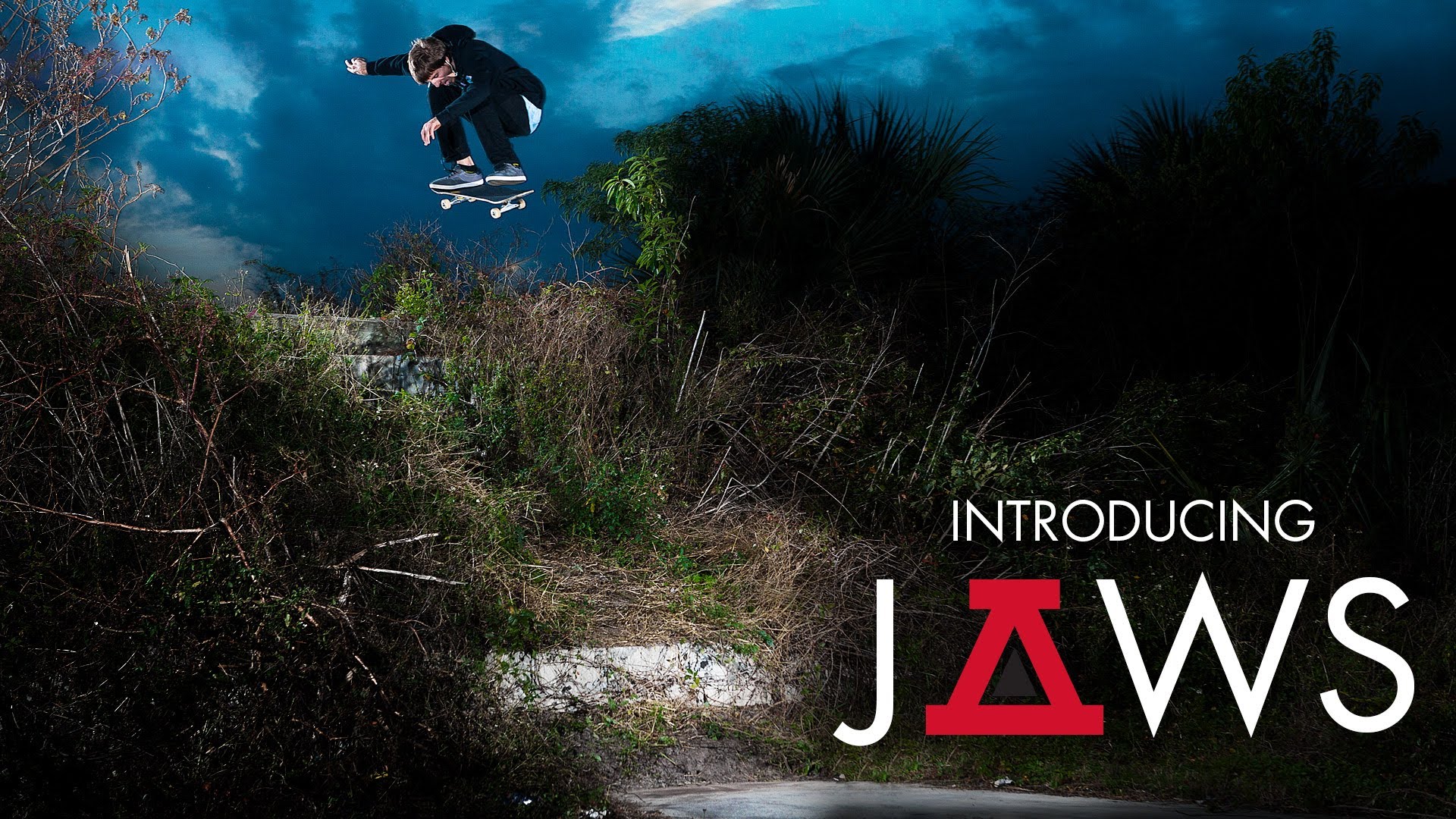
Aaron Homoki, widely known by his nickname "Jaws," is a professional skateboarder who redefined the boundaries of high-impact skating by successfully navigating the world’s largest gaps and drops. As of 2026, his career serves as a definitive case study in physical resilience, the evolution of protective equipment, and the psychological endurance required to perform at the absolute edge of human capability.
The Origins and Evolution of "Jaws"
Born in 1990 in Phoenix, Arizona, Aaron Homoki emerged from a desert landscape known for its rugged concrete and relentless heat—environments that demand a specific type of grit. The nickname "Jaws" was famously bestowed upon him by local skaters during his youth, a reference to his braces at the time, but it quickly became synonymous with his "predatory" approach to massive architectural features.
Unlike many of his contemporaries who focused on technical ledge lines or intricate flip-in/flip-out maneuvers, Homoki gravitated toward the vertical. His early career was marked by a fearless willingness to "send it" off heights that most professionals would consider inaccessible. By the time he turned pro for Tony Hawk’s Birdhouse Skateboards, Homoki had already established himself as a outlier. In an era where "steez" (style and ease) often prioritized low-impact aesthetics, Homoki championed the raw power of the "ollie," proving that the most fundamental trick in skateboarding could still be the most spectacular when scaled to impossible dimensions.
The Lyon 25: A Career-Defining Achievement
To understand the magnitude of Aaron Homoki’s impact on the sport, one must analyze the "Lyon 25." Located at the Cité Internationale in Lyon, France, this 25-stair set was long considered the "Holy Grail" of un-skatable gaps. It first gained notoriety in 2002 when Swedish pro Ali Boulala attempted it, resulting in a legendary and heart-wrenching failure that left him with severe injuries.
Homoki’s pursuit of the Lyon 25 was not merely an athletic endeavor; it was a multi-year psychological and physical siege. His first attempt in 2014 resulted in a torn ACL, an injury that many thought would end his career as a high-impact specialist. However, his return in 2015 remains one of the most documented and celebrated moments in skateboarding history.
Technical Analysis of the Drop
The Lyon 25 is not just a flight of stairs; it is a vertical drop of approximately 12 feet and a horizontal gap exceeding 20 feet. When a skater hits the ground from that height, the kinetic energy transferred through the legs is immense.
- Impact Force: Estimates suggest the impact force at the bottom of the 25-stair set can exceed several times the skater’s body weight.
- Speed Requirements: To clear the stairs, Homoki had to maintain a precise velocity—too slow and he would clip the final steps; too fast and the impact would be unmanageable.
- The Landing: The success of the 2015 attempt relied on Homoki’s ability to "stomp" the board perfectly flat to distribute the force through his skeletal structure and into the specialized padding of his shoes.
Looking back from 2026, the Lyon 25 attempt stands as the bridge between the "reckless" era of the early 2000s and the modern "calculated" era of professional skating, where preparation and technology meet raw talent.
Engineering Resilience: The Technology of Impact Protection
One of the most significant contributions Homoki has made to the industry is his role in the development and popularization of high-performance impact protection. Because his style of skating is inherently destructive to the human body, Homoki became a long-term partner and advocate for Footprint (FP) Insoles.
The technology used in Homoki’s footwear is often derived from non-Newtonian fluids or specialized memory foams that remain soft during normal movement but harden instantly upon high-velocity impact. In 2026, this technology is standard for many professional athletes, but Homoki was the primary "test pilot" for these innovations.
| Component | Standard Equipment | Homoki’s Specialized Gear | Purpose of Variation |
|---|---|---|---|
| Insoles | Thin foam/textile | Kingfoam/Orthotic Impact Foam | Absorbs up to 90% of impact energy to protect joints. |
| Decks | Standard 7-ply maple | Birdhouse "Powerply" or Carbon-reinforced | Prevents "snapping" mid-air during high-impact landings. |
| Wheels | 99a–101a Durometer | 54mm–56mm High-rebound urethane | Provides a balance of speed and vibration dampening on rough landings. |
| Hardware | Standard steel bolts | High-tensile strength 1" bolts | Ensures the trucks do not shear off upon landing 10+ foot drops. |
Longevity and Physical Maintenance in 2026
As of 2026, Aaron Homoki has transitioned into a "veteran" status, a feat that seemed improbable given the sheer volume of trauma his joints have endured. His longevity is attributed to a rigorous shift in his approach to health and recovery that occurred in the early 2020s.
High-impact skating creates micro-fractures and chronic inflammation. Homoki’s regimen in recent years has included:
- Physical Therapy: Focused on posterior chain strength to support the knees and lower back.
- Dietary Management: Anti-inflammatory nutrition to manage the long-term effects of his career-defining drops.
- Calculated Risks: In his later career, Homoki has moved away from "stair-counting" (trying to beat his own records) and toward more creative, aesthetically unique spots that emphasize flow without sacrificing his signature height.
His ability to remain active in the professional circuit into 2026 has provided a blueprint for younger skaters like those in the "Next Gen" programs at Birdhouse. He has proven that with the right combination of technology, technique, and medical maintenance, a high-impact career does not have to be a short one.
Media Presence and Video Legacy
The career of Aaron "Jaws" Homoki is perhaps best preserved through his prolific video parts. In the skateboarding world, a "part" is a curated collection of a skater's best footage over several years, set to music. Homoki’s parts are distinct for their "shock value"—they often feature tricks that make viewers audibly gasp.
Key Video Milestones
- "A Happy Medium" (Series): These independent videos showcased Homoki’s raw talent in his home state of Arizona, establishing his identity as a skater who could find a "gap" in the most mundane urban environments.
- Birdhouse "Saturdays": Released to critical acclaim, this part solidified his position as the premier "big drop" skater of his generation.
- Thrasher "Firing Line" and "My War": These segments provided a behind-the-scenes look at the mental toll of his skating. "My War," in particular, highlighted the grueling process of repeated failures at the Lyon 25 before his ultimate success.
In 2026, these videos are viewed as historical documents of human potential. They are frequently analyzed by sports scientists and biomechanics experts to understand how the human frame can withstand such extreme forces.
The Psychology of the "Drop"
Beyond the physical requirements, Homoki is often cited for his unique mental approach. To jump off a building or a massive set of stairs requires a suspension of the natural survival instinct. Homoki describes his mental state during these moments as a form of hyper-focus where the world "slows down."
This psychological resilience is what separates him from other talented skaters. Many have the physical ability to ollie a 10-stair, but very few have the mental fortitude to approach a 20-stair with the confidence that they will roll away. This "Jaws" mindset has become a point of study for sports psychologists, emphasizing the role of visualization and incremental desensitization to fear.
Frequently Asked Questions
How many stairs was Aaron Homoki's biggest drop?
The Lyon 25-stair set remains his most famous achievement in terms of stair count and vertical height. However, he has cleared various "gaps" (horizontal distances between two points) that are equivalent to or greater than the 25-stair set in terms of impact.
What happened to Aaron Homoki's teeth?
His nickname "Jaws" originally came from the braces he wore as a teenager. While he has had various dental injuries common to professional skateboarding, the name itself was a lighthearted jab from friends that eventually became a global brand.
Does Aaron Homoki still skate for Birdhouse in 2026?
Yes, Homoki remains a cornerstone of the Birdhouse Skateboards professional team. His relationship with Tony Hawk has spanned over a decade, and he continues to represent the brand's legacy of pushing the limits of the sport.
How does Aaron Homoki avoid breaking his legs?
He utilizes a combination of "impact-primed" body mechanics—bending his knees deeply to absorb force—and advanced shoe technology. Specifically, he uses Footprint Kingfoam insoles, which are designed to absorb the kinetic energy that would otherwise cause bone fractures or ligament tears.
Has Aaron Homoki ever won Skater of the Year (SOTY)?
While Aaron Homoki has been a perennial contender and has appeared on the cover of Thrasher Magazine multiple times, his career has been defined more by individual "milestone" achievements than by a single SOTY title. His legacy is measured by the spots he conquered rather than trophy counts.
Following the Future of High-Impact Skating
For those looking to follow Aaron Homoki’s current projects in 2026, his focus has shifted toward mentoring and content creation. He remains active on social media platforms, providing deep-dive "breakdowns" of his most famous tricks and offering advice to the next generation of "gap seekers."
Aspiring skaters should look to Homoki not just for his highlight reels, but for his commitment to safety and longevity. The "Jaws" method is not just about jumping off the highest point possible; it is about the years of training, the investment in protective gear, and the patience required to walk away and return another day when the conditions are not right. His career serves as a reminder that in the world of professional athletics, the greatest victory is the ability to keep playing the game.