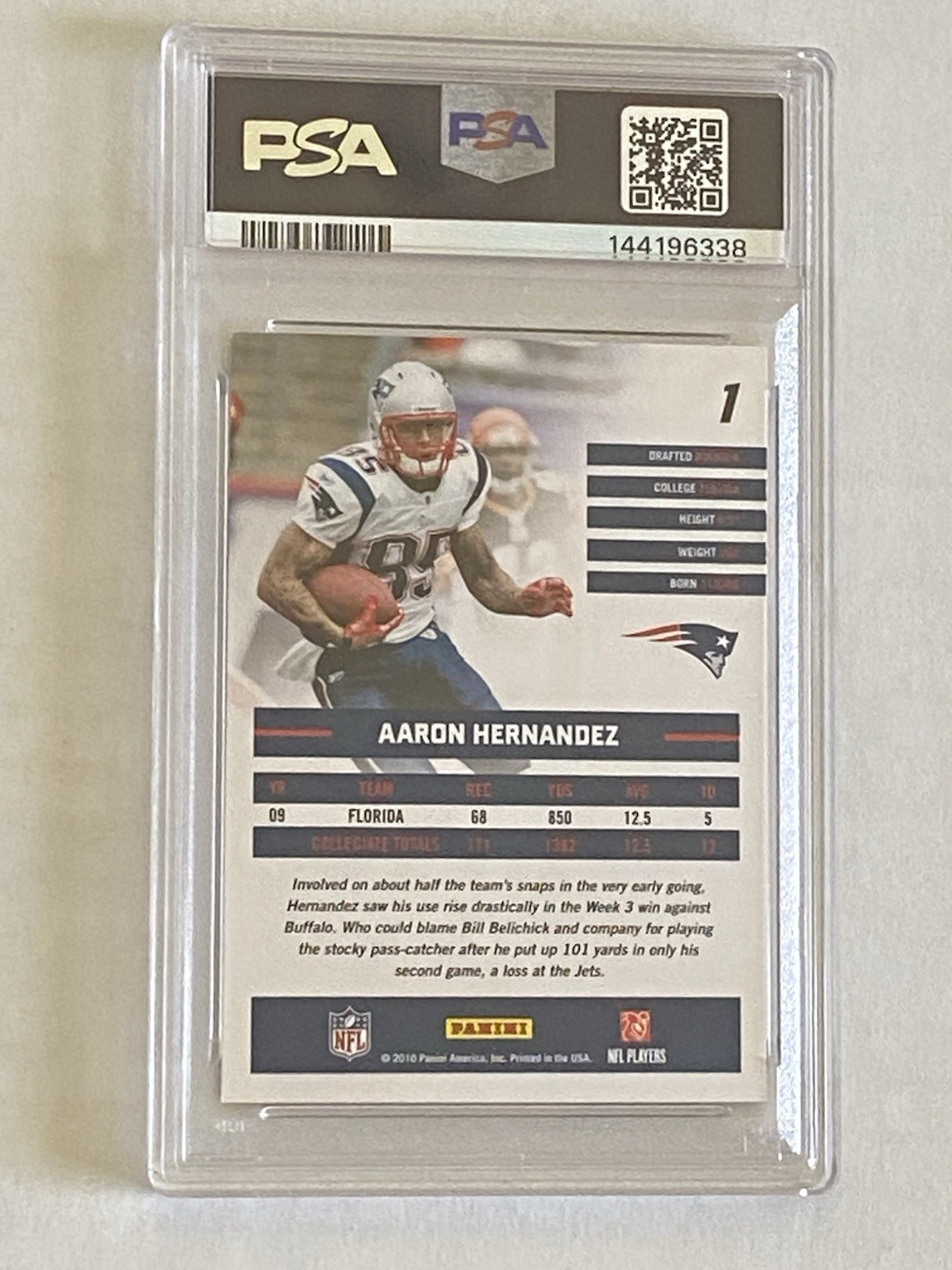
When Aaron Hernandez entered the NFL in 2010 after being selected by the New England Patriots in the fourth round of the NFL Draft, he signed a four-year rookie contract valued at approximately $2.378 million. This agreement included a signing bonus of roughly $200,000 and established a base salary structure that increased incrementally over the life of the deal, reflecting standard NFL rookie wage scales of that era.
The Context of the 2010 NFL Draft
To understand the financial structure of Aaron Hernandez’s entry into the professional league, it is necessary to examine the landscape of the 2010 NFL Draft. At the time, rookie contracts were not yet governed by the rigid, slot-based system introduced by the 2011 Collective Bargaining Agreement (CBA). However, players selected outside of the first round still faced significant limitations regarding leverage and guaranteed money.
Hernandez, a standout tight end from the University of Florida, was selected with the 113th overall pick. Because he was a fourth-round selection, his contract followed the norms for mid-round developmental players. The New England Patriots, known for their disciplined approach to salary cap management, utilized the available rookie wage parameters to secure his services at a cost that provided significant value relative to his on-field production during his initial years.
Breakdown of the Rookie Agreement
The primary components of the 2010 contract consisted of the total contract value, the signing bonus, and the annual base salaries. Unlike modern rookie deals, which are almost entirely predetermined by the draft slot, the 2010 framework allowed for some negotiation regarding the distribution of bonuses and potential performance incentives.
- Total Contract Value: $2,378,000 over four years.
- Signing Bonus: $200,000, which was prorated against the salary cap over the four-year duration of the contract.
- Average Annual Value: Approximately $594,500.
The structure of the deal was intended to provide a pathway for player development. The base salary in the first year was set at the rookie minimum, with scheduled increases in the subsequent three years. This structure was designed to reward the player for remaining on the roster while allowing the team to maintain cost predictability as the player gained experience and demonstrated professional viability.
Salary Progression and Financial Structure
The following table provides a breakdown of the typical financial progression for a rookie contract of this magnitude during the 2010–2013 period, illustrating how the base salary and prorated bonus impacted the team's cap space.
| Contract Year | Base Salary | Prorated Signing Bonus | Total Cap Hit |
|---|---|---|---|
| 2010 | $320,000 | $50,000 | $370,000 |
| 2011 | $405,000 | $50,000 | $455,000 |
| 2012 | $490,000 | $50,000 | $540,000 |
| 2013 | $575,000 | $50,000 | $625,000 |
Note: The figures in this table reflect the standard accounting practices for a four-year contract with a $200,000 signing bonus. Actual cap hits could vary slightly based on specific team accounting and league-wide adjustments.
Performance and the Subsequent Contract Extension
The rookie contract served its purpose as a bridge to a more lucrative deal. Due to Hernandez's high level of production—specifically his contributions to the Patriots' high-powered offense alongside Rob Gronkowski—the team opted to negotiate a significant contract extension in 2012 before his rookie deal had fully expired.
In August 2012, Hernandez signed a five-year contract extension worth $40 million, including a substantial $12.5 million signing bonus. This extension superseded the original 2010 rookie contract. The transition from the modest rookie deal to the $40 million contract reflected his development into a core offensive player. This shift highlights how NFL franchises utilize rookie contracts to assess a player's worth before committing to long-term, high-value financial obligations.
The Impact of the 2011 Collective Bargaining Agreement
It is vital to note that Hernandez’s career bridged two distinct eras of NFL financial management. His rookie deal was governed by the expiring CBA, while his extension occurred under the strict rules of the 2011 CBA. The 2011 agreement fundamentally changed the NFL by introducing the "Rooney Rule" for coaches but, more relevantly, by implementing the "Rookie Wage Scale."
Under the 2011 rules, all draft picks were assigned specific salary slots based on their draft position. Had Hernandez been drafted one year later, his rookie contract would have been entirely non-negotiable regarding base salary and would have included a standard four-year term with a team option for a fifth year. His 2010 entry allowed for more traditional, albeit limited, contract negotiations that became a relic of the past immediately following the 2011 season.
Common Questions Regarding the Contract
How did the 2010 signing bonus affect the salary cap?
The $200,000 signing bonus was spread evenly over the four years of the contract, meaning $50,000 was charged against the team’s salary cap in each of those years. This practice is known as "prorating" and is a standard procedure in the NFL to manage immediate cap hits.
Did the rookie contract include guaranteed money?
While the base salaries were not fully guaranteed in the same sense as modern first-round picks, the signing bonus was paid upfront. Other protections, such as injury guarantees, were standard in contracts of that era, providing the player with financial security if they suffered a career-ending injury during the season.
Why was the contract extended before the four years concluded?
Teams often extend players who outperform their draft position to secure them long-term and to manage future cap hits. By signing Hernandez to an extension in 2012, the Patriots were attempting to lock in a key contributor before his market value increased further.
How did his earnings change after the 2012 extension?
The 2012 extension significantly altered his compensation. The $40 million total value was a substantial increase from his rookie annual average of less than $600,000. It moved him into the upper tier of tight end compensation at the time.
Assessing the Rookie Contract as a Strategic Investment
From the perspective of team management, the 2010 rookie contract for Aaron Hernandez was highly effective. By securing a player who became a primary target for the offense at a fourth-round price point, the Patriots maximized their salary cap efficiency. This allowed the team to allocate resources elsewhere on the roster. The transition to the 2012 extension was a reflection of his perceived value as a centerpiece of the offense, illustrating the standard life cycle of an NFL player’s compensation: moving from a low-cost "value" contract to a market-rate extension.
For stakeholders or analysts reviewing this period, the primary takeaway is the contrast between the developmental rookie phase and the veteran extension phase. The rookie contract functioned as an introductory period, while the extension represented a commitment based on proven performance.