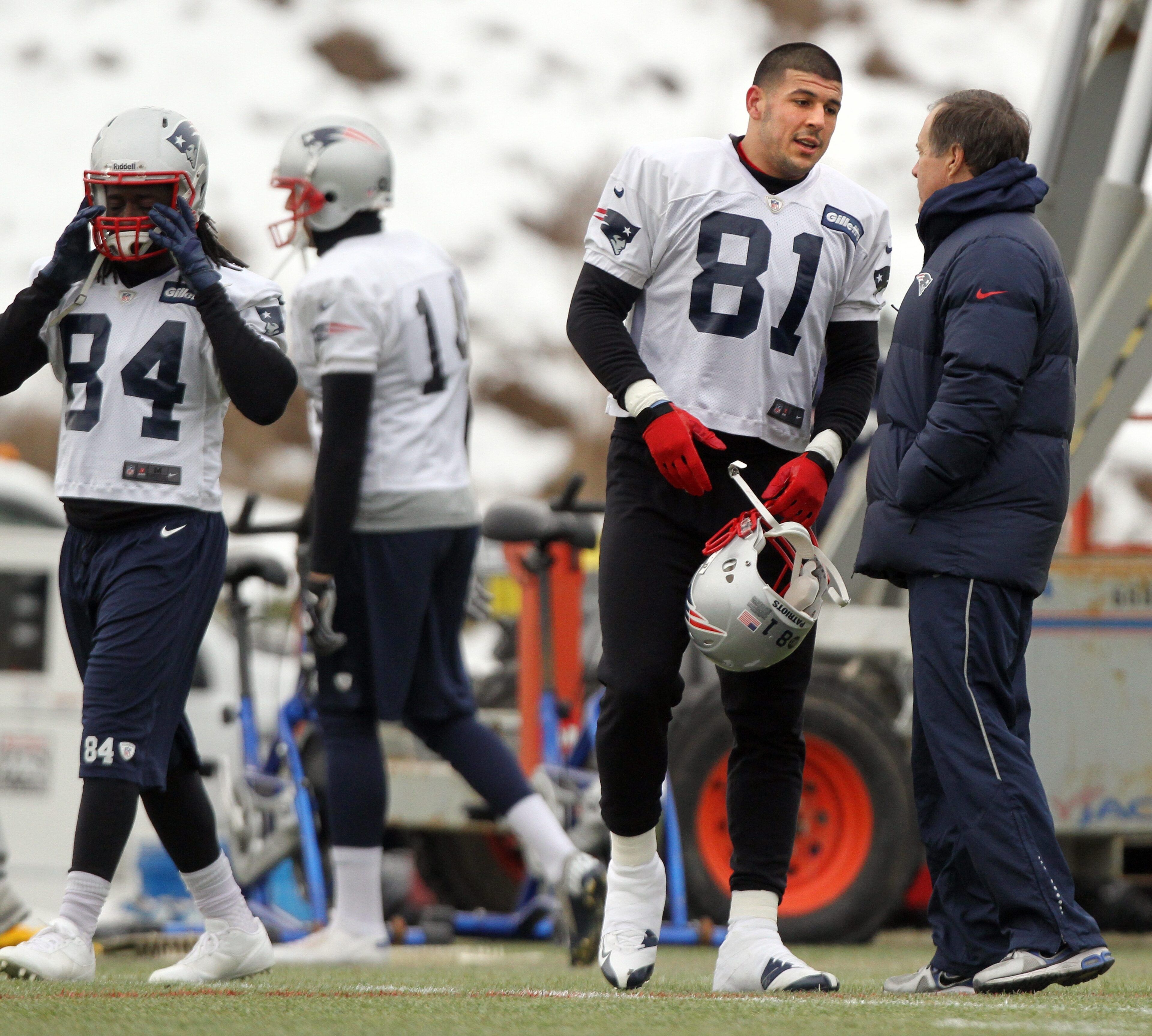
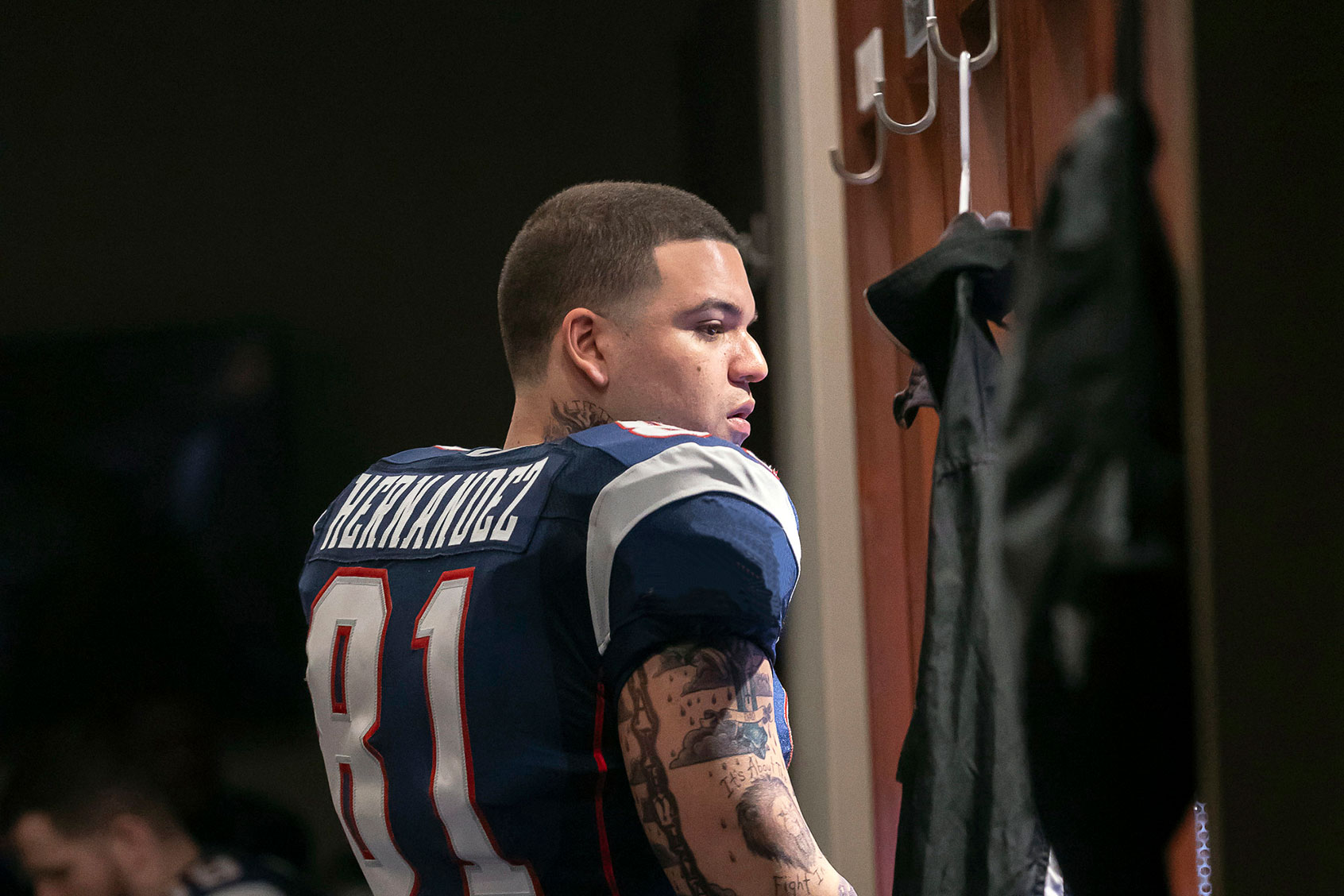
Former New England Patriots tight end Aaron Hernandez signed a five-year contract extension in August 2012 worth $39.582 million, which included a $12.5 million signing bonus—the largest ever awarded to an NFL tight end at the time. Including his remaining rookie deal, the full contract spanned seven years with maximum earnings approaching $40 million before his 2013 arrest led to immediate termination and extensive financial litigation.
The 2012 Extension: Contract Structure, Signing Bonus, and Terms
On August 27, 2012, the New England Patriots secured Aaron Hernandez with a major extension through the 2018 NFL season. Coming off a breakout 2011 campaign where he caught 79 passes for 910 yards and seven touchdowns alongside fellow tight end Rob Gronkowski, Hernandez was positioned as a cornerstone of New England's dynamic dual-tight-end offense.
The financial details of the five-year extension (which ran concurrently with the final two years of his original rookie deal) established new benchmarks for tight end compensation:
- Total Contract Value: $39,582,000 (often cited as $39.6 million or $40 million total compensation across the combined seven-year timeframe).
- Signing Bonus: $12,500,000. At the time of signing, this surpassed all historical bonuses for tight ends in NFL history.
- Total Guaranteed Money: $15,950,000, which covered the signing bonus and fully guaranteed base salaries for the early years of the deal.
- Average Annual Value (AAV): Approximately $7.916 million per year for the five extension years.
Contract Timeline Overview:
- 2010–2011: Initial Rookie Deal
- Aug 2012: $39.58M Extension Signed
- June 2013: Arrest & Release
- 2013–2020: Cap & Legal Litigation
Signing Bonus Payout Schedule
Unlike contracts where a signing bonus is paid entirely upfront, Hernandez’s $12.5 million bonus was structured into deferred installments:
- Initial Payment: $3,000,000 paid upon signing in August 2012.
- Second Installment: $6,000,000 paid in February 2013.
- Final Installment: $3,500,000 scheduled for March 2014.
This payout schedule became a central point of contention when the Patriots released Hernandez in June 2013 prior to the third installment, leading to years of labor grievances between the New England Patriots, the National Football League Players Association (NFLPA), and Hernandez's estate.
Rookie Contract Foundation: 2010–2011 Earnings
Before securing his record-setting extension, Hernandez entered the league under the NFL’s standard rookie compensation system. Selected by New England in the fourth round (113th overall) of the 2010 NFL Draft out of the University of Florida, off-field concerns had caused his draft stock to slip despite his second-round talent evaluation.
Hernandez’s original four-year rookie contract contained modest financial terms:
- Total Rookie Value: $2.37 million over four years.
- Rookie Signing Bonus: $200,000.
- Base Salaries: $320,000 (2010), $450,000 (2011), $565,000 (2012), and $685,000 (2013).
Because Hernandez outperformed his initial Fourth-Round draft slot during his first two seasons, the Patriots opted to lock him into a long-term deal early rather than letting him enter the final years of his rookie contract, leading directly to the 2012 extension.
Financial Breakdown of Aaron Hernandez’s NFL Contracts
The following table outlines the key financial components, guarantees, paid amounts, and voided dollars associated with Aaron Hernandez's NFL career contracts.
| Contract Component | Rookie Contract (2010–2013) | 5-Year Extension (2012–2018) | Realized / Earned Amount |
|---|---|---|---|
| Total Stated Value | $2,370,000 | $39,582,000 | ~$9.6 million – $10.6 million total |
| Signing Bonus | $200,000 | $12,500,000 | $9,200,000 ($200k rookie + $9M paid extension bonus) |
| Guaranteed Base Salaries | $0 (Non-guaranteed base) | $3,450,000 (Initial guaranteed portion) | Paid through 2012 season only |
| Unpaid / Voided Value | $0 | ~$30,000,000 | ~$29.9 million voided or withheld |
| Max Annual Average (AAV) | $592,500 | $7,916,400 | N/A |
| Contract Termination Date | Replaced by extension | Terminated June 26, 2013 | Released following murder arrest |
Termination and Voided Guarantees: The 2013 Release
On June 26, 2013, Aaron Hernandez was arrested and charged with the murder of Odin Lloyd. Less than two hours after his arrest, before formal charges were officially entered in court, the New England Patriots announced his immediate release from the team.
Financial Impact of Release:
- Maximum Potential Extension Value ($39.58M)
- Earned / Retained Salary & Bonuses (~$9.6M to $10.6M)
- Voided Salaries & Recouped Guarantees (~$29.9M to $30.0M)
The Patriots exercised default provisions embedded in standard NFL Player Contracts and the Collective Bargaining Agreement (CBA):
- Default Clauses: Standard NFL contracts allow teams to void guaranteed money if a player engages in behavior that severely damages the team’s reputation or renders the player physically unable to perform due to legal detention or moral turpitude.
- Voiding Future Base Salaries: The Patriots immediately withheld Hernandez’s remaining base salaries for 2013 ($1.323 million), 2014 ($1.137 million), 2015 ($4.85 million), 2016 ($5.35 million), 2017 ($6.0 million), and 2018 ($6.5 million).
- Withholding Deferred Signing Bonuses: The team refused to pay the remaining $3.5 million signing bonus installment due in March 2014, arguing that Hernandez breached his contract through fraud and material non-disclosure.
Salary Cap Impact on the New England Patriots
Terminating a high-value contract with a large signing bonus creates significant accounting challenges under NFL salary cap rules. When a player is released, all unamortized signing bonus allocations immediately accelerate into the current or following year’s salary cap as "dead money."
The "Dead Cap" Allocations
When Hernandez signed his $12.5 million bonus, the Patriots amortized that bonus over five years at a rate of $2.5 million per season against the salary cap. Following his release, New England absorbed severe cap hits:
- 2013 Cap Dead Money: The Patriots carried a dead money charge of approximately $2.55 million in 2013, reflecting his allocated signing bonus and earned portion of his salary.
- 2014 Acceleration: In 2014, the remaining unamortized portion of the $12.5 million signing bonus accelerated onto the Patriots' salary cap, resulting in a $7.5 million dead cap charge.
Combined with the simultaneous contract situations of other players, New England spent the 2013 and 2014 seasons navigating substantial dead money, restricting their active roster payroll flexibility until the entire bonus acceleration cleared the books in 2015.
Posthumous Legal Battles and Estate Financial Claims
Following Hernandez’s conviction for first-degree murder in 2015 and his subsequent death in prison in April 2017, a unique legal battle emerged regarding his unpaid contract money.
Abatement Ab Initio and Financial Claims
Under long-standing Massachusetts common law, the legal doctrine of abatement ab initio dictated that if a defendant dies before their direct appeals are exhausted, their criminal conviction is vacated, restoring their legal status to unconvicted at the time of death.
When Hernandez died in April 2017 while appealing his murder conviction, the trial judge vacated his conviction under this rule. This prompt legal status change led to significant financial ramifications:
- Estate Grievances: Representatives of Hernandez’s estate and the NFLPA asserted that because his conviction was legally vacated, he had not officially breached his contract provisions regarding criminal convictions.
- Targeted Unpaid Funds: The estate sought to collect the withheld $3.5 million bonus installment, unpaid 2013 base salaries, and workout bonuses totaling over $6 million.
- Patriots Defense: The Patriots maintained that Hernandez committed material breach of contract prior to signing the extension in 2012 by concealing his involvement in prior criminal incidents, thereby invalidating the contract terms regardless of post-mortem criminal procedure rulings.
Reversal of Abatement and Final Settlement
The legal uncertainty ended in November 2019, when the Massachusetts Supreme Judicial Court officially reinstated Aaron Hernandez's murder conviction, abolishing the doctrine of abatement ab initio in the Commonwealth of Massachusetts.
With the first-degree murder conviction legally reinstated, the legal foundation for the estate's claims against the Patriots collapsed. Confidential settlements between the NFL, the Patriots, the NFLPA, and the estate resolved the remaining administrative grievances, leaving the team with no further obligation to pay out the voided millions.
Frequently Asked Questions
How much money did Aaron Hernandez actually collect from his NFL career?
Aaron Hernandez earned approximately $9.6 million to $10.6 million in total gross income during his three-season NFL career. Although he signed contracts worth over $41 million combined, his release in 2013 stripped away nearly $30 million in unearned base salaries and unpaid deferred bonus payments.
What was the signing bonus on Aaron Hernandez’s 2012 contract?
Aaron Hernandez received a $12.5 million signing bonus when he signed his five-year extension in August 2012. It was the largest signing bonus ever awarded to an NFL tight end up to that point. The Patriots paid $9 million of this bonus across two installments but withheld the final $3.5 million installment scheduled for 2014.
Did the New England Patriots get cap relief after releasing Aaron Hernandez?
The Patriots did not receive immediate, full salary cap relief. Under NFL rules, accelerating signing bonus money resulted in a total dead cap hit of approximately $10 million across 2013 and 2014. The team eventually reached salary cap adjustments after resolving formal grievances through the league office and the NFLPA.
How did Aaron Hernandez's contract compare to Rob Gronkowski's?
In June 2012, just two months before Hernandez signed his extension, tight end Rob Gronkowski signed a six-year, $54 million extension with $13.17 million guaranteed. Hernandez’s deal ($39.58 million over 5 years) had a slightly higher annual average value ($7.91M vs. $9.0M base average adjustments), but Gronkowski's total guaranteed length and contract maximum were substantially higher.
Did Aaron Hernandez’s family or estate receive his unpaid contract money after his death?
No. While the NFLPA initially filed grievances to recover roughly $6 million in unpaid salary and deferred bonuses based on the temporary vacatur of his conviction, the Massachusetts Supreme Judicial Court reinstated his murder conviction in 2019. This reinstatement legally protected the Patriots from paying any remaining contract claims to his estate.
Practical Takeaways: How NFL Contracts Protect Teams Against Default
The Aaron Hernandez contract saga remains one of the most prominent precedent-setting cases in modern sports law and salary cap management. It established modern standards for how NFL front offices write protective guarantees into player contracts:
- Multi-Installment Bonus Protection: Dividing large signing bonuses into deferred installments protects franchise cash flow and allows teams to withhold unpaid balance tranches if a player breaches contract terms prior to payment dates.
- Morality and Fraud Provisions: Modern NFL contracts feature explicit representations where players warrant that they have disclosed all pre-existing legal risks, allowing teams to void guarantees retroactively if past undisclosed criminal conduct comes to light.
- Cap Adjustments via Grievances: The case demonstrated how teams can utilize the official NFL/NFLPA grievance mechanism to credit dead salary cap allocations back to active payroll in subsequent league years following clear breaches of conduct.