The musical partnership between Taylor Swift and Aaron Dessner, founding member of the indie-rock band The National, stands as one of the most transformative creative pairings in modern music. Beginning with 2020's folklore and expanding through evermore, select tracks on Midnights (3am Edition), re-recorded vault tracks, and 2024's The Tortured Poets Department, their collaborations blend intimate indie-folk textures with narrative pop songwriting. Building the ultimate playlist requires understanding their signature acoustic arrangements, complex rhythm grids, and distinct emotional sequencing.
The Evolution of the Swift-Dessner Creative Partnership
The collaboration between Taylor Swift and Aaron Dessner began remotely in April 2020 during the global lockdowns. Seeking a radical shift from the polished, stadium-ready pop of Lover (2019), Swift reached out to Dessner after admiring his work with The National. What started as an experiment—Dessner emailing instrumental sketches created at his Long Pond Studio in upstate New York, and Swift returning fully realized lyrics and vocal melodies hours later—rapidly evolved into folklore.
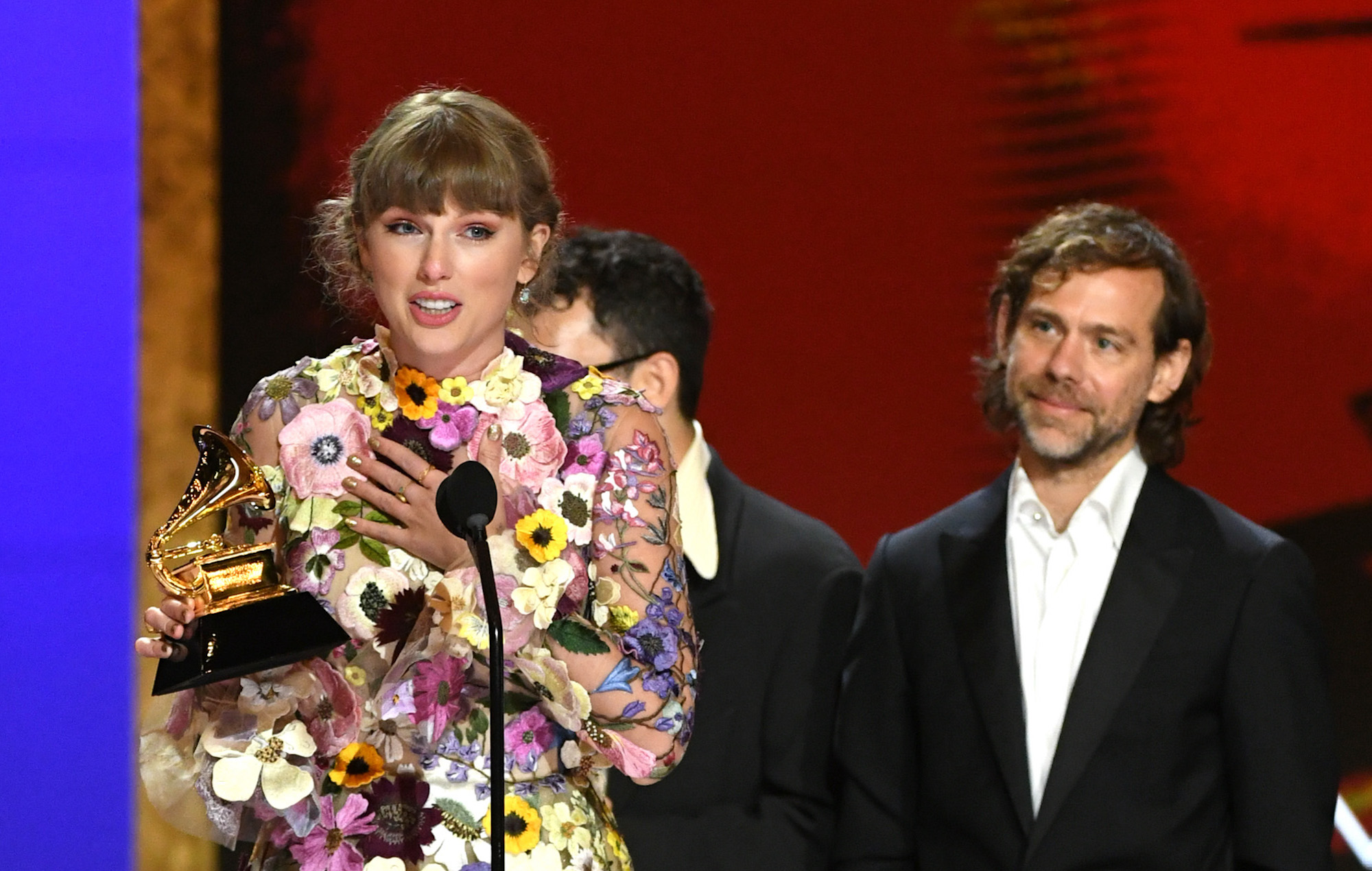
The initial result was a critical and commercial triumph. Folklore won Album of the Year at the 63rd Annual Grammy Awards, establishing a minimalist, acoustic-leaning palette that stripped away heavy synthesizer stacks in favor of muted pianos, fingerpicked guitars, and organic orchestration. The creative momentum was so pronounced that the duo recorded a sister album, evermore, released just five months later in December 2020.
Rather than concluding with these two sister albums, the partnership matured into a permanent fixture of Swift’s creative ecosystem. Dessner contributed key tracks to the re-recorded Taylor’s Version projects—producing fan-favorite vault tracks such as "Nothing New" (featuring Phoebe Bridgers) and "I Bet You Think About Me"—and returned for the extended 3am Edition of Midnights (2022). Most recently, on The Tortured Poets Department (2024) and its expanded The Anthology edition, Dessner co-wrote and produced some of Swift's most lyrically intricate and sonically expansive tracks to date, proving that their joint work is a defining pillar of her modern discography.
Key Signature Elements of the Dessner-Swift Sound
To curate an immersive playlist, it is helpful to recognize the specific production techniques and musical motifs that characterize a Dessner-produced Taylor Swift track. While co-producer Jack Antonoff frequently favors vintage synthesizers, vocal chops, and punchy pop hooks, Dessner’s contributions are distinguished by several key traits:
- Muted Felt Piano: Dessner often records upright pianos with heavy felt dampening placed between the hammers and strings. This technique softens the attack, producing a warm, nostalgic, and slightly degraded tone heard prominently on "cardigan," "champagne problems," and "loml."
- Intricate Fingerpicked Guitars: Drawing from his indie-rock roots, Dessner builds driving harmonic foundations using complex acoustic picking patterns, alternating bass lines, and subtle open tunings. Tracks like "invisible string," "ivy," and "willow" showcase this layered guitar weaving.
- Syncopated Rhythm Grids and Polyrhythms: Working alongside his brother Bryce Dessner and drum programmer Bryan Devendorf, Dessner frequently incorporates uncommon time signatures and syncopated electronic percussion. "Tolerate it" utilizes a restless 5/4 meter, while "closure" employs a chaotic, industrial 5/4 drum beat beneath a delicate piano melody.
- Cinematic Orchestration: Many tracks feature subtle brass, woodwind, and string arrangements penned by Bryce Dessner and performed by members of the London Contemporary Orchestra or the Wordless Music Orchestra. These elements build slow, sweeping crescendos rather than sudden pop drops, evident in "exile," "seven," and "The Smallest Man Who Ever Lived."
Curating the Ultimate Swift-Dessner Playlist: Strategic Track Order
A successful collaboration playlist should not simply present tracks chronologically. Instead, it should guide the listener through thematic movements, balancing low-tempo acoustic ballads with expansive, cinematic builds. Below is the definitive 20-track playlist structure optimized for emotional flow and sonic continuity.
- Movement I: Gentle Acoustic Beginnings
- the 1
- cardigan
- willow
- exile (feat. Bon Iver)
- seven
- Movement II: Deep Narrative & Winter Solstice
- champagne problems
- tis the damn season
- ivy
- tolerate it
- coney island (feat. The National)
- Movement III: Nocturnal Introspection & Vaults
- right where you left me
- Nothing New (feat. Phoebe Bridgers)
- The Great War
- High Infidelity
- Would've, Could've, Should've
- Movement IV: Gothic Catharsis & Resolution
- So Long, London
- loml
- The Smallest Man Who Ever Lived
- The Black Dog
- peace
Movement I: Atmospheric Beginnings & Folk-Pop Roots
The opening sequence establishes the core organic textures of the Long Pond sessions.
- "the 1" (folklore): The ideal opener. Driven by a bouncing, muted piano loop and subtle percussion, it sets a relaxed, reflective tone.
- "cardigan" (folklore): Transitions into melancholic story-telling with rich string swells and atmospheric synthesizer pads underneath a classic piano riff.
- "willow" (evermore): Accelerates the tempo slightly using rhythmically complex, syncopated acoustic guitar picking and breathy vocals.
- "exile" feat. Bon Iver (folklore): Introduces dramatic vocal contrast, pairing Justin Vernon's deep baritone with Swift's soaring register over slow-building piano and orchestral percussion.
- "seven" (folklore): Offers a nostalgic, pastoral shift featuring soaring vocal melodies, floating violin arpeggios, and shifting meter.
Movement II: Deep Narrative Landscapes & Winter Melancholy
This segment dives into intricate character studies, complex time signatures, and acoustic storytelling.
- "champagne problems" (evermore): Anchored by a simple, repeating four-chord piano progression that gradually builds in vocal intensity toward a powerful bridge.
- "tis the damn season" (evermore): Features ambient electric guitar feedback layered over a steady, unhurried drum groove, evoking seasonal nostalgia.
- "ivy" (evermore): A masterclass in guitar weaving, utilizing banjo, acoustic picking, and harmonized backing vocals to create a bright yet lyrically dark atmosphere.
- "tolerate it" (evermore): Demonstrates Dessner's signature use of odd time signatures, employing a restless 5/4 piano pattern that mirrors the lyric's narrative tension.
- "coney island" feat. The National (evermore): Brings Dessner's primary band into the fold, featuring Matt Berninger’s low lead vocals alongside Swift over a steady, driving drum beat.
Movement III: Midnight Introspection & Nocturnal Synth-Folk
Transitioning from pure acoustic folk into the darker, electronic-tinged soundscapes developed during the Midnights (3am Edition) and re-recording eras.
- "right where you left me" (evermore - Deluxe): A fast-paced, country-infused folk track driven by relentless acoustic strumming and a looping banjo motif.
- "Nothing New" feat. Phoebe Bridgers (Red - Taylor's Version): A vulnerable, introspective duet built around soft acoustic strumming and warm cello lines.
- "The Great War" (Midnights - 3am Edition): Combines martial snare drum rudiments with swirling acoustic guitars and atmospheric synth pads.
- "High Infidelity" (Midnights - 3am Edition): Features an accented electronic drum loop and layered acoustic textures detailing narrative misdirection.
- "Would've, Could've, Should've" (Midnights - 3am Edition): A mid-tempo track that escalates into a roaring, drum-heavy climax featuring electric guitars and dramatic bass lines.
Movement IV: Gothic Catharsis & Resolution
The final movement incorporates the expansive, emotionally charged production found on The Tortured Poets Department before settling into peaceful resolution.
- "So Long, London" (The Tortured Poets Department): Driven by a fast, pulsing synthesizer pattern reminiscent of a racing heartbeat, layered beneath vocal harmonies.
- "loml" (The Tortured Poets Department): A stark, minimalist piano ballad that relies almost entirely on felt piano and subtle room reverberation to highlight the lyricism.
- "The Smallest Man Who Ever Lived" (The Tortured Poets Department): Begins as a quiet piano track before exploding in its final two minutes into a massive marching-drum and brass arrangement.
- "The Black Dog" (The Tortured Poets Department - The Anthology): Demonstrates dynamic range, shifting from whispered verse piano to crashing, distorted rock choruses.
- "peace" (folklore): The definitive closing track. Built around a looping, electric bass line recorded by Dessner with no traditional percussion, leaving room for a delicate vocal performance.
Technical Analysis of Core Collaborative Tracks
To understand why these songs function so effectively as a cohesive unit, the following matrix breaks down the key musical elements across Dessner and Swift's primary album eras:
| Track Title | Primary Album Era | Key Instruments & Hardware | Rhythmic Meter / Tempo | Production Highlight |
|---|---|---|---|---|
| "cardigan" | folklore (2020) | Felt upright piano, mellotron, drum programming, strings | 4/4 time, 130 BPM | Layers subtle vinyl crackle and room noise to create a vintage aesthetic. |
| "exile" | folklore (2020) | Grand piano, synth bass, orchestral brass, heavy snare | 4/4 time, 76 BPM | Slow orchestral swell in the final bridge that counterpoints two distinct melodies. |
| "tolerate it" | evermore (2020) | Upright piano, muted bass, subtle synth pads | 5/4 time, 75 BPM | Asymmetrical 5/4 timing creates a feeling of rhythmic instability and emotional tension. |
| "ivy" | evermore (2020) | Fingerpicked acoustic, electric guitar swells, banjo | 3/4 (Waltz) time, 89 BPM | Complex layering of four distinct stringed instruments across the stereo field. |
| "Would've, Could've, Should've" | Midnights (3am) (2022) | Electric guitar, synth bass, live rock drums | 4/4 time, 122 BPM | Gradual transition from subtle folk-pop into a heavy, live-drum rock climax. |
| "So Long, London" | The Tortured Poets Department (2024) | Arpeggiated synths, bass guitar, acoustic piano | 4/4 time, 108 BPM | Rapid, high-frequency synthesizer arpeggios contrast against slow vocal phrasing. |
| "The Smallest Man Who Ever Lived" | The Tortured Poets Department (2024) | Piano, marching snare, distorted electric guitars, brass | 4/4 time, 74 BPM | Dramatic dynamic shift from low-level acoustic ballad to explosive orchestral outro. |
Mastering the Curation: Flow and Digital Audio Settings
When assembling this playlist on streaming platforms such as Apple Music, Spotify, or Tidal, specific playback adjustments can enhance the listening experience.
Crossfade and Gapless Playback
Dessner’s production relies heavily on delicate reverb tails and ambient soundscapes that fade naturally.
- Set Crossfade to 0 or 1 Second: Avoid long crossfade settings (e.g., 5–12 seconds). Long crossfades destroy the carefully engineered intros of tracks like "So Long, London" and cut off the natural decaying piano notes at the end of "loml."
- Enable Gapless Playback: Crucial for preserving thematic transitions, especially when moving between album tracks that share soft room ambiance.
Spatial Audio and Dynamic EQ Settings
Because Dessner uses binaural recording techniques, stereo width, and subtle instrumentation (such as muted trombones or soft woodwinds), listening settings impact clarity:
- Dolby Atmos / Spatial Audio: While Dolby Atmos mixes provide wide soundstages for orchestral tracks like "exile" and "The Smallest Man Who Ever Lived," some listeners prefer standard Lossless Stereo for piano-heavy tracks like "champagne problems" to maintain a punchier, centered low-end piano presence.
- Acoustic / Flat EQ Profile: Set your playback device to a neutral EQ setting. Boosting the bass artificially can muddy the subtle felt-piano resonances, while boosting high frequencies can make fingerpicked guitar transients sound overly harsh.
The Broader Impact on Modern Indie-Pop
The collaboration between Aaron Dessner and Taylor Swift did more than expand Swift's discography; it redefined mainstream pop production standards in the early 2020s. By proving that a commercially successful pop icon could release un-skewed, low-fidelity acoustic records that dominated charts without relying on traditional dance beats, Swift and Dessner opened the door for a resurgence of acoustic, narrative-driven songwriting across the music industry.
Furthermore, it reframed Aaron Dessner's role in contemporary music. Previously recognized primarily within indie-rock circles for his work with The National, Big Red Machine, and Sharon Van Etten, his work with Swift positioned him as one of the most sought-after producers in modern music. His ability to build spacious, emotionally resonant instrumental frameworks allowed Swift's lyrics to take center stage, establishing a collaborative blueprint that continues to shape pop and indie music alike.
Frequently Asked Questions
How many songs have Taylor Swift and Aaron Dessner collaborated on?
Taylor Swift and Aaron Dessner have collaborated on over 50 released tracks as co-writers, co-producers, or performers. This catalog spans the entirety of folklore and evermore, select tracks on Midnights (3am Edition), vault tracks on Fearless (Taylor's Version) and Red (Taylor's Version), and numerous songs across The Tortured Poets Department and The Anthology.
What is the primary difference between Aaron Dessner's and Jack Antonoff's production with Taylor Swift?
Aaron Dessner’s production typically focuses on organic, acoustic, and indie-folk arrangements featuring felt pianos, fingerpicked guitars, syncopated live-drum patterns, and orchestral instrumentation. Jack Antonoff’s production generally leans toward retro synthesizers, vibrant pop beats, vocal chops, dynamic synth-bass lines, and modern pop arrangements.
Did Aaron Dessner win a Grammy Award for his work with Taylor Swift?
Yes. Aaron Dessner won the Grammy Award for Album of the Year as a co-producer and songwriter on Taylor Swift's 2020 album folklore at the 63rd Annual Grammy Awards. He was also nominated for Album of the Year for his contributions to evermore.
Which track was the very first song Taylor Swift and Aaron Dessner wrote together?
The first song they completed was "cardigan." Dessner sent Swift an instrumental track sketch via email in April 2020, and Swift wrote the full vocal melody and lyrics within roughly five hours of receiving the file.
Why do many Dessner-produced tracks sound quieter or warmer than standard pop songs?
Dessner frequently records using analog gear, vintage tape loops, and felt-dampened pianos, while avoiding heavy brickwall limiting during the mastering phase. This preserves dynamic range, giving the music a warmer, more intimate sound reminiscent of bedroom-folk and indie-rock recordings.
Optimizing Your Custom Playlist
To build the ultimate listening experience, create a new playlist on your preferred music streaming platform titled "Swift & Dessner: The Long Pond Sessions & Beyond." Add the 20 suggested tracks in the precise sequence outlined above to maintain thematic integrity, narrative arc, and dynamic contrast. For optimal sound quality, stream using a uncompressed lossless audio format with a neutral EQ preset through high-quality wired headphones or stereophonic studio monitors.