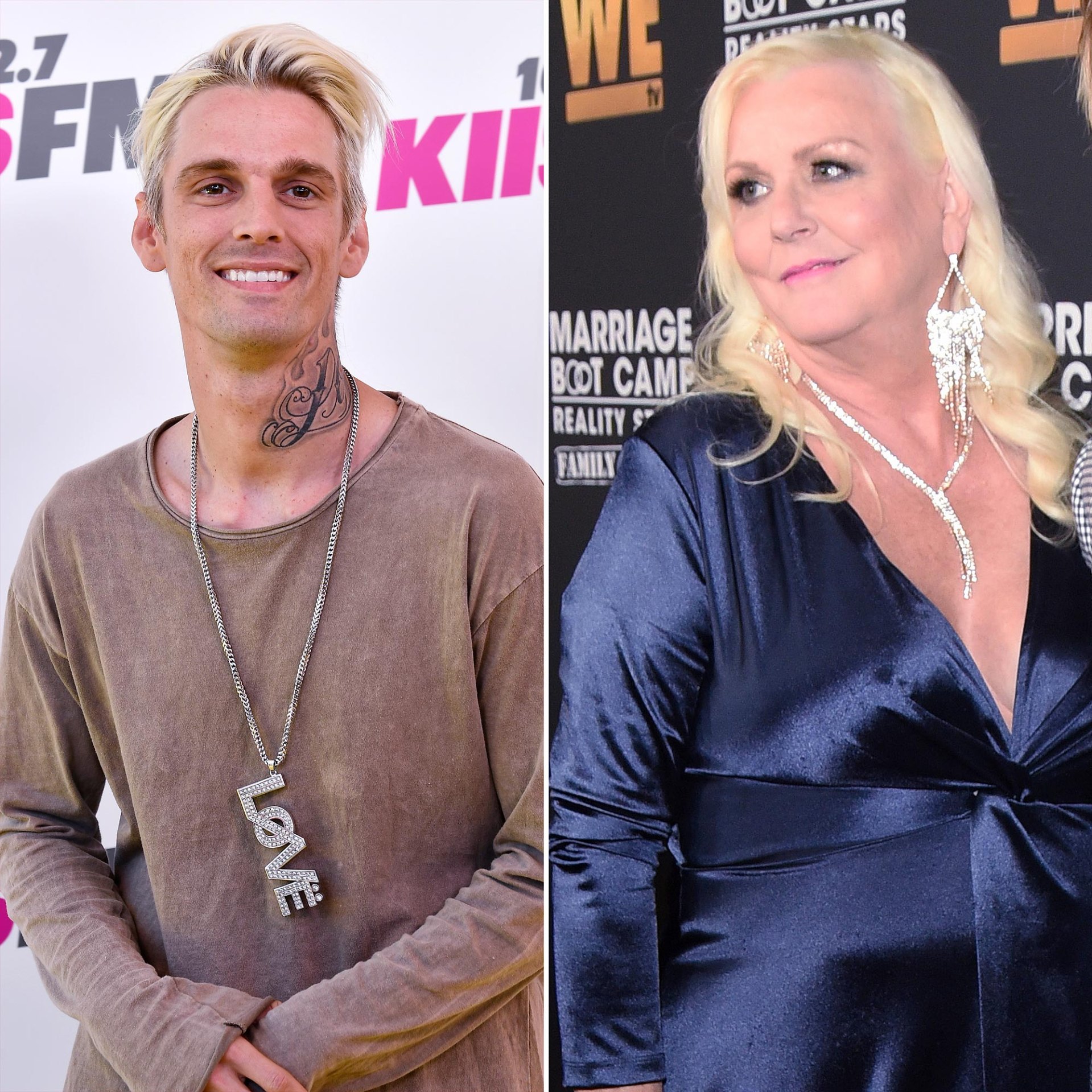
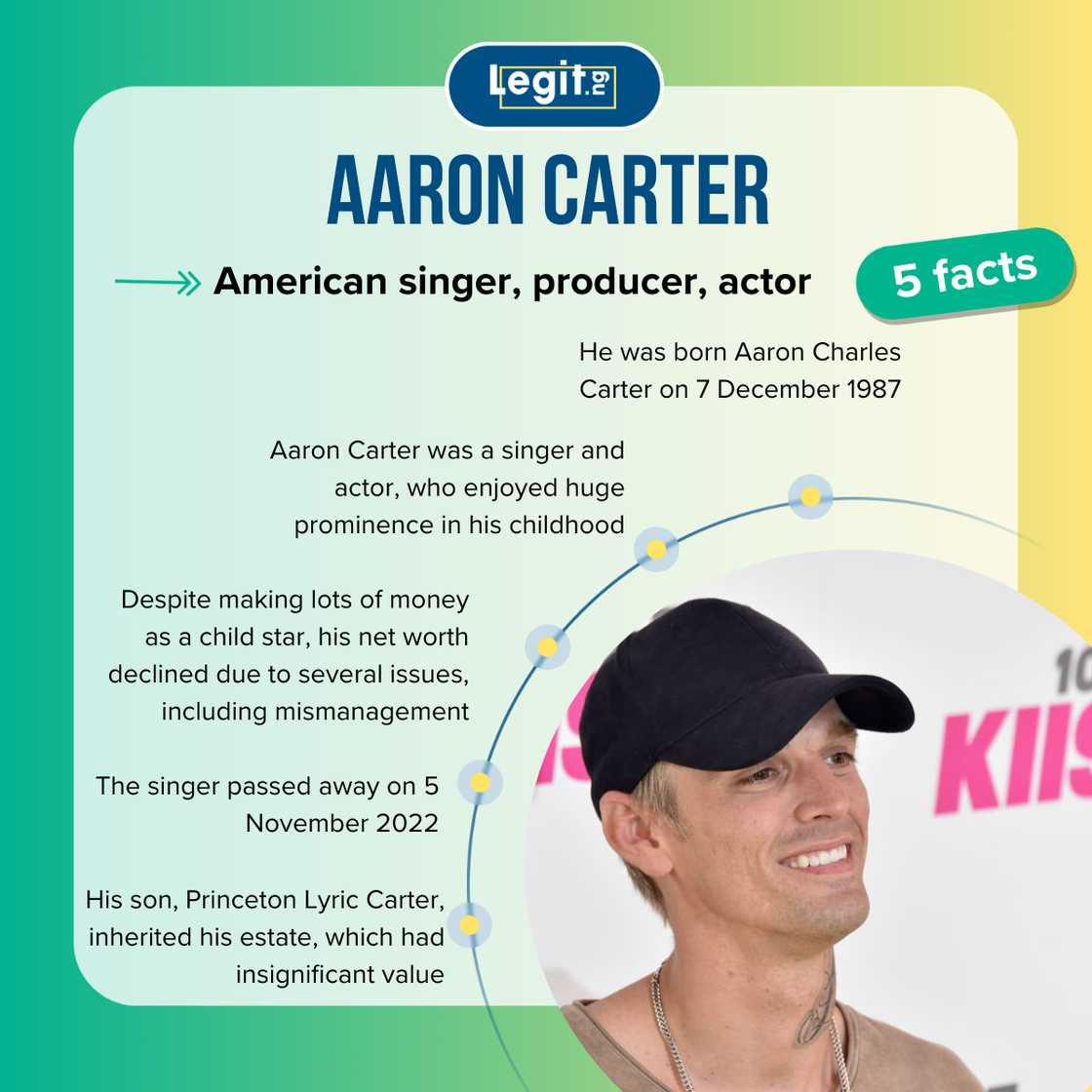
Aaron Carter was an American singer, rapper, and actor who rose to global prominence in the late 1990s and early 2000s as one of the preeminent teen pop icons of the turn of the millennium. After achieving multi-platinum record sales before his mid-teens, Carter's adult life became a high-profile case study in the systemic pressures, financial mismanagement, and psychological strains associated with early commercial stardom, culminating in his tragic passing in November 2022.
Early Life and Breakthrough: From Backstreet Boys to Global Teen Idol
Aaron Charles Carter was born on December 7, 1987, in Tampa, Florida, into a family deeply intertwined with the music industry. His elder brother, Nick Carter, gained international fame as a member of the Backstreet Boys, providing Aaron with an early, direct pipeline into the record industry. Carter began performing at age seven as the lead vocalist of Dead End, a local band formed at a Tampa rock school, but his solo career took off when he performed a cover of The Jets' "Crush on You" as an opening act for the Backstreet Boys in Berlin in March 1997.
That performance led immediately to a record contract with Trans Continental Records, leading to the release of his self-titled debut studio album, Aaron Carter, in late 1997. The debut achieved Gold status in several European nations and Canada before making its impact in the United States. Carter’s youth, high-energy stage persona, and polished pop production resonated with young audiences, laying the groundwork for a broader cultural footprint across international markets.
Key Milestone Timeline: Aaron Carter (1987–2022)
| Year | Milestone / Event |
|---|---|
| 1997 | Solo debut opening for Backstreet Boys; self-titled album |
| 2000 | Released "Aaron's Party (Come Get It)" (3x Platinum) |
| 2001 | Broadway debut in "Seussical"; guest appearance on Disney |
| 2013 | Filed for Chapter 7 bankruptcy protection |
| 2018 | Released "LØVË", first full studio album in 16 years |
| 2022 | Passed away on November 5 in Lancaster, California |
The success of his initial record demonstrated that late-1990s teen pop was not limited to boy bands and adolescent solo artists; pre-teen performers could command significant market share. Carter’s management strategically targeted juvenile demographics through music videos on Nickelodeon and the Disney Channel, establishing a blueprint for child pop acts throughout the decade that followed.
Peak Commercial Stardom: Chart Hits and Cross-Media Dominance
The pinnacle of Carter’s commercial success arrived with his second studio album, Aaron's Party (Come Get It), released in September 2000 under Jive Records. The album sold more than three million copies in the United States alone, earning triple-platinum certification from the Recording Industry Association of America (RIAA). Driven by hit singles such as the title track, "That's How I Beat Shaq," and a cover of The Strangeloves' "I Want Candy," the record became a fixture on youth radio stations and music video countdowns.
During this period, Carter expanded beyond recording to build a presence across television and theater. His cross-promotional appearances amplified his musical footprint, bringing his work to millions of homes across North America and Europe:
- Television Guest Roles: Memorable guest appearances on hit series such as Disney Channel's Lizzie McGuire and Nickelodeon's All That.
- Theatrical Productions: A stint on Broadway playing JoJo the Who in Seussical the Musical (2001).
- Film Soundtracks: High-profile soundtrack contributions for major studio releases, including Jimmy Neutron: Boy Genius and The Princess Diaries.
- Concert Tours: Extensive world tours as a headliner, alongside co-headlining dates with pop acts such as Britney Spears and the Backstreet Boys.
Carter followed his sophomore effort with Oh Aaron (2001), which achieved Platinum status and featured his first studio duet with his brother Nick. His fourth studio album, Another Earthquake!, arrived in 2002. While both records performed well commercially, sales began to show signs of decline relative to the multi-platinum high-water mark of 2000, signaling a transition period as Carter aged out of his initial pre-teen niche.
The Transition to Adulthood: Financial Mismanagement and Legal Battles
As Carter transitioned out of adolescent pop stardom, his personal and professional life encountered increasing turbulence. Like many child stars of the 1990s era, Carter faced severe financial issues driven by inadequate estate management and disputes over trusts established during his youth under the Coogan Act framework. In 2013, Carter filed for Chapter 7 bankruptcy protection in Florida to resolve millions of dollars in back taxes and consumer debt incurred during his years as a minor under adult stewardship.
Concurrently, Carter’s personal life was increasingly exposed to media scrutiny. Public conflicts with family members, high-profile romantic breakups, and frequent encounters with law enforcement eroded his mainstream commercial viability.
Commercial & Institutional Factors in Carter's Career Transition
| Operational / Legal Area | Historical Context & Impact |
|---|---|
| Financial Management | Chapter 7 bankruptcy in 2013 due to unpaid back taxes |
| Record Label Relations | Separation from major labels; transition to independent distribution |
| Public Media Coverage | Transition from youth-market press to tabloid scandal coverage |
| Health & Substance Use | Publicized struggles with mental health diagnoses and addiction |
Despite these struggles, Carter continued to pursue music production, transitioning from pure pop to electronic music, hip-hop, and R&B. However, mainstream radio play proved elusive, and his public profile became increasingly defined by tabloid reporting and personal live-stream broadcasts rather than his artistic output.
Career Revival Attempts, Independent Music, and Mental Health Advocacy
In the late 2010s, Aaron Carter undertook several deliberate efforts to re-establish himself as an independent artist and producer. In 2018, he released LØVË, his fifth studio album and his first full-length LP in 16 years. The project marked a dramatic sonic departure from his childhood repertoire, featuring modern electropop soundscapes, atmospheric production, and personal lyrics written or co-produced by Carter himself.
During this period, Carter spoke candidly about his mental health, appearing on medical talk shows such as The Doctors to discuss his diagnoses, which included bipolar disorder and schizophrenia, as well as his ongoing battles with prescription medication dependence.
Key Albums in Aaron Carter's Discography
| Album Title | Release Year | RIAA Certification Status |
|---|---|---|
| Aaron Carter | 1997 | Gold (US) / Multi-Gold (Intl) |
| Aaron's Party (Come Get It) | 2000 | 3x Platinum (US) |
| Oh Aaron | 2001 | Platinum (US) |
| Another Earthquake! | 2002 | Standard Release |
| LØVË | 2018 | Independent Release |
While these public appearances showed his desire to regain control of his narrative, they also highlighted the challenges of managing chronic mental illness while remaining under public media scrutiny. Carter continued touring smaller venues and releasing standalone singles, maintaining a dedicated core fan base despite his ongoing struggles.
Passing and Official Findings: November 2022
On November 5, 2022, Aaron Carter was found deceased at his home in Lancaster, California, at the age of 34. The news drew an outpouring of tributes from fellow artists, fans, and entertainment industry veterans who recalled his early talents and expressed sorrow over his premature death.
In April 2023, the Los Angeles County Department of Medical Examiner released its official autopsy report. The report concluded that Carter’s death was an accident resulting from drowning in his bathtub, caused by incapacitation due to the effects of inhaled difluoroethane (a propellant used in compressed air cans) and alprazolam (a generic form of Xanax).
The official findings provided definitive medical clarity regarding the circumstances of his death, confirming that his passing was an accidental outcome stemming from substance use rather than deliberate self-harm.
Legacy and Impact: Re-Evaluating Pop Stardom and Child Fame
Aaron Carter's artistic and biographical legacy remains complex, operating on two distinct tracks within popular culture:
- Sonic Blueprint for Late-90s Teen Pop: Carter demonstrated that young solo acts could command major stadium tours, drive multi-platinum record sales, and anchor multi-media franchises. His music videos and high-energy stage work laid structural precedents for the child pop stars of the Disney Channel and Nickelodeon era that followed.
- Structural Vulnerabilities of Child Stardom: Carter's later life serves as an important case study regarding the structural systemic failures of the entertainment industry during the late 1990s. His struggles sparked broader discussions regarding:
- Financial Safeguards: The legal limitations of traditional Coogan accounts in protecting minor performers' earnings from adult mismanagement.
- Post-Fame Support Systems: The lack of long-term mental health infrastructure for youth performers transitioning out of intense childhood fame.
- The Tabloid and Digital Media Economy: How early internet culture and social media live-streaming can exacerbate mental health crises for public figures in distress.
Key Milestone Comparison: Youth Pop Era vs. Independent Era
| Metric / Dimension | Youth Pop Era (1997–2003) | Independent Era (2014–2022) |
|---|---|---|
| Primary Music Genre | Dance-Pop, Teen Pop | Electropop, Trap-Pop, Hip-Hop |
| Record Label Support | Major Labels (Trans Continental / Jive) | Independent Labels / Self-Released |
| Peak Album Sales | > 3,000,000 units (Aaron's Party) | Streaming-focused distribution |
| Media Exposure | Nickelodeon, Disney Channel, MTV | Independent streams, Podcasts, Social Media |
| Primary Audience | Pre-teens and Adolescents | Nostalgic fans, EDM/Indie pop listeners |
Frequently Asked Questions
What was Aaron Carter’s biggest commercial hit?
Aaron Carter’s biggest commercial success was his 2000 single "Aaron's Party (Come Get It)," from the triple-platinum album of the same name. The song gained massive rotation on music television channels and peaked on international charts, cementing his status as a major pop star.
How was Aaron Carter related to the Backstreet Boys?
Aaron Carter was the younger brother of Nick Carter, a member of the Backstreet Boys. Aaron’s early entry into the music industry was directly facilitated by this connection, as his first major solo performance was as an opening act for the Backstreet Boys in Berlin in 1997.
What were the official findings regarding Aaron Carter’s cause of death?
According to the Los Angeles County Department of Medical Examiner report released in April 2023, Aaron Carter’s cause of death was accidental drowning in his bathtub, caused by incapacitation from inhaling difluoroethane and taking alprazolam (Xanax).
How many studio albums did Aaron Carter release during his lifetime?
Aaron Carter released five full-length studio albums during his lifetime: Aaron Carter (1997), Aaron's Party (Come Get It) (2000), Oh Aaron (2001), Another Earthquake! (2002), and LØVË (2018).
Did Aaron Carter write his own music?
Early in his career, Carter performed songs written and produced by established pop songwriters. In his later career, particularly on his 2018 album LØVË and subsequent independent singles, Carter took a primary role as a songwriter, lyricist, and sound producer.
Navigating the Archival and Cultural Record of Aaron Carter
When researching or referencing Aaron Carter's life, career, and legacy, media historians and readers should rely on primary public documentation rather than tabloid speculation. Key resources for accurate research include:
- Verified Discographical Archives: Consult official certifying bodies such as the RIAA for accurate album sales data and historic chart metrics.
- Official Public Records: Reference verified legal filings, such as the 2013 bankruptcy records and the April 2023 Los Angeles County Medical Examiner report, to understand his financial and physical health history accurately.
- Contemporary Media Industry Analysis: Examine academic and institutional analyses of child entertainment laws—including modern revisions to Coogan Trust protections—to contextualize the systemic financial and personal challenges experienced by Carter and his contemporaries.