While 98.6°F (37°C) has been the gold standard for "normal" body temperature since the mid-19th century, modern medical research indicates it is no longer accurate for the average adult. In 2026, healthcare professionals recognize that the average human body temperature has cooled to approximately 97.5°F to 97.9°F due to changes in physiology, environment, and reduced chronic inflammation.
The Origin of the 98.6°F Standard
The benchmark of 98.6°F was established in 1851 by German physician Carl Wunderlich. His monumental study involved taking over a million axillary (underarm) temperature readings from approximately 25,000 patients. At the time, this was a revolutionary attempt to use quantitative data to define health and disease. However, several factors made Wunderlich’s data less applicable to the modern era.
First, the thermometers used in the 19th century were significantly different from today’s digital and infrared devices. Wunderlich used foot-long thermometers that required 15 to 20 minutes to stabilize, and they were often calibrated higher than modern instruments. Furthermore, axillary readings are generally less accurate than oral or rectal measurements, as they are more susceptible to ambient air temperature.
Perhaps most importantly, the physiological state of the average human in 1851 was vastly different from a person living in 2026. The 19th century was characterized by shorter life expectancies and a high prevalence of chronic infections, such as tuberculosis, syphilis, and persistent dental issues. These conditions caused systemic inflammation, which naturally raises the body's basal metabolic rate and, consequently, its resting temperature.
Why Human Body Temperatures Are Dropping
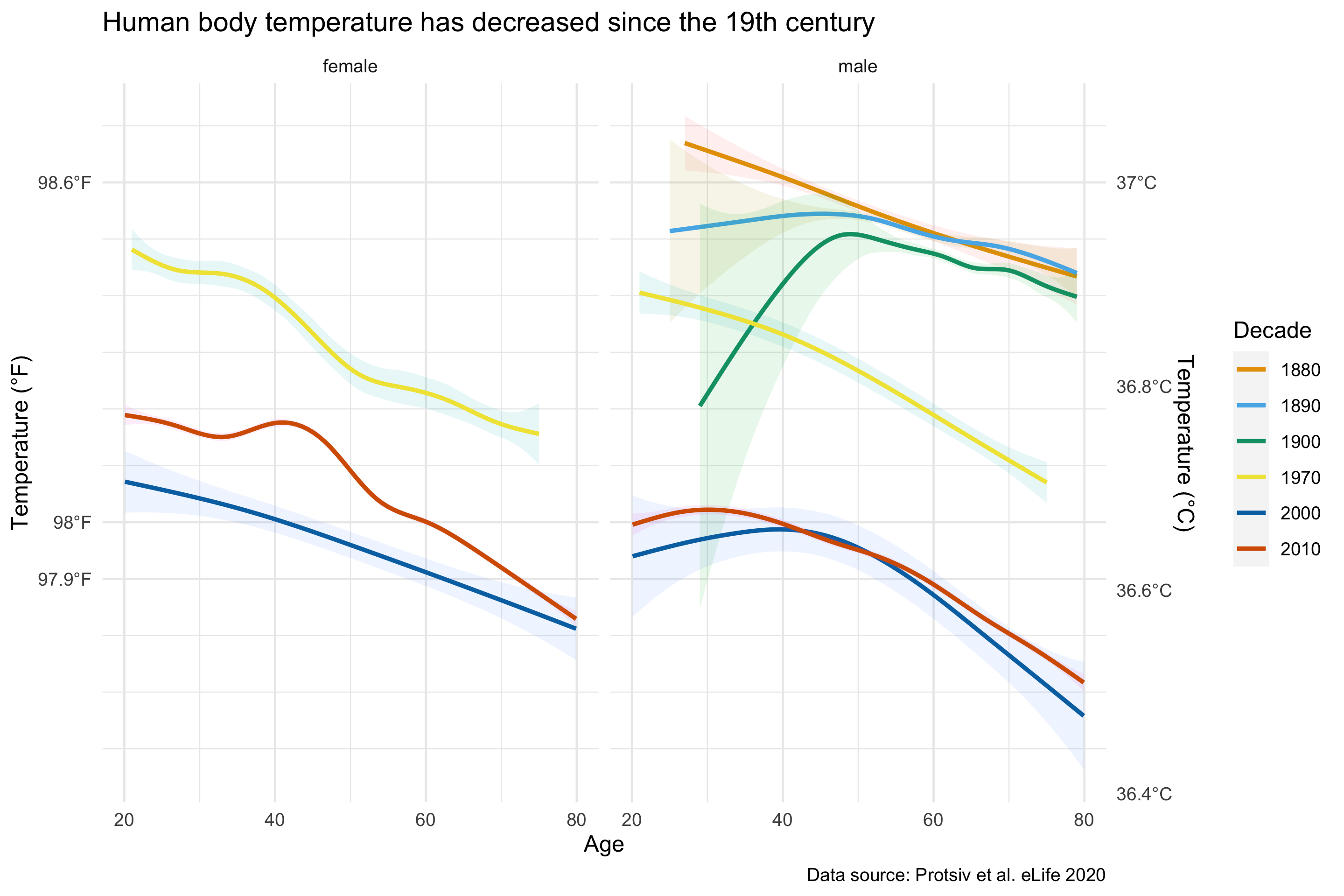
In recent years, researchers at Stanford University and other institutions have confirmed a steady decline in average human body temperature. By analyzing records spanning over 150 years, scientists found that for every decade, the average body temperature has dropped by about 0.03°C (0.05°F). This phenomenon is not merely a measurement error but a reflection of significant changes in human biology.
One primary driver is the reduction in metabolic rate. The modern human spends much less energy maintaining a stable internal temperature thanks to climate-controlled environments. In 1851, houses were drafty and lacked central heating or cooling, forcing the body to work harder (and burn more calories) to achieve homeostasis. Today, we live in a narrow "thermoneutral" zone, which lowers our metabolic demand.
Another factor is the widespread reduction in chronic inflammation. Advances in public health, including vaccinations, antibiotics, and improved hygiene, mean that our immune systems are no longer in a state of constant high alert. Inflammation triggers the production of cytokines, which signal the hypothalamus to raise the body's temperature. With fewer infections to fight, our baseline temperature has naturally settled at a lower point.
Factors That Influence Your Personal "Normal"
It is a common misconception that "normal" is a single number. In reality, body temperature is a dynamic range that fluctuates based on several biological and environmental variables. Understanding these factors is essential for accurately assessing one's health status in 2026.
Circadian Rhythm and Time of Day
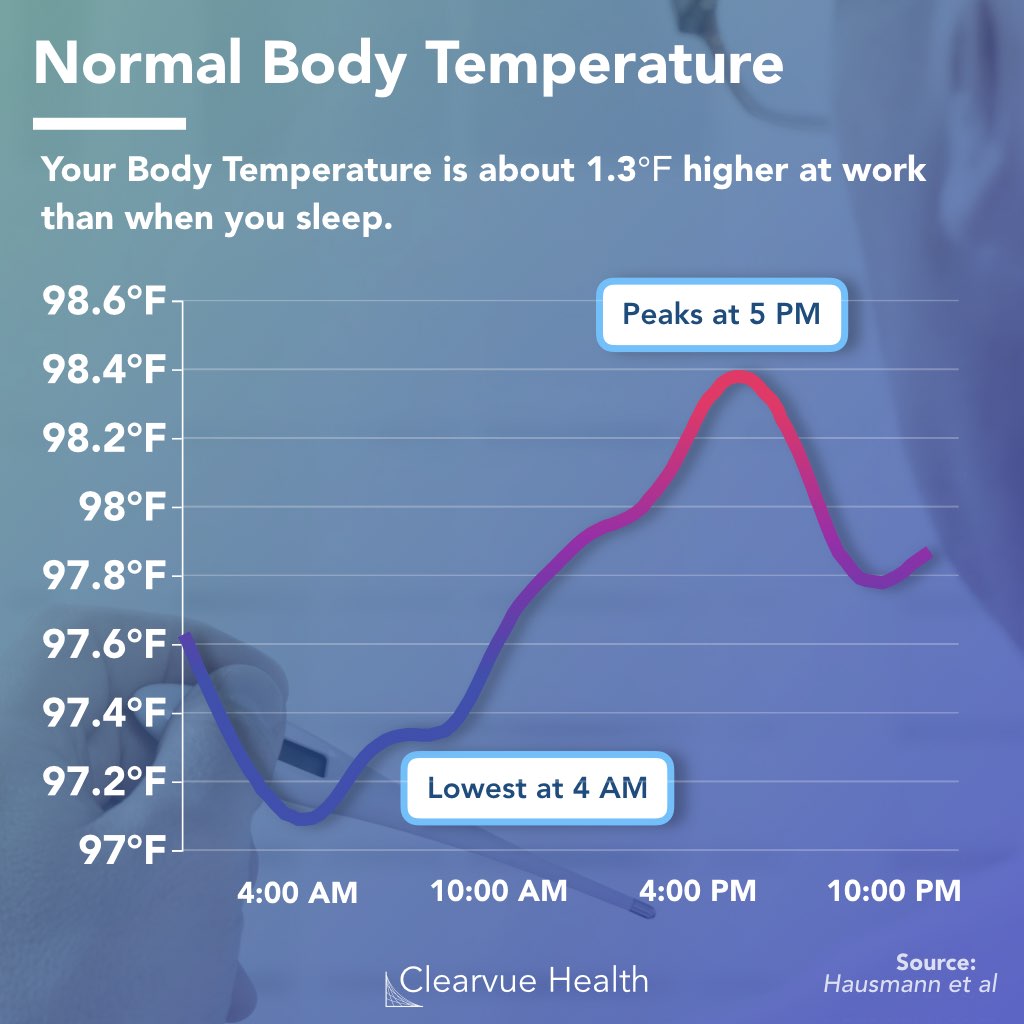
The body's internal clock, or circadian rhythm, causes temperature to fluctuate throughout a 24-hour cycle. Most people experience their lowest temperature (nadir) around 4:00 AM to 6:00 AM and their peak temperature (acme) between 4:00 PM and 8:00 PM. This variation can be as much as 1.0°F to 1.5°F. Therefore, a reading of 98.6°F might be perfectly normal in the evening but could indicate a slight fever if recorded at dawn.
Age and Gender
Age plays a significant role in thermal regulation. Infants and young children tend to have higher average temperatures because they have a higher surface-area-to-volume ratio and more active metabolisms. Conversely, older adults often have lower body temperatures and may have a diminished ability to generate a fever response even during a severe infection. Gender also introduces variability; women often have slightly higher core temperatures than men, which further fluctuate during the menstrual cycle due to hormonal changes in progesterone.
Physical Activity and Environment
Metabolic heat is a byproduct of muscular exertion. Intense exercise can raise core body temperature significantly, sometimes exceeding 100°F (37.8°C) temporarily. Environmental factors, such as high humidity or heavy clothing, can also impede the body’s ability to dissipate heat through sweat, leading to higher-than-normal readings that are not related to illness.
Measuring Accuracy: Methods and Tool Comparison
The accuracy of a temperature reading depends heavily on the site of measurement and the device used. While mercury thermometers have been phased out due to safety concerns, modern alternatives offer varying levels of precision. In clinical settings, the goal is to measure the "core" temperature, which is the temperature of the blood surrounding the heart and brain.
| Measurement Site | Accuracy Level | Relative to Oral Temp | Best Use Case |
|---|---|---|---|
| Rectal | High (Gold Standard) | +0.5°F to 1.0°F | Infants and emergency medicine |
| Oral | Moderate to High | Baseline | Standard adult screening |
| Tympanic (Ear) | Moderate | +0.5°F to 1.0°F | Quick screening in children/adults |
| Temporal (Forehead) | Moderate | -0.5°F to 1.0°F | Non-invasive public screening |
| Axillary (Armpit) | Low | -1.0°F to 2.0°F | Last resort; least reliable |
Oral measurements are the most common for household use, but they can be skewed by recently consuming hot or cold liquids, smoking, or mouth breathing. For the most accurate oral reading, it is recommended to wait at least 20 minutes after eating or drinking and to ensure the probe is placed deep in the sublingual pocket (under the tongue).
Redefining Fever in a "Cooler" Population
As the average baseline temperature drops, the clinical definition of a fever—traditionally 100.4°F (38°C)—is coming under scrutiny. If an individual's normal baseline is 97.0°F, a reading of 99.5°F represents a 2.5-degree increase, which may signify an immune response even if it does not meet the 100.4°F threshold.
This shift is particularly relevant for vulnerable populations. The Infectious Diseases Society of America has long noted that in elderly patients, a fever may be defined by a persistent temperature of 99°F or an increase of 2°F over their baseline. As we move through 2026, personalized medicine encourages individuals to know their "personal normal" so that deviations can be caught early.
A fever is not a disease in itself but a symptom of the body’s defense mechanism. It helps the immune system function more efficiently while making the body a less hospitable environment for pathogens. However, the absence of a high fever does not always mean an absence of infection, especially if other symptoms like fatigue, aches, or respiratory distress are present.
Frequently Asked Questions
Is 98.6°F considered a fever now?
No, 98.6°F is not considered a fever. While it is higher than the modern average of 97.9°F, it still falls within the normal physiological range for most healthy adults, particularly in the late afternoon or evening. A fever is generally not diagnosed until the temperature exceeds 100.4°F (38°C) in a clinical setting.
Why do I always feel cold if my temperature is "normal"?
Feeling cold is often a matter of "thermal comfort" rather than core body temperature. Factors such as low body fat, poor circulation, thyroid issues (hypothyroidism), or even iron deficiency can make you feel cold despite having a standard internal temperature. Your skin temperature, which is what you "feel," is often much lower than your internal core temperature.
Should I worry if my temperature is consistently 97.2°F?
Usually, no. A consistent temperature of 97.2°F is well within the modern expected range. If you feel healthy and have no other symptoms, this is likely just your unique baseline. According to research published in JAMA, many healthy individuals maintain a baseline in the low 97s.
How often should I check my baseline temperature?
To establish a true baseline, it is helpful to take your temperature at the same time each day (preferably in the morning) for three to five consecutive days while you are feeling healthy. This provides a reference point that you can use to compare against when you feel ill.
Can weather affect my thermometer's reading?
Yes, particularly with infrared temporal (forehead) thermometers. If you have just come inside from extreme cold or heat, your skin temperature will be affected. For an accurate reading, you should allow your body to acclimate to the indoor temperature for at least 15 minutes before measuring.
Monitoring Your Personal Baseline
In the current medical landscape of 2026, the most important takeaway is that 98.6°F is a historical artifact rather than a strict biological requirement. Because "normal" is a moving target, you should prioritize understanding your own body's patterns over adhering to a 175-year-old average.
If you suspect you are ill, do not rely solely on the number on the thermometer. Assess your overall symptoms, including heart rate, hydration levels, and cognitive clarity. If your temperature is significantly higher than your established personal baseline—even if it is below 100.4°F—it may be worth monitoring more closely or consulting a healthcare provider, especially if you have underlying health conditions or are over the age of 65.