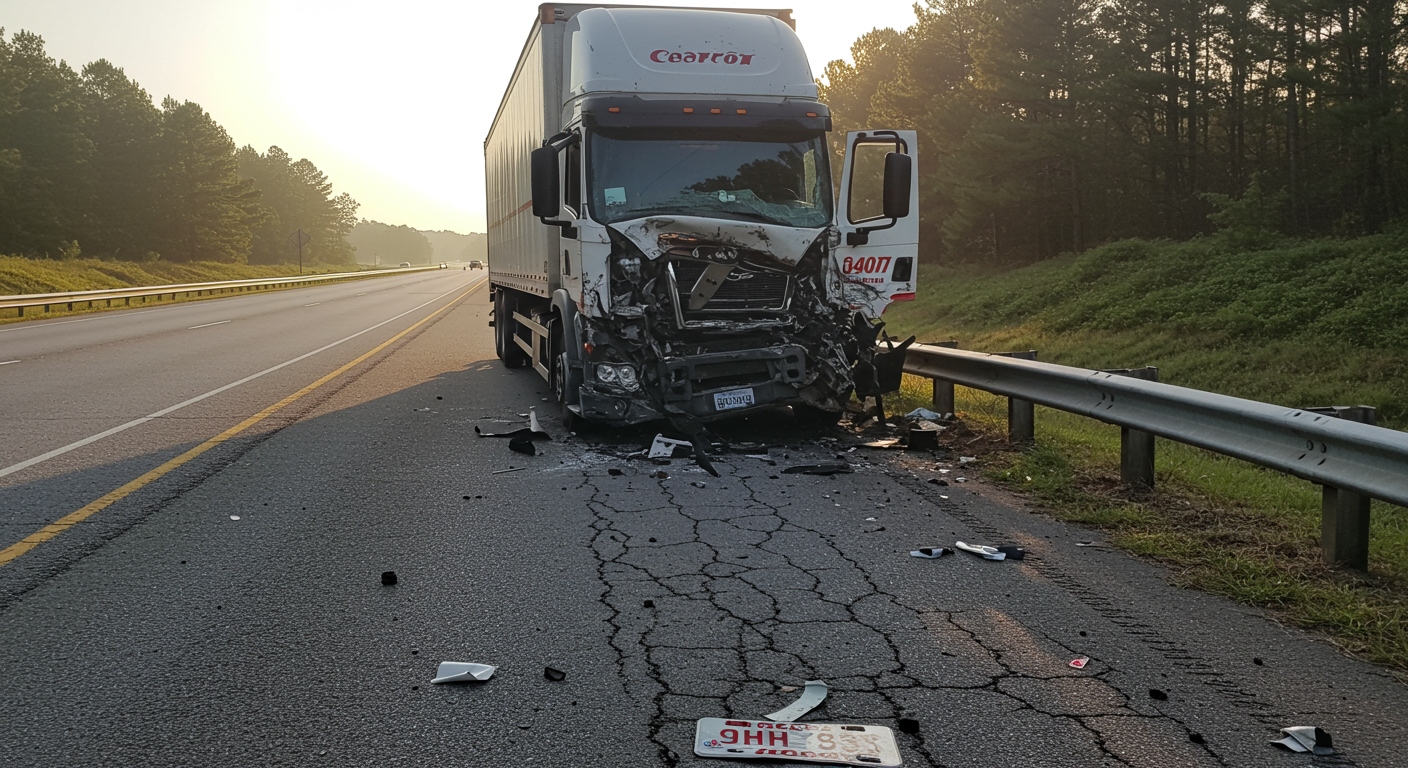
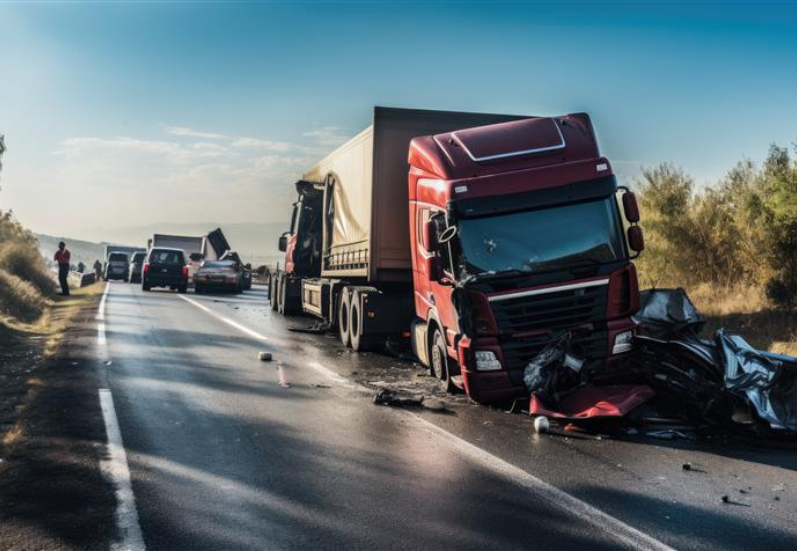
Major commercial vehicle accidents on the I-95 corridor typically involve high-velocity impacts, structural damage to overpasses, and significant disruptions to the East Coast supply chain. Key facts often center on driver fatigue, hazardous material spills, and the thermal degradation of bridge supports, while safety impacts include immediate localized traffic diversion and long-term regulatory shifts in federal trucking oversight.
The Anatomy of Major I-95 Commercial Vehicle Incidents
Interstate 95 (I-95) serves as the primary longitudinal artery for the United States Eastern Seaboard, stretching from Miami, Florida, to Houlton, Maine. Because it serves as a critical conduit for the "Just-in-Time" delivery model, it experiences a high density of Class 8 heavy-duty trucks. When an accident occurs, the technical complexity of the recovery and investigation is dictated by the vehicle's mass and the specific location of the impact.
A standard fully loaded semi-truck on I-95 can weigh up to 80,000 pounds (the federal gross vehicle weight limit). At highway speeds of 65 mph, these vehicles possess immense kinetic energy. In many I-95 incidents, particularly in the Northeast Corridor where the road is elevated, the primary concern is not just the collision between vehicles, but the impact against "fixed objects" such as bridge piers or median barriers.
Structural Vulnerabilities and Bridge Impacts
Many sections of I-95, particularly through Maryland, Pennsylvania, and New York, utilize aging infrastructure designed before modern seismic and impact standards. When a truck carrying flammable liquids—such as the 2023 Philadelphia incident involving a gasoline tanker—ignites under or on a bridge, the safety impacts are catastrophic.
Structural steel begins to lose significant load-bearing capacity at approximately 1,100°F (600°C). Tanker fires can exceed 2,000°F, leading to the rapid softening of steel girders and the subsequent collapse of concrete roadbeds. As of 2026, the Federal Highway Administration (FHWA) has increased its focus on "Hardening" these structures, but many remains vulnerable to high-temperature thermal events.
Hazardous Materials (HazMat) and Environmental Safety
I-95 is a designated route for the transport of hazardous materials. Key facts regarding spills involve the immediate deployment of state Department of Environmental Protection (DEP) teams. A single tractor-trailer can carry thousands of gallons of diesel fuel in its saddle tanks alone, independent of its cargo. Soil contamination, drainage into local watersheds, and the need for specialized vacuum trucks to mitigate the spread of chemicals are standard operational requirements following a major I-95 crash.
Critical Safety Impacts on Regional Infrastructure
The safety impacts of an I-95 truck accident extend far beyond the immediate scene of the crash. The highway is integrated into a complex network of local and regional roads that are not designed to handle the diverted volume of heavy commercial traffic.
- Secondary Collision Risk: Statistics from the National Transportation Safety Board (NTSB) indicate that the risk of a "secondary" accident increases by nearly 2.8% for every minute a primary accident remains un-cleared. These secondary crashes often occur in the back-of-queue (the end of the traffic jam) where drivers are caught off guard by stationary traffic.
- Infrastructure Fatigue: When I-95 is closed, trucks are diverted onto local routes (such as Route 1 or US-13). These roads often have lower weight tolerances and tighter turning radii. This leads to accelerated pavement degradation and "bridge strikes" where trucks attempt to pass under low-clearance overpasses on secondary roads.
- Emergency Response Access: I-95's design in urban centers often features narrow shoulders or "walled-in" sections. A major truck accident can effectively "plug" the artery, preventing emergency vehicles from reaching victims quickly. This necessitates the use of "contraflow" response, where emergency teams must enter the highway from the opposite direction of travel.
Logistical Disruption and Economic Cascades
The economic impact of a major I-95 closure is measured in millions of dollars per hour. As the main link for the Port of New York and New Jersey, the Port of Baltimore, and the Port of Savannah, I-95 carries a significant portion of the nation's GDP.
When a truck accident closes the highway for an extended period, the ripple effect is felt across the supply chain. Carriers incur "detention fees," and refrigerated goods (reefers) risk spoilage if the delay exceeds the fuel capacity of the cooling units. By 2026, many logistics firms have integrated real-time AI routing to mitigate these impacts, but the physical constraints of the East Coast road network mean that alternatives are often congested immediately.
Comparative Analysis of High-Profile I-95 Trucking Incidents
The following table contextualizes the scale and impact of major truck accidents on this corridor based on historical data and modern 2026 safety benchmarks.
| Incident Type | Primary Cause | Infrastructure Impact | Recovery Timeline | Safety Regulation Outcome |
|---|---|---|---|---|
| Bridge/Overpass Fire | Tanker Roll/Ignition | Critical (Collapse) | Weeks to Months | Enhanced bridge thermal shielding requirements |
| Multi-Vehicle Pileup | Fog/Limited Visibility | Moderate (Surface) | 12–48 Hours | V2X (Vehicle-to-Everything) alert mandates |
| Jackknife/Rollover | Excessive Speed/Shifted Load | Low (Barriers) | 4–8 Hours | Stricter electronic logging of g-force events |
| HazMat Leak | Valve Failure/Collision | Environmental | 24–72 Hours | Specialized HazMat driver training audits |
Evolution of FMCSA Regulations and Roadside Inspections
In response to the recurring nature of I-95 accidents, the Federal Motor Carrier Safety Administration (FMCSA) has tightened several key parts of the 49 CFR (Code of Federal Regulations) as of 2026. These regulations are designed to prevent the root causes of truck accidents: fatigue, mechanical failure, and driver error.
Hours of Service (HOS) and ELD Integration
Electronic Logging Devices (ELDs) are now more sophisticated. In 2026, many "smart" ELDs are integrated with driver-facing cameras and biometric sensors that can detect signs of microsleep or distraction. On the I-95 corridor, "high-intensity" enforcement zones have been established where state troopers use "weigh-in-motion" and "inspection-in-motion" technology to identify fatigued drivers without requiring them to pull over, thus maintaining traffic flow while ensuring safety.
Automatic Emergency Braking (AEB)
As of 2026, federal mandates require all new Class 8 trucks to be equipped with advanced AEB systems. These systems use radar and LiDAR to detect stationary objects or decelerating traffic ahead. On I-95, where "stop-and-go" traffic is common, AEB has significantly reduced the frequency of rear-end collisions, which historically accounted for a large percentage of truck-related fatalities.
Technological Interventions and the "Safe System" Approach
The Department of Transportation (DOT) has moved toward a "Safe System" approach, acknowledging that humans will make mistakes and the goal is to design the road and vehicle to prevent those mistakes from being fatal.
- Intelligent Transportation Systems (ITS): I-95 is now heavily outfitted with ITS sensors that communicate directly with truck navigation systems. If a truck accident occurs "yesterday" or even moments ago, every commercial vehicle within a 50-mile radius is alerted with specific "hard-braking" warnings and suggested detour routes optimized for their specific weight and height.
- Variable Speed Limits (VSL): In areas prone to accidents, such as the I-95 sections through the Carolinas or the "mixing bowl" in Virginia, VSLs are used to harmonize traffic flow. By slowing traffic down before it reaches a congestion point, the "shockwave" effect that leads to truck accidents is minimized.
FAQ
What are the most common causes of truck accidents on I-95?
The most frequent causes include driver fatigue, improper lane changes, and brake failure. Due to the high volume of traffic, even a minor lapse in judgment by a commercial driver can result in a catastrophic multi-vehicle event. In the Northeast, weather conditions like "black ice" and heavy rain significantly contribute to hydroplaning incidents involving empty trailers.
How does a truck accident on I-95 affect local air quality?
When an accident involves a fire or a chemical leak, the immediate safety impact includes an air quality alert. Burning tires and diesel fuel release particulate matter (PM2.5) and volatile organic compounds (VOCs). Emergency protocols often require residents within a certain radius to "shelter in place" until the plume is suppressed by specialized foam used by firefighting teams.
Who is liable in an I-95 truck accident?
Liability is often complex and may involve the driver, the motor carrier (the company), the vehicle manufacturer, or even the entity responsible for loading the cargo. Under the FMCSA’s "Compliance, Safety, Accountability" (CSA) program, every incident is logged against the carrier’s safety rating, which can lead to increased insurance premiums or the revocation of their operating authority.
How long does it typically take to reopen I-95 after a major accident?
For a standard tractor-trailer recovery without infrastructure damage, the goal is 4 to 6 hours. However, if there is a hazardous material spill or a bridge hit, the closure can last several days. In cases of structural collapse, temporary bypasses (like the temporary fill used in the 2023 Philadelphia repair) can be implemented within 1 to 2 weeks.
What should a commuter do if they are stuck behind an I-95 truck accident?
The primary action is to remain in the vehicle and avoid using the shoulder, which must remain clear for emergency responders. Drivers should use mobile apps like Waze or state-specific 511 systems to look for the nearest exit. It is critical to avoid "rubbernecking" when passing the scene in the opposite direction, as this is a leading cause of secondary accidents.
Recommended Safety Actions for Carriers and Drivers
To mitigate the risks associated with the I-95 corridor, motor carriers should implement a rigorous safety management cycle. This includes the regular auditing of Maintenance Records and the use of Forward-Looking Infrared (FLIR) cameras for night driving.
For individual drivers and commuters, the most effective safety measure is the "four-second rule"—maintaining at least four seconds of following distance behind any large commercial vehicle. This provides the necessary "cushion" to react to sudden braking or tire blowouts (commonly referred to as "road gators"), which are frequent hazards on the high-temperature asphalt of I-95.
For up-to-the-minute updates on specific incidents, travelers should consult the National Highway Traffic Safety Administration (NHTSA) or their respective state's Department of Transportation (DOT) portal, which provides real-time sensor data and live camera feeds of the I-95 corridor.