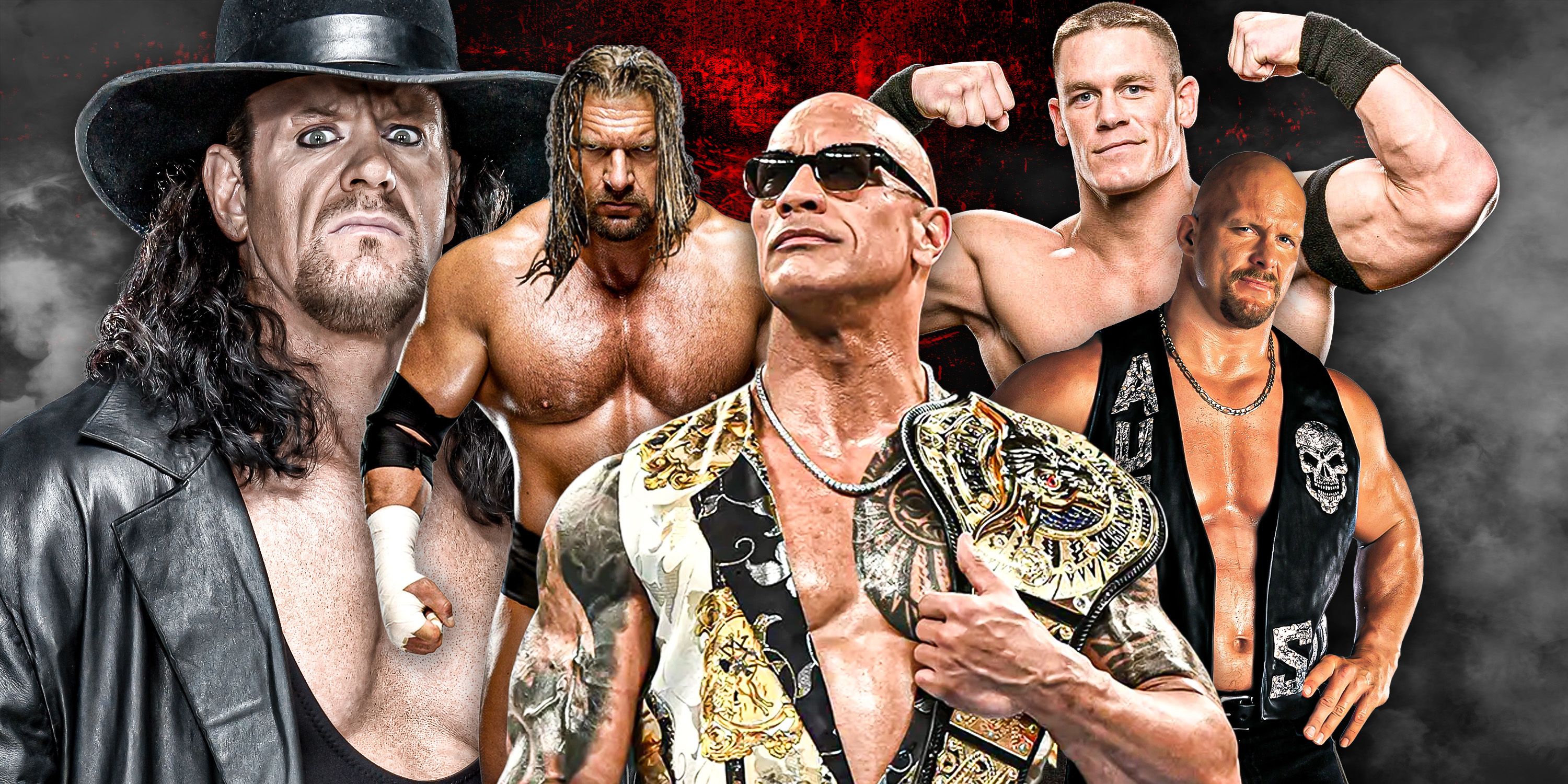
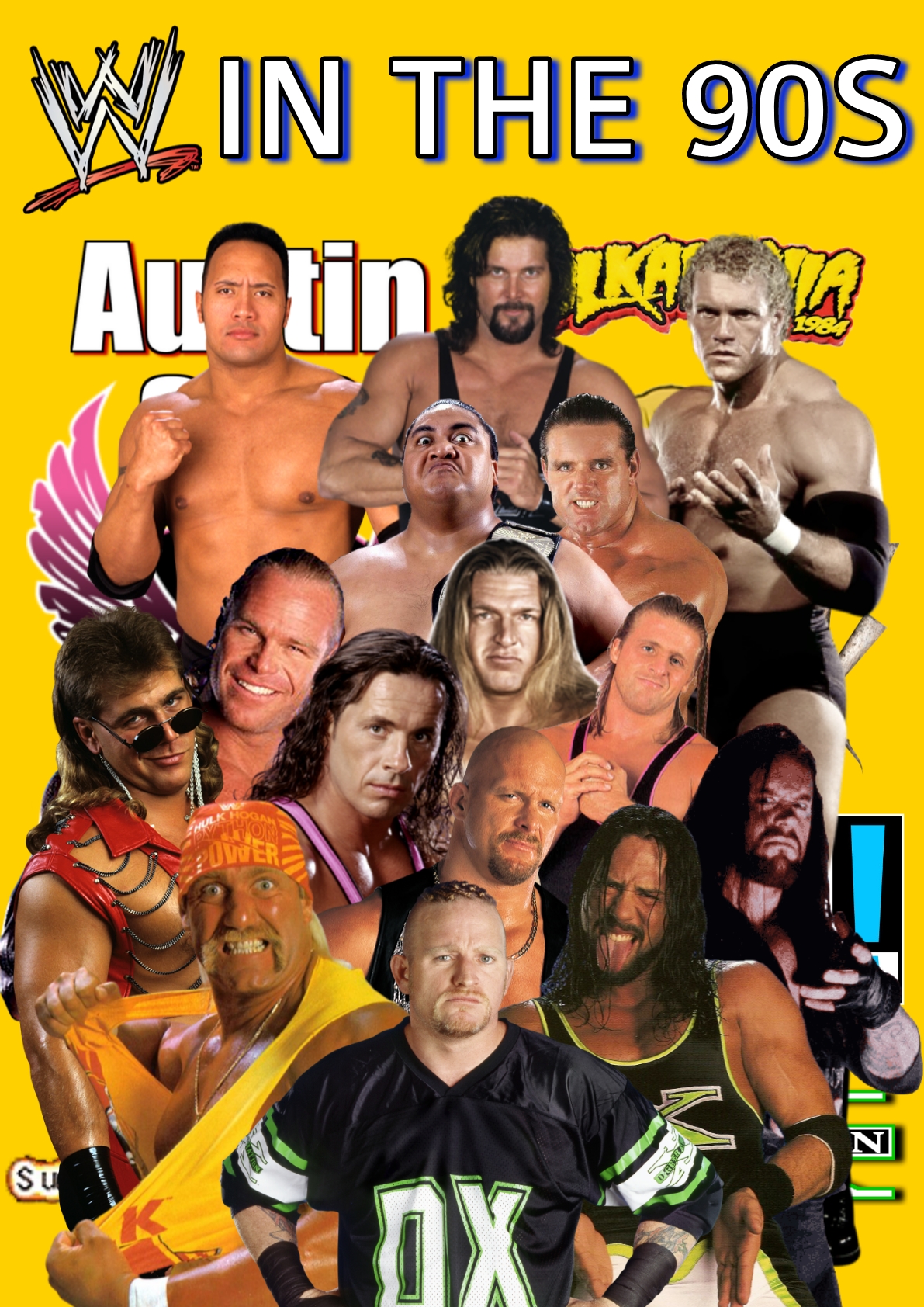
90s wrestlers redefined professional wrestling by transitioning the industry from cartoonish heroics to gritty, reality-based storytelling. This era, characterized by the "Monday Night Wars" between the WWF and WCW, introduced legendary figures like Stone Cold Steve Austin, The Rock, and the nWo, permanently altering global pop culture and sports entertainment.
The 1990s represent the most transformative decade in the history of professional wrestling. It was a period that began with the fading "Golden Era" of muscle-bound superheroes and ended with the "Attitude Era," a counter-culture phenomenon that pushed the boundaries of television. For fans and historians in 2026, looking back at 90s wrestlers is not just an exercise in nostalgia; it is an examination of how the business of "sports entertainment" was built. During this decade, the industry moved from local territories and Saturday morning tapings to a multi-billion-dollar global juggernaut driven by ratings, merchandise, and revolutionary character work.
The Evolution of Professional Wrestling in the 1990s
The decade was effectively split into three distinct movements: the tail end of the Golden Era, the experimental New Generation, and the explosive Attitude Era. In the early 1990s, the World Wrestling Federation (WWF, now WWE) still relied on larger-than-life characters like Hulk Hogan and the Ultimate Warrior. However, a series of scandals and shifting audience tastes forced the industry to pivot toward younger, more technically proficient athletes.
By 1993, the "New Generation" was born, highlighting performers like Bret "The Hitman" Hart and Shawn Michaels. These 90s wrestlers focused on "work rate"—the quality of the physical performance in the ring—rather than just size and charisma. This shift was essential for the survival of the industry, as it attracted a more dedicated fanbase that appreciated the athleticism of the sport. However, the true explosion occurred in the mid-to-late 90s when the industry embraced "Attitude," a creative direction that favored "anti-heroes," adult-oriented storylines, and a blurring of the lines between reality and fiction (known as breaking kayfabe).
The Monday Night Wars: WWF vs. WCW
The defining narrative of 90s wrestlers is the "Monday Night Wars." This was a period between 1995 and 2001 when the WWF’s Monday Night Raw and World Championship Wrestling’s (WCW) Monday Nitro competed head-to-head for television ratings. This competition forced both companies to innovate at a breakneck pace, leading to some of the most memorable moments in television history.
WCW, backed by the financial resources of Ted Turner, began signing established WWF stars like Hulk Hogan, Randy Savage, and Kevin Nash. This aggressive talent acquisition culminated in the formation of the New World Order (nWo), a stable of "invaders" that made wrestling feel dangerous and unpredictable. Meanwhile, the WWF, facing potential bankruptcy, responded by unleashing the Attitude Era. This era was spearheaded by "Stone Cold" Steve Austin, whose rebellious persona resonated with the disenfranchised youth of the late 90s. The competition was so fierce that wrestlers would often jump between companies overnight, creating a sense of "anything can happen" that has never been replicated in the industry since.
Defining Icons of the New Generation (1993–1997)
Before the era became truly "edgy," a specific group of 90s wrestlers laid the groundwork for modern technical wrestling. These performers were the bridge between the 80s spectacle and the 2000s realism.
Bret "The Hitman" Hart
Bret Hart is widely regarded as one of the greatest technical wrestlers of all time. His "Excellence of Execution" persona was built on the premise that he was a serious athlete in a world of characters. Hart’s matches against the likes of Mr. Perfect and the British Bulldog elevated the Intercontinental Championship to a status often rivaling the World Heavyweight Title. His departure from the WWF following the "Montreal Screwjob" in 1997 remains one of the most controversial real-life events in the history of the medium.
Shawn Michaels
"The Heartbreak Kid" Shawn Michaels brought a high-flying, charismatic energy that was previously unseen in the main event scene. As a founding member of D-Generation X (DX), Michaels transitioned from a flashy technician to a rebellious provocateur. His ability to perform in "gimmick matches," such as the first-ever televised Ladder Match at WrestleMania X, set a new standard for what was physically possible in the ring.
The Pillars of the Attitude Era (1997–1999)
The latter half of the decade saw the rise of the two most commercially successful 90s wrestlers: Stone Cold Steve Austin and The Rock. Their rivalry defined the peak of the wrestling boom.
- Stone Cold Steve Austin: Austin’s character—a beer-drinking, boss-defying blue-collar worker—was the perfect foil for the villainous Chairman of the WWF, Mr. McMahon. This "everyman vs. the establishment" storyline propelled wrestling into the mainstream, making Austin a cultural icon on par with the biggest stars in Hollywood.
- The Rock: Dwayne "The Rock" Johnson leveraged his unparalleled charisma and verbal skills to become "The People’s Champion." His transition from a struggling "babyface" (hero) to a charismatic "heel" (villain) and back again showed the importance of the "promo"—the ability to talk fans into the building. By the end of the 90s, The Rock was already being scouted by mainstream entertainment, leading to his eventual Hollywood superstardom.
The WCW Powerhouse and the nWo Revolution
While the WWF focused on character-driven narratives, WCW revolutionized the "faction" or "stable" concept. The nWo (New World Order), originally consisting of "Hollywood" Hulk Hogan, Kevin Nash, and Scott Hall, turned the wrestling world upside down in 1996.
By turning Hulk Hogan—the ultimate symbol of 80s heroism—into a villain, WCW captured the cynical spirit of the 90s. The nWo’s "cool" aesthetic, featuring black-and-white logos and spray-painted championship belts, made wrestling fashionable. Additionally, WCW’s cruiserweight division, featuring stars like Eddie Guerrero, Rey Mysterio, and Chris Jericho, introduced American audiences to the fast-paced "Lucha Libre" style of Mexico and the technical "Strong Style" of Japan. This diversity of talent allowed WCW to lead the ratings for 83 consecutive weeks, a feat that forced the WWF to change its entire business model.
The Hardcore Revolution and ECW
One cannot discuss 90s wrestlers without acknowledging Extreme Championship Wrestling (ECW). Based in Philadelphia, ECW was a smaller promotion that served as the R-rated alternative to the big two. Led by Paul Heyman, ECW introduced "Hardcore" wrestling—matches involving chairs, tables, and barbed wire.
Wrestlers like Mick Foley (as Cactus Jack), The Sandman, and Sabu pushed their bodies to the absolute limit. ECW was the laboratory where the "Attitude" style was actually invented. The WWF and WCW frequently "borrowed" (or outright stole) ECW’s ideas and talent. Mick Foley’s eventual move to the WWF, where he played the characters of Mankind, Dude Love, and Cactus Jack, proved that hardcore wrestlers could become mainstream stars. His legendary fall from the top of the "Hell in a Cell" cage in 1998 remains the most iconic stunt in wrestling history.
Comparative Overview of 90s Wrestling Icons
The following table summarizes the key 90s wrestlers who defined the era’s various movements and their lasting contributions to the industry.
| Wrestler | Primary Organization | Key Persona/Gimmick | Major Contribution |
|---|---|---|---|
| Stone Cold Steve Austin | WWF | The Texas Rattlesnake | Popularized the anti-hero archetype; led the Attitude Era. |
| Hulk Hogan | WCW | "Hollywood" Hogan | Executed the most famous "heel turn" in history; led the nWo. |
| Bret Hart | WWF / WCW | The Hitman | Set the global standard for technical in-ring excellence. |
| The Rock | WWF | The People’s Champion | Revolutionized the "promo" and crossed over to Hollywood. |
| Sting | WCW | The Crow | The "conscience" of WCW; defined the dark, brooding 90s aesthetic. |
| The Undertaker | WWF | The Phenom | Successfully transitioned a supernatural gimmick into the reality era. |
| Goldberg | WCW | The Unstoppable Force | Perfected the "squash match" and established an unprecedented winning streak. |
| Mick Foley | WWF / ECW | Mankind / Cactus Jack | Brought hardcore wrestling and psychological depth to the mainstream. |
Legacy and the Current Status of 90s Wrestlers in 2026
As of 2026, the legacy of 90s wrestlers is more visible than ever. Most of these icons have been inducted into the WWE Hall of Fame, and their matches are preserved for new generations on digital streaming platforms. While many have retired, their influence persists through the wrestlers they trained and the storytelling techniques they pioneered.
Some, like Sting and Goldberg, enjoyed remarkably long careers that extended well into the 2020s, proving the enduring drawing power of 90s nostalgia. Others, like Triple H (Paul Levesque), transitioned into executive roles, shaping the creative direction of modern wrestling based on the lessons learned during the Monday Night Wars. Sadly, the decade was also marked by tragedy, as the physical toll of the "hardcore" style and the grueling travel schedules led to the early passing of several stars. In 2026, the industry places a much higher emphasis on athlete wellness and mental health—a direct response to the hardships faced by the legends of the 90s.
Frequently Asked Questions
Who was the most popular 90s wrestler?
While popularity is subjective, "Stone Cold" Steve Austin and The Rock are statistically the most successful. Austin holds the record for the highest merchandise sales and ticket draws during the peak of the Attitude Era (1998–1999). However, Hulk Hogan remained the most recognizable name globally due to his 1980s stardom and 1990s reinvention.
What was the "Montreal Screwjob"?
The Montreal Screwjob was a real-life incident in 1997 where WWF owner Vince McMahon manipulated the outcome of a match between Bret Hart and Shawn Michaels without Hart's prior knowledge. This occurred because Hart was leaving for the rival WCW, and McMahon feared he would take the WWF Championship with him. It is considered the moment that birthed the "Mr. McMahon" character and the Attitude Era.
Why did WCW eventually lose to the WWF?
WCW’s downfall was caused by several factors, including bloated contracts, backstage politics that prevented young talent from rising, and a lack of long-term creative planning. Following the merger of AOL and Time Warner, the new corporate leadership was uninterested in wrestling, leading to the sale of WCW’s assets to Vince McMahon in March 2001.
How did 90s wrestlers influence modern MMA?
Many 90s wrestlers, such as Ken Shamrock and Dan Severn, were "hybrid" athletes who competed in both professional wrestling and the early Ultimate Fighting Championship (UFC). The marketing techniques, character development, and "trash talking" popularized by wrestlers in the 90s were later adopted by MMA promoters to build stars like Conor McGregor and Brock Lesnar.
Are any 90s wrestlers still active in 2026?
By 2026, almost all major 90s stars have retired from full-time in-ring competition. However, many remain active as "Legends," making special appearances at events like WrestleMania or working as coaches and producers behind the scenes. Their primary role in 2026 is acting as ambassadors for the sport and mentors to the current generation.
Exploring the 90s Era Further
To truly appreciate the impact of 90s wrestlers, viewers should seek out primary source material. Studying the "Promos" of the era reveals the shift from scripted lines to improvised, character-driven monologues. For those interested in the technical side of the sport, the WCW Cruiserweight matches from 1996 to 1998 offer a masterclass in athleticism. Finally, documentaries like The Monday Night War series provide a comprehensive business-perspective look at how these athletes changed the landscape of television forever. Understanding this era is essential for anyone looking to comprehend why professional wrestling remains a dominant force in the entertainment industry today.