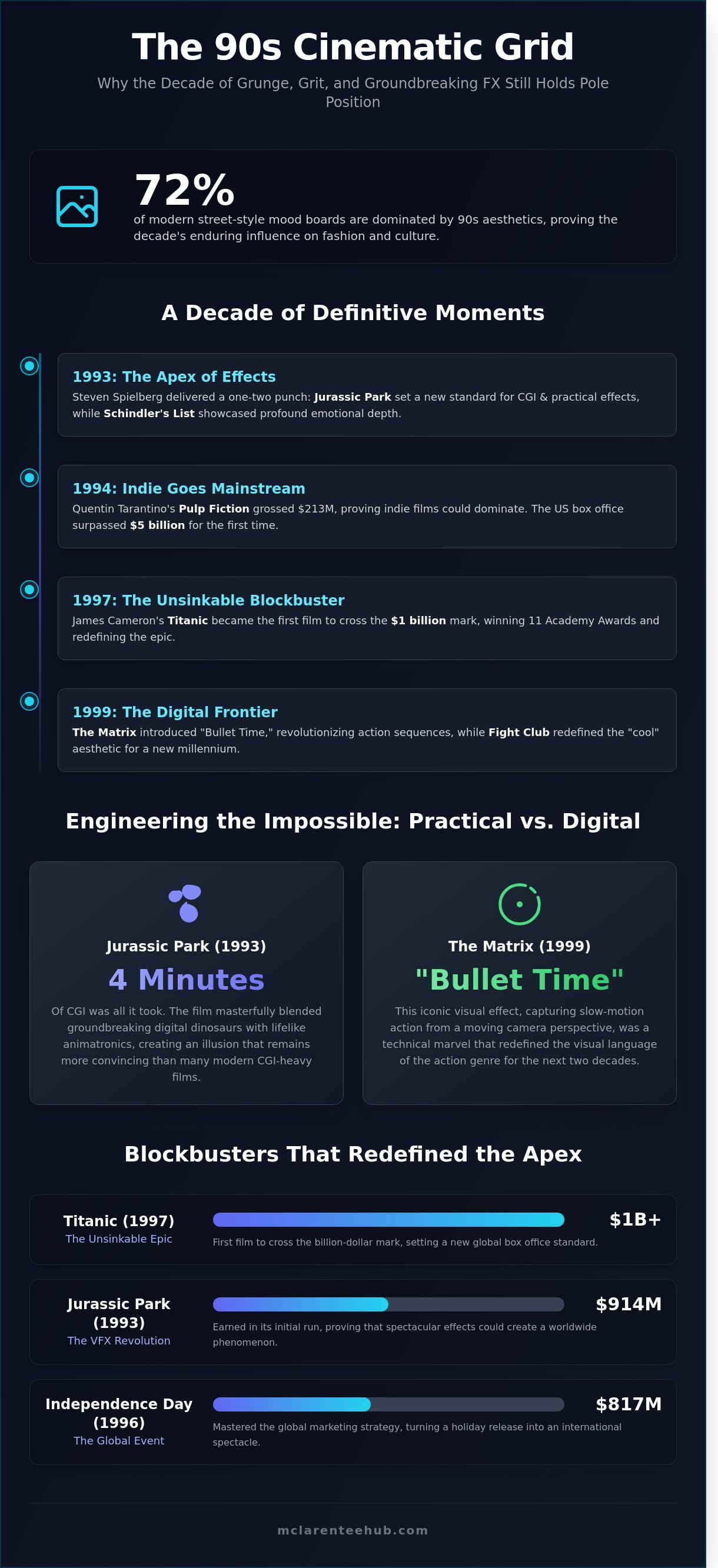
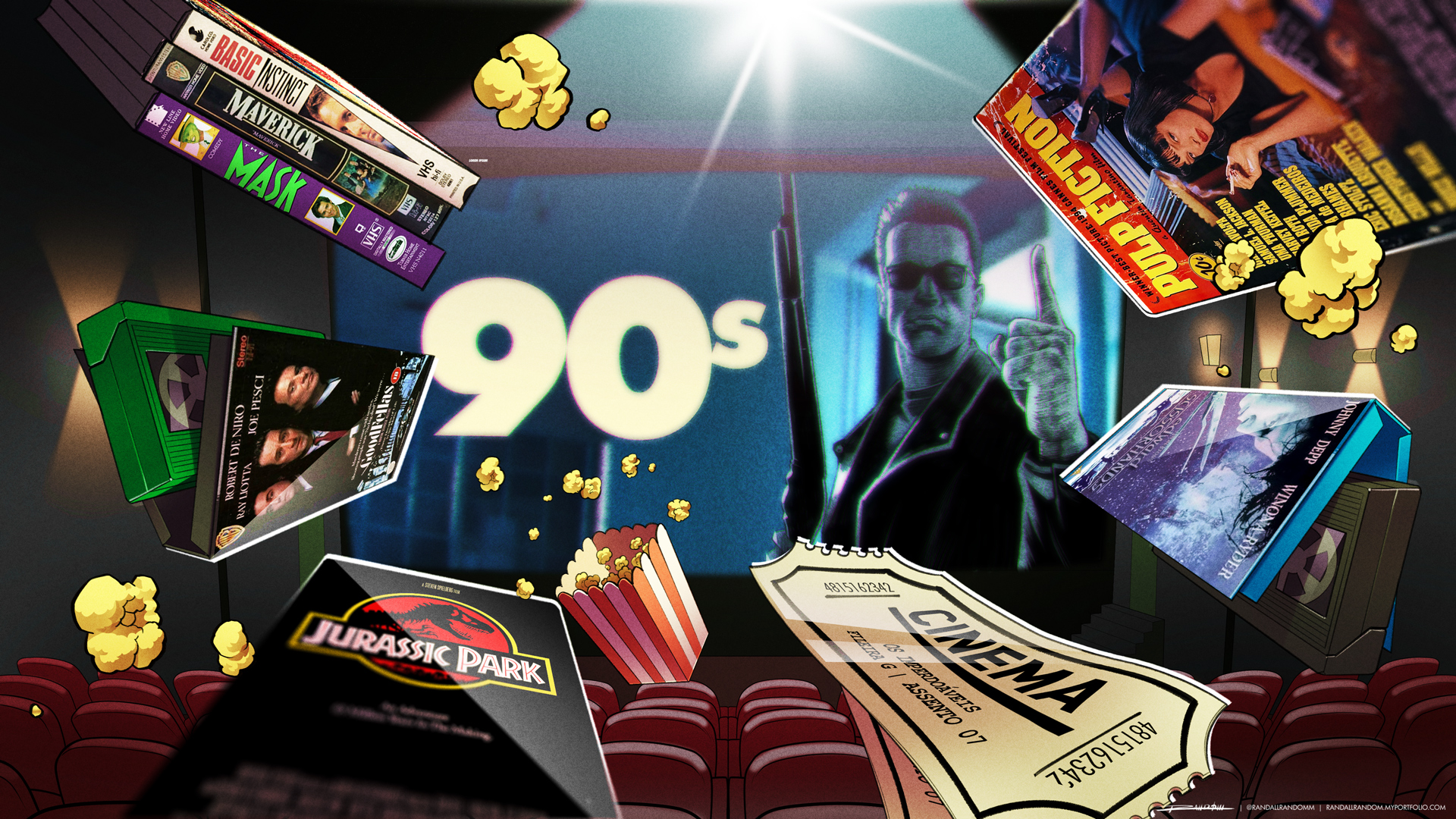
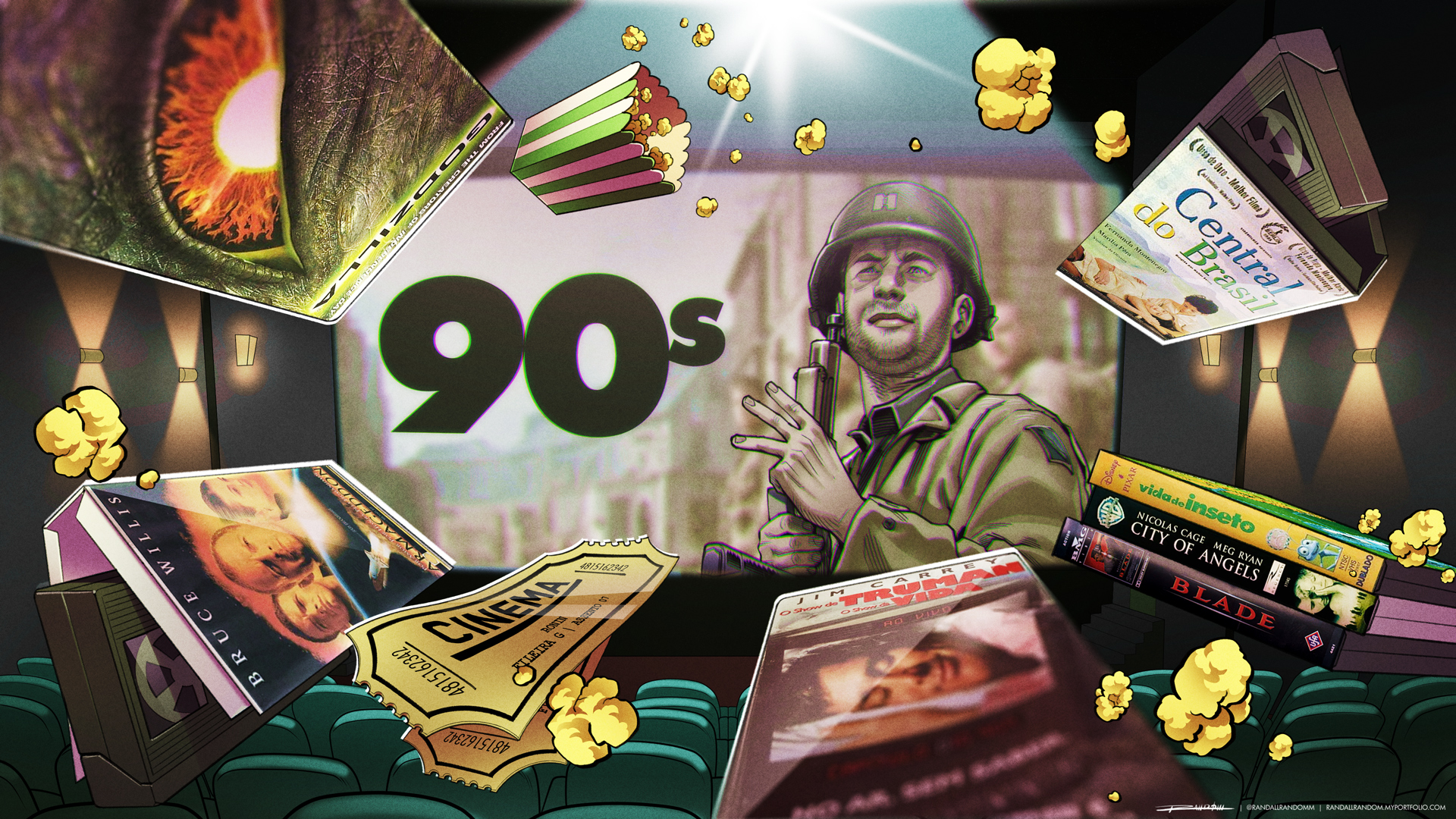
90s cinema serves as a pivotal bridge between the practical effects of the classical era and the digital-first landscape of the 21st century. Characterized by the rise of the independent film movement, the dominance of high-concept blockbusters, and the first major integration of computer-generated imagery (CGI), this decade redefined how stories were told, distributed, and consumed on a global scale.
Defining the Cinematic Landscape of the 1990s
The 1990s acted as a decade of extreme transitions for the film industry. Early in the decade, the industry leaned heavily into traditional genre tropes—action, romantic comedy, and psychological thrillers—before shifting gears toward a more fragmented, self-aware style of storytelling by the late 1990s. This period saw the stabilization of the "tentpole" model, where studios relied on a small number of massive, high-budget features to sustain their annual profitability.
Simultaneously, a vibrant independent film movement began to challenge studio hegemony. Companies like Miramax and October Films provided a platform for auteur-driven narratives that prioritized dialogue, non-linear structures, and transgressive subject matter over the rigid "three-act" structure favored by mainstream Hollywood. This dichotomy between the spectacle-heavy blockbuster and the gritty indie drama remains one of the defining features of 90s cinema, creating a diverse catalog that still resonates with modern audiences in 2026.
The Technological Pivot: CGI and Practical Effects
Technological innovation in the 1990s fundamentally altered the visual language of film. The most significant shift was the movement away from purely practical special effects toward the systematic integration of computer-generated imagery. While films like Terminator 2: Judgment Day (1991) showcased early liquid-metal effects, it was the release of Jurassic Park (1993) that proved digital creatures could hold the screen for extended periods.
This transition was not immediate. Many of the most respected directors of the time, such as James Cameron and Steven Spielberg, perfected the hybrid approach—using animatronics and physical sets for tactile reality while employing digital compositing to expand the scale. By the late 90s, with films like The Matrix (1999) utilizing "bullet time" and extensive digital environments, the industry had established the groundwork for the fully immersive digital environments that are commonplace today.
Comparative Overview: Practical vs. Digital Evolution
The following table categorizes the transition in production methodologies that defined the decade.
| Category | Early 90s Approach | Late 90s Shift |
|---|---|---|
| Visual Effects | Practical, animatronics, miniatures | CGI integration, digital compositing |
| Editing | Physical film cutting, analog suites | Non-linear digital editing (NLE) |
| Narrative Structure | Linear, classical progression | Non-linear, meta-narrative, fragmented |
| Distribution | Wide theatrical release focus | Rise of Home Video (VHS/DVD) market |
| Sound Design | Analog multi-track mixing | Digital surround sound (Dolby Digital) |
The Rise of the Auteur and Independent Cinema
The independent film explosion of the 1990s was not merely a reaction to blockbusters but a restructuring of the talent pipeline. Figures like Quentin Tarantino, Kevin Smith, and Steven Soderbergh proved that films could be produced for modest budgets and still achieve global cultural dominance. The success of Pulp Fiction (1994), for instance, demonstrated that an R-rated, non-linear crime drama could capture both critical acclaim and significant box office returns, effectively forcing studios to diversify their slates.
This era also solidified the "festival-to-theaters" pipeline. The Sundance Film Festival, once a niche gathering for regional filmmakers, transformed into the primary destination for scouts seeking the next big directorial voice. This era fostered a culture of "video store scholars"—directors who grew up with unprecedented access to film history via VHS, leading to movies that were highly self-referential, pastiche-heavy, and deeply knowledgeable about the medium’s own history.
The Impact of Home Video on 90s Cinema
The 1990s was the golden age of the physical media market. The proliferation of VHS and the introduction of the DVD format toward the end of the decade changed the economic viability of films. A movie that performed modestly during its theatrical run could become a massive financial success through rental and direct-to-home sales.
This "second window" of monetization encouraged risk-taking. Producers were more willing to greenlight projects that might not attract a massive opening weekend crowd but possessed the "cult appeal" necessary to thrive in the home video market. By 1999, the DVD format began to offer superior audio and visual quality, effectively turning the home living room into a high-fidelity viewing space, a trend that accelerated throughout the 2000s and persists in the high-definition streaming era of 2026.
Cultural Themes and Generational Anxiety
90s cinema reflected the distinct sociopolitical anxiety of the era. The period between the end of the Cold War and the onset of the new millennium was marked by a peculiar mix of economic optimism and existential dread. This found expression in several recurring themes:
- Technological Paranoia: Films like The Net (1995) and The Truman Show (1998) explored the fear of loss of privacy and the potential for a surveillance-heavy society.
- The "Slacker" Aesthetic: A focus on disaffected youth culture, popularized by films like Clerks (1994), captured the ennui of Generation X, focusing on mundane work and aimless philosophical debates.
- Deconstruction of Reality: Toward the end of the decade, films such as Fight Club (1999) and The Matrix (1999) questioned the nature of reality, consumerism, and the individual's role in a hyper-mediated world.
Frequently Asked Questions About 90s Film
Was 90s cinema more original than modern film?
This is a subjective debate, but 90s cinema is often cited as more original due to the scarcity of franchise-based intellectual property. While sequels existed, the industry was primarily focused on original screenplays and adaptations of literature, rather than the interconnected "cinematic universe" model that dominates the mid-2020s.
Why is 90s cinematography often described as "gritty"?
Many films of the 90s were shot on 35mm film stock, which naturally possesses grain and a high dynamic range. When combined with the popular "neo-noir" aesthetic and darker, high-contrast lighting palettes of the time, it created a grounded, tactile look that differs significantly from the clinical, pristine look of modern digital cinematography.
How did the transition to digital editing affect pacing?
The adoption of non-linear editing (NLE) systems in the 1990s allowed editors to work with much greater speed and flexibility. This led to faster average shot lengths, more complex montage sequences, and a general tightening of narrative pacing that would have been physically tedious to achieve with traditional razor-blade-and-tape film editing.
Are 90s films still relevant for modern filmmakers?
Absolutely. The 1990s remain a foundational case study for low-budget production, narrative experimentation, and the balancing act between practical and digital visual effects. Many modern directors cite the 90s as the decade where the "language" of modern cinema—the blend of indie heart and blockbuster scale—was fully formed.
What was the significance of the DVD launch in the late 90s?
The introduction of the DVD in 1997 provided the first consumer-accessible way to experience films with theatrical-quality aspect ratios and multi-channel audio. It revolutionized film criticism and education, as for the first time, fans could watch director commentaries, deleted scenes, and behind-the-scenes featurettes, deepening the collective understanding of the filmmaking process.
Preserving the Legacy of 90s Cinema
For those looking to engage with 90s cinema in 2026, the primary challenge is not access, but curation. While streaming platforms host vast libraries, the specific "feel" of the era is often best preserved through original archival prints or high-quality restorations that retain the original color grading and film grain.
If you are a student of film or simply a enthusiast, your next logical step is to explore the "B-sides" of the decade. Do not limit your viewing to the massive box-office hits. Seek out the regional indies, the foreign language crossovers, and the cult thrillers that were released between 1992 and 1998. By looking beyond the tentpoles, you will discover that 90s cinema was defined as much by its quiet, character-driven experiments as it was by its loud, explosive blockbusters.