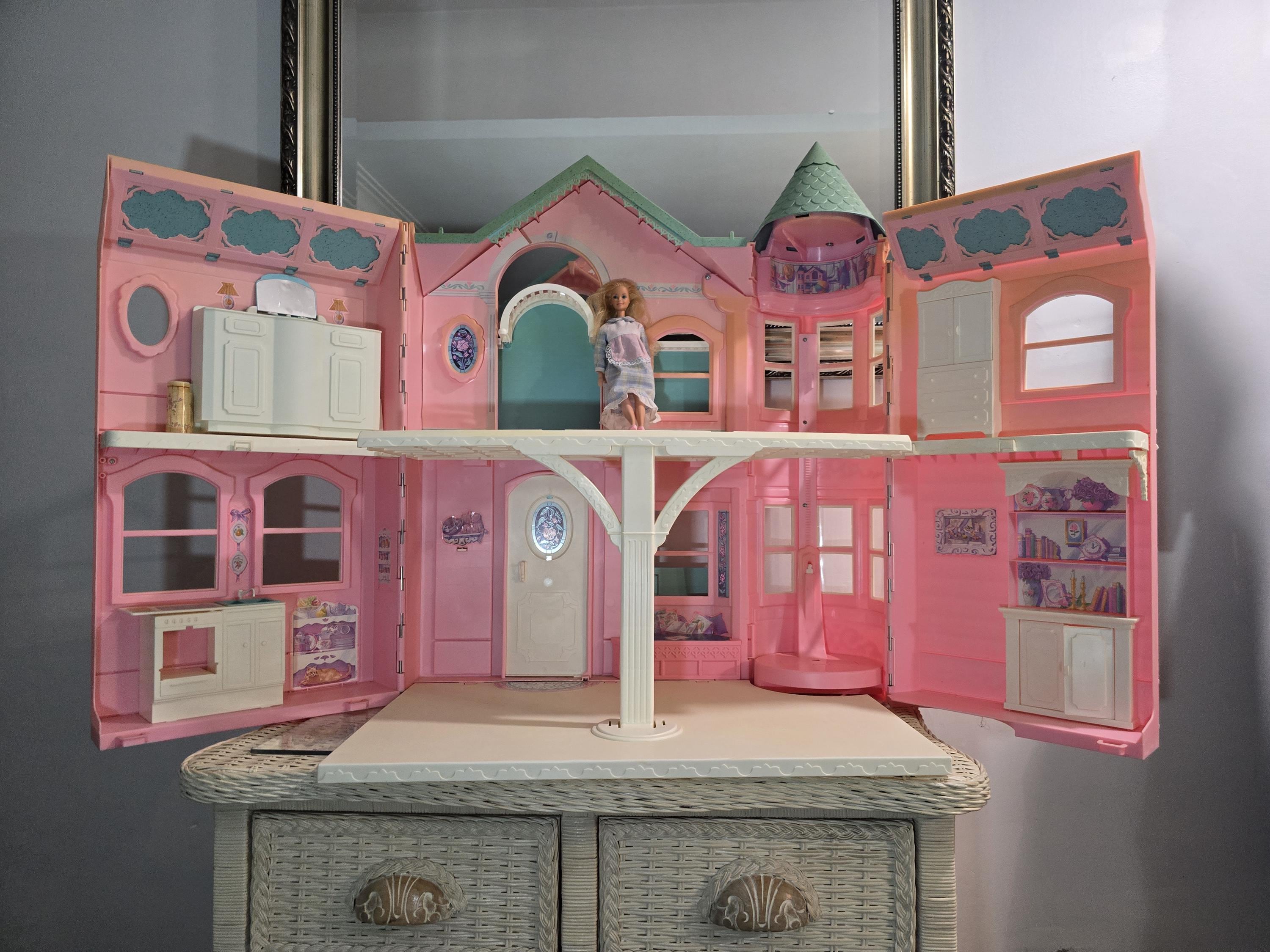
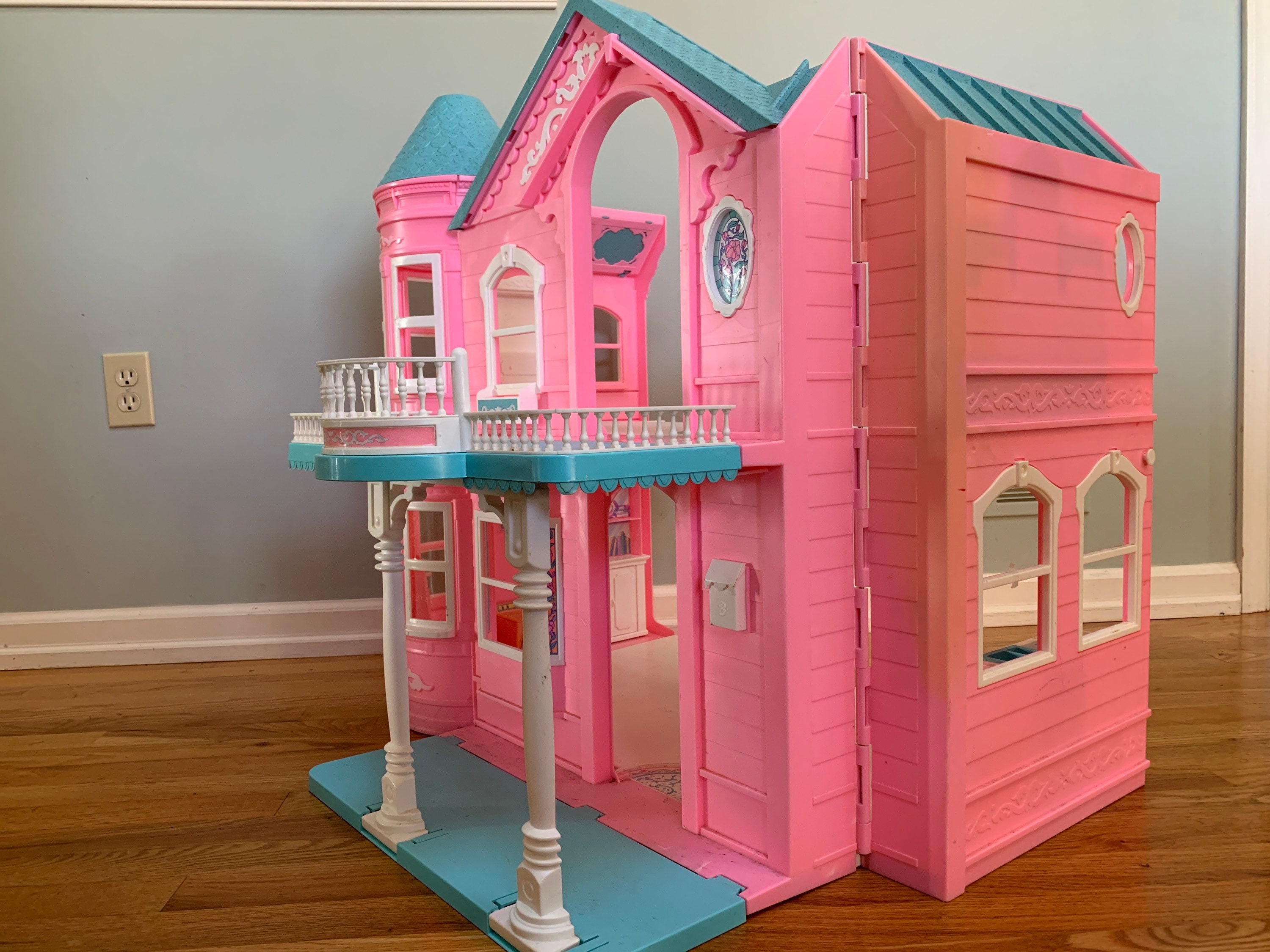
The 90s Barbie Dream House represents a pivotal era in toy manufacturing, characterized by a transition from modular cardboard-and-plastic hybrids to elaborate, multi-story, injection-molded plastic architectures. These houses defined the aesthetic expectations of a generation by integrating interactive light-and-sound technology with a distinctly neon, pastel-heavy domestic fantasy that mirrored contemporary suburban aspirations.
The Architectural Evolution of the 90s Dream House
Throughout the 1990s, Mattel shifted the Dream House from a simple "folding" structure to a massive, immersive playset. Unlike the flat-packed designs of the 1970s and 80s, which often relied on cardboard room dividers and clip-on plastic accessories, the 90s models—most notably the 1990 Magic Attic Dream House and the 1996 Magical Mansion—focused on verticality and structural integrity.
The primary design shift was the move toward "permanent" molded features. Architects and designers at Mattel utilized high-density polyethylene and polystyrene to create permanent staircases, balconies, and working elevators. These features were not merely decorative; they were functional mechanisms designed to facilitate complex, multi-room roleplay scenarios. The 90s design language emphasized the "open-back" concept, which allowed children to inhabit multiple levels of the home simultaneously, promoting a non-linear approach to play that moved beyond traditional dollhouse conventions.
Materiality and Aesthetic Signatures
The 90s aesthetic was dictated by a specific color palette often referred to as "Barbie Pink," which evolved during this decade into a more sophisticated spectrum. While the 1980s favored hot pink and deep magenta, the 1990s introduced a palette of "soft" pinks mixed with mint green, lavender, and sky blue. This shift coincided with contemporary interior design trends of the mid-90s, which favored these pastel shades in real-world suburban decor.
Another significant feature was the inclusion of sophisticated decal sets. Rather than molded-in texture, manufacturers provided intricate, high-detail stickers that represented household objects: a half-eaten breakfast, a miniature television showing a news broadcast, or a bookshelf filled with tiny volumes. This provided a level of visual realism that encouraged children to engage in "realistic" play patterns—mimicking the mundane tasks of adult life—which was a departure from the more abstract fantasy play of the previous decade.
Technological Integration: Lights, Sounds, and Motion
The late 1990s marked the dawn of the "electronic" dollhouse era. Prior to this, interaction was entirely manual. The introduction of electronic components—such as working doorbells, blinking kitchen lights, and cassette-tape recorders hidden in the walls—fundamentally changed the relationship between the child and the toy.
These features introduced an element of cause-and-effect interaction. When a child pressed a doorbell, the house responded with a sound; when a specific button was pushed, the kitchen light flickered. This feedback loop kept the user engaged for longer sessions and served as a precursor to the "smart home" concepts that would become common in consumer technology years later. By grounding the fantasy in sensory feedback, Mattel increased the perceived value of the product, moving it from a static toy to an interactive device.
Comparison of Key 90s Dream House Models
The following table compares the developmental progression of signature models released during the decade, highlighting the shift toward complexity and electronic functionality.
| Model Name | Primary Material | Key Feature | Electronic Elements |
|---|---|---|---|
| Magic Attic Dream House (1990) | Injection-Molded Plastic | Vertical Attic Extension | Basic mechanical lift |
| Dream Glow Dollhouse (1992) | Heavy-duty Plastic | Glow-in-the-dark surfaces | Battery-operated lighting |
| Magical Mansion (1996) | High-density Polymer | Working Elevator | Sounds and light loops |
| Barbie's 3-Story Townhouse (1999) | Modular Plastic | Fold-out balconies | Integrated kitchen sounds |
Cultural Impact: Shaping Domestic Aspirations
The cultural impact of the 90s Barbie Dream House extends beyond the playroom. These houses acted as microcosms of the "American Dream" during the economic expansion of the 1990s. By depicting a high-functioning, spacious, and well-equipped home, the toys socialized children into a specific domestic ideal: the suburban, single-family detached home with modern appliances.
This representation also reinforced the gendered nature of domestic work, though it simultaneously presented Barbie as a career-oriented individual. A notable tension existed between the domesticity of the kitchen sets and the professional accessories (computers, briefcases, phones) often included in the broader Barbie line. The Dream House provided the stage for Barbie to occupy both roles, reflecting the shifting social attitudes toward women in the workforce during that period.
Logistics, Storage, and Parental Challenges
From a practical standpoint, the 90s Dream Houses presented significant logistical challenges for parents. Unlike the collapsible models of the 70s, the 90s houses were notoriously difficult to store. Their size required dedicated floor space, and the complex plastic molding often made them fragile at the attachment points.
Common issues reported by users in the 1990s included:
- Structural Fatigue: The plastic "tabs" that held floor panels to walls were prone to snapping under the weight of accessories.
- Adhesive Degradation: The high-detail stickers often peeled or bubbled due to changes in humidity or improper application.
- Battery Corrosion: Early electronic components, if stored with batteries inside, often suffered from acid leakage, rendering the light-and-sound features permanent "dead zones."
Maintenance and Restoration for Collectors
For those acquiring these units in 2026, restoration is the primary focus. Because these toys were made of specific blends of plastic that may have yellowed or become brittle, collectors often look for models kept away from direct sunlight. Cleaning these vintage sets requires mild, non-abrasive surfactants to ensure that the original decal sets—which are impossible to replace without professional custom printing—do not lose their adhesive or color intensity.
If the internal wiring is compromised, repair often involves basic circuitry troubleshooting, such as cleaning battery terminals or re-soldering disconnected wires. Because these units were not originally designed for longevity, the historical preservation of a 1990s-era Barbie Dream House is a task of stabilizing plastic decay while retaining the original aesthetic charm.
Frequently Asked Questions
Did 90s Barbie Dream Houses require complex assembly?
Yes, they shifted from pre-assembled units to "consumer-ready" assembly. Most 90s models required parents to manually snap dozens of plastic clips together and apply extensive sticker sets, a task that often took over an hour to complete.
Why do many 90s Dream Houses appear yellowed today?
The plastics used in the 90s frequently contained brominated flame retardants. Over decades, exposure to UV light causes a chemical reaction that yellows the polymer, a common issue for vintage plastic toys of this specific era.
Were the electronics in the 90s Dream Houses standardized?
No, the electronic components were generally proprietary to specific model lines. This means that a sound module from a 1996 Magical Mansion is rarely interchangeable with parts from a 1999 Townhouse model, making parts scavenging difficult.
How do modern collectors verify an authentic 90s model?
Authenticity is verified by checking the mold markings usually found on the underside of the floor plates or the rear of the wall panels, which include the year of manufacture and the specific Mattel patent or production code.
What is the best way to clean vintage plastic without damaging decals?
Use a soft microfiber cloth dampened with distilled water and a tiny amount of mild dish soap. Avoid harsh chemical cleaners or alcohol, as these will dissolve the adhesive behind the stickers and can cause the plastic to craze or crack.
Next Steps for Collectors and Enthusiasts
If you are looking to acquire or preserve a 1990s Barbie Dream House in 2026, your first action should be to determine your intent: display or active play. For display, focus on finding "new-in-box" (NIB) or "old-stock" items, though these carry a significant premium. For active play or restoration, focus on finding complete sets that lack electronic functionality, as these are more affordable and allow you to focus on cleaning and minor structural repairs rather than complex electrical restoration. Always check for the presence of the original, often-lost furniture pieces, as these are usually the most difficult elements to source separately.