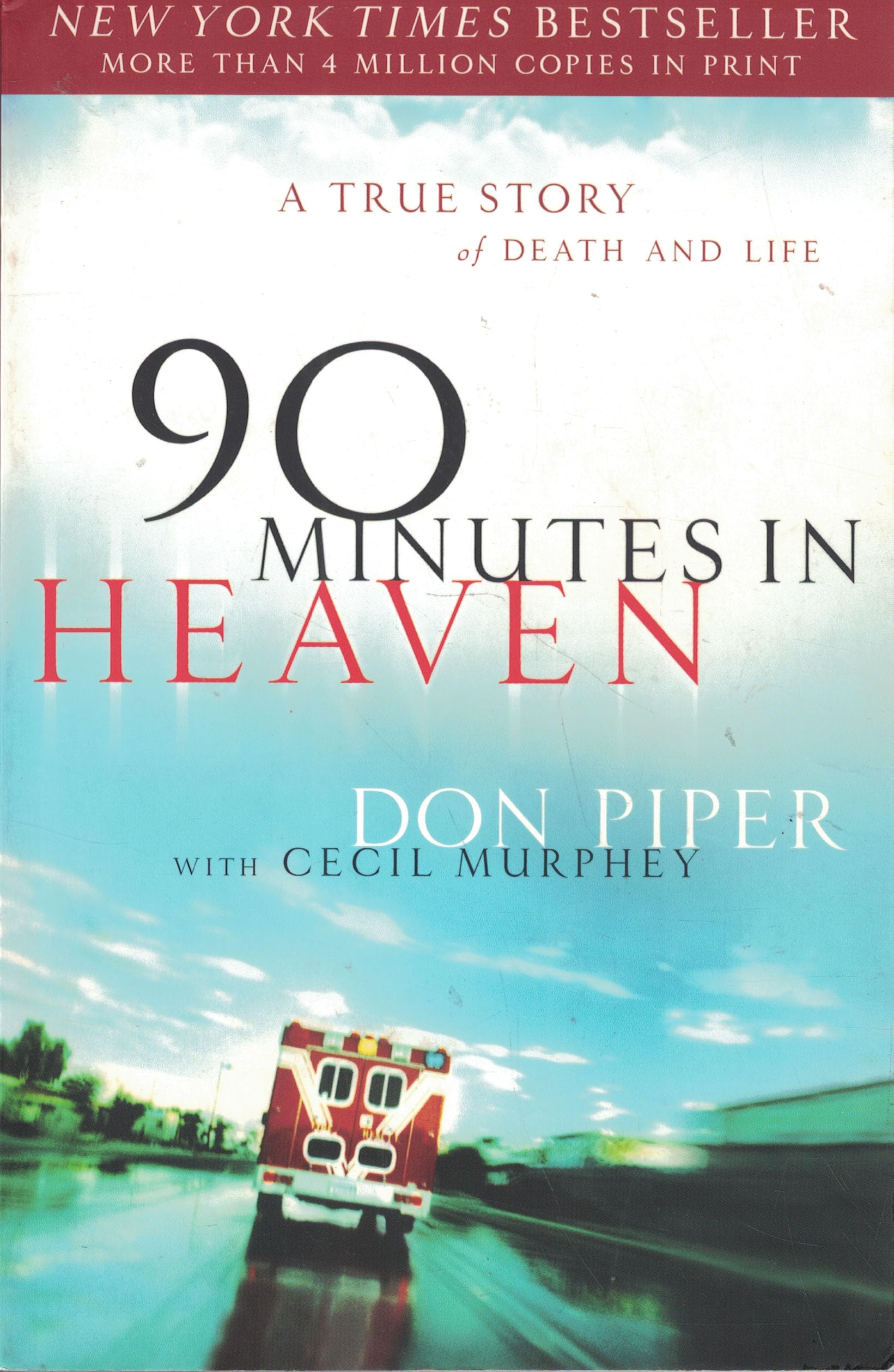
90 Minutes in Heaven is a 2004 Christian memoir written by Don Piper with Cecil Murphey that chronicles Piper’s claims of experiencing the afterlife following a fatal automobile accident. The book achieved massive commercial success, spending over five years on the New York Times bestseller list, and was subsequently adapted into a 2015 feature film, remaining a notable entry in the contemporary genre of near-death experience literature.
Understanding the Origin and Narrative Arc of the Memoir
The narrative framework of 90 Minutes in Heaven centers on an event that occurred on January 18, 1989. Don Piper, a Baptist minister, was driving home from a conference when a semi-trailer truck crossed into his lane, crushing his car. Emergency responders pronounced him dead at the scene, and his body remained covered in the vehicle for approximately an hour and a half while emergency personnel awaited the arrival of the coroner. According to Piper's account, the moment his life ended on earth marked the beginning of an immediate transition into heaven, where he experienced sights, sounds, and emotions that defied earthly description.
The memoir details his sensory and emotional impressions of the afterlife, emphasizing encounters with deceased relatives and friends who greeted him at the gates of heaven. Piper describes an overwhelming sense of peace, brilliant light, and celestial music that overshadowed any earthly comprehension. However, the narrative shifts abruptly when another pastor, who had arrived at the accident site to pray for the victim, began singing hymns over the wreckage. Piper reportedly heard these hymns while in heaven, and upon their conclusion, he found himself abruptly thrust back into his mangled, pain-ridden physical body on earth.
Following the accident, Piper endured a grueling recovery process that spanned several years. He underwent dozens of major surgeries, dealt with severe chronic pain, and faced profound psychological and emotional adjustments as he attempted to reconcile his physical reality with his memories of the afterlife. The contrast between the perfection of heaven and the intense suffering of his rehabilitation forms the core emotional tension of the book. Cecil Murphey, a prolific ghostwriter and co-author, collaborated with Piper to structure these personal recollections into a coherent, highly readable narrative designed to appeal to a broad readership interested in faith-based accounts of the supernatural.
Commercial Success and Publishing Milestones
Upon its initial publication by Fleming H. Revell, an imprint of Baker Publishing Group, 90 Minutes in Heaven did not immediately capture widespread mainstream attention. However, through grassroots marketing, word-of-mouth recommendations within evangelical communities, and features on Christian broadcasting networks, the book steadily gained momentum. By the late 2000s, it had become a publishing phenomenon, reaching top positions on various bestseller lists, including the New York Times paperback non-fiction list, where it remained charted for years.
The commercial trajectory of the book reflects broader trends in the religious publishing market during the early 2000s, a period marked by high consumer interest in personal testimonies of miraculous healings, angelic encounters, and afterlife journeys. Millions of copies were sold in multiple languages, cementing Piper’s status as a sought-after speaker on the Christian conference circuit. The following table outlines the key publishing milestones and media adaptations associated with the work:
| Milestone / Media Form | Year | Creator / Publisher | Significance |
|---|---|---|---|
| Original Book Publication | 2004 | Fleming H. Revell (Baker Publishing) | Established the foundational narrative of Don Piper's experience. |
| New York Times Bestseller | 2006–2011 | N/A | Maintained a multi-year presence on bestseller lists, driving massive sales. |
| Feature Film Adaptation | 2015 | Giving Films / Samuel Goldwyn Films | Brought the narrative to a cinematic audience, starring Hayden Christensen and Kate Bosworth. |
| Tenth Anniversary Edition | 2014 | Fleming H. Revell | Featured updated reflections, new forewords, and expanded commentary on the impact of the ministry. |
Critical Reception and Theological Scrutiny
While 90 Minutes in Heaven resonated deeply with millions of readers seeking comfort regarding mortality and the afterlife, it also encountered substantial critical scrutiny from both secular reviewers and theologians. Literary critics frequently categorized the work within the growing sub-genre of inspirational memoirs, noting its formulaic emotional beats and straightforward prose style. However, theological debates surrounding the book proved more contentious, particularly among conservative Christian scholars and pastors.
Critics within the theological community raised questions regarding the compatibility of Piper's specific claims with traditional orthodox Christian doctrines concerning the intermediate state of the soul. While historic Christian theology generally teaches that believers enter the presence of God upon death, detailed descriptions of earthly-style reunions, pearly gates, and architectural structures in heaven are often viewed by theologians as imaginative elaborations or subjective interpretations rather than literal, authoritative revelations. Furthermore, skeptics pointed out the complete lack of verifiable medical documentation confirming actual brain death for the full duration claimed, as emergency records typically noted a severe accident with delayed extraction rather than clinical brain death lasting ninety minutes.
Despite these theological reservations, defenders of the book argued that its primary value lay not in acting as a definitive theological treatise on eschatology, but rather in providing pastoral comfort to grieving individuals and those suffering from chronic illness or severe physical trauma. The emphasis on divine presence, resilience through suffering, and the reality of life after death provided psychological and spiritual solace to readers navigating personal loss.
The 2015 Cinematic Adaptation: Production and Performance
The enduring popularity of the memoir eventually attracted the attention of independent filmmakers, leading to a cinematic adaptation released in September 2015. Directed by Michael Polish and produced by Giving Films, the movie adaptation starred Hayden Christensen as Don Piper and Kate Bosworth as his wife, Eva Piper. The production sought to capture both the dramatic physical toll of the automobile accident and the emotional strain placed upon the Piper family during years of arduous medical rehabilitation.
Translating a deeply internal, spiritual memoir into a two-hour narrative feature required significant dramatization. Screenwriters focused heavily on the relational friction between Don and Eva Piper, highlighting the psychological burden of caregiving and the despair that often accompanies catastrophic injury. The heavenly sequences were stylized to evoke a sense of ethereal beauty and peace, contrasting sharply with the bleak, sterile hospital environments where much of the narrative unfolds.
Upon its theatrical release, the film received mixed-to-negative reviews from mainstream film critics, who criticized its melodramatic tone, predictable pacing, and heavy-handed didacticism. On review aggregator platforms such as Rotten Tomatoes, the film garnered low critical approval ratings, with reviewers noting that its appeal was largely confined to committed evangelical audiences. Nevertheless, the film performed moderately well within its targeted niche market, benefiting from church buyouts, grassroots promotional campaigns, and dedicated support from the faith-based demographic that originally propelled the book to bestseller status.
Common Questions Regarding Near-Death Experiences and the Memoir
What evidence supports the claims made in 90 Minutes in Heaven?
The primary evidence presented in the book is based entirely on Don Piper's personal testimony, corroborated by his wife and the medical staff who treated his extensive injuries. While hospital records confirm the severity of the car crash and the extensive nature of his subsequent surgeries, there is no independent medical or scientific verification of a ninety-minute cessation of brain activity or a journey to an alternate spiritual realm.
How does this book compare to other near-death experience literature?
Unlike secular near-death experience accounts—such as those studied by medical professionals like Raymond Moody or Eben Alexander—90 Minutes in Heaven is explicitly framed within a conservative evangelical Christian worldview. While secular accounts often emphasize tunnels of light and a universal sense of peace without specific religious iconography, Piper’s account explicitly highlights Christian imagery, biblical figures, and traditional theological concepts of heaven.
Did Don Piper continue his pastoral work after the publication of the book?
Yes, following his long and arduous physical recovery, Don Piper founded a widespread ministry centered on motivational speaking, pastoral counseling, and offering encouragement to trauma survivors and families dealing with catastrophic medical situations. He traveled extensively to share his story at churches, conferences, and healthcare seminars until his health permitted.
How did the accident impact Don Piper's physical health long-term?
The physical consequences of the 1989 truck accident remained with Piper for the remainder of his life. He underwent more than 34 major surgical procedures, dealt with chronic nerve damage, and required extensive physical therapy to regain basic mobility, which forms a significant secondary theme of the memoir alongside his spiritual experiences.
Where can readers find official resources related to the author and the book?
Official information, ministry updates, and authorized editions of the book can be found through major Christian publishing houses, particularly Baker Publishing Group (Fleming H. Revell imprint), as well as through archives maintained by religious broadcasting networks that originally covered his story.
Navigating Inspirational Literature and Personal Testimonies
For readers exploring 90 Minutes in Heaven or similar inspirational biographies, approaching the text with a balanced perspective is essential. Whether evaluated as a profound personal testimony of faith and resilience through extreme physical suffering or as a culturally significant publishing phenomenon, the work occupies a unique space in contemporary religious media. Readers should weigh personal anecdotal claims against established medical science and rigorous theological frameworks, utilizing such texts primarily for their narrative value in examining human endurance, psychological recovery, and the perennial search for meaning in the face of mortality.