9/11 survivor stories document the firsthand experiences of individuals who escaped the World Trade Center complex, the Pentagon, and surrounding lower Manhattan during the September 11, 2001 terrorist attacks. Preserved through institutional archives, oral history projects, and federal health registries, these testimonies record real-time survival strategies, emergency responses, maritime evacuations, and the ongoing long-term health impacts managed by survivors today.
The Evacuation Landscape: Survival Across Impact Sites
The physical circumstances surrounding survival on September 11, 2001, varied significantly depending on location, structural engineering factors, and immediate proximity to the impact zones. Understanding these spatial dynamics provides crucial context for the firsthand testimonies recorded in historical archives.
World Trade Center Tower 1 (North Tower)
When American Airlines Flight 11 struck the North Tower at 8:46 a.m. EDT between floors 93 and 99, all three main stairwells (A, B, and C) were severed above the 92nd floor. This structural destruction instantly trapped everyone located on or above the 92nd floor, making physical descent impossible. Survival stories from the North Tower are entirely concentrated among occupants who were located on the 91st floor and below, or individuals who were inside the lower concourse and surrounding building plaza at the moment of impact. Evacuation from the upper accessible floors required navigating dark, smoke-filled stairwells filled with jet fuel fumes, water from severed fire suppression lines, and physical debris.
World Trade Center Tower 2 (South Tower)
United Airlines Flight 175 struck the South Tower at 9:03 a.m. EDT between floors 77 and 85. Unlike the North Tower, the impact occurred at an oblique angle. While stairwells B and C were completely severed, Stairwell A remained structurally intact, though heavily compromised by smoke, debris, and heat. A small number of individuals above the impact zone discovered that Stairwell A was passable, allowing 18 people located on or above the floors of impact to successfully descend to safety before the tower collapsed at 9:59 a.m.
The Pentagon
At 9:37 a.m. EDT, American Airlines Flight 77 struck the western facade of the Pentagon in Arlington County, Virginia. Survival testimonies from inside the building center on navigating dense, toxic smoke caused by burning jet fuel, intense internal heat, and structural collapse within Rings E, D, and C. Military personnel and civilian staff formed human chains to guide colleagues through blacked-out corridors, while individuals on the perimeter assisted in pulling wounded personnel from the burning structural collapse zone.
The Maritime Evacuation of Lower Manhattan
Following the collapse of both World Trade Center towers, hundreds of thousands of civilians were pushed to the waterfront of lower Manhattan, trapped by toxic dust clouds, falling debris, and suspended public transit networks. Over the course of nine hours, a spontaneously organized fleet of tugboats, ferries, private yachts, fishing vessels, and Coast Guard craft evacuated an estimated 500,000 civilians across New York Harbor and the Hudson River. Documented as the largest maritime evacuation in recorded history, this event generated thousands of unique survivor accounts detailing civic coordination and maritime rescue operations.
Key Accounts of Escape and Real-Time Survival
Among the thousands of documented accounts, several specific testimonies illustrate the unique structural and physical challenges encountered by evacuees during the attacks.
The Escape via Stairwell A: Brian Clark and Stanley Praimnath
One of the most documented accounts of survival above an impact zone occurred in the South Tower. Stanley Praimnath, an executive at Fuji Bank, was on the 81st floor when United Airlines Flight 175 struck the building directly adjacent to his office. Trapped under debris, Praimnath shouted for help.
Brian Clark, a volunteer fire warden for Euro Brokers located on the 84th floor, was descending Stairwell A with a group of colleagues when he heard Praimnath’s cries. Clark broke through a wall to rescue Praimnath. While other evacuees elected to ascend toward the roof (where doors were locked and no helicopter rescues were planned), Clark and Praimnath chose to descend Stairwell A despite smoke and structural damage. They successfully navigated past the impact floors and cleared the building perimeter shortly before its collapse.
Survival Within the Rubble: Genelle Guzman-McMillan
Genelle Guzman-McMillan was an office worker for the Port Authority of New York and New Jersey located on the 64th floor of the North Tower. During her descent via Stairwell B, the building collapsed around her on the 13th floor level. Guzman-McMillan became trapped under concrete and steel debris, unable to move her body for 27 hours.
She was rescued on the morning of September 12, 2001, after rescue teams located her hand protruding from the rubble. Guzman-McMillan was the 20th and final living survivor pulled directly from the Ground Zero collapse debris by search-and-rescue teams.
The Stairwell B "Miracle": The B-Company Firefighters and Pasquale Buzzelli
When the North Tower collapsed at 10:28 a.m., a group of 12 firefighters from the FDNY (including members of Ladder 6 and Engine 39), along with civilian evacuee Josephine Harris and Port Authority officer Paul Kuria, were located inside Stairwell B between the 1st and 4th floors.
Due to the unique structural configuration of Stairwell B, this specific segment of the concrete enclosure held intact despite the surrounding 110-story collapse. All individuals inside this section of Stairwell B survived the catastrophic failure of the tower with relatively minor injuries and were extracted by rescue workers within hours.
Archives and Preservation Initiatives for Firsthand Testimonies
Preserving survivor testimonies has required systemic efforts by historians, archivists, and oral historians to capture accurate primary accounts while minimizing memory degradation and traumatic re-experiencing.
| Institution / Archive | Core Mandate & Content Scope |
|---|---|
| National 9/11 Memorial & Museum | - Comprehensive collection of audio/video- Focus on evacuees, responders, families- Preserves recorded phone logs & voicemails |
| StoryCorps 9/11 Initiative | - Personal face-to-face audio interviews- Focus on individual loss & recovery- Archival copy lodged at Library of Congress |
| Library of Congress 9/11 Project | - Multi-city documentary focus- Focus on nationwide civic reactions- Written transcripts & photo documentation |
| FDNY World Trade Center Task Force | - 500+ official firefighter interviews- Focus on operational response & egress- Unedited public records for analysis |
The National September 11 Memorial & Museum Oral History Collection
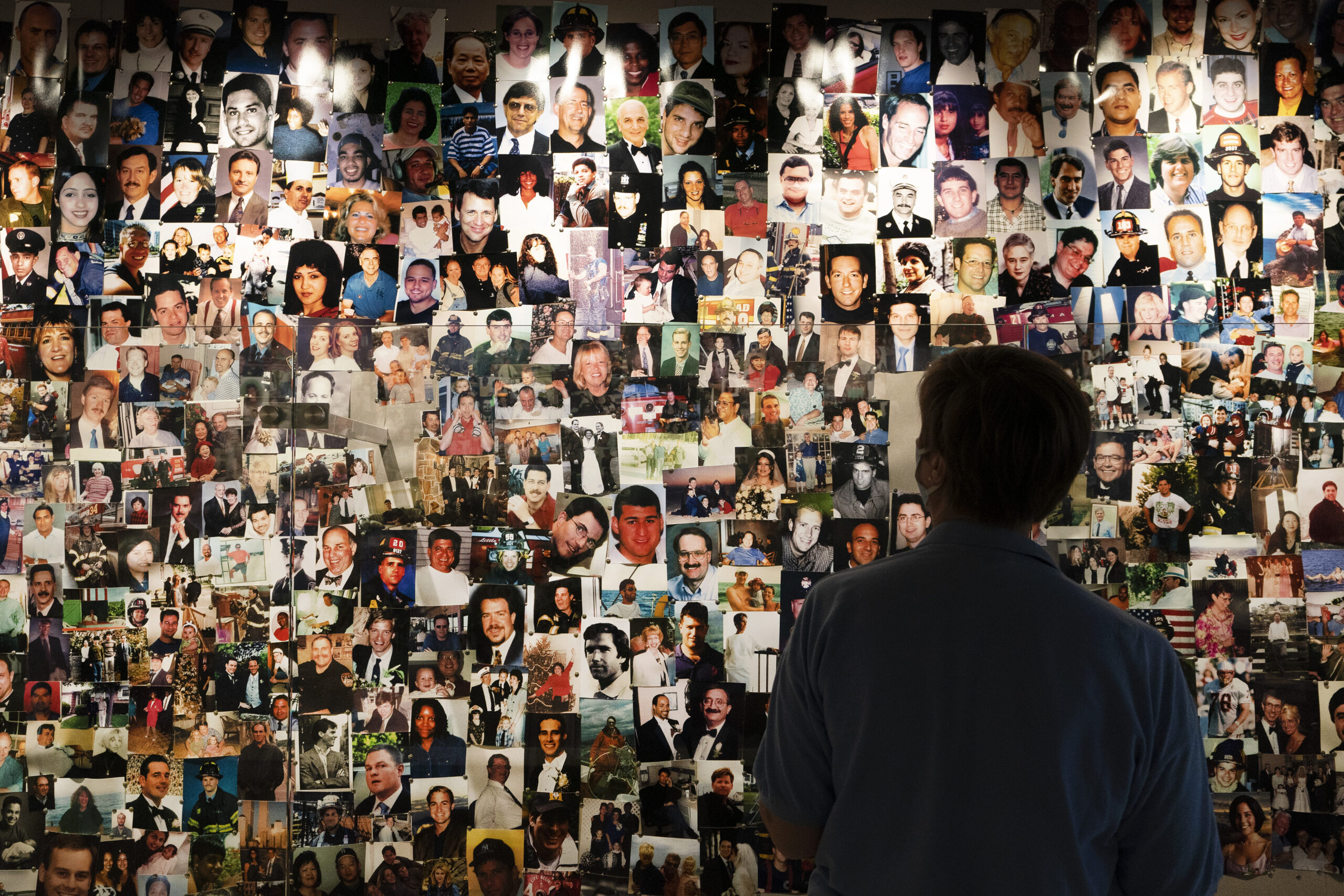
The National September 11 Memorial & Museum maintains one of the world's largest archives of verified 9/11 survivor testimonies. The collection includes thousands of hours of audio and video recordings, audio landline transcripts, emergency dispatch calls, and personal oral history interviews conducted with survivors, first responders, and local residents. These recordings are cataloged for scholarly research and curated within the museum's public exhibition spaces.
The StoryCorps September 11th Initiative
In partnership with the National September 11 Memorial & Museum, the non-profit organization StoryCorps launched a dedicated initiative to record a personal narrative for every victim and survivor of the September 11 attacks. These unedited audio recordings capture conversations between survivors, colleagues, and family members, documenting both immediate survival and long-term grieving processes. The full repository is preserved permanently at the American Folklife Center at the Library of Congress.
The FDNY World Trade Center Task Force Interviews
Beginning in October 2001, the New York City Fire Department conducted over 500 interviews with firefighters, paramedics, and officers who responded to Ground Zero. Following a legal movement by media organizations and victims' families, these official transcripts were publicly released in 2005. They offer unedited, technical accounts of building conditions, evacuation bottlenecking, radio communications failures, and localized survival inside the towers.
Health Impacts: Post-9/11 Survival and Exposure Tracking
For tens of thousands of individuals, survival did not end with their physical evacuation on September 11, 2001. The destruction of the World Trade Center complex pulverized thousands of tons of building materials, releasing a toxic plume containing asbestos, benzene, polychlorinated biphenyls (PCBs), glass fibers, lead, and fine particulate matter across lower Manhattan.
| Institutional Program | Primary Purpose & Operational Scope |
|---|---|
| World Trade Center Health Program (WTC Health Program) | - Free medical monitoring and treatment- Serves responders and certified survivors- Authorized by Congress through year 2090 |
| September 11th Victim Compensation Fund (VCF) | - Financial compensation for economic loss- Covers physical injuries & fatal illnesses- Permanent funding extended through July 2090 |
| WTC Health Registry (NYC Dept of Health / ATSDR) | - Longitudinal epidemiological research study- Tracks long-term physical/mental conditions- Enrolls over 71,000 survivors & responders |
Chronic Conditions in 9/11 Evacuees and Residents
Medical studies published by the New York City Department of Health and Mental Hygiene confirm that survivors exposed to the dust cloud developed elevated rates of chronic physical conditions. Key diagnosed conditions include:
- Aerodigestive Disorders: Chronic Rhinosinusitis, Gastroesophageal Reflux Disease (GERD), Asthma, and World Trade Center Cough (a combination of persistent airways hyperreactivity and chronic inflammation).
- Oncological Conditions: Over 70 types of cancer have been certified as causally linked to toxic dust exposure, with prostate cancer, thyroid cancer, skin cancers (melanoma and non-melanoma), and blood cancers (leukemia, lymphoma, multiple myeloma) showing elevated incidence rates among exposed cohorts.
- Mental Health Disorders: Post-Traumatic Stress Disorder (PTSD), major depressive disorder, severe anxiety, and sleep apnea related to airway trauma.
The World Trade Center Health Program
Established by Congress under the James Zadroga 9/11 Health and Compensation Act of 2010 and reauthorized by subsequent federal legislation, the World Trade Center Health Program provides medical monitoring and treatment for eligible responders and survivors. Managed by the National Institute for Occupational Safety and Health (NIOSH) within the CDC, the program serves individuals who lived, worked, attended school, or were present in lower Manhattan (south of Houston Street) or specified areas in Brooklyn on or shortly after September 11, 2001.
The September 11th Victim Compensation Fund (VCF)
The September 11th Victim Compensation Fund is a federal program administered by the U.S. Department of Justice. Originally operating from 2001 to 2004, the VCF was reopened in 2011 to compensate individuals who suffered physical harm or lost a family member as a result of the attacks or the subsequent debris removal. Under the Never Forget the Heroes, James Zadroga, Ray Pfeifer, and Luis Álvarez Permanent Authorization of the September 11th Victim Compensation Fund Act, funding is guaranteed through October 1, 2090.
Methodologies for Recording and Analyzing Oral History
Analyzing survivor narratives requires understanding the methodologies used by professional archivists to preserve historical fidelity while respecting trauma informed protocols.
Trauma-Informed Interviewing Protocols
Oral historians interviewing 9/11 survivors adhere to specific ethical frameworks designed to protect participants:
- Informed Consent: Interviewees retain rights regarding how their spoken accounts are transcribed, published, or restricted in public archives.
- Pacing and Voluntariness: Questions are structured to allow interviewees control over the depth of emotional detail they choose to share, with clear options to pause or discontinue recording.
- Fact-Checking via Multi-Source Triangulation: Historians cross-reference personal memories with mechanical logs, timeline data (such as radar records and building blueprint maps), and emergency communication recordings to place personal accounts accurately within the broader timeline.
Memory Distortion and Narrative Evolution
Documentary research shows that oral history accounts collected within days of September 11, 2001, often emphasize immediate sensory details—such as sound, smell, and light—whereas accounts recorded years later tend to incorporate broader social context, post-event media narratives, and long-term reflective processing. Archivists preserve both early and late-stage interviews to study how trauma memory evolves over decades.
Frequently Asked Questions
How many people survived the evacuation of the World Trade Center towers?
An estimated 14,000 to 17,000 individuals successfully evacuated the World Trade Center complex before the towers collapsed. Approximately 87% to 99% of occupants below the impact zones in both towers were able to reach safety due to phased evacuations, localized leadership, and prompt emergency response operations.
What was Stairwell A in the South Tower, and why was it significant?
Stairwell A was one of three emergency stairwells in Tower 2 of the World Trade Center. It was the only stairwell that remained partially passable through the impact zone (floors 77 to 85) after United Airlines Flight 175 struck the building. Exactly 18 people located on or above the impact floors used Stairwell A to escape before the building collapsed.
Who was the last living person rescued from the World Trade Center rubble?
Genelle Guzman-McMillan was the final survivor pulled alive from the collapse debris at Ground Zero. She was rescued 27 hours after the collapse of the North Tower, having been trapped beneath concrete slabs in the remains of Stairwell B.
What was the Maritime Evacuation of Lower Manhattan?
Also known as the "9/11 Boatlift," it was an emergency waterborne evacuation of lower Manhattan following the collapse of the World Trade Center. Over 500,000 civilians trapped at the tip of Manhattan were rescued across New York Harbor by a fleet of over 150 civilian tugboats, ferries, private craft, and U.S. Coast Guard vessels over nine hours.
How can a survivor verify eligibility for post-9/11 healthcare coverage?
Survivors who were present in lower Manhattan (south of Houston Street), the Pentagon site, or Shanksville, PA during the specified exposure windows can apply to the World Trade Center Health Program. Eligibility requires submitting documentation of presence—such as utility bills, employment records, school transcripts, or sworn affidavits—along with medical certification of a covered condition.
Respectful Access and Research Guidance for 9/11 Primary History
When conducting research using 9/11 survivor accounts, researchers, educators, and students should prioritize direct access to primary institutional archives. Utilizing peer-reviewed historical texts and institutional repositories ensures factual integrity while avoiding unverified secondary accounts.
To engage responsibly with survivor testimonies:
- Consult Primary Repositories Direct: Utilize verified archives such as the National September 11 Memorial & Museum registry, the Library of Congress Folklife Center, and official government publications.
- Verify Context via Timelines: Cross-reference personal memory accounts with official timeline documentation, such as the 9/11 Commission Report and the National Institute of Standards and Technology (NIST) Building Science Studies.
- Respect Ethical Guidelines for Educational Use: When utilizing primary audio or transcript materials in educational settings, maintain full, unedited contexts to preserve the dignity and exact intent of the individual narrator.