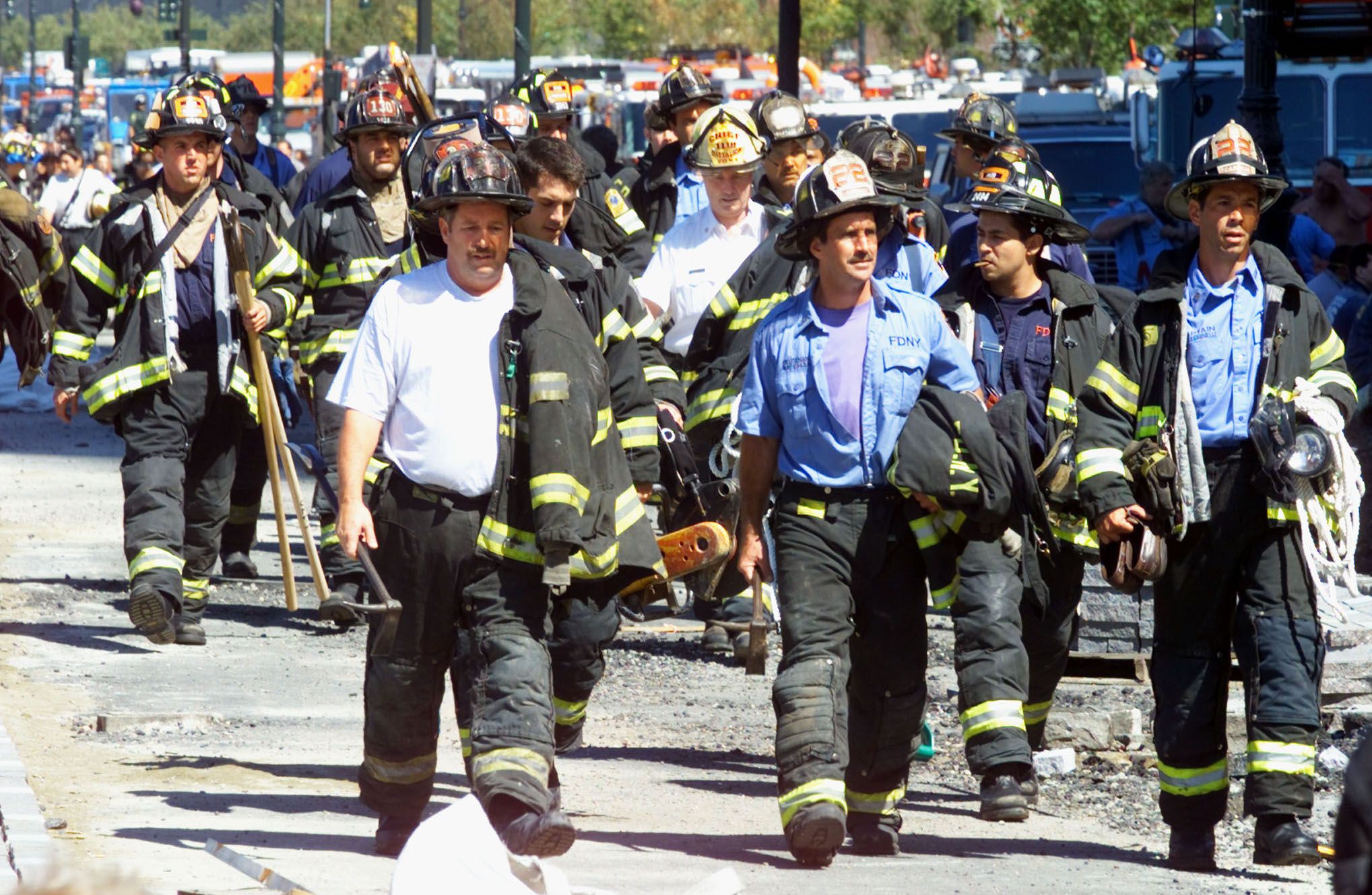
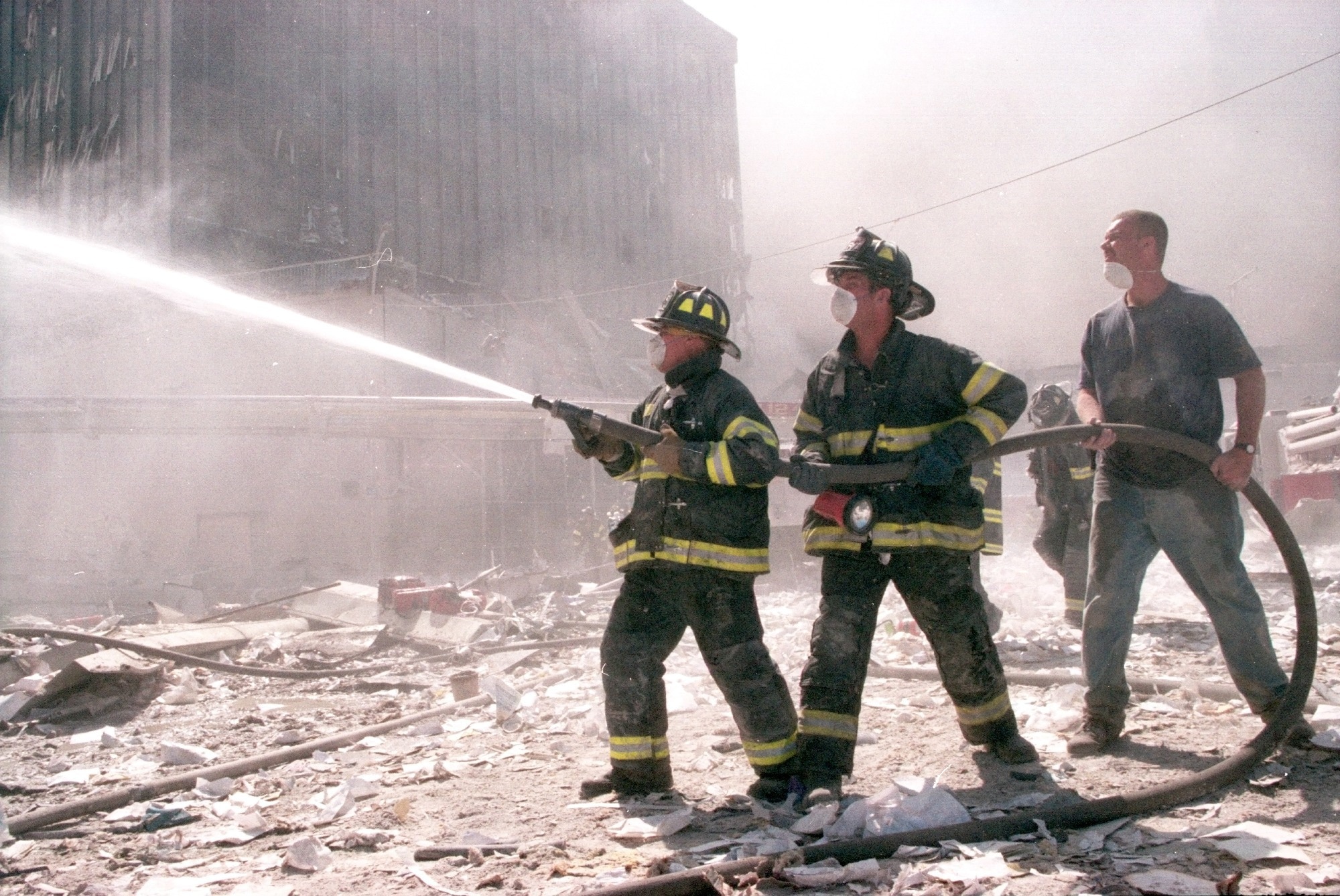
A 9/11 responder is any first responder, cleanup worker, rescue personnel, or volunteer who served at Ground Zero, the Pentagon, or Shanksville between September 11, 2001, and May 30, 2002. Eligible responders can access free lifelong medical monitoring and treatment through the World Trade Center Health Program and tax-free financial compensation via the September 11th Victim Compensation Fund.
Defining a 9/11 Responder: Exposure Zones and Timeframes
The federal legal definition of a 9/11 responder encompasses a broad array of public safety officers, trade workers, and volunteers who performed rescue, recovery, debris removal, or related support services following the September 11, 2001, terrorist attacks. Qualifying as a responder requires meeting specific geographic, temporal, and duty-based criteria established by federal statute under the James Zadroga 9/11 Health and Compensation Act.
- NEW YORK CITY EXPOSURE ZONE (GROUND ZERO)
- Manhattan: South of Houston Street
- Waterways: Lower Manhattan shorelines & piers
- Support Sites: Fresh Kills Landfill (Staten Island), NYC Chief Medical Examiner's Office, Barge loading piers
Qualifying Professions and Roles
Eligibility is not limited to uniform emergency services. Recognized responder roles include:
- First Responders: Members of the Fire Department of the City of New York (FDNY), New York City Police Department (NYPD), Port Authority Police Department (PAPD), emergency medical technicians (EMTs), paramedics, and federal law enforcement officers.
- Construction and Trade Workers: Heavy equipment operators, ironworkers, laborers, carpenters, electricians, and plumbers involved in structural stabilization, search-and-rescue, and site clearance.
- Sanitation and Infrastructure Workers: New York City Department of Sanitation personnel, utility crews (conEdison, telecommunications), and road repair crews who cleared toxic dust and restored critical infrastructure.
- Volunteers and Support Staff: Individuals affiliated with organizations such as the American Red Cross or Salvation Army, as well as unaffiliated volunteers who performed rescue, feeding, or site support duties under official supervision.
Geographic Exposure Zones
To qualify for federal health and compensation benefits, an individual must have performed responder work within specific geographic boundaries:
- New York City Exposure Zone: The area in Lower Manhattan south of Houston Street, as well as any block in Manhattan south of 14th Street for designated emergency personnel. The zone also includes the Fresh Kills Landfill on Staten Island, the NYC Chief Medical Examiner’s Office, and specific barge loading piers along the Hudson and East Rivers used to transport debris.
- Pentagon Exposure Zone: The immediate crash site and designated containment areas at the Pentagon in Arlington, Virginia.
- Shanksville Exposure Zone: The crash site of United Airlines Flight 93 in Stonycreek Township, Somerset County, Pennsylvania.
Temporal Requirements
The primary qualification window runs from September 11, 2001, to May 30, 2002. Depending on the specific site and program, minimum hours of presence may apply. For example, responders present in Lower Manhattan during the initial 24 to 48 hours face lower minimum hour thresholds than those who began recovery work months later.
Core Health Coverage: World Trade Center Health Program (WTCHP)
The World Trade Center Health Program is a federal health program administered by the National Institute for Occupational Safety and Health (NIOSH), a component of the Centers for Disease Control and Prevention (CDC) within the U.S. Department of Health and Human Services. Reauthorized through the year 2090, the WTCHP provides no-cost medical monitoring, diagnostic evaluations, and specialized treatment for certified 9/11-related physical and mental health conditions.
- WTCHP CLINICAL CARE NETWORK
- NY/NJ Metropolitan Area
- FDNY Responders Clinical Center
- Mount Sinai Clinical Center
- NYU Langone, Stony Brook, etc.
- Nationwide Network
- Nationwide Provider Network (NPN)
- Serves responders outside NY/NJ
- Local contracted specialists
- NY/NJ Metropolitan Area
Medical Monitoring and Diagnostic Screening
Enrolled responders receive comprehensive annual health evaluations tailored to detect conditions caused by toxic exposure. These evaluations include pulmonary function testing (spirometry), chest imaging, blood panels, and psychological screenings. Monitoring is available even if a responder exhibits no active symptoms, allowing for early detection of latent diseases such as cancers or progressive lung impairments.
Out-of-Pocket Cost Protections
All medically necessary treatments for certified conditions are funded directly by the program. There are no deductibles, co-pays, or out-of-pocket expenses for enrolled responders. If a responder maintains private health insurance or Medicare, the WTCHP coordinates as the primary payer for certified 9/11 conditions, ensuring responders face no personal financial burden for covered care.
Clinical Centers of Excellence (CCEs) and National Care
Treatment is delivered through specialized Clinical Centers of Excellence located throughout the New York and New Jersey metropolitan area, including facilities at Mount Sinai Health System, NYU Langone Health, Stony Brook University, and Northwell Health, alongside dedicated FDNY clinical facilities. For responders residing outside the tri-state area, the WTCHP operates a Nationwide Provider Network (NPN) that links patients with local medical specialists who adhere to WTCHP clinical guidelines.
Financial Relief: The September 11th Victim Compensation Fund (VCF)
The September 11th Victim Compensation Fund is a federal compensation program administered by the U.S. Department of Justice under a Special Master. Originally created in 2001 and permanently authorized through October 1, 2090, under the Never Forget the Heroes: James Zadroga, Ray Pfeifer, and Luis Alvarez Permanent Authorization of the September 11th Victim Compensation Fund Act, the VCF awards tax-free monetary compensation to individuals who suffered physical injuries or illnesses resulting from exposure to 9/11 dust and toxins.
Types of Compensable Losses
The VCF categorizes monetary awards into two primary types of damages:
- Non-Economic Loss (Pain and Suffering): Financial awards designed to compensate for physical pain, emotional distress, permanent physical impairment, and diminished quality of life. Non-economic loss awards are capped by statutory guidelines based on the severity of the physical condition, with higher caps applied to aggressive cancers or multi-system illnesses.
- Economic Loss: Compensation for verifiable financial damage resulting from a certified 9/11 physical condition. This includes lost past wages, future loss of earning capacity, pension loss, and out-of-pocket medical expenses that were not covered by insurance or the WTCHP.
Physical Condition Requirement
A critical distinction between the WTCHP and the VCF is that the VCF compensates only physical conditions. While the WTCHP diagnoses and treats mental health conditions such as Post-Traumatic Stress Disorder (PTSD), depression, or generalized anxiety, the VCF does not issue monetary compensation for standalone mental health conditions. A responder must have an eligible physical condition certified by the WTCHP to receive financial recovery through the VCF.
Wrongful Death Claims for Surviving Dependents
If a 9/11 responder passed away due to a certified 9/11-related physical illness, their legal Personal Representative (appointed through a probate or surrogate’s court) can file a wrongful death claim with the VCF. Compensation in wrongful death claims may include non-economic loss for the responder’s death, additional non-economic components for surviving spouses and dependent children, and replacement of lost future financial support.
Covered Health Conditions: Respiratory, Gastrointestinal, and Cancers
The airborne dust cloud generated by the collapse of the World Trade Center towers contained hundreds of tons of pulverized concrete, asbestos, toxic metals (lead, mercury), synthetic glass fibers, dioxins, and polycyclic aromatic hydrocarbons. Ingestion and inhalation of these agents caused complex inflammatory and carcinogenic reactions across multiple organ systems.
- CERTIFIED HEALTH CONDITIONS
- Aerodigestive / Respiratory
- Asthma, COPD, RADS
- Pulmonary Fibrosis
- GERD, Sleep Apnea
- Cancers (70+ Types)
- Prostate, Lung, Breast
- Colon, Melanoma, Bladder
- Leukemia, Lymphoma, Multiple Myeloma
- Aerodigestive / Respiratory
Aerodigestive and Respiratory Disorders
Upper and lower respiratory disorders represent the most prevalent acute and chronic conditions among Ground Zero responders:
- Interstitial Lung Disease and Fibrosis: Progressive lung scarring resulting from deep particle inhalation.
- Chronic Obstructive Pulmonary Disease (COPD) and Asthma: Persistent airway inflammation characterized by wheezing, shortness of breath, and chronic cough.
- Reactive Airways Dysfunction Syndrome (RADS): An acute, asthma-like condition triggered by severe toxic dust exposure.
- Chronic Rhinosinusitis and Nasopharyngitis: Inflammation of the sinus membranes leading to chronic congestion, post-nasal drip, and breathing difficulty.
- Gastroesophageal Reflux Disease (GERD): Severe acid reflux stemming from swallowing alkaline dust particles, often co-occurring with upper respiratory irritation.
- Sleep Apnea: Severe upper airway resistance directly linked to persistent inflammation of nasal passages and pharyngeal tissues.
Covered Cancers
More than 70 distinct types of cancer are officially recognized by the WTCHP and eligible for VCF financial compensation. Major categories include:
- Blood and Lymphatic Cancers: Leukemia, non-Hodgkin lymphoma, Hodgkin disease, and multiple myeloma.
- Solid Organ Cancers: Cancers of the lung, prostate, breast, colon, rectum, thyroid, kidney, bladder, liver, and pancreas.
- Skin Cancers: Malignant melanoma, basal cell carcinoma, and squamous cell carcinoma.
Minimum Latency Requirements
To establish that a cancer diagnosis stems from 9/11 toxic exposure rather than unrelated risk factors, federal guidelines enforce strict "latency periods"—the mandatory minimum duration between an individual's first exposure at a 9/11 site and the initial medical diagnosis of cancer.
| Disease Category | Minimum Latency Requirement |
|---|---|
| Lymphoid and Hematopoietic Cancers (Leukemia, Lymphoma) | 0.4 years (approx. 146 days) |
| Non-Melanoma Skin Cancers | 1.0 year (365 days) |
| Solid Tumors (Lung, Prostate, Breast, Colon, Thyroid, etc.) | 4.0 years (1,460 days) |
| Mesothelioma | 11.0 years |
Step-by-Step Claim Process for 9/11 Responders
Securing medical care and financial compensation requires navigating two distinct administrative processes: establishing clinical coverage through the WTCHP and filing a financial claim through the VCF.
- STEP 1: Gather Presence Documentation (Work logs, affidavits, payroll)
- STEP 2: Apply to the WTC Health Program (Submit eligibility application)
- STEP 3: Complete Clinical Evaluation (Exam at CCE or NPN facility)
- STEP 4: Obtain Formal Medical Certification (NIOSH certification of illness)
- STEP 5: Register with the VCF (Preserve right to file financial claim)
- STEP 6: Submit VCF Claim (Upload wage records, medical certification, and loss proof)
Step 1: Gather Proof of Presence
Before filing an application, responders must assemble documentation confirming their physical presence in an exposure zone during the qualifying period. Valid forms of evidence include:
- Official employer deployment rosters, overtime logs, or shift records.
- Pay stubs, memo books, or union records showing site assignment.
- Signed, notarized affidavits from supervisors, co-workers, or third parties who personally witnessed the responder's presence.
- Official awards, commendations, or volunteer service logs.
Step 2: Apply for Enrollment in the WTCHP
Responders submit an online or paper application to the WTCHP accompanied by proof-of-presence documents. Once the program verifies geographic and temporal eligibility, the responder is assigned to a local Clinical Center of Excellence or the Nationwide Provider Network.
Step 3: Complete Health Evaluation and Certification
The responder undergoes a baseline clinical evaluation. If an examining WTCHP physician diagnoses a condition listed on the federal register of 9/11-related illnesses, the clinic submits a certification request to NIOSH. Once NIOSH approves the certification, the condition is officially linked to exposure, unlocking free medical care for life.
Step 4: Register with the VCF
Registering with the VCF preserves an individual’s legal right to file a claim in the future. Registration does not commit the responder to filing a claim, nor does it require proof of illness at the time of registration. All responders who served in the exposure zone should register early to protect their rights.
Step 5: File a VCF Claim for Compensation
Once a responder receives official WTCHP certification for a physical illness, they may submit a formal compensation claim. The claim file must include:
- WTCHP condition certification details.
- Proof of economic loss (tax returns, W-2 forms, disability retirement awards, social security benefit statements).
- Out-of-pocket medical receipts for non-reimbursed treatments.
- Detailed impact statements describing how the physical illness affects daily life and physical capacity.
Comparative Overview of Federal 9/11 Responder Programs
Understanding the operational differences between the WTCHP and the VCF prevents common administrative errors, such as expecting financial payouts directly from the health program or seeking routine medical treatment through the compensation fund.
| Feature / Metric | World Trade Center Health Program (WTCHP) | September 11th Victim Compensation Fund (VCF) |
|---|---|---|
| Primary Administrator | CDC / NIOSH (Dept. of Health and Human Services) | Special Master (U.S. Department of Justice) |
| Primary Purpose | Medical monitoring, diagnosis, and specialized treatment | Monetary financial compensation for losses |
| Benefit Type | Direct medical services (No out-of-pocket cost) | Tax-free cash awards (Lump sum payment) |
| Covered Health Conditions | Certified physical and mental health conditions | Certified physical health conditions only |
| Geographic Scope | Global (Clinical hubs in NY/NJ + Nationwide Network) | Global (Files processed for eligible applicants anywhere) |
| Program Authorization | Authorized through 2090 | Authorized through October 1, 2090 |
| Prerequisite Requirement | Proof of presence in an exposure zone | Proof of presence + WTCHP certified physical condition |
| Payment Recipient | Medical providers and health systems directly | Injured responder or deceased responder's estate |
Frequently Asked Questions
Who qualifies as an official 9/11 responder under federal law?
An official responder is any individual who participated in rescue, recovery, cleanup, or support services at Ground Zero (Lower Manhattan south of Houston St), the Pentagon, or the Shanksville, PA crash site between September 11, 2001, and May 30, 2002. This includes police, fire, emergency medical personnel, construction workers, sanitation workers, utility personnel, and registered volunteers.
Can family members file a claim if a 9/11 responder has already passed away?
Yes. The personal representative of a deceased responder’s estate can file a wrongful death claim with the VCF and register with the WTCHP for posthumous benefits. The representative must show that the responder died as a result of a certified 9/11-related physical condition and present formal court appointment papers granting authority to act on behalf of the estate.
Does a 9/11 responder need to live in New York to receive medical treatment?
No. While many clinical centers are located in the New York/New Jersey area, the WTCHP operates a Nationwide Provider Network (NPN). Responders living anywhere in the United States can receive monitoring and treatment from local medical providers contracted under the NPN program at no out-of-pocket cost.
What is the deadline to register for and submit a 9/11 VCF claim?
Under current law, the VCF is authorized to operate through October 1, 2090. However, specific registration deadlines apply depending on when a condition is certified. Generally, individuals must register within two years of the date a physical condition is officially certified by the WTCHP, or within two years of a responder's death. Registering early preserves the right to file a claim at any point in the future.
Are mental health conditions compensated by the Victim Compensation Fund?
No. The VCF provides financial compensation solely for certified physical conditions, such as respiratory diseases and cancers. While the WTCHP fully covers medical treatment and therapy for mental health conditions like PTSD, depression, and anxiety, these conditions alone do not qualify for a monetary payout from the VCF.
Immediate Action Plan for Responders and Families
Taking prompt action ensures responders maintain access to preventative medical monitoring and protect their financial rights. Follow these core actions:
- Secure Exposure Documentation Immediately: Gather military records, employment records, union logs, affidavits, or municipal records verifying your presence at a 9/11 site. Store physical and digital copies in a secure location.
- Apply to the WTC Health Program: Submit your application to the WTCHP even if you are currently healthy. Establishing baseline health metrics ensures rapid access to care if toxic-exposure symptoms emerge later.
- Register with the VCF to Preserve Rights: Complete early registration with the Victim Compensation Fund. Registration acts as a deadline reservation and does not force you to file an active monetary claim immediately.
- Schedule Regular Health Monitoring: Attend annual WTCHP monitoring evaluations. Cancers and chronic lung conditions resulting from toxic exposure often remain latent for decades before manifesting clinical symptoms.
- Maintain Complete Records: Keep accurate files of medical evaluations, WTCHP certification letters, work history records, and out-of-pocket medical expense receipts to streamline future claim submissions.