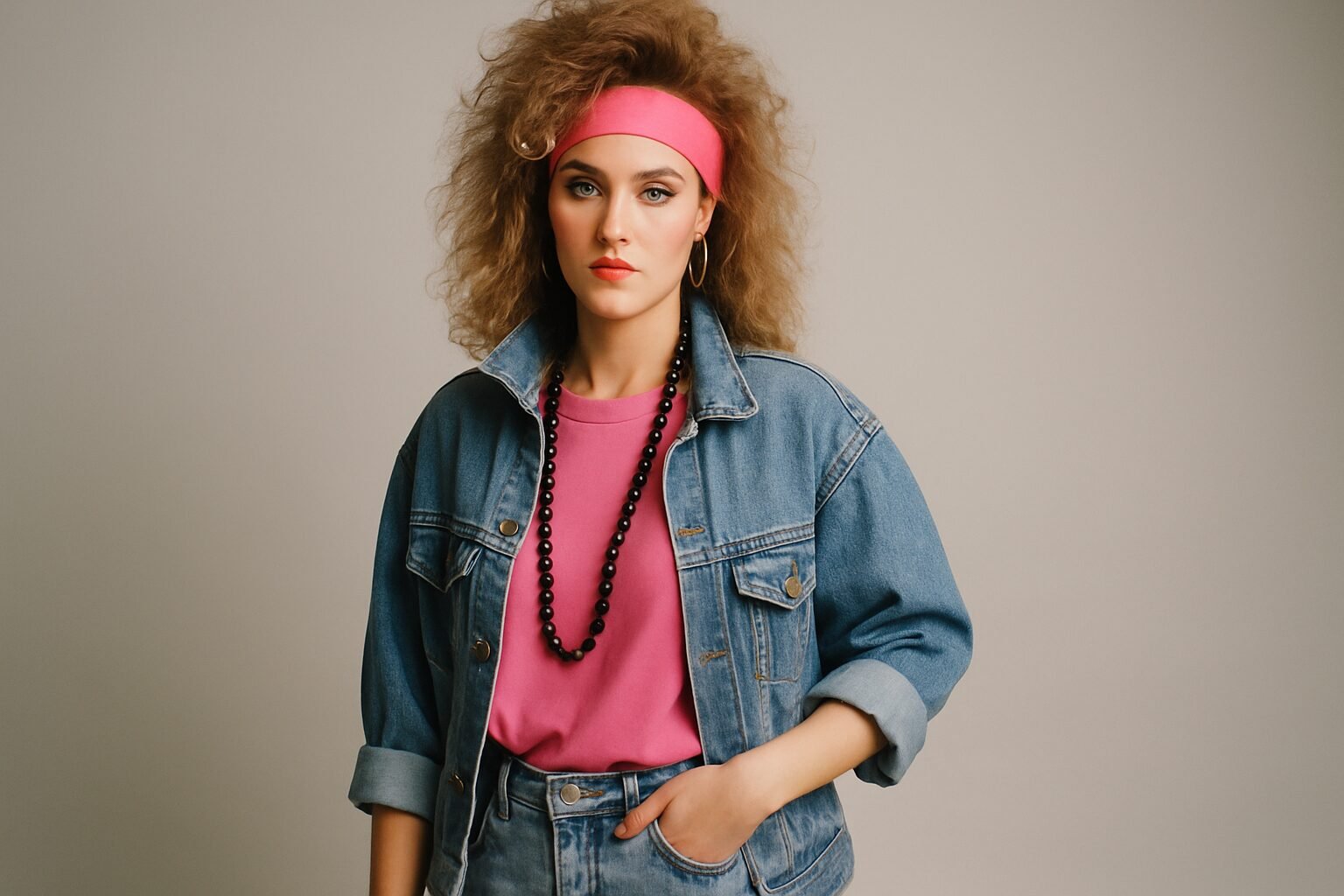
80s fashion is defined by a "more is more" philosophy, characterized by oversized silhouettes, padded shoulders, neon color palettes, and the birth of modern athleisure. Influenced by the rise of MTV, power dressing in the corporate world, and burgeoning subcultures, the era prioritized bold self-expression, material status, and experimental synthetic fabrics.
The 1980s represent one of the most polarizing yet influential eras in the history of style. It was a decade where fashion broke away from the bohemian, earth-toned fluidity of the 1970s and embraced a rigid, structured, and unapologetically loud aesthetic. For those researching the era in 2026, 80s fashion is no longer just a collection of "retro" costumes; it is a foundational period that established the concepts of global branding, celebrity-driven trends, and the fusion of sportswear with high fashion. To understand this decade, one must look past the surface-level cliches and examine the socio-economic shifts that drove these aesthetic choices.
The Structural Revolution: Shoulders and Silhouettes
The defining silhouette of the 1980s was the inverted triangle. This was achieved primarily through the ubiquitous use of shoulder pads, which appeared in everything from power suits and winter coats to simple T-shirts and evening gowns. The intent was to create an imposing, authoritative frame, mirroring the decade's focus on professional advancement and individual dominance.
Designers such as Claude Montana and Thierry Mugler championed this aggressive tailoring, pushing the boundaries of garment construction to create "architectural" clothing. This structural rigidity wasn't just for women; men’s suits also saw an increase in shoulder width and a loosening of the overall drape, led by the revolutionary tailoring of Giorgio Armani. Armani’s work, famously showcased in the 1980 film American Gigolo, moved away from the stiff padding of traditional English tailoring in favor of a relaxed yet sophisticated "deconstructed" look that defined the masculine ideal for the decade.
Beyond the shoulders, the silhouette was often balanced by high-waisted, tapered bottoms. For women, this meant "mom jeans" or stirrup pants, while men frequently wore "baggy" trousers that narrowed sharply at the ankle. This play on proportions—extreme volume on top and a streamlined lower half—created a visual language of energy and movement that separated 80s style from the flares and bell-bottoms of the preceding decade.
The Influence of Media and the MTV Generation
The launch of MTV in 1981 fundamentally changed how fashion was consumed. For the first time, trends were not dictated solely by Parisian runways or local boutiques but by music videos that reached millions of viewers simultaneously. Artists like Madonna, Michael Jackson, and Prince became global style icons whose wardrobe choices could spark international trends overnight.
- Madonna's "Boy Toy" Aesthetic: Madonna popularized the use of innerwear as outerwear, layering lace tops with crucifix jewelry, fingerless gloves, and tutus. This "shabby chic" look blended punk rebellion with feminine kitsch, encouraging a generation to experiment with DIY fashion and heavy accessorizing.
- Michael Jackson’s Military Influence: The "Thriller" era introduced the iconic red leather jacket with multiple zippers, while Jackson’s later use of military-inspired hussar jackets and sequined gloves brought a sense of theatricality to mainstream menswear.
- The New Romantic Movement: In the early 80s, bands like Duran Duran and Spandau Ballet brought the "New Romantic" style to the forefront. This look drew heavily from historical costume, featuring ruffled pirate shirts, waistcoats, and heavy makeup, challenging traditional gender norms through flamboyant, dandy-inspired aesthetics.
The speed at which these trends spread created a culture of rapid consumption. According to the Victoria and Albert Museum, the 1980s were a turning point where fashion became an integral part of a multimedia entertainment experience, merging music, film, and visual identity into a single brand.
Power Dressing: The Visual Language of Authority
As more women entered high-level corporate roles in the 1980s, "Power Dressing" emerged as a strategic tool. The goal was to minimize the perceived "fragility" of traditional feminine attire and replace it with a wardrobe that commanded respect in male-dominated boardrooms. This movement was popularized by popular media, most notably the TV shows Dynasty and Dallas, where characters like Alexis Carrington (played by Joan Collins) showcased an opulent, aggressive style.
The Power Suit featured sharp lapels, heavy padding, and was often paired with bold, chunky gold jewelry. This was not about blending in; it was about projecting wealth and competence. The "Yuppie" (Young Urban Professional) culture further fueled this trend, emphasizing designer labels and "success" as the ultimate fashion statement. For men, this manifested in the "Power Tie"—typically silk, in bold reds or yellows—paired with pinstriped shirts and suspenders (braces), a look immortalized by the character Gordon Gekko in the 1987 film Wall Street.
High-Performance Fabrics and the Fitness Craze
The 1980s saw a massive boom in the fitness industry, led by Jane Fonda’s workout videos and the aerobics craze. This cultural shift necessitated the development of high-performance, stretchy fabrics, specifically Lycra and Spandex. These materials allowed for skin-tight garments that showcased the "perfected" athletic body, a key status symbol of the era.
Athleisure, a term we use frequently in 2026, has its roots here. Leg warmers, originally designed to keep dancers' muscles warm, became a mainstream fashion accessory. Headbands, wristbands, and leotards were worn both in the gym and as street attire. This era also saw the rise of the designer sneaker. The 1984 debut of the Air Jordan by Nike transformed athletic footwear from functional equipment into a cultural phenomenon and a pillar of streetwear.
The Birth of Modern Streetwear and Hip-Hop Influence
While high fashion was focused on power suits and neon, a parallel movement was occurring in urban centers. Hip-hop culture began to exert a significant influence on global fashion, introducing a more utilitarian and rhythmic approach to dressing.
The group Run-D.M.C. was pivotal in this transition, famously wearing Adidas tracksuits and "Superstar" sneakers without laces. This look rejected the sequins and glamor of disco and the theatricality of New Wave in favor of something authentic to the streets. The oversized puffer jackets, Kangol hats, and heavy gold "dookie" chains of the late 80s laid the groundwork for the multi-billion dollar streetwear industry that persists today.
Furthermore, the 80s saw the evolution of denim technology. Acid wash and stone wash denim became the standard for casual wear. These chemical treatments gave jeans a distressed, mottled appearance that appealed to both the heavy metal "hair band" community and the general public, moving denim away from its workwear origins and toward a purely stylistic choice.
Comparison of Iconic 80s Fashion Archetypes
The following table outlines the distinct styles that coexisted during the decade, highlighting the diversity of the "80s look."
| Style Archetype | Key Garments | Primary Materials | Cultural Influence |
|---|---|---|---|
| The Power Professional | Shoulder-padded blazers, pencil skirts, pinstripe suits | Wool, silk, polyester | Dynasty, Wall Street |
| The Aerobics Enthusiast | Leg warmers, leotards, spandex leggings | Lycra, Spandex, cotton terry | Jane Fonda, Flashdance |
| The New Romantic | Ruffled shirts, velvet blazers, brooches | Velvet, lace, silk | Duran Duran, Boy George |
| The Hip-Hop Pioneer | Tracksuits, bucket hats, shell-toe sneakers | Nylon, heavy cotton, leather | Run-D.M.C., LL Cool J |
| The Preppy | Polo shirts (collars up), boat shoes, khakis | Pique cotton, chino, wool | The Official Preppy Handbook |
| The Glam Metal "Rocker" | Spandex pants, shredded tees, leather jackets | Leather, denim, spandex | Mötley Crüe, Bon Jovi |
FAQs About 80s Fashion
Why were shoulder pads so popular in the 1980s?
Shoulder pads were popular because they created an "authority figure" silhouette that aligned with the decade's focus on professional success and "Power Dressing." For women, they served to broaden the frame and project a sense of equality in corporate environments. For men, they emphasized a traditional masculine physique, making the wearer appear larger and more imposing.
What colors were most associated with the 80s?
While the early 80s retained some of the browns and tans of the late 70s, the decade is most famous for neon and jewel tones. Electric blue, hot pink, lime green, and bright yellow were common in both casual and formal wear. Additionally, the "Preppy" look favored pastels like mint green and pale pink, while the "Yuppie" look focused on contrast—sharp blacks, whites, and bold reds.
How did 80s fashion differ from 70s fashion?
70s fashion was largely defined by natural fibers, earthy colors, and a relaxed, flared silhouette (bohemian/disco). In contrast, 80s fashion was more structured, synthetic, and aggressive. The 80s moved away from flares toward tapered legs, replaced "natural" hair with heavily permed and sprayed styles, and favored man-made materials like polyester and Lycra over cotton and suede.
Were there specific 80s trends for men that are still relevant today?
Yes, several menswear staples from the 80s remain foundational. The rise of "designer" sneakers and high-end athletic wear (athleisure) started in the 80s. The oversized blazer and relaxed-fit suit trousers have seen a significant resurgence in the 2020s. Furthermore, the popularity of the bomber jacket and the graphic T-shirt as a primary wardrobe item solidified during this decade.
What role did subcultures play in 80s style?
Subcultures were the "research and development" arm of 80s fashion. Punk, Goth, and New Wave movements experimented with deconstructed clothing, safety pins, black leather, and extreme makeup. While these styles started as rebellious "anti-fashion" statements, they were eventually sanitized and adopted by mainstream designers, influencing the collections of Vivienne Westwood and Jean Paul Gaultier.
Preserving and Sourcing Authentic 80s Fashion
As of 2026, authentic 1980s garments have transitioned from "second-hand" to "true vintage." For those looking to incorporate genuine 80s pieces into a modern wardrobe, the focus should be on quality of construction and material integrity. Many synthetic blends from the 80s, such as early polyesters and high-sheen rayons, have aged surprisingly well, but natural fibers like wool and silk from high-end labels (e.g., Ralph Lauren, Perry Ellis, or Anne Klein) offer the best longevity.
To source these items, collectors should look for specific markers of the era:
- Union Labels: For U.S.-made items, check for ILGWU (International Ladies' Garment Workers' Union) tags, which indicate domestic manufacturing.
- Internal Padding: Authentic 80s blazers will have integrated shoulder pads that are often sewn into the lining rather than being removable.
- Specific Brand Tags: Look for "Made in Italy" labels on 80s tailoring, which often signify a higher grade of textile than mass-market versions.
When styling 80s pieces today, the most effective approach is to use a "statement item"—like an oversized denim jacket or a structured blazer—paired with contemporary, minimalist basics. This prevents the look from appearing like a costume while still celebrating the decade’s unique contribution to the history of clothing. For more in-depth historical analysis of specific garments, the Fashion Institute of Technology's History Gallery provides an excellent resource for verified dating and material identification.