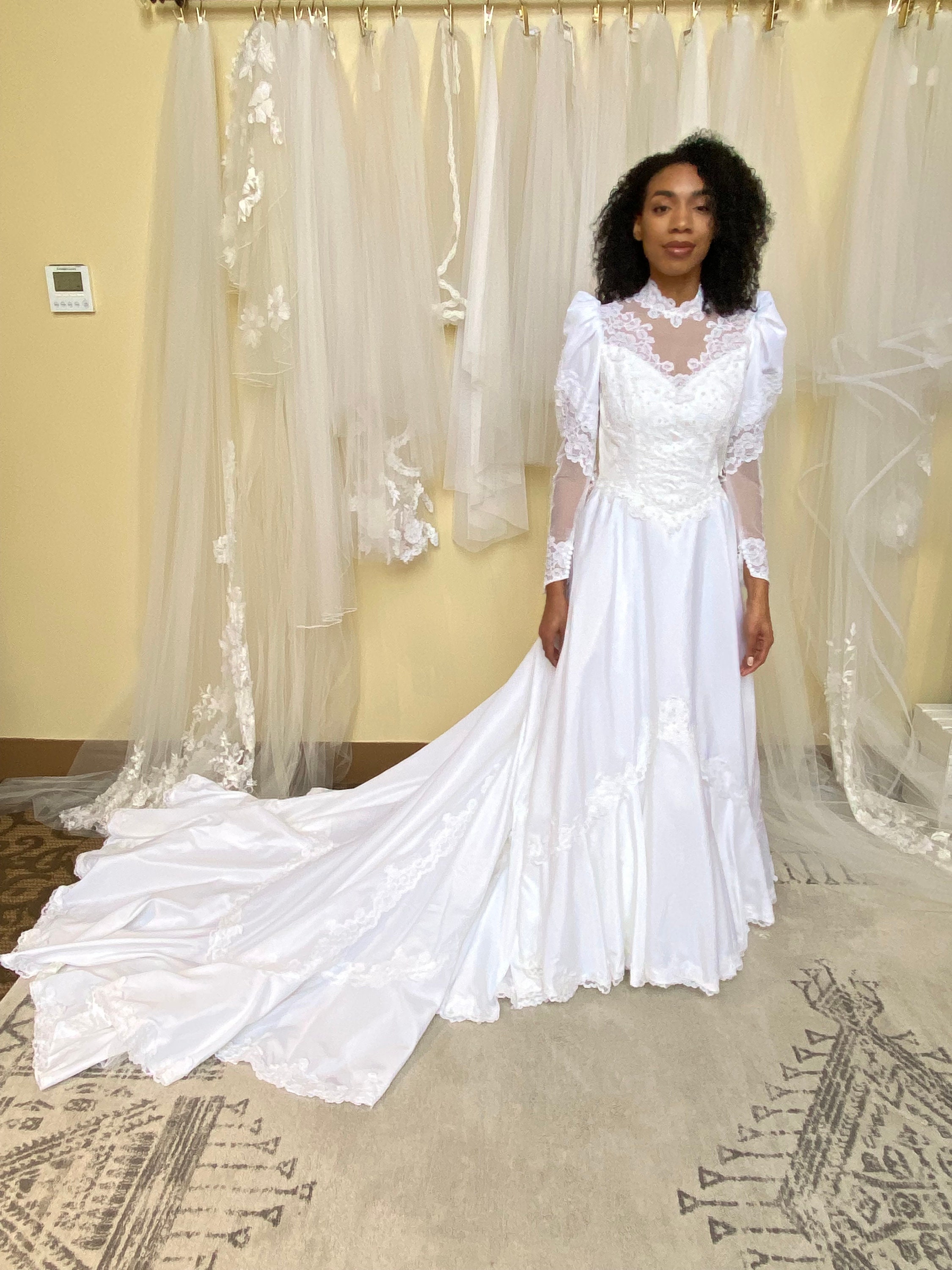
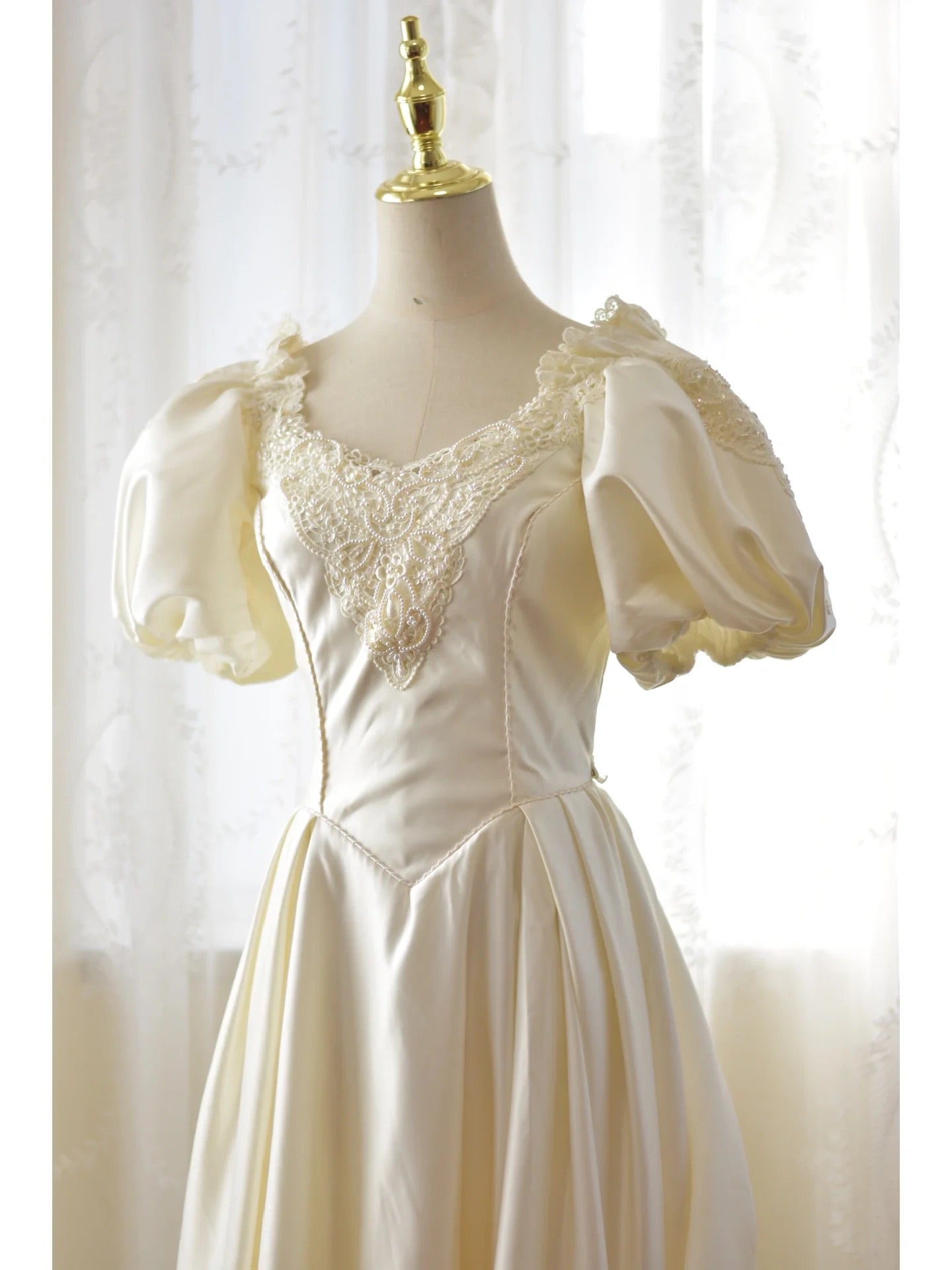
80s bridal fashion is defined by a maximalist aesthetic characterized by voluminous silhouettes, dramatic "leg-of-mutton" sleeves, high necklines, and cathedral-length trains. Influenced by royal weddings and "power dressing," this era prioritized ornate lace, stiff taffeta, and excessive embellishments, a style currently experiencing a significant resurgence in the 2026 vintage wedding market.
The Cultural Architecture of 1980s Bridal Fashion
The 1980s marked a radical departure from the relaxed, bohemian "flower child" aesthetics of the 1970s. In the bridal world, this shift was catalyzed by a return to traditionalism fused with the decade’s obsession with status and excess. The most pivotal moment for this niche occurred on July 29, 1981, when Lady Diana Spencer married Prince Charles. Her David and Elizabeth Emanuel gown—featuring a 25-foot train, 10,000 pearls, and massive puffed sleeves—set the blueprint for nearly a decade of bridal design.
During this period, "power dressing" influenced feminine silhouettes. Just as shoulder pads defined the corporate world, they defined the altar. The goal was to create a commanding presence. Designers like Victor Costa, Priscilla of Boston, and Alfred Angelo dominated the market, offering gowns that utilized "Stiffened" fabrics to hold architectural shapes. The 80s bride was not meant to blend in; she was framed by her dress, often disappearing into clouds of tulle and silk taffeta.
In 2026, we see a renewed appreciation for these archival pieces. The modern bride’s interest in 80s bridal is often driven by a desire for "Main Character Energy" and a rejection of the hyper-minimalist "slip dress" trends that dominated the early 2020s. This resurgence is not about a 1:1 replication but rather a curated selection of 80s elements—such as the Basque waist or the dramatic bow—integrated into modern tailoring.
Key Design Elements of the 80s Silhouette
To understand 80s bridal, one must analyze the structural components that gave the gowns their distinct "triangle" or "meringue" shape. These elements were designed to emphasize the waist by dramatically overstating the width of the shoulders and the volume of the skirt.
The Statement Sleeve
The sleeve was the centerpiece of the 80s gown. Several specific styles defined the era:
- Leg-of-Mutton (Gigot): Extremely full at the shoulder and tapering to a tight fit at the forearm.
- Juliet Sleeve: A long sleeve with a puffed top and a slim lower half, often ending in a point over the hand (the "pointed cuff").
- Bishop Sleeve: Full length with a gentle flare that gathers at the wrist into a decorative lace cuff. To maintain these shapes, designers utilized internal structures like crinoline inserts or nylon mesh headers sewn into the shoulder seams.
Necklines and Bodices
Modesty was frequently a stylistic choice, if not a requirement. High "Victorian" necklines featuring ruffled lace or "Queen Anne" necklines (high back, sculpted neckline that opens at the chest) were ubiquitous. The bodices were heavily boned to create a rigid, elongated torso. The Basque waist—a waistline that dips into a "V" shape at the center front—was the gold standard, as it visually narrowed the waist while transitioning into a voluminous skirt.
The Cathedral Train and Veil
In the 1980s, the train was an endurance test. Cathedral trains (extending 6 to 9 feet from the waist) were standard for formal weddings. These were often accompanied by "extra" veils—multilayered tulle attached to a crown of faux pearls or silk flowers, creating a "fountain" effect of netting that added height to the bride's overall stature.
Fabrics and Textures: The Materiality of Excess
The choice of fabric was essential to achieving the structural integrity required for 80s designs. Unlike the fluid silks of the 1930s or the soft chiffons of the 1970s, 80s bridal relied on "crisp" materials.
- Silk Taffeta: Known for its "rustle" (scroop), taffeta provided the stiffness needed for oversized bows and gathered skirts. It photographed with a high-contrast sheen that defined the era’s aesthetic.
- Satin Shantung: A heavy weight satin with a slight ribbed texture, used for more structured, formal gowns.
- Alençon and Chantilly Lace: Often applied as "appliques," lace was rarely the primary fabric but was used to trim every available edge, from the hem to the collar.
- Organza and Tulle: These were used primarily for layering. A standard 80s skirt might contain three to five layers of tiered tulle underneath the main fabric to ensure a wide, bell-like shape.
Embellishments were rarely subtle. Iridescent sequins, which shimmered with a rainbow-like effect, were hand-sewn alongside faux seed pearls and metallic thread embroidery. This created a texture that was as tactile as it was visual.
Comparison: 1980s Original vs. 2026 Modernized 80s Style
For brides in 2026, the challenge lies in distinguishing between a "costume" look and a "vintage-inspired" editorial look. The following table highlights how specific elements have evolved.
| Feature | 1980s Original Standard | 2026 Modern Interpretation |
|---|---|---|
| Sleeves | Stiff, opaque taffeta with mesh inserts. | Sheer organza or "detachable" puffed sleeves. |
| Waistline | Rigid Basque waist with heavy boning. | Softened "V" waist with exposed corset boning. |
| Train | Fixed, heavy cathedral length (unwieldy). | Removable "Watteau" trains or floor-length veils. |
| Lace | Heavy, synthetic-blend lace appliques. | Delicate 3D floral appliqués or laser-cut lace. |
| Embellishment | Iridescent sequins and plastic pearls. | Clear glass beads and sustainably sourced crystals. |
| Color | Stark "optic" white or heavy cream. | "Champagne," "Oyster," or "Nude" undertones. |
Sourcing and Restoring Vintage 80s Bridal Gowns
With the rise of sustainable wedding practices in 2026, many brides are opting to wear original gowns from the 1980s, often sourced from specialty archival boutiques or family members. However, restoring a 40-year-old garment requires technical expertise.
Addressing Oxidation and Yellowing
Most 80s gowns were made from synthetic blends or treated silks that are prone to yellowing over time due to "oxidation." Standard dry cleaning is often insufficient. Specialist "Museum-Grade" restoration is required, involving oxygen-based bleaching agents that do not degrade the fibers.
The "De-Poofing" Process
A common 2026 modification involves "de-poofing" the gown. This involves removing several layers of internal nylon crinoline to allow the dress to fall in a more natural, modern A-line shape while preserving the intricate bodice and sleeve work. Tailors also frequently replace the 80s-era "zipper and faux button" closures with genuine silk loops and buttons for a more high-end finish.
Resizing Challenges
80s gowns often have very small armscyes (armholes) and narrow ribcages due to the corsetry of the era. When sourcing vintage, it is recommended to buy 1-2 sizes larger than current measurements, as these gowns have significant internal seam allowances that can be let out, but the sleeves are notoriously difficult to enlarge without adding gussets.
80s Bridal Beauty: Hair and Makeup Integration
A gown from the 1980s cannot be viewed in isolation; it was part of a holistic "look" that included dramatic beauty choices. In the 2026 revival, these elements are being softened but remain influential.
- The "Power" Hair: The original era utilized heavy hairspray (Aquanet style) to create height that balanced the wide shoulders. Modern brides are opting for "voluminous blowouts" or "curated curls" that offer height without the rigid texture.
- The Makeup Palette: The 80s were famous for "draped" blush (extending from the cheekbones to the temples) and cool-toned eyeshadows. In 2026, this has shifted to "monochromatic rose" tones—using the same pink or peach hues on the eyes, cheeks, and lips to nod to the 80s without the harshness.
- Headpieces: The 80s "hat-veils" and "floral crowns" have returned in the form of padded headbands and "birdcage" veils, providing a vintage flair that is more wearable for contemporary ceremonies.
Frequently Asked Questions
Why is 80s bridal fashion trending again in 2026?
The 40-year fashion cycle is a major factor, as trends from the 80s become "vintage" to a new generation. Additionally, there is a cultural shift away from "quiet luxury" toward "expressive maximalism," where brides want unique, high-impact silhouettes that stand out on social media and in photography.
Can I shorten the sleeves on a vintage 80s wedding dress?
Yes, but it often changes the balance of the dress. The "Leg-of-Mutton" sleeve relies on the length of the forearm to anchor the puff at the shoulder. If you want a shorter look, it is better to convert the sleeve into a "cap puff" rather than simply cutting it, as this preserves the structural intent of the design.
What fabrics should I look for in a high-quality 80s gown?
Look for "Silk Taffeta" or "Silk Duchesse Satin." Many lower-end 80s gowns were made from polyester "acetate," which does not breathe well and can have a "plastic" shine. High-quality silk versions will have a more subtle luster and will be much more comfortable for a full day of wear.
How do I style an 80s dress without it looking like a costume?
The key is "subtraction." If the dress is very busy (big sleeves, big skirt, big lace), keep the hair sleek and the jewelry minimal. Avoid the 80s "fountain" veil and instead opt for a simple long-drop tulle veil or no veil at all. Modern footwear, such as a sleek pointed-toe pump, also helps ground the look in the present.
Are 80s wedding dresses expensive in the current vintage market?
Prices vary wildly. While "unbranded" 80s gowns can often be found for $200–$500, designer pieces from the likes of Vivienne Westwood (80s era) or high-end archival Priscilla of Boston gowns can fetch $2,000–$5,000 in 2026, especially if they are in pristine, un-oxidized condition.
Next Steps for Incorporating 80s Aesthetics
If you are planning to embrace the 80s bridal aesthetic for a 2026 wedding, your first action should be to identify which "level" of the trend you want to inhabit. For a subtle nod, look for modern designers who are currently incorporating "Basque waists" and "structured shoulders" into their 2026 collections. This provides the 80s look with 21st-century comfort and sizing.
For the purist, begin by visiting specialized vintage bridal archivists rather than general thrift stores. These specialists have already performed the necessary "stability checks" on the lace and seams. Once a gown is acquired, secure a tailor who specializes in "bridal reconstruction." The transition from an original 1980s silhouette to a 2026-ready masterpiece is almost entirely dependent on the internal structural modifications—removing old foam pads, replacing yellowed tulle, and ensuring the boning is adjusted to your modern posture.