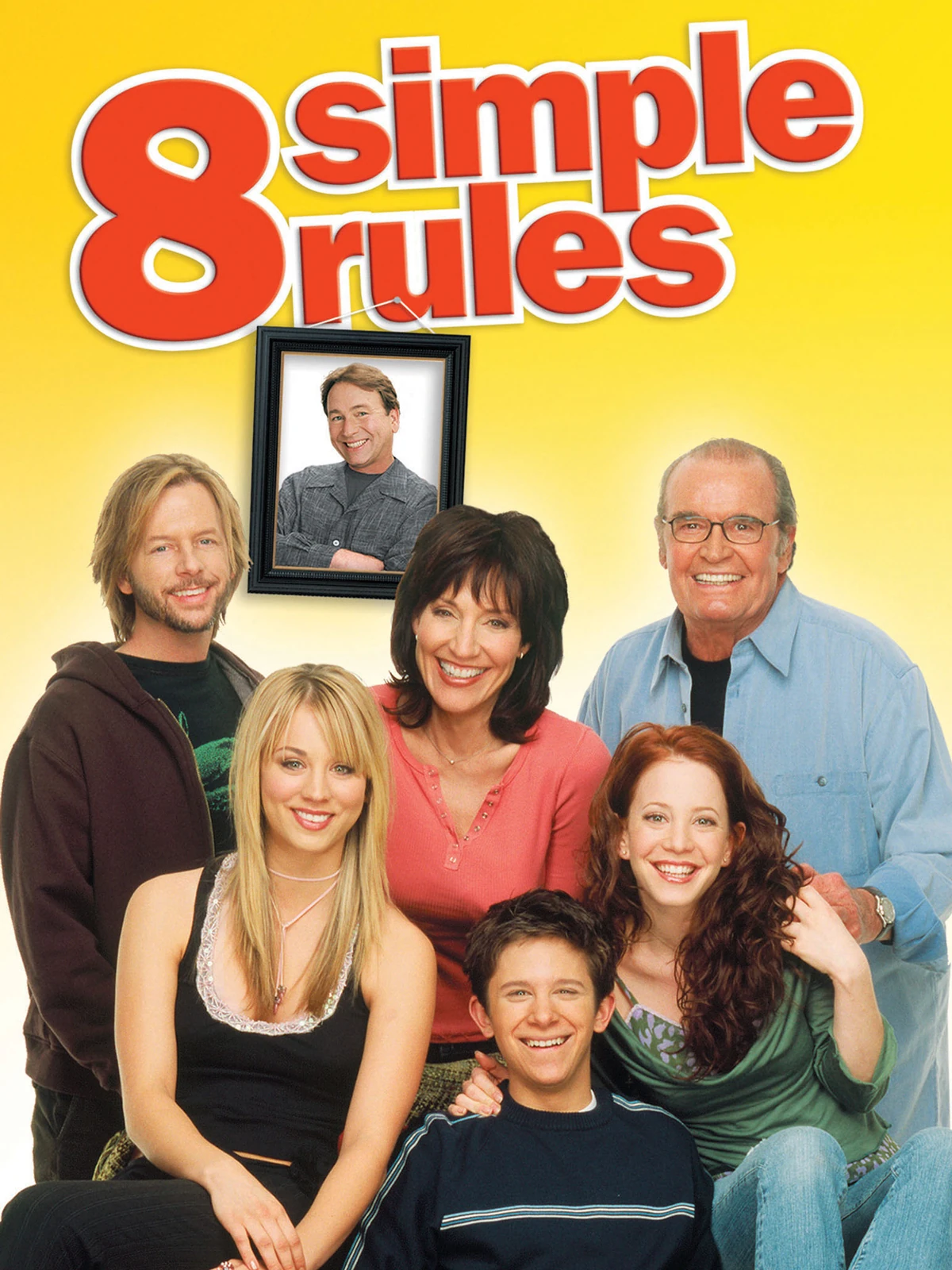
Originally titled 8 Simple Rules... for Dating My Teenage Daughter, this ABC sitcom became a definitive piece of early-2000s television history. Based on the humorous parenting book by W. Bruce Cameron, the series balanced traditional family dynamics with a modern look at adolescence, eventually navigating a profound real-life tragedy that changed the course of its production and legacy.
The Origins: From Humor Column to Primetime Success
The journey of 8 Simple Rules began not in a writers' room, but in the newspaper columns of W. Bruce Cameron. His humorous insights into the struggles of a father raising daughters resonated deeply with readers, eventually leading to the publication of his book in 2001. The book served as a "survival guide" for fathers dealing with the complexities of modern dating, fashion, and the shifting attitudes of teenage children.
When ABC picked up the concept for a television adaptation in 2002, the network saw an opportunity to return to the classic family sitcom format that had been a staple of their "TGIF" programming for decades. However, they aimed for a more grounded, slightly edgier tone suited for the new millennium. The casting of John Ritter as Paul Hennessy was a stroke of genius; Ritter brought his legendary physical comedy and an innate "everyman" warmth that made the character’s overprotective nature feel endearing rather than overbearing.
The show premiered on September 17, 2002, and quickly became a hit. It focused on the Hennessy family in suburban Michigan. Paul, a sports columnist who worked from home, found himself forced to take a more active role in parenting his three children after his wife, Cate (played by Katey Sagal), returned to work as a nurse. This reversal of the traditional 1950s sitcom trope provided the engine for the show's conflict and comedy.
Decoding the 8 Simple Rules
The "rules" mentioned in the title were a recurring motif, often cited by Paul to intimidate his daughters' boyfriends. While the television show took liberties with the exact wording compared to the book, the spirit remained the same: a father’s desperate, often futile attempt to maintain control over his children’s transition into adulthood.
These rules were more than just comedic fodder; they represented the central tension of the show—the struggle between a parent’s instinct to protect and a child’s need for independence. In the context of 2026, many of these rules are viewed through a lens of nostalgia, representing a pre-social-media era where a father’s main concern was the boy waiting in the driveway.
The Original Rules Framework
| Rule Number | The Rule Description | Paul Hennessy’s Rationale |
|---|---|---|
| Rule 1 | Use your hands on my daughter and you'll lose them. | To establish immediate physical boundaries and consequences. |
| Rule 2 | You make her cry, I make you cry. | Emotional protection through the threat of shared distress. |
| Rule 3 | Safe sex is a myth; anything you try will be fatal to you. | Hyperbolic deterrent against premature intimacy. |
| Rule 4 | Bring her home late, there's no next time. | Punctuality as a measure of respect for the household. |
| Rule 5 | If you honk in the driveway, you're not picking anything up. | Requirement for the "front door" greeting and formal introduction. |
| Rule 6 | No complaining while you're waiting for her. | A test of the suitor’s patience and temperament. |
| Rule 7 | If you're in the driveway for more than 3 seconds, you're late. | An impossible standard meant to keep boyfriends on edge. |
| Rule 8 | Keep the zipper up; no exceptions. | The ultimate baseline for behavioral expectations. |
The Hennessy Family: Character Dynamics and Casting
The success of the show rested heavily on the chemistry of the Hennessy family. Each character was designed to represent a specific archetype of the American family, but the actors brought a depth that transcended those tropes.
Paul and Cate Hennessy
John Ritter’s Paul was the heart of the show. His performance was a masterclass in the "flustered dad," balancing genuine concern with comedic outbursts. Katey Sagal, fresh off her iconic run on Married... with Children, played Cate Hennessy. Sagal provided the necessary "straight man" to Ritter’s antics, acting as the pragmatic bridge between the overprotective father and the rebellious children.
The Children
- Bridget Hennessy (Kaley Cuoco): The eldest daughter, Bridget was the stereotypical "popular" girl, often focused on boys, fashion, and social status. This role served as the breakout performance for Cuoco, who would later become a television powerhouse on The Big Bang Theory.
- Kerry Hennessy (Amy Davidson): The middle child and the "smart, cynical" daughter. Kerry often felt overshadowed by Bridget, and her relationship with her father was more intellectual, though no less contentious.
- Rory Hennessy (Martin Spanjers): The youngest and the only son. Rory often acted as a "spy" for his father, reporting on his sisters' activities, though he dealt with his own growing pains as the series progressed.
The Turning Point: Coping with the Loss of John Ritter
On September 11, 2003, during the filming of the show’s second season, John Ritter fell ill on set and passed away later that evening due to an aortic dissection. The tragedy devastated the cast, the crew, and the television audience at large. For many viewers, it felt like losing a member of their own family.
The production of 8 Simple Rules faced an unprecedented challenge: how to continue a comedy series after the death of its central star. ABC and the show’s producers decided to move forward, choosing to incorporate the death of the character Paul Hennessy into the storyline rather than recasting the role or ending the show immediately.
The "Goodbye" Episode
After a brief hiatus, the show returned with a one-hour special titled "Goodbye." This episode is still regarded by critics as one of the most poignant and honest depictions of grief ever broadcast on a sitcom. It avoided the "very special episode" clichés, instead focusing on the raw, messy, and non-linear nature of family loss. The episode was filmed without a laugh track, a stark departure from the show's usual format, emphasizing the gravity of the moment.
The Post-Ritter Era
To fill the void left by Ritter, the show introduced new characters to help support the family. James Garner joined the cast as Jim Egan, Cate’s father, bringing a dry, old-school wisdom to the household. David Spade was also added as C.J. Barnes, Cate’s nephew and a perennial "slacker," providing a different comedic energy to balance the heavier themes of the second and third seasons.
Critical Reception and Cultural Impact
Throughout its three-season run (2002–2005), 8 Simple Rules was a consistent performer for ABC. In its first season, it helped revitalize the network's Tuesday night lineup. Critics praised Ritter's return to the sitcom format and noted that the show handled the "battle of the generations" with more wit than many of its contemporaries.
The show’s legacy is inextricably linked to how it handled its mid-series tragedy. It proved that a sitcom could address real-life trauma without losing its identity, though the tone of the show shifted significantly. The third season focused more on Cate’s journey as a widow and the children’s growth in the absence of their father. While the ratings eventually declined, leading to its cancellation in May 2005, the show remains a significant case study in television production and the resilience of a creative team.
Where to Watch 8 Simple Rules in 2026
As of 2026, 8 Simple Rules continues to find new audiences through streaming services and digital syndication. The show’s themes of parenting and growing up remain universal, ensuring its relevance decades after its original broadcast.
- Streaming Platforms: The series is currently available on Disney+ and Hulu in many regions, as part of the Disney-owned ABC archive. These platforms typically offer all three seasons in high definition.
- Digital Purchase: Episodes and full seasons can be purchased through major digital retailers such as the Apple TV app, Amazon Prime Video, and the Google Play Store.
- Physical Media: For collectors, DVD box sets of the individual seasons remain in circulation. These are particularly valued for their bonus features, including behind-the-scenes looks at the making of the "Goodbye" episode and tributes to John Ritter.
For those looking to revisit the series or discover it for the first time, it is recommended to start from the pilot to appreciate the evolution of the characters and the profound shift that occurs midway through the second season.
FAQ
Why did 8 Simple Rules change its name?
The show was originally titled 8 Simple Rules... for Dating My Teenage Daughter. Following the death of John Ritter, the title was shortened to simply 8 Simple Rules for the third season. This change reflected the show’s broader focus on the family as a whole as they moved past the specific "dating rules" premise and dealt with the complexities of life after loss.
How many seasons of 8 Simple Rules are there?
There are three seasons in total. Season 1 consists of 28 episodes, Season 2 has 24 episodes (including the transition following Ritter’s death), and Season 3 has 24 episodes, concluding the series with a total of 76 episodes.
Is the show based on a true story?
The show is based on W. Bruce Cameron’s book, which was a collection of humorous essays inspired by his own experiences as a father. While the characters and specific plotlines are fictionalized for television, the core emotions and the "rules" themselves are rooted in the real-world observations of the author.
Who replaced John Ritter on the show?
No one technically replaced John Ritter as the character Paul Hennessy. Instead, the show added James Garner as the grandfather and David Spade as the nephew to expand the cast and provide new comedic and dramatic avenues. This allowed the show to honor Ritter’s contribution without attempting the impossible task of recasting him.
What happened to the cast after the show ended?
The cast went on to significant success. Kaley Cuoco became one of the highest-paid actresses on television through The Big Bang Theory. Katey Sagal starred in the critically acclaimed Sons of Anarchy and The Conners. Amy Davidson and Martin Spanjers have continued to work steadily in television and film, often appearing in guest roles and independent projects.
Preserving the Sitcom Legacy
Watching 8 Simple Rules in 2026 offers a unique perspective on the evolution of the American family. It stands as a testament to the talent of John Ritter and the bravery of a cast that chose to share their real-world grief with a global audience. Whether you are a parent navigating your own set of "simple rules" or a fan of classic television comedy, the series remains a poignant, funny, and deeply human exploration of what it means to grow up—and what it means to let go. To get the most out of the experience, viewers should look for the remastered versions on streaming platforms to appreciate the high-quality production values ABC maintained throughout the show's run.