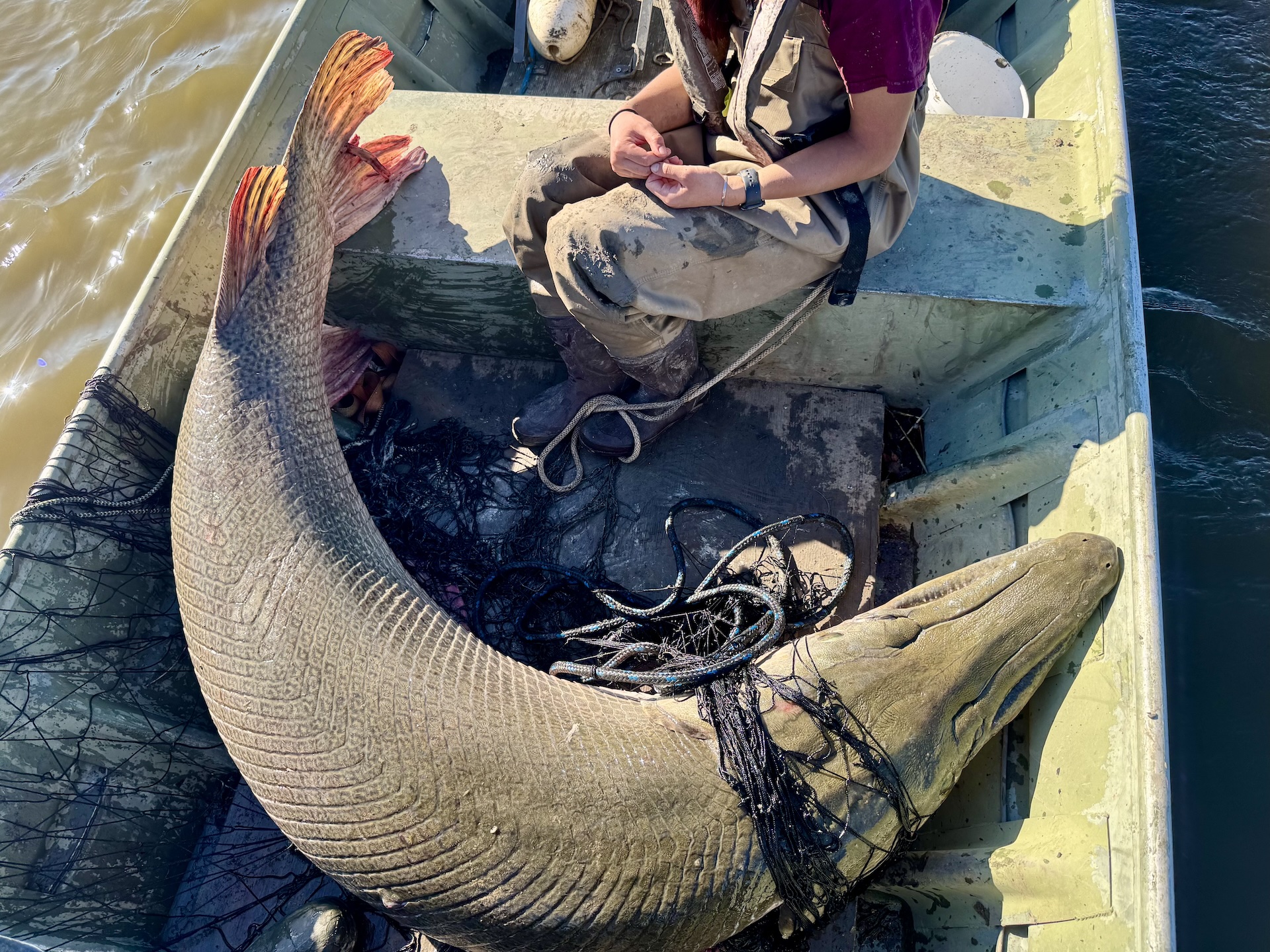
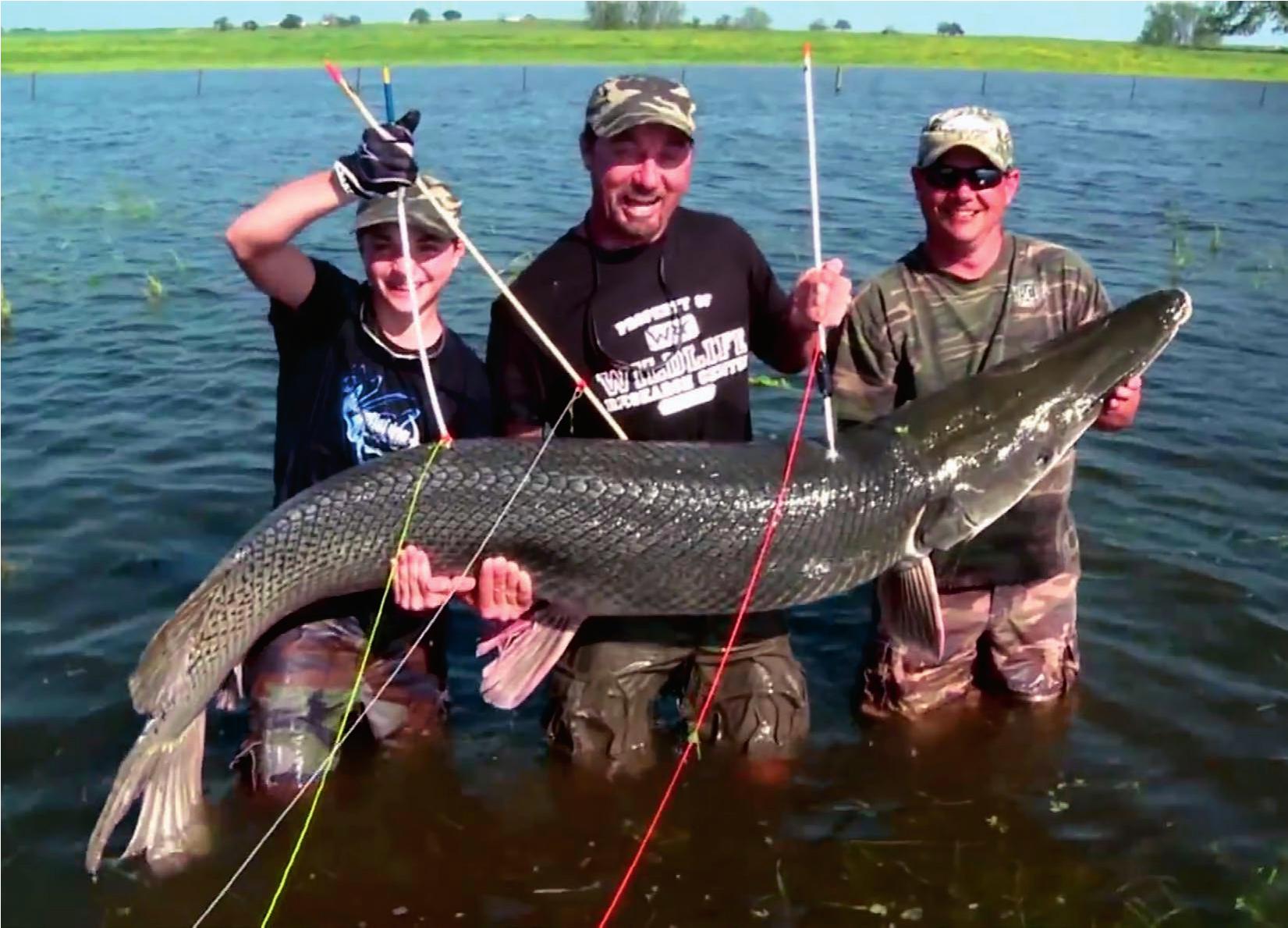
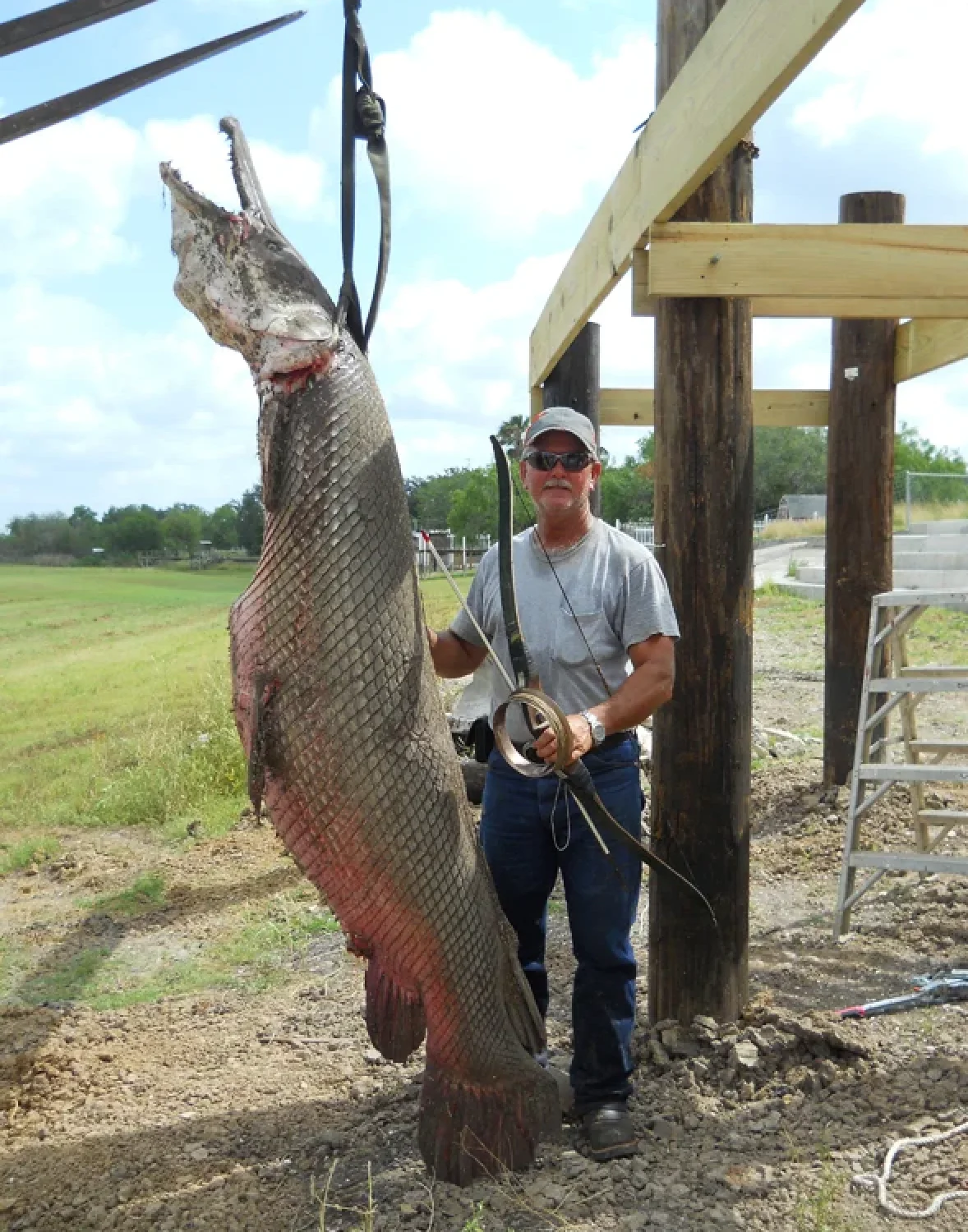
Reaching lengths of seven feet or more, the alligator gar (Atractosteus spatula) is one of North America’s largest strictly freshwater and estuarine apex predators. Renowned for its double row of needle-sharp teeth, heavy ganoid armor, and opportunistic ambush style, this prehistoric giant thrives in deep river pools, oxbow lakes, and coastal estuaries across the southern United States.
| Attribute | Details |
|---|---|
| Scientific Name | Atractosteus spatula |
| Maximum Size | Exceeds 8 ft (2.4 m) and 300 lbs (136 kg); 7 ft is mature |
| Primary Habitat | Deep river channels, murky oxbow lakes, reservoirs, estuaries |
| Distinctive Trait | Dual rows of teeth on upper jaw; interlocking ganoid scales |
| Conservation Status | Protected/managed across southern US basins (e.g., Texas, LA) |
Species Profile and Evolutionary History of Atractosteus spatula
The alligator gar is often described as a "living fossil," belonging to the family Lepisosteidae, an ancient group of ray-finned fish whose lineage dates back over 100 million years to the Early Cretaceous period. Unlike most modern teleost fishes, the alligator gar has retained primitive morphological features that have remained virtually unchanged for millions of years.
Among the extant gar species in North America—which include the longnose gar (Lepisosteus osseus), shortnose gar (Lepisosteus platostomus), and spotted gar (Lepisosteus oculatus)—the alligator gar is by far the largest. It occupies an ecological role similar to apex marine predators, but adapted specifically for warm, slow-moving, low-oxygen river networks and coastal drainages.
- Cretaceous Ancestors (100+ Mya)
- Modern Lepisosteidae
- Atractosteus spatula (Alligator Gar)
A crucial evolutionary adaptation of Atractosteus spatula is its vascularized swim bladder, which functions as a rudimentary lung. Connected directly to the gut via a pneumatic duct, this organ allows the gar to surface and gulp atmospheric oxygen. This bimodal breathing strategy enables the species to thrive in stagnant, hypoxic waters where other large predatory fish would suffer from low dissolved oxygen levels.
Physical Characteristics of a 7-Foot Specimen
A 7-foot (2.13-meter) alligator gar represents an extraordinary milestone in individual growth, typically indicating a female specimen that has survived for several decades. Because female alligator gar grow larger and live longer than males, specimens exceeding six and a half feet are almost universally mature females.
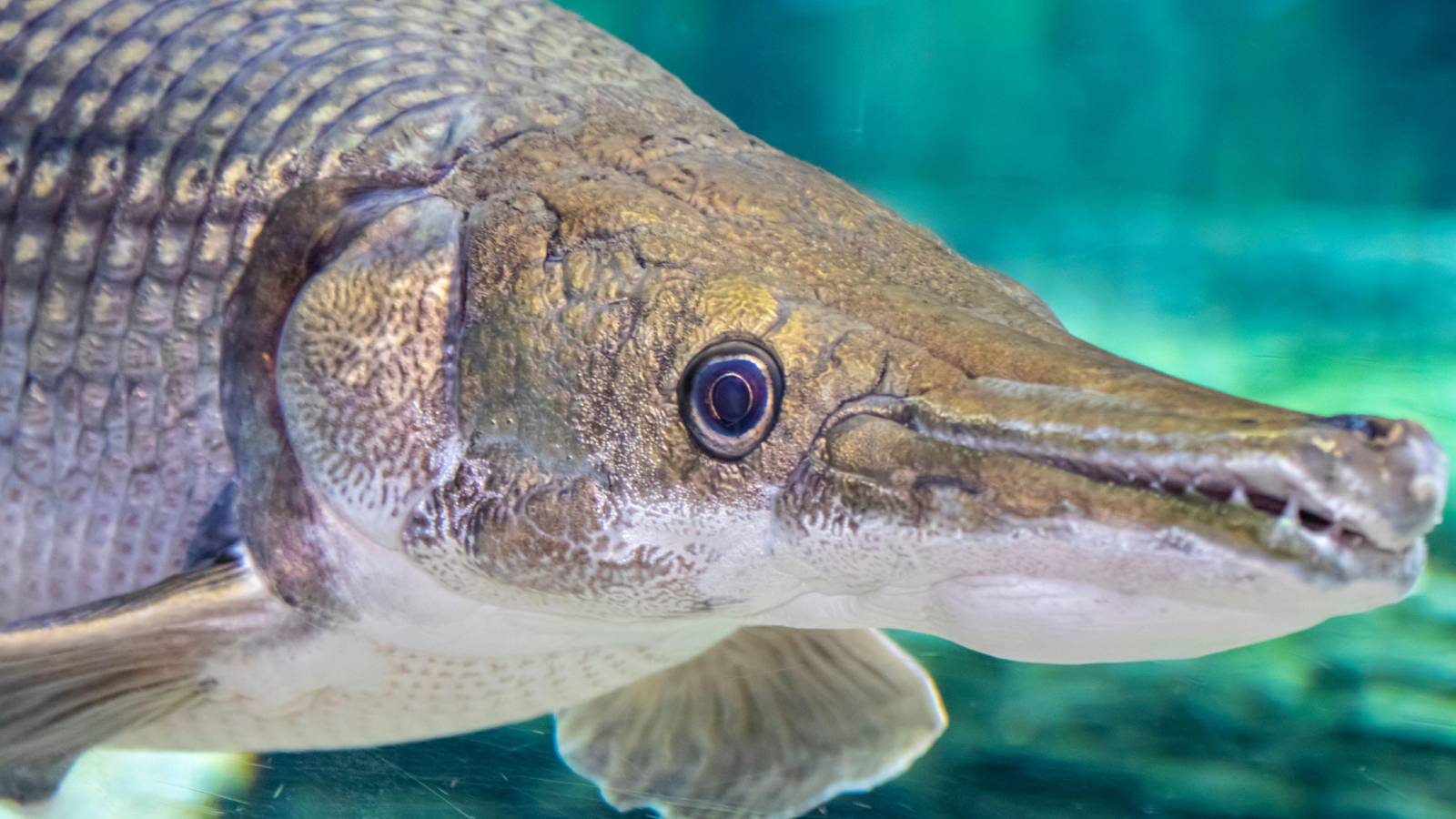
- Head & Jaw Structure: Broad, alligator-like snout with two distinct rows of maxillary teeth
- Dorsal Armor Coverage: Heavy, diamond-shaped ganoid scales made of enamel-like ganoine
- Respiratory System: Dual-mode: Functional gills alongside a vascularized aerial swim bladder
Scale Armor and Dermal Structure
The body of an alligator gar is encased in heavy, diamond-shaped ganoid scales. Unlike the flexible cycloid or ctenoid scales found on panfish and bass, ganoid scales consist of a tough bony basal layer covered by an enamel-like substance called ganoine. These overlapping plates form an impenetrable suit of armor that shields mature gar from parasites, sharp rocks, and rival predators. Historically, Native American communities utilized these durable scales for arrowheads, tools, and breastplates.
Dentition and Jaw Anatomy
The defining characteristic that separates the alligator gar from all other gar species is its upper jaw structure. The alligator gar features a broad, short snout—resembling that of an American alligator—equipped with two rows of sharp teeth on the upper jaw (palatine teeth running parallel to the premaxillary row). This dual-row arrangement provides tremendous crushing and gripping power, ensuring that once prey is seized, escape is virtually impossible.
Weight and Age Estimates for a 7-Foot Gar
Growth rates for alligator gar vary based on food availability, water temperature, and latitude, but general biometrics for a 7-foot specimen typically align with the following standard ranges:
- Total Length: 84 to 90 inches (213 to 228 cm)
- Estimated Weight: 160 to 240 pounds (72 to 109 kg), depending on girth and reproductive state
- Estimated Age: 40 to 70+ years (verified through otolith aging analysis)
Habitat Dynamics: Deciphering "The Deep"
The popular moniker "predator of the deep" refers to the gar's preference for dark, submerged river habitats rather than oceanic abysses. Alligator gar are inland and coastal creatures that inhabit specific freshwater and brackish environments across the southern Mississippi River basin and Gulf Coast drainages.
- River Mainstem (Deep Holes)
- Oxbow Lakes & Reservoirs
- Seasonal Floodplains (Spawning)
River Channels and Deep Oxbow Lakes
Mature alligator gar aggregate in deep river bends, scour holes below dams, and quiet oxbow lakes. These deep water pockets serve three distinct operational purposes:
- Thermal Stability: Deep holes maintain cooler water during intense summer heat and retain warmth during winter cold snaps.
- Prey Accumulation: Forage fish such as gizzard shad, carp, and buffalo naturally congregate in deep eddies to escape strong river currents, placing them directly in the gar's strike zone.
- Energy Conservation: Slow-moving deep pools allow these massive fish to hover neutrally buoyant without wasting vital energy fighting swift surface currents.
Estuarine and Brackish Adaptations
Alligator gar exhibit high salinity tolerance. They frequently travel down coastal rivers into brackish estuaries, bays, and tidal marshes along the Gulf Coast. In these environments, they forage on saltwater species like mullet, blue crabs, and menhaden before migrating back upriver to spawn.
Predatory Mechanics and Diet Breakdown
Despite their menacing appearance and massive size, alligator gar are sluggish, energy-efficient ambush predators rather than high-speed chasers. Their hunting strategy relies on stealth, camouflage, and explosive lateral jaw strikes.
- Camouflaged Hovering
- Lateral Head Sweep
- Dual-Row Jaw Clamp
- Head-First Swallowing
Ambush Tactics and Strike Efficiency
An alligator gar will drift motionless in the water column, often looking like a floating log. When an unsuspecting fish swims within strike distance—typically within a few feet—the gar uses a powerful side-to-side sweep of its head while expanding its buccal (mouth) cavity. This rapid expansion creates a negative pressure vacuum that pulls the prey directly between its locked rows of teeth.
Primary Prey Items
Research analyzing the stomach contents of large alligator gar confirms that they are opportunistic carnivores. Their diet consists predominantly of coarse fish species, including:
- Gizzard Shad and Threadfin Shad: Primary forage for juvenile and sub-adult gar.
- Common Carp and Smallmouth Buffalo: High-calorie benthic targets for large adults.
- Catfish (Channel and Blue): Abundant bottom-dwelling prey in major river systems.
- Crustaceans: Blue crabs in estuarine waters and crayfish in river bends.
- Waterfowl and Small Mammals: Occasionally captured at the surface, though representing a minor percentage of overall intake.
Contrary to common angling myths, scientific surveys conducted by state wildlife agencies show that alligator gar do not decimate game fish populations like largemouth bass or crappie. Instead, they play a vital role in culling weak, sick, or overpopulated bottom-feeders, preserving ecological balance in native river ecosystems.
Comparative Analysis of North American Gar Species
Understanding the differences between North American gar species is essential for proper species identification, conservation compliance, and biological recording.
| Feature | Alligator Gar (A. spatula) | Longnose Gar (L. osseus) | Shortnose Gar (L. platostomus) | Spotted Gar (L. oculatus) |
|---|---|---|---|---|
| Max Length | 8+ feet (2.4+ m) | 4–6 feet (1.2–1.8 m) | 2–3 feet (0.6–0.9 m) | 2–3 feet (0.6–0.9 m) |
| Upper Jaw Teeth | Two rows | Single row | Single row | Single row |
| Snout Shape | Broad, short (alligator-like) | Extremely long and narrow | Short and broad | Short with distinct dark spots |
| Primary Habitat | Deep rivers, oxbows, estuaries | Lakes, quiet river pools | Large rivers, muddy backwaters | Clear, vegetated lakes/streams |
| Salinity Tolerance | High (frequently brackish) | Moderate | Low | Low to Moderate |
| Conservation State | Regulated / Protected | Abundant | Stable | Stable / Locally Regulated |
Conservation History and Modern Management
The historical narrative surrounding the alligator gar is one of extreme depletion followed by modern, science-based recovery efforts.
- Early 20th Century: Mass Eradication
- Mid-20th Century: Habitat Loss
- 21st Century: State-Level Protection & Tagging
Historical Eradication Campaigns
During the early to mid-20th century, alligator gar were mistakenly classified as "trash fish" and destructive pests that threatened commercial and sport fisheries. Government agencies and local communities deployed "Electrical Eradication Boats" and unregulated harvesting to eliminate gar populations across the Mississippi basin. Coupled with the damming of major rivers—which cut off access to vital seasonal floodplains required for spawning—alligator gar disappeared from the northern limits of their historical range, including Illinois, Indiana, and Ohio.
Contemporary Protection Protocols
Today, fishery biologists recognize the alligator gar as an irreplaceable apex predator. States like Texas, Louisiana, Arkansas, and Oklahoma have instituted strict harvest regulations to protect remaining breeding populations:
- Texas: Texas Parks and Wildlife Department (TPWD) enforces a standard limit of one alligator gar per day, with specific seasonal closures in high-value spawning grounds like the Trinity River during active flood conditions.
- Arkansas: Requires a special permit for harvest, with strict draw systems on designated waters.
- Reintroduction Programs: States like Illinois and Tennessee have initiated reintroduction campaigns, stocking juvenile alligator gar into historical watersheds to control invasive silver and bighead carp populations.
Responsible Angling, Handling, and Field Equipment
Targeting a 7-foot alligator gar requires specialized heavy-duty tackle, patience, and a strict commitment to fish safety. Because large gar take decades to grow, catch-and-release practices are critical for maintaining healthy populations.
- Heavy Rod/Reel & 80-100lb Braided Line
- Non-Crimp Wire Trace & Large Circle Hook
- Secure Landing via Cradle/Lasso (Support Abdomen)
- Rapid Oxygenated Release in Water
Recommended Fishing Gear
- Rods: Heavy-action to extra-heavy conventional casting or big-game saltwater rods (7 to 8 feet).
- Reels: High-capacity conventional reels with smooth drag systems capable of producing 25+ pounds of drag.
- Main Line: 80- to 100-pound test braided line for abrasion resistance against underwater logs and structure.
- Leader: 100- to 150-pound single-strand stainless steel wire leader (to resist the gar's sharp scales and teeth).
- Hooks: Large circle hooks (8/0 to 10/0) designed to hook in the corner of the jaw, minimizing the risk of gut-hooking.
Safe Catch-and-Release Practices
- Avoid Dry Ground Handling: Never drag a 7-foot gar onto hot dry sand or concrete, as this strips off its protective slime coat.
- Use a Landing Cradle or Rope Lasso: A soft mesh landing cradle or a soft rope loop positioned behind the pectoral fins allows anglers to control the fish safely in shallow water.
- Support the Internal Organs: A gar's body structure is supported by water pressure. If lifting the fish for photographs, support its weight evenly under the belly and near the tail. Never hold a giant gar vertically by its jaw.
- Allow Air-Breathing Recovery: Before releasing the gar into deep water, hold it horizontally in a gentle current until it takes an aerial breath and swims away under its own power.
Frequently Asked Questions
Are 7-foot alligator gar dangerous to humans?
No, alligator gar are not aggressive toward humans. While their large size and dual rows of sharp teeth appear intimidating, there are no documented, verified attacks on humans by alligator gar. Swimmers and waders are routinely overlooked by gar in favor of their natural prey, such as fish and crabs.
How old is a 7-foot alligator gar?
A 7-foot alligator gar is typically between 40 and 70 years old. Growth rates slow down dramatically after the fish reaches adulthood. Because female gar grow significantly faster and larger than males, almost all alligator gar that reach or exceed seven feet in length are mature females.
Can alligator gar live in saltwater?
Yes, alligator gar have a high tolerance for brackish and marine environments. They frequently inhabit tidal estuaries, salt marshes, and coastal bays along the Gulf of Mexico, moving between salty coastal zones and freshwater rivers to hunt and reproduce.
How do biologists determine the age of an alligator gar?
Biologists determine the age of an alligator gar by extracting and cross-sectioning its otoliths (ear bones). Similar to counting tree rings, scientists count the growth rings visible under a microscope. Because this procedure requires harvesting the fish, researchers also use non-lethal scale analysis and acoustic tag tracking to estimate age across living populations.
What is the world record size for an alligator gar?
The official IGFA all-tackle world record alligator gar weighed 279 pounds (126.5 kg), caught in the Rio Grande, Texas, in 1951. However, larger non-official specimens have been recorded by bowfishermen and commercial nets, including a historic 8-foot-5-inch, 327-pound specimen accidentally captured in Mississippi in 2011.
Action Plan for Anglers and Conservationists
To target or observe giant alligator gar responsibly while preserving these ancient freshwater apex predators, implement the following actions:
- Verify State-Specific Regulations: Check current daily bag limits, tagging requirements, and waterbody closures directly through state agencies such as the Texas Parks and Wildlife Department or the Louisiana Department of Wildlife and Fisheries.
- Upgrade Fishing Tackle for Catch-and-Release: Switch from traditional treble hooks to heavy-duty inline circle hooks to reduce deep-hooking rates and ensure clean releases.
- Report Giant Sightings and Tagged Fish: If you capture a tagged alligator gar, record the tag number, total length, girth, and precise location, and report the data to local fisheries managers to assist in ongoing population research.
- Support Floodplain Habitat Preservation: Advocate for river conservation policies that maintain natural spring flooding cycles, which are essential for alligator gar spawning in shallow, vegetated floodplains.