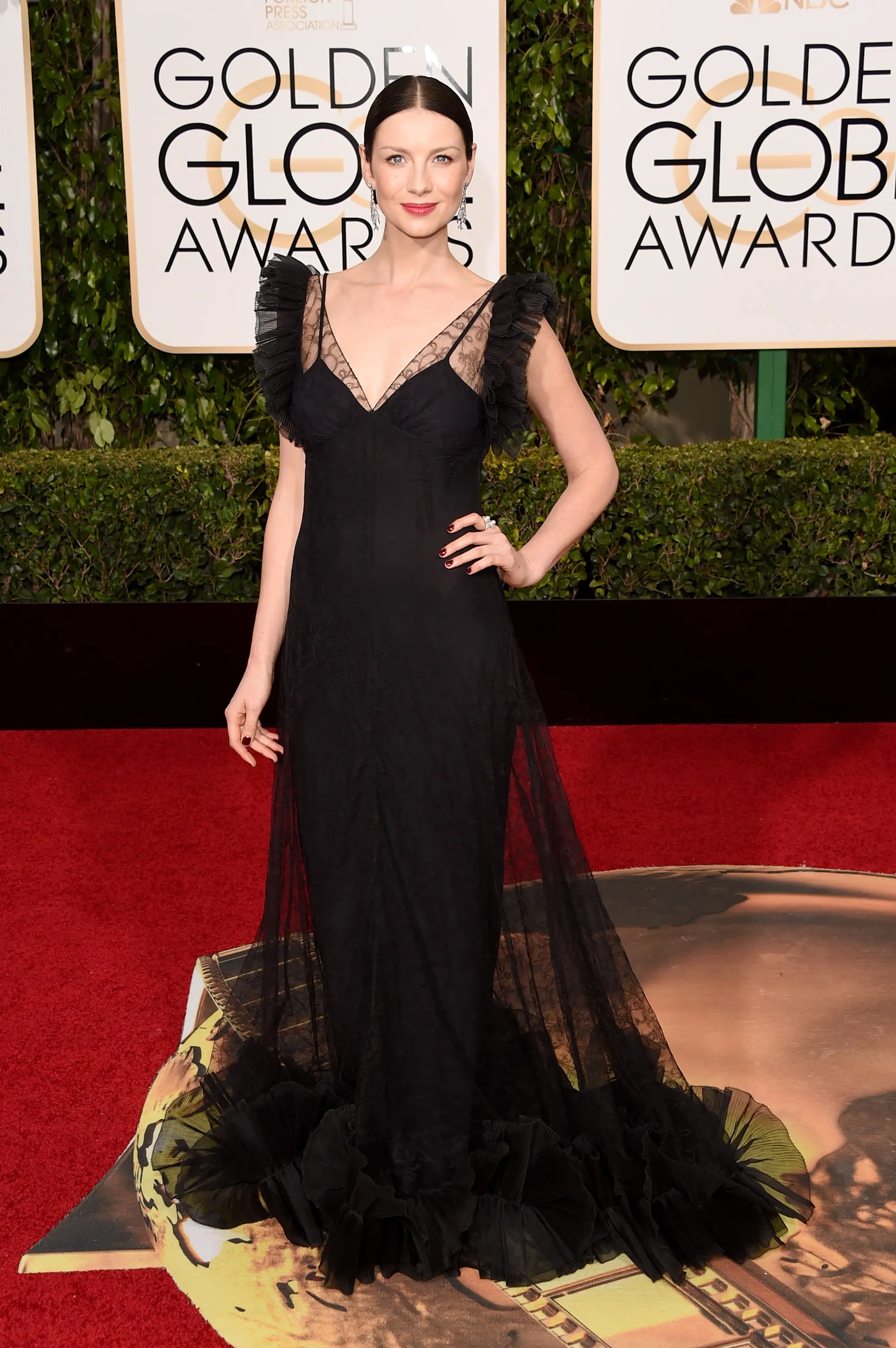
The 73rd Golden Globe Awards took place on January 10, 2016, at the Beverly Hilton in Beverly Hills, California. Hosted by Ricky Gervais, the ceremony honored the best in film and television from 2015. Major winners included The Revenant, which secured Best Motion Picture – Drama, and The Martian, which controversially won Best Motion Picture – Musical or Comedy.
As we look back from the vantage point of 2026, the 73rd Golden Globe Awards remain a pivotal moment in award show history. This ceremony not only solidified the awards-season momentum for future Oscar winners but also highlighted the ongoing debates regarding genre classification and the influence of the Hollywood Foreign Press Association (HFPA). The event was marked by the return of a polarizing host, several historic wins for streaming platforms, and a legendary tribute to one of cinema's greatest actors.
Historical Context and the HFPA Era
The 73rd Golden Globe Awards occurred during a period when the Hollywood Foreign Press Association (HFPA) held significant sway over the industry's awards circuit. Unlike the Academy of Motion Picture Arts and Sciences, the HFPA consisted of a relatively small group of international journalists. This smaller voting body often led to more unpredictable and "glitzy" winners, making the Golden Globes a unique precursor to the Academy Awards.
The 2016 ceremony was the 73rd iteration of the event, reinforcing its status as the "party of the year" in Hollywood. The atmosphere at the Beverly Hilton was typically festive, with a sit-down dinner and an open bar—a stark contrast to the more formal theater seating of the Oscars. This environment often produced the candid, unscripted moments that the Golden Globes became famous for, such as actors moving between tables or delivering more relaxed acceptance speeches.
Furthermore, the 2016 awards were broadcast live on NBC, maintaining strong viewership numbers at a time before the massive shifts in linear television consumption that would characterize the late 2010s and early 2020s. The production values and the high concentration of A-list celebrities served as a testament to the event's prestige within the entertainment ecosystem of the mid-2010s.
The Return of Ricky Gervais as Host
One of the most discussed aspects of the 73rd Golden Globe Awards was the return of Ricky Gervais as host. Having previously hosted in 2010, 2011, and 2012, Gervais had established a reputation for a "no-holds-barred" comedic style that frequently targeted the HFPA itself, as well as the celebrities in the room.
His performance in 2016 did not deviate from this pattern. Gervais opened the show with a monologue that touched on controversial topics of the time, including the gender pay gap, the industry’s diversity issues, and specific jabs at high-profile figures like Mel Gibson and Caitlyn Jenner. His presence set a cynical yet high-energy tone for the evening, reinforcing the idea that the Golden Globes were the "edgy" alternative to the more traditional awards ceremonies.
Critics were divided on Gervais’s performance. Some praised his willingness to speak "truth to power" in a room full of egos, while others felt his routine had become repetitive or unnecessarily mean-spirited. Regardless of the critical reception, his hosting stint ensured that the 73rd Golden Globe Awards generated significant social media engagement and post-show analysis.
Key Winners in Motion Pictures
The film categories at the 73rd Golden Globes were dominated by a few standout productions that would go on to define the 2015–2016 awards season. The drama categories were particularly competitive, featuring high-stakes narratives and transformative performances.
The Dominance of The Revenant
The Revenant, directed by Alejandro G. Iñárritu, was the night's biggest winner in the drama field. It took home three major awards: Best Motion Picture – Drama, Best Director (Iñárritu), and Best Actor – Motion Picture Drama for Leonardo DiCaprio. The film's success at the Globes was a critical indicator of its eventual success at the Oscars, particularly for DiCaprio, whose portrayal of frontiersman Hugh Glass became a defining moment in his career.
The "Musical or Comedy" Controversy
The Musical or Comedy categories were headlined by Ridley Scott’s The Martian. While the film was a critical and commercial triumph, its classification as a "Comedy" sparked widespread debate among industry insiders and fans. Despite its survivalist and often humorous tone, many felt it was fundamentally a drama. Nevertheless, The Martian won Best Motion Picture – Musical or Comedy, and Matt Damon won Best Actor in the same category. This win prompted the HFPA to later clarify its rules regarding the classification of dramas with comedic elements.
Breakout Performances and Supporting Wins
Brie Larson secured the award for Best Actress – Motion Picture Drama for her harrowing performance in Room, effectively launching her into the Hollywood stratosphere. In the Supporting categories, Sylvester Stallone provided one of the night's most emotional moments. Winning Best Supporting Actor for his return as Rocky Balboa in Creed, Stallone received a standing ovation, marking a significant late-career vindication for the veteran actor.
Major Winners and Trends in Television
The television categories at the 73rd Golden Globe Awards reflected the rapidly changing landscape of the "Peak TV" era. The HFPA has historically been quicker than the Emmys to recognize new, experimental, or international-themed series, and 2016 was no exception.
The Rise of Mr. Robot and Mozart in the Jungle
USA Network’s Mr. Robot won Best Television Series – Drama, a major win for a basic cable network against heavy competition from premium channels. Christian Slater also won Best Supporting Actor in a Series, Miniseries, or Motion Picture Made for Television for his role in the show.
In the Musical or Comedy field, Amazon Video’s Mozart in the Jungle took home the top prize, along with a Best Actor win for Gael García Bernal. This was a significant milestone for streaming services, which were still in the process of establishing themselves as primary contenders for major industry awards.
Limited Series and Acting Accolades
Wolf Hall won for Best Miniseries or Motion Picture Made for Television, beating out high-profile competitors like Fargo. Individual acting awards in the television categories were diverse:
- Jon Hamm won Best Actor – Television Series Drama for the final season of Mad Men.
- Taraji P. Henson won Best Actress – Television Series Drama for Empire, delivering a memorable acceptance speech where she handed out cookies to the audience.
- Lady Gaga won Best Actress – Miniseries or Motion Picture Made for Television for her role in American Horror Story: Hotel, a win that signaled her successful transition into serious acting.
Summary of Major Award Winners
The following table summarizes the primary winners across the most prestigious categories at the 73rd Golden Globe Awards.
| Category | Winner | Project |
|---|---|---|
| Best Motion Picture – Drama | The Revenant | N/A |
| Best Motion Picture – Musical or Comedy | The Martian | N/A |
| Best Director – Motion Picture | Alejandro G. Iñárritu | The Revenant |
| Best Actor – Motion Picture Drama | Leonardo DiCaprio | The Revenant |
| Best Actress – Motion Picture Drama | Brie Larson | Room |
| Best Actor – Motion Picture Musical or Comedy | Matt Damon | The Martian |
| Best Actress – Motion Picture Musical or Comedy | Jennifer Lawrence | Joy |
| Best Supporting Actor – Motion Picture | Sylvester Stallone | Creed |
| Best Supporting Actress – Motion Picture | Kate Winslet | Steve Jobs |
| Best TV Series – Drama | Mr. Robot | N/A |
| Best TV Series – Musical or Comedy | Mozart in the Jungle | N/A |
| Best Miniseries or TV Film | Wolf Hall | N/A |
The Cecil B. DeMille Award: Denzel Washington
The Cecil B. DeMille Award, given annually for "outstanding contributions to the world of entertainment," was presented to Denzel Washington during the 73rd ceremony. Tom Hanks, a previous recipient and collaborator, introduced Washington with a speech that highlighted the actor’s immense range and status as a cinematic icon.
Washington’s acceptance was a family affair, as he was joined on stage by his wife and children. While he struggled slightly with his speech due to misplaced glasses, the moment was widely regarded as a highlight of the night. It underscored the industry's deep respect for his body of work, spanning decades and encompassing some of the most critically acclaimed films in modern history, such as Glory, Training Day, and Malcolm X.
Technical Achievements and Special Categories
Beyond the major acting and "Best Picture" categories, the 73rd Golden Globes recognized significant technical and creative achievements:
- Best Screenplay: Aaron Sorkin won for Steve Jobs. His characteristically rapid-fire, dialogue-heavy script was praised for its unconventional structure.
- Best Original Score: Ennio Morricone won for Quentin Tarantino’s The Hateful Eight. This was a notable win for the legendary composer, who had recently returned to the Western genre.
- Best Original Song: "Writing's on the Wall" by Sam Smith and Jimmy Napes from the James Bond film Spectre took the prize.
- Best Animated Feature Film: Pixar’s Inside Out won, continuing the studio’s long-standing dominance in the category.
- Best Foreign Language Film: The Hungarian Holocaust drama Son of Saul won, a precursor to its eventual Oscar victory.
FAQs: Common Questions About the 73rd Golden Globes
Who was the host of the 73rd Golden Globe Awards?
The ceremony was hosted by British comedian and actor Ricky Gervais. This marked his fourth time hosting the event, and he would later return one final time in 2020. His hosting style was characterized by sharp satire and a willingness to roast the attendees and the Hollywood Foreign Press Association.
Why was The Martian nominated as a comedy?
The Martian was submitted and accepted in the Musical or Comedy category because the HFPA rules at the time allowed for films with significant comedic elements to be classified as such. While the film is a survival drama, its protagonist’s witty dialogue and the use of disco music provided enough "comedic" leeway for the studio to campaign in that category, which was perceived as less competitive than the Drama category.
Did Leonardo DiCaprio win an award at the 73rd Golden Globes?
Yes, Leonardo DiCaprio won Best Actor – Motion Picture Drama for his role in The Revenant. This win was seen as a critical step in his successful campaign for the Academy Award for Best Actor later that year.
Which television series won the most awards?
Mr. Robot and Mozart in the Jungle were the primary winners in the television categories, both winning Best Series in their respective genres. Mr. Robot also secured a win for Christian Slater, while Mozart in the Jungle saw Gael García Bernal take home an acting trophy.
Who received the lifetime achievement award in 2016?
Denzel Washington was the recipient of the Cecil B. DeMille Award at the 73rd Golden Globe Awards. He was recognized for his extraordinary contributions to the film industry as both an actor and a director.
What were the biggest upsets of the night?
One of the biggest upsets was Lady Gaga’s win for Best Actress in a Limited Series for American Horror Story: Hotel, as many critics expected Kirsten Dunst to win for Fargo. Additionally, Mozart in the Jungle winning over more established shows like Veep or Transparent was considered a surprise by many industry analysts.
Recontextualizing the 2016 Ceremony
For modern researchers or fans looking to revisit the 73rd Golden Globe Awards, the event serves as a time capsule of a specific era in Hollywood. It captures the moment just before the industry underwent massive cultural shifts regarding diversity (the #OscarsSoWhite movement gained significant traction shortly after this ceremony) and the restructuring of the HFPA itself.
To experience the ceremony's impact today, viewers should look for the following:
- Archival Footage: Official clips of the monologues and acceptance speeches are available on the Golden Globes' official YouTube channel and NBC's archives.
- Critical Retrospectives: Reading trade publications from January 2016 (such as Variety or The Hollywood Reporter) provides a glimpse into the immediate industry reaction to the wins.
- Streaming Availability: Most of the winning films, such as The Revenant, The Martian, and Inside Out, are widely available on major streaming platforms, allowing for a re-evaluation of the work that defined the year.
As we progress through 2026, the 73rd Golden Globe Awards remain a testament to a year of high-caliber filmmaking and the enduring, if often controversial, allure of Hollywood’s most unpredictable night.