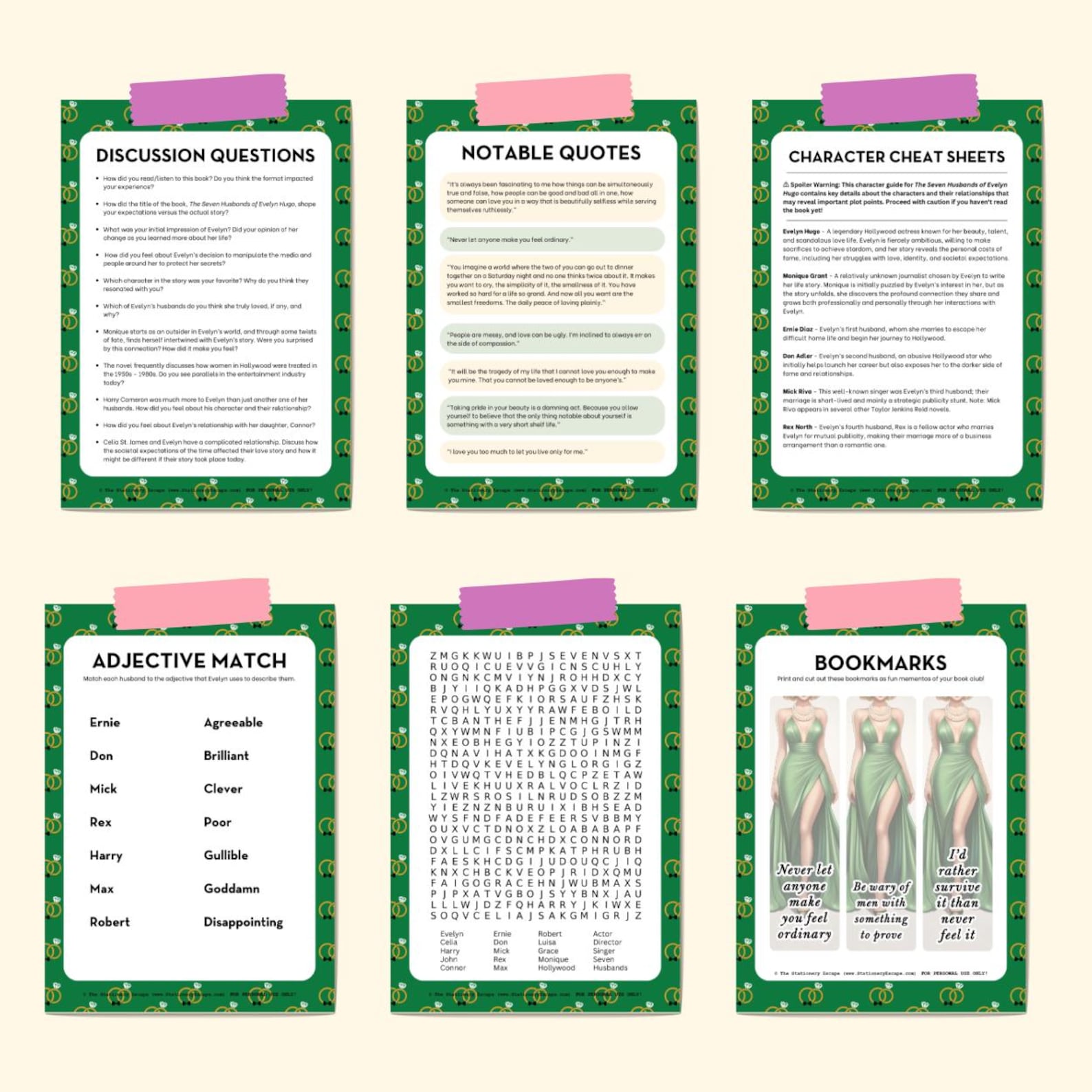
The 7 Husbands relationship guide quiz is an archetype-based personality assessment inspired by the distinct marital dynamics in Taylor Jenkins Reid's acclaimed novel The Seven Husbands of Evelyn Hugo. By evaluating your romantic priorities, emotional boundaries, and conflict patterns, the quiz identifies which partner archetype best reflects your current relationship needs and long-term compatibility goals.
What Is the 7 Husbands Relationship Archetype Framework?
The 7 Husbands relationship framework translates the complex, multi-layered marriages featured in contemporary fiction into a practical diagnostic tool for modern dating. Rather than testing simple romantic preferences, the framework examines why people enter partnerships, how they navigate compromise, and what trade-offs they accept in pursuit of security, ambition, or passion.
In relationship psychology, individuals rarely seek the exact same qualities in a partner across every decade of life. A person's romantic drivers shift depending on age, career pressures, past heartbreaks, and personal growth. The 7 Husbands model acknowledges this evolution by categorizing romantic partnerships into seven distinct functional archetypes. Each archetype represents a specific relational style, ranging from high-passion intensity and transactional convenience to deep emotional security and quiet, low-conflict devotion.
When taken as an interactive quiz, the assessment presents situational scenarios—such as how you handle career conflicts, public image, personal secrets, and emotional vulnerability. By analyzing your responses, the quiz highlights your primary relationship archetype (what you currently seek or embody) and your secondary archetype (your underlying safety net or subconscious desire).
The 7 Husband Archetypes Explained
Understanding each archetype helps contextualize your quiz results and illuminates the hidden dynamics driving your past and present romantic choices.
1. The Ticket Out (Youthful Impulsivity and Practical Escape)
Represented by Ernie Diaz
This archetype is defined by urgency, environmental escape, and naive hope. In dating, this dynamic occurs when a partnership is formed primarily to transition away from an uncomfortable home life, a stagnant hometown, or an insecure financial situation.
- Key Characteristics: High optimism, low initial depth, driven by external circumstances rather than deep personal alignment.
- Modern Parallel: Marrying early to leave a restrictive environment or combining finances quickly to manage living costs.
2. The Stepping Stone (Calculated Ambition and Short-Term Utility)
Represented by Liam Campbell
The Stepping Stone dynamic centers on short-term pragmatism. In this relationship, one or both partners view the connection as a necessary step toward personal or professional advancement. Emotional investment remains intentionally limited.
- Key Characteristics: Clear transactional boundaries, brief duration, functional alignment.
- Modern Parallel: Dating someone who fits a specific social network or professional circle to elevate personal status before moving on.
3. The High-Voltage Flame (Volatile Passion and Tumultuous Chemistry)
Represented by Mitchell Vance
This archetype thrives on intense physical chemistry, dramatic grand gestures, and volatile conflict cycles. While passion is exceptionally high, emotional stability and long-term trust are frequently compromised by ego and possessiveness.
- Key Characteristics: Magnetic attraction, quick escalation, frequent arguments, high emotional burnout.
- Modern Parallel: "On-again, off-again" relationships where extreme high points overshadow persistent red flags and underlying incompatibilities.
4. The Practical Alliance (Shared Objectives and Low Intimacy)
Represented by Allan Heckner
The Practical Alliance archetype focuses on smooth domestic or professional operations without demanding deep romantic passion or emotional vulnerability. Partners operate as effective co-managers of a lifestyle.
- Key Characteristics: Predictability, mutual respect, lack of intense romance or deep emotional disclosure.
- Modern Parallel: Partnerships based primarily on co-parenting harmony, shared financial management, or maintaining social expectations.
5. The Power Duo (Public Image and Strategic Partnership)
Represented by Rex North
In the Power Duo dynamic, two ambitious individuals join forces to present a formidable front to the outside world. The relationship functions like a joint business enterprise where public perception, status, and shared achievements take precedence over private intimacy.
- Key Characteristics: Mutual benefit, professional alignment, high public synergy, clear separation of public image and private reality.
- Modern Parallel: Power couples who build a shared brand, business, or social media presence prioritizing external achievements over internal vulnerability.
6. The Safe Harbor (Unconditional Trust and Soulmate Loyalty)
Represented by Harry Cameron
The Safe Harbor archetype represents the ultimate anchor of safety, deep platonic or romantic intimacy, and unwavering loyalty. In this dynamic, partners accept each other completely, protect each other's vulnerabilities, and build an unbreakable foundation of trust.
- Key Characteristics: Complete psychological safety, mutual sacrifice, absence of pretense, deep unconditional support.
- Modern Parallel: A life partner who serves as your closest confidant, supporting your true identity regardless of external pressures.
7. The Peaceful Haven (Mature Serenity and Low-Drama Comfort)
Represented by Robert Jamison
This final archetype emerges when an individual values quiet comfort, emotional stability, and gentle companionship above high drama or intense ambition. It is a mature, low-friction partnership designed for sustainable long-term peace.
- Key Characteristics: Calm devotion, low conflict, steady emotional presence, deep acceptance of life as it is.
- Modern Parallel: A stable, nourishing relationship entered after years of emotional turbulence, prioritizing daily comfort and quiet happiness.
Comparative Breakdown of the 7 Relationship Archetypes
The following matrix compares each archetype across core motivations, key strengths, potential risks, and typical life stages where they tend to manifest.
| Archetype Name | Core Motivation | Primary Strength | Potential Risk | Typical Life Stage |
|---|---|---|---|---|
| The Ticket Out | Freedom & Escape | High adaptability, decisive action | Premature commitment, low depth | Early adulthood (18–24) |
| The Stepping Stone | Practical Utility | Clear boundaries, functional focus | Emotionally cold, short shelf-life | Early career building |
| The High-Voltage Flame | Intense Passion | Powerful chemistry, excitement | Emotional volatility, burnout | Any stage following repression |
| The Practical Alliance | Operational Stability | Low drama, smooth logistics | Emotional detachment, boredom | Mid-career, co-parenting phases |
| The Power Duo | External Status & Goals | High productivity, shared success | Transactional distance, isolation | Peak professional ambition |
| The Safe Harbor | Deep Security & Trust | Unconditional acceptance, safety | Hard to find, high vulnerability required | Prime adulthood to mature years |
| The Peaceful Haven | Quiet Serenity & Comfort | Emotional stability, ease | Passive routine if unmaintained | Later adulthood, post-turbulence |
How to Interpret Your Quiz Results
When completing a 7 Husbands relationship quiz, your primary result indicates your dominant relationship preference, while your secondary score reveals your underlying emotional fallback.
- PRIMARY ARCHETYPE (60-70% of Score)
- Reflects your conscious, current romantic priorities.
- SECONDARY ARCHETYPE (20-30% of Score)
- Represents your subconscious security needs or safety net.
Understanding this balance allows you to make more intentional choices in your dating life:
- Recognize Pattern Mismatches: If your primary result is The Safe Harbor but you consistently select partners fitting The High-Voltage Flame, you are pursuing emotional intensity at the expense of your actual core need for psychological safety.
- Evaluate Your Current Life Stage: A dominant Power Duo result makes complete sense during major career expansion phases. However, if your long-term goal is emotional intimacy, you will eventually need to cultivate Safe Harbor elements within that dynamic.
- Identify Hidden Compromises: Scoring high in The Practical Alliance often indicates that you have prioritized stability or domestic convenience over genuine emotional disclosure.
Common Pitfalls When Applying Fiction-Based Frameworks to Real Life
While archetype quizzes offer valuable self-reflection, applying literary frameworks to real-world relationships requires healthy boundaries.
- Glorifying Tumultuous Romance: Readers often romanticize volatile archetypes like The High-Voltage Flame due to their dramatic narrative appeal. In real life, sustained volatility leads to anxiety, insecure attachment, and relationship burnout.
- Expecting One Partner to Fit Every Archetype Instantly: Expecting a single partner to provide the dramatic excitement of a flame, the strategic alignment of a power duo, and the quiet peace of a haven simultaneously creates unhelpful expectations.
- Ignoring Growth and Evolution: Relationship needs are not static. A partner who served as your Ticket Out in your twenties may not naturally transition into your Safe Harbor unless both individuals actively cultivate emotional intimacy over time.
Frequently Asked Questions
Is the 7 Husbands relationship quiz a validated clinical psychological tool?
No, the 7 Husbands relationship guide quiz is a self-reflective personality framework inspired by narrative literature rather than a standardized clinical assessment like the Myers-Briggs Type Indicator (MBTI) or the Adult Attachment Interview. However, its underlying categories map closely onto established psychological concepts such as attachment theory, transactional vs. intrinsic motivations, and relational life stages.
Which archetype represents the healthiest long-term relationship?
There is no single "correct" archetype, as healthiness depends on mutual alignment and consent. However, The Safe Harbor and The Peaceful Haven consistently show the highest rates of long-term relationship satisfaction because they are built on psychological safety, emotional honesty, and mutual respect rather than transactional benefits or high-conflict drama.
Can my primary relationship archetype change over time?
Yes, your primary archetype frequently changes as your personal priorities, career, and emotional maturity evolve. A person who prioritized The Power Duo or The Stepping Stone during their twenties may prioritize The Safe Harbor or The Peaceful Haven in their thirties and fifties after experiencing life transitions or personal growth.
How should I discuss my quiz results with my partner?
Use your quiz results as a non-judgmental entry point for open communication. Share your primary archetype and explain what it reveals about your current needs—such as a desire for greater emotional safety (Safe Harbor) or more low-stress quiet time (Peaceful Haven). Ask your partner which archetype they feel best describes your shared dynamic and where your expectations align or differ.
Do I need to read the novel to understand my quiz outcome?
No, prior knowledge of the book is not required. While the archetypes draw their names and inspiration from character dynamics in the novel, the quiz results explain each relationship style using universal dating, communication, and emotional patterns that apply to any modern partnership.
Next Steps: Applying Archetype Insights to Your Romantic Life
Once you have identified your primary and secondary relationship archetypes, translate those insights into practical daily actions to improve your relationship decisions:
- Audit Your Past Relationships: Review your last three major relationships against the seven archetypes. Identify recurring patterns, such as choosing partners who promise high chemistry (High-Voltage Flame) but fail to provide safety (Safe Harbor).
- Update Your Dating Criteria: If you are single, align your dating profile and vetting criteria with your genuine archetype needs rather than superficial preferences. Focus on identifying behaviors that demonstrate long-term alignment.
- Establish Clear Relationship Goals: If you are in a partnership, sit down with your partner to identify which archetype represents your shared goal for the next three to five years. Discuss the specific habits—such as scheduled quality time, joint financial planning, or emotional check-ins—required to nurture that dynamic.