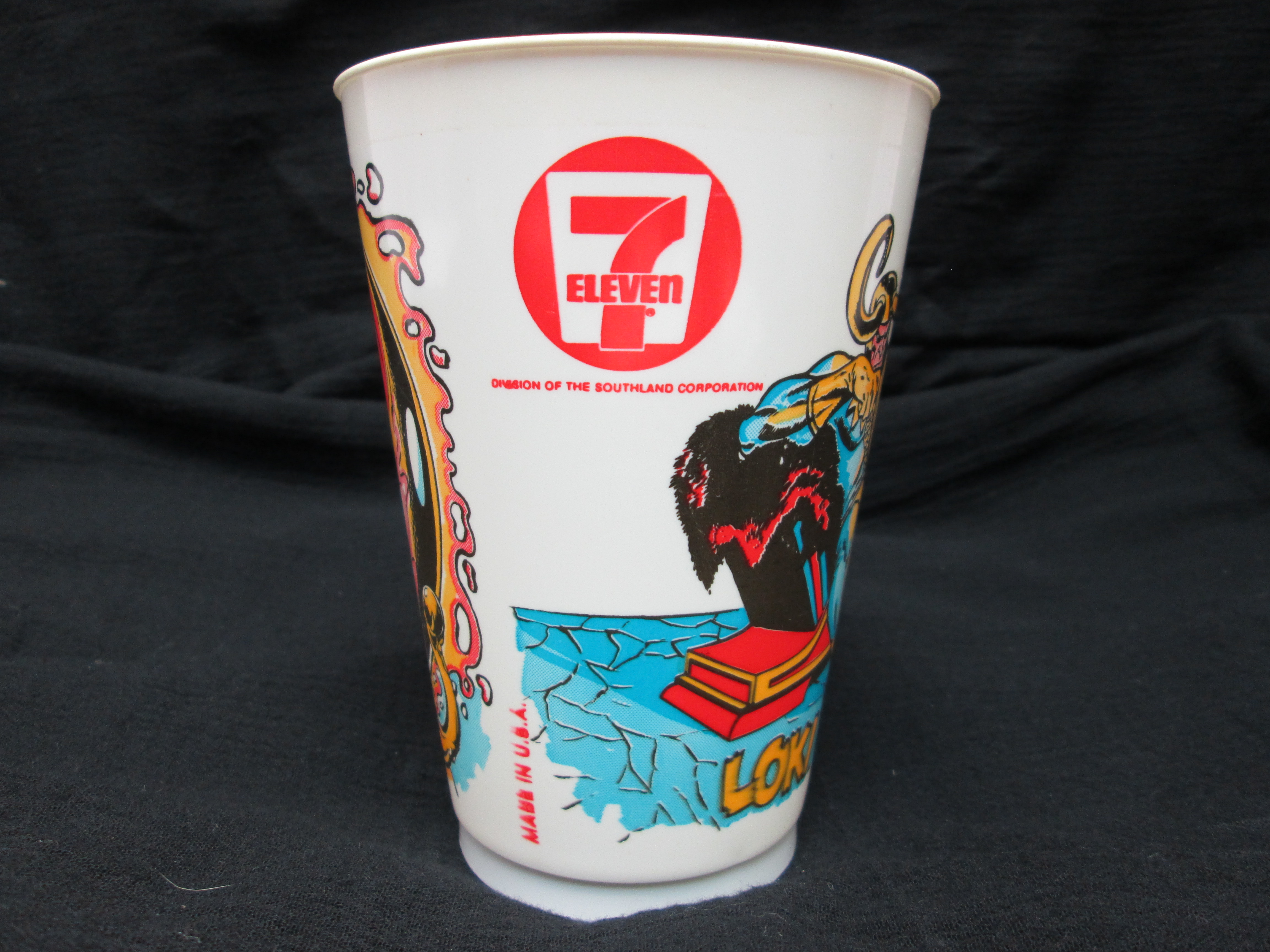
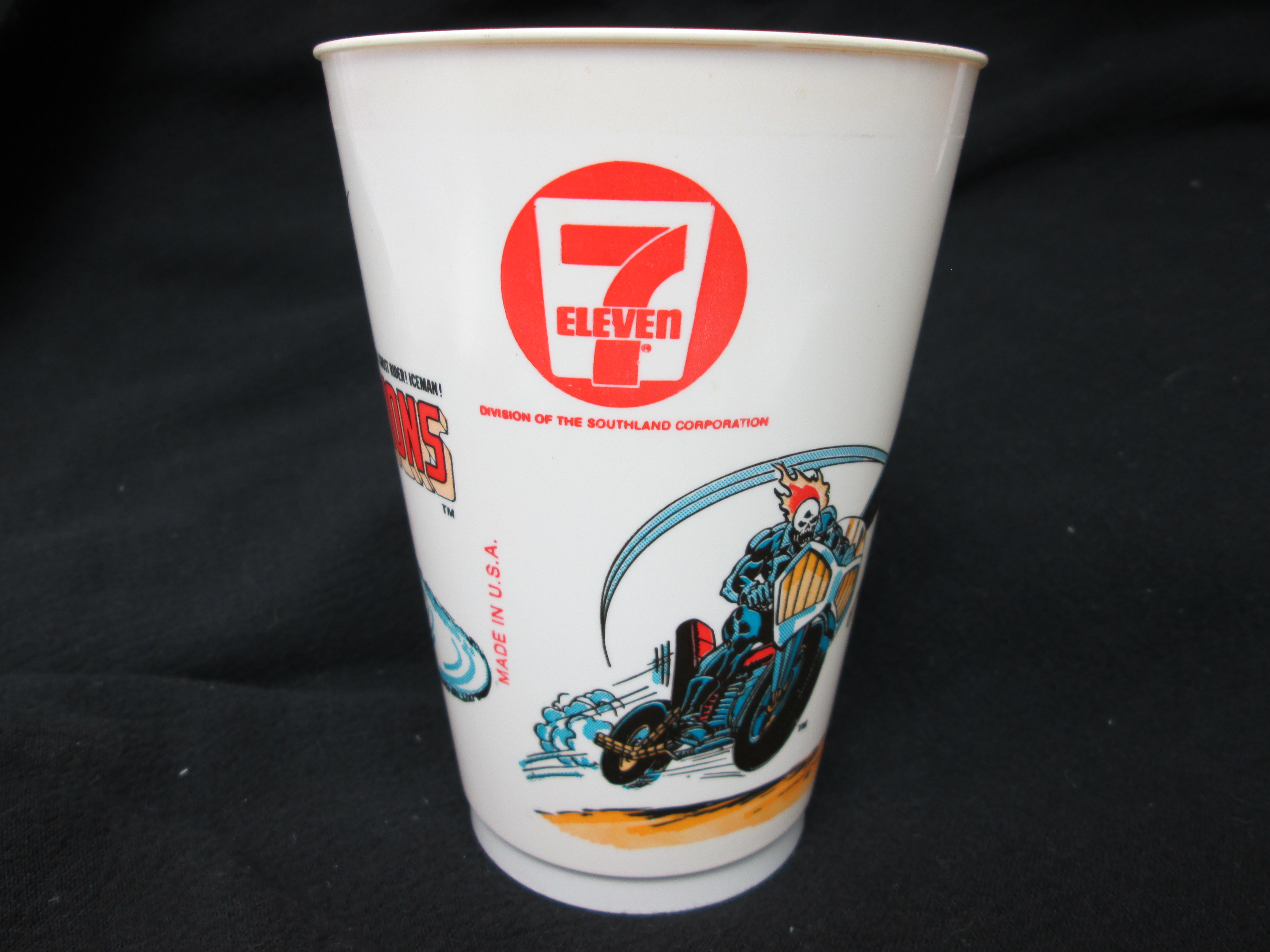
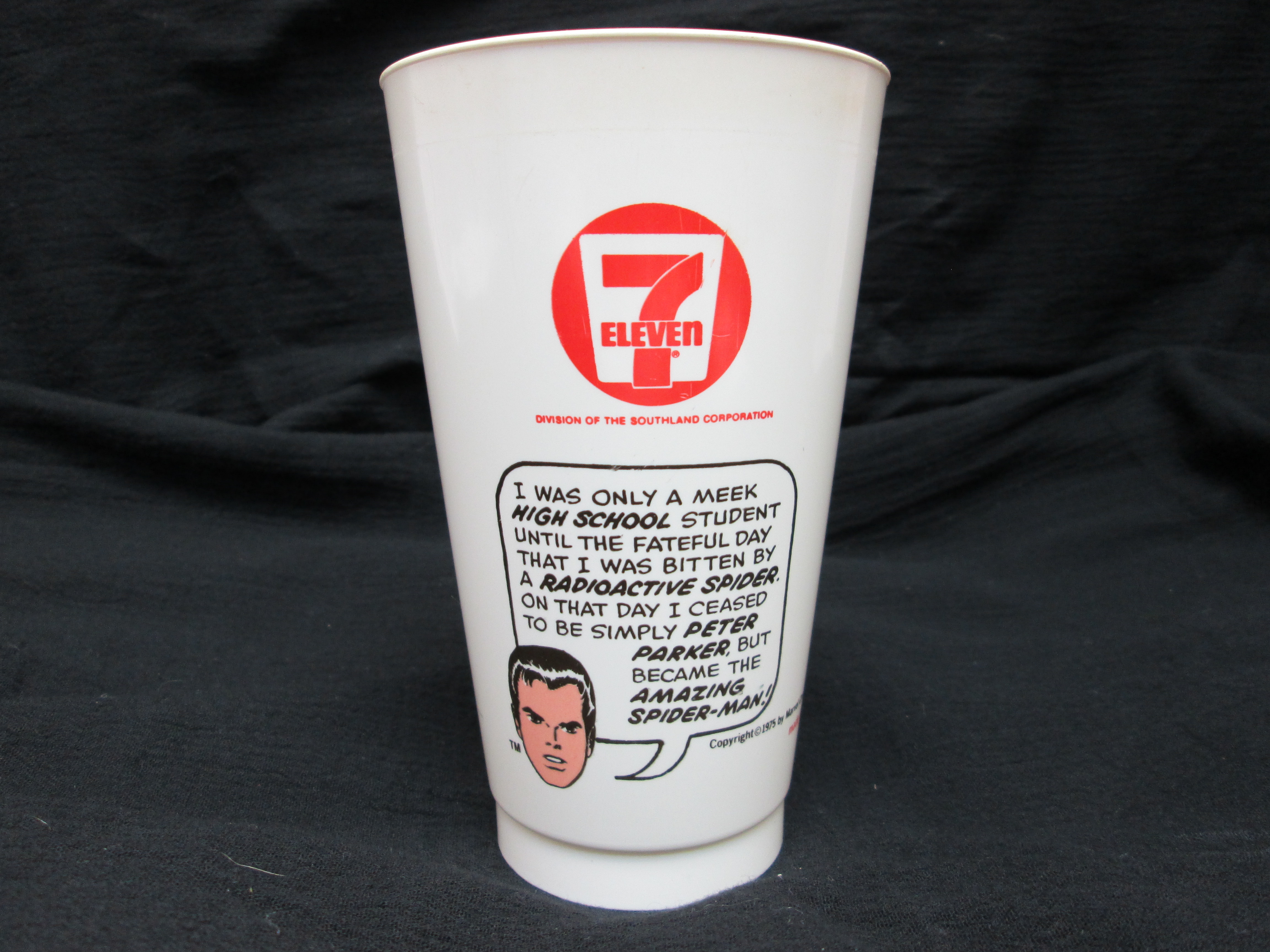
The 7-Eleven Slurpee cup is a specialized insulating container engineered to hold the semi-frozen, carbonated beverage served at 7-Eleven convenience stores. Available in standard volumes ranging from 12 ounces to 40 ounces, the system relies on pressurized freezing, coated container materials, and a custom spoon-straw to deliver stable carbonated slush.
Defining the 7-Eleven Slurpee Cup and Material Engineering
A Slurpee cup is distinct from standard soft drink paper or plastic cups due to the physical requirements of carbonated frozen beverages (CFB). Standard fountain sodas consist of chilled liquid poured over solid ice cubes. A Slurpee, by contrast, is a delicate mixture of microscopic ice crystals, liquid syrup, and trapped carbon dioxide ($CO_2$) bubbles held at temperatures slightly below freezing.
To maintain this delicate semi-frozen equilibrium, the container must resist rapid ambient thermal transfer while preventing liquid leakage and container degradation caused by condensation. 7-Eleven utilizes distinct material constructions depending on the cup size and promotional format:
- Poly-Coated Paperboard Containers: Standard single-use paper Slurpee cups are fabricated from food-grade liquid packaging board (LPB). The interior wall—and frequently the exterior wall—is coated with a thin layer of polyethylene plastic. This poly-coating creates a waterproof barrier that prevents the melting beverage from soaking into the paper pulp fibers, preserving the structural rigidity of the sidewalls over extended periods.
- Thermoformed Polypropylene and PET Plastic: Clear plastic Slurpee cups, frequently used for medium and large sizes or limited-edition graphic releases, are manufactured from polyethylene terephthalate (PET) or polypropylene (PP). These polymers offer high clarity, structural flexibility, and superior resistance to cracking when subjected to sub-freezing temperatures.
- Double-Wall and Injection-Molded Reusables: Souvenir cups, refillable novelty vessels, and seasonal promotional cups utilize thicker double-wall construction or high-density polyethylene (HDPE). The insulating air gap between double walls significantly slows convective heat transfer, preventing the slush from separating into flat liquid syrup and solid ice chunks.
The open top of every Slurpee cup is engineered to accept a rigid plastic dome lid. Unlike flat fountain lids with simple cross-cuts for narrow straws, Slurpee dome lids provide extra vertical headroom above the cup rim. This extra space accommodates the natural expansion of carbonated foam during dispensing and allows consumers to fill the vessel slightly above the brim without spilling.
Standard and Specialty 7-Eleven Slurpee Cup Sizes
7-Eleven offers a standardized range of cup sizes across North America, though specific liquid volumes may vary slightly in international franchise regions such as Japan, Australia, or Scandinavia. The core lineup balances single-serving convenience with high-capacity options.
| Size | Volume |
|---|---|
| Small | 12 fl oz (approx. 355 mL) |
| Medium | 20 fl oz (approx. 591 mL) |
| Large | 30 fl oz (approx. 887 mL) |
| Extra Large | 40 fl oz (approx. 1183 mL) |
Small (12 Fluid Ounces / ~355 mL)
The small Slurpee cup is designed primarily for child portions, quick refreshment, or lower-calorie consumption. Built with poly-coated paperboard, it features a narrow base that easily fits into standard vehicle cup holders.
Medium (20 Fluid Ounces / ~591 mL)
The medium cup is the standard mid-tier choice for adult consumers. Available in both poly-coated paper and clear PET plastic options, the 20-ounce capacity offers a balance between serving volume and thermal stability, ensuring the drink can be consumed before thermal dissipation causes complete thawing.
Large (30 Fluid Ounces / ~887 mL)
The large Slurpee cup represents the standard high-capacity option. Due to the higher mass of frozen slush held within a 30-ounce vessel, the core interior temperature stays lower longer compared to smaller sizes, making it popular during hot summer months.
Extra Large / Big Gulp Format (40 Fluid Ounces / ~1.18 Liters)
Frequently branded under the extended "Big Gulp" umbrella or special XL sizing, the 40-ounce Slurpee cup is engineered with a tapered lower profile. The narrow lower pedestal allows the high-capacity, wide-rimmed container to seat securely inside standard automotive cup holders.
| Cup Size | Liquid Capacity | Primary Material | Lid Style | Intended Usage & Key Features |
|---|---|---|---|---|
| Small | 12 fl oz (355 mL) | Poly-Coated Paperboard | High-Dome Clear Plastic | Portion control, children, low thermal mass |
| Medium | 20 fl oz (591 mL) | Paperboard or PET Plastic | High-Dome Clear Plastic | Standard single serving, balanced melt rate |
| Large | 30 fl oz (887 mL) | PET or Polypropylene | High-Dome Wide-Rim Plastic | Extended consumption, high thermal mass |
| Extra Large (XL) | 40 fl oz (1,183 mL) | Heavy-Duty PET / Paper | Tapered High-Dome Plastic | Tapered base fits vehicle cup holders |
| Reusable / Collectible | Variable (16–32 fl oz) | Rigid HDPE or Polycarbonate | Snap-On Dome with Cap | Insulated walls, refill eligible in select markets |
The Thermodynamics and Physics of How Slurpees Work
Understanding how the cup functions requires examining the underlying mechanics of the carbonated frozen beverage system. The beverage served inside a Slurpee cup is not simply crushed ice mixed with liquid soda; it is a complex, supercooled thermodynamic mixture produced under controlled mechanical pressure.
- Water + Syrup + CO2
- Pressurized Cylinder (30-35 PSI)
- Freezing Unit
- Scraper Blades
- Dispensing Nozzle
- Ambient Atmospheric Pressure Drop
- Soft Carbonated Slush
1. Freezing Point Depression and Sugar Concentration
A Slurpee begins as a liquid mixture of purified water, flavored syrup concentrate, and carbon dioxide gas. Pure water freezes at 32°F (0°C) into hard, solid ice lattice structures. To prevent the machine from turning into a solid block of ice, the syrup formulation relies on freezing point depression.
The dissolved sugars and flavor compounds lower the freezing point of the water solution below 32°F. The exact sugar concentration—measured on the Brix scale—must be maintained precisely. If the sugar content is too low, the liquid freezes solid and jams the machine; if it is too high, the liquid will not freeze at all.
2. Pressurized Supercooling inside the Barrel
The machine's internal freezing cylinder keeps the carbonated syrup solution under continuous mechanical pressure of approximately 30 to 35 pounds per square inch (PSI). As chilling coils freeze the solution along the inner walls of the cylinder, continuous rotating scraper blades shave off micro-ice crystals.
Because the cylinder is pressurized, the $CO_2$ gas remains completely dissolved in the liquid fraction of the freezing mixture, preventing large gas pockets or solid ice sheets from forming.
3. Expansion Upon Dispensing
When the store customer pulls the dispensing handle, the pressurized mixture travels out of the freezing barrel into the atmosphere (14.7 PSI at sea level). This sudden drop in pressure causes two physical reactions simultaneously:
- Gas Flash Expansion: The dissolved $CO_2$ gas rapidly escapes solution, forming tiny micro-bubbles throughout the mixture.
- Phase Transition: The micro-bubbles become encapsulated within the slush, turning the mixture into a soft, low-density frozen foam.
4. Thermal Stabilization Inside the Cup
Once inside the Slurpee cup, the liquid packaging board or plastic sidewall acts as an insulator against external heat. Because a Slurpee contains millions of trapped gas micro-bubbles, the drink itself possesses a lower thermal conductivity than solid liquid ice water.
However, as ambient atmospheric heat passes through the cup wall, the micro-ice crystals slowly melt, releasing the trapped $CO_2$ gas. The poly-coated cup structure holds the residual syrup-water solution together, delaying complete phase separation into separate layers of flat liquid and floating clear ice.
The Spoon-Straw: Purpose-Built Engineering for Semi-Solid Drinks
Standard drinking straws are inadequate for consuming carbonated slush drinks. A traditional narrow-aperture cylindrical straw creates high fluid resistance when pulling semi-solid ice crystals upwards. Furthermore, traditional straws suffer from fluid separation: the user pulls only the liquid syrup from the bottom of the cup, leaving a dry, tasteless block of white ice crystals at the top.
- Scoop End
- Hollow Shaft
- Intake Port (Wide-bore orifice)
To resolve this issue, 7-Eleven introduced the patented spoon-straw. This utensil features two engineered components:
- The Scoop Base: The bottom tip of the straw flares out into a small, angled spoon scoop. This allows consumers to manually scoop up dense ice crystal deposits from the bottom of the cup when fluid suction decreases.
- Wide-Bore Tube Aperture: The hollow shaft of a spoon-straw possesses a significantly larger inner diameter than standard soda straws. This wider cross-sectional area reduces fluid friction, allowing the viscous, air-entrained ice mixture to flow smoothly under low suction pressure without clogging.
Bring Your Own Cup (BYOC) Day Guidelines and Rules
One of 7-Eleven's most popular promotional campaigns is "Bring Your Own Cup Day" (BYOC Day). During this event, customers are permitted to bring custom vessels into participating stores and fill them with Slurpee slush for a fixed promotional rate, regardless of total volume, provided the container meets specific structural and hygienic criteria.
To maintain food safety, operational safety, and store sanitation, 7-Eleven enforces standard physical regulations for BYOC Day containers:
- The 10-Inch Cutout Rule: The container must fit upright through a standardized 10-inch diameter circular hole cut into an in-store display board. If the widest part of the vessel—including handles, structural contours, or exterior ornaments—cannot pass cleanly through the aperture, it is disqualified.
- Height and Dispenser Clearance: The container must fit beneath the physical clearance space of the Slurpee machine dispensing nozzle without tilting or forcing the tap mechanism.
- Sanitation Requirements: The vessel must be clean, food-safe, and leak-proof. Improvised containers such as trash cans, dirty boots, or unwashed chemical buckets are strictly prohibited by health and safety compliance protocols.
- Watertight Integrity: The container must be structurally sound and capable of supporting the weight of the filled slush without flexing, leaking, or collapsing under liquid pressure.
Practical Tips for Maximizing Your Slurpee Experience
To ensure optimal flavor balance, maximum thermal retention, and a clean experience, consider the following practical guidelines when selecting and filling a Slurpee cup:
- Avoid Over-Packing Flavors: Layering multiple Slurpee flavors into a single cup can alter the overall sugar concentration (Brix balance) of the drink. Flavors with slightly different sugar densities may thaw at unequal rates, causing phase separation inside the cup faster than single-flavor pours.
- Secure the Dome Lid Before Final Filling: Place the transparent high-dome lid onto the paper or plastic cup rim before dispensing the final 1 to 2 inches of slush. Tap the dispenser handle gently to fill the dome space through the top hole. This prevents overflow down the exterior sidewalls of the cup.
- Use Insulated Sleeves for Paper Cups: Single-wall paper cups transfer ambient heat directly from the drinker's hand into the beverage. Using a cardboard beverage sleeve or placing the paper cup into a insulated holder reduces conductive heat transfer, extending the frozen lifespan of the slush.
- Monitor Liquid Separation: If syrup begins pooling at the bottom of the cup, use the spoon end of the spoon-straw to mix the liquid back into the ice crystal matrix rather than sucking up pure syrup through the tube.
Frequently Asked Questions About Slurpee Cups
What is the largest standard Slurpee cup size available at 7-Eleven?
The largest standard single-use Slurpee cup available in regular retail inventory is the Extra Large (XL) size, which holds 40 fluid ounces (approximately 1.18 liters). During special promotional campaigns, 7-Eleven has occasionally offered specialty novelty containers holding up to 64 fluid ounces, subject to regional store availability.
Why do Slurpees melt faster in standard non-insulated cups?
Slurpees rely on microscopic trapped $CO_2$ bubbles and precise ice-to-syrup ratios to maintain their semi-frozen state. Standard un-coated paper or thin single-wall plastic cups allow rapid thermal conduction from ambient room air and human hands, raising the internal temperature above the freezing depression point and causing the trapped gas to escape.
How does the Slurpee machine keep the drink frozen without solidifying into ice?
The machine uses sugar-induced freezing point depression combined with continuous mechanical agitation and gas pressure (30–35 PSI). Rotating scraper blades inside the chilled barrel shave away ice crystals as quickly as they form, while high sugar content prevents the water molecules from locking together into a single solid block.
Can you reuse standard poly-coated paper 7-Eleven Slurpee cups?
Standard paper Slurpee cups are engineered for single-use consumption. While the inner polyethylene coating prevents immediate liquid soaking, repeated washing or exposure to warm water degrades the paperboard fibers and seam adhesives, increasing the risk of structural failure and bacterial growth. Hard plastic souvenir cups should be used for ongoing refills.
What are the exact dimensions permitted for Bring Your Own Cup Day?
To qualify on Bring Your Own Cup Day, the customer's container must fit completely through an in-store 10-inch diameter measuring cutout without forcing or squeezing. The container must also fit vertically under the dispenser nozzle, be completely food-grade, clean, and structurally leak-proof.
Optimizing Your Slurpee Selection and Cup Handling
For the best Slurpee experience, select a cup material and size tailored to your consumption speed and environmental conditions. Clear plastic PET cups offer structural integrity and visual flavor visibility, while poly-coated paperboard cups provide adequate temporary insulation for immediate consumption.
If traveling long distances or spending extended time outdoors, opt for an insulated reusable container that fits within the standard 10-inch BYOC guidelines. Pair your cup selection with a proper wide-bore spoon-straw, secure the high-dome lid firmly before topping off the drink, and store the container in an insulated vehicle holder to preserve the micro-bubble carbonated slush structure from premature thawing.