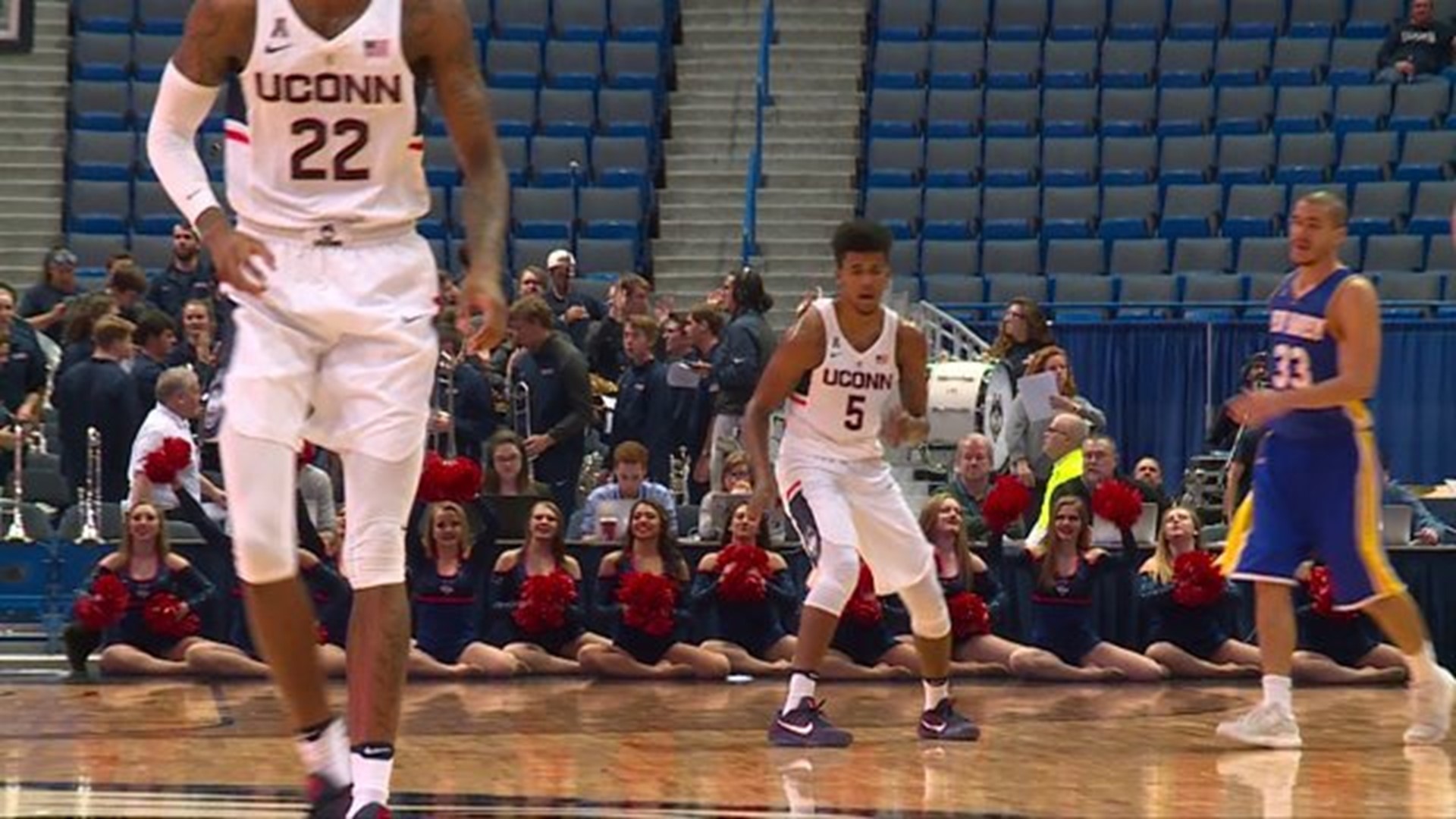
In 2026, the presence of a 7'9" (2.36 m) player on the basketball court represents a historic shift in the sport’s physical limits. Primarily centered on Canadian prospect Olivier Rioux, this phenomenon combines unprecedented verticality with modern training, challenging traditional defensive schemes and forcing a re-evaluation of how extreme height is utilized in elite competition.
The Biomechanical Reality of a 7'9" Frame
The sheer physics of a 7'9" basketball player creates a unique set of advantages and challenges that redefine the geometry of the court. At this height, a player like Olivier Rioux possesses a standing reach that often exceeds 9'6", meaning they can practically touch the rim without leaving the floor. This "rim-level" presence changes the fundamental math of shot-blocking and rebounding.
From a defensive perspective, the "gravity" of a 7'9" player is immense. Opposing guards who typically rely on floaters or high-arcing layups find those windows closed because the defender’s wingspan—often exceeding 8 feet—covers a massive volume of the paint. This forces offenses to become perimeter-centric, as the risk of a blocked shot or a distorted field goal attempt in the paint becomes statistically prohibitive.
However, the biomechanical cost of this height is significant. A 7'9" frame puts immense stress on the navicular bones in the feet and the lower lumbar region of the spine. In 2026, sports science departments at institutions like the University of Florida have pioneered "load-management" protocols specifically for "extreme-height athletes." These programs focus on eccentric strength training to dampen the impact of landing and proprioceptive drills to improve the player’s awareness of their center of mass, which is much higher than that of a standard 7-footer.
The Journey of Olivier Rioux: From Montreal to the Global Stage
Olivier Rioux has been a subject of fascination since he was first recognized by Guinness World Records as the world's tallest teenager. Born in Terrebonne, Quebec, his growth trajectory has been consistently documented by the basketball world. By 2026, Rioux has moved through the prestigious IMG Academy and into the collegiate system, specifically playing for the Florida Gators.
His development has been a case study in patient coaching. Unlike previous giants of the game who were often relegated to "statue-like" roles under the basket, Rioux’s training has emphasized modern mobility. His time at the University of Florida has focused on developing a "functional" 7'9" player—one who can navigate high-ball screens and recover to the rim.
The cultural impact of Rioux in 2026 cannot be overstated. He represents a new archetype: the "Stretch Giant." While his primary dominance occurs within five feet of the basket, his ability to set screens that are essentially "moving walls" creates massive gaps for shooters. His passing ability from the high post, facilitated by his high vantage point, allows him to see over every defensive rotation, turning him into a unique offensive hub.
Tactical Challenges: Defending the Modern Giant
Defending a 7'9" player requires a total departure from standard "post-up" defense. In the current 2026 basketball landscape, teams have developed "front-and-back" schemes to neutralize such height. Because a player of this stature can catch any entry pass thrown near the rim, defenders often "front" the post to deny the pass entirely, while a weak-side defender provides "help" behind to prevent the lob.
The offensive response to these tactics has been the "High-Low" game. By placing the 7'9" player at the dunker spot or the low block, offenses force the defense to commit multiple players to a single entity. This creates a "man-advantage" on the perimeter. If the defense stays home on shooters, the 7'9" player scores via simple drop-steps or put-backs. If the defense collapses, the giant becomes a distributor.
The biggest tactical hurdle for a 7'9" player remains the "Pace and Space" era. On the defensive end, they are often targeted in pick-and-roll situations. Guards with elite change-of-direction speed attempt to pull the giant away from the basket and "dance" on the perimeter. The survival of a 7'9" player on the court depends on their ability to execute "drop coverage" effectively, using their length to contest shots while dropping back to prevent the drive, rather than trying to switch onto smaller, faster players.
Comparative Analysis of Historical and Current Basketball Giants
To understand the dominance of a 7'9" player in 2026, one must compare them to the historical titans of the sport. Height alone does not guarantee success; it is the combination of height, weight, and mobility that determines "court gravity."
| Player | Height | Primary Era | Key Impact Metric | Professional Status (2026) |
|---|---|---|---|---|
| Olivier Rioux | 7'9" | 2024–2026+ | +4.5 Defensive Rating Impact | Collegiate / NBA Prospect |
| Sun Mingming | 7'9" | 2005–2014 | Post-Scoring Specialist | Retired |
| Gheorghe Mureșan | 7'7" | 1990s | League Leader in FG% | Retired |
| Victor Wembanyama | 7'4" | 2023–Current | Perimeter Agility / DPOY | NBA Superstar |
| Yao Ming | 7'6" | 2000s | Hall of Fame Post Play | Retired (Hall of Fame) |
While Sun Mingming matched Rioux’s height, he played in an era with less emphasis on lateral mobility and fast-break transitions. Rioux, in 2026, benefits from specialized footwear and orthopedic support that Sun Mingming did not have access to, allowing for a higher "up-time" on the court. Meanwhile, comparison to Victor Wembanyama highlights the difference between a "Wing-Giant" (Wembanyama) and a "True-Giant" (Rioux). Rioux does not possess Wembanyama’s guard-like handles, but he offers a level of interior presence that even Wembanyama cannot match due to the sheer mass and standing reach of a 7'9" frame.
Medical and Longevity Considerations for Extreme Height
The history of basketball players over 7'4" is unfortunately marked by shortened careers due to physiological limitations. The human heart must work significantly harder to pump blood to the extremities of a 7'9" individual, and the skeletal system faces the "square-cube law," which states that as an object grows in size, its volume (and weight) grows faster than its surface area (bone strength).
In 2026, medical teams use advanced DXA scans to monitor bone density and "gait analysis" software to detect early signs of stress-response in the metatarsals. For a player like Rioux, maintaining a weight that is high enough to hold position in the paint but low enough to protect the joints is a delicate balancing act. Most 7'9" players are kept between 280 and 310 pounds; exceeding this can lead to catastrophic foot injuries, while being too light makes them susceptible to being "pushed" by shorter, stronger defenders with lower centers of gravity.
Furthermore, sleep and recovery are specialized for these athletes. Custom-built beds, cryotherapy chambers designed for larger volumes, and specialized nutrition plans that account for the massive caloric burn of such a large body are standard in 2026. These interventions aim to extend the career of the 7'9" player beyond the traditional "5-year window" that has plagued previous giants.
Training the 7'9" Athlete: The Specialized Approach
Training a 7'9" player in 2026 involves a "top-down" philosophy. Coaches prioritize balance and core stability over raw lifting power. Because their limbs are so long, the "lever arms" are massive, making traditional bench presses or squats less effective and potentially more dangerous than for a standard athlete.
- Isometric Stability: Holding positions to strengthen the connective tissue around the knees and ankles.
- Soft Touch Development: Because they are so close to the rim, "shooting" is often more about "placement." Drills involve thousands of repetitions of finger-rolls and "tip-ins" to capitalize on offensive rebounds.
- Low-Center Defensive Stance: Training the player to keep their hips low despite their height, which is essential for preventing smaller players from "getting under" them.
- Oxygen Efficiency: Cardiovascular training often involves low-impact swimming or specialized cycling to build endurance without the pounding of running on hardwood.
FAQ
Who is currently the tallest basketball player in 2026?
Olivier Rioux remains the most prominent 7'9" (2.36 m) player in the basketball world. While other individuals globally may claim similar heights, Rioux is the most high-profile athlete at this stature, currently competing in the American collegiate system with the Florida Gators and attracting significant interest from professional scouts worldwide.
Can a 7'9" player play in the NBA?
Yes, but it depends on their mobility. The NBA has evolved into a league that prizes speed and perimeter defense. A 7'9" player must be able to "run the floor" and avoid being a liability in defensive switches. In 2026, scouts view extreme height as a "specialist tool"—a player who can dominate the paint for 15-20 minutes a game rather than playing a full 40 minutes.
What are the main health risks for a 7'9" player?
The primary risks involve the lower extremities, specifically stress fractures in the feet (navicular bone) and knee degradation. There are also cardiovascular considerations, as the heart must work harder to circulate blood across such a large frame. Modern sports science in 2026 uses wearable tech to monitor heart rate and "mechanical load" in real-time to prevent overexertion.
How does height affect shooting mechanics for a 7'9" player?
For a 7'9" player, the basket is physically much "closer," which can actually make long-range shooting more difficult due to the steep angle of the shot. Most players of this height focus on "hook shots" and "floaters" because their release point is so high that it is virtually unblockable. Their free-throw shooting is often a point of emphasis, as teams frequently use "Hack-a-Shaq" tactics against them.
What is the "standing reach" of a 7'9" basketball player?
A 7'9" player typically has a standing reach between 9'6" and 9'10". Since the rim is exactly 10 feet high, these players only need to rise an inch or two on their toes to execute a dunk. This makes them elite "dunker spot" threats and offensive rebounders, as they do not require the "load-up" time that shorter players need to jump.
Future Outlook: The Evolutionary Path of Basketball Giants
As we look toward the remainder of the 2020s, the "dominance" of the 7'9" player will likely be measured by their adaptability rather than just their height. The era of the "unskilled giant" is over. For Olivier Rioux and those who may follow, the path to sustained success lies in the integration of extreme height with high-level basketball IQ and modern athletic conditioning.
The next step for these athletes is the transition to the professional ranks, where the 24-second shot clock and the defensive three-second rule create a more demanding environment. If a 7'9" player can maintain health and develop a reliable mid-range jump shot, they could become the most "un-guardable" asset in the history of the sport. The focus remains on "functional dominance"—ensuring that their presence on the court is a net positive for team speed and spacing, rather than just a spectacle of size.