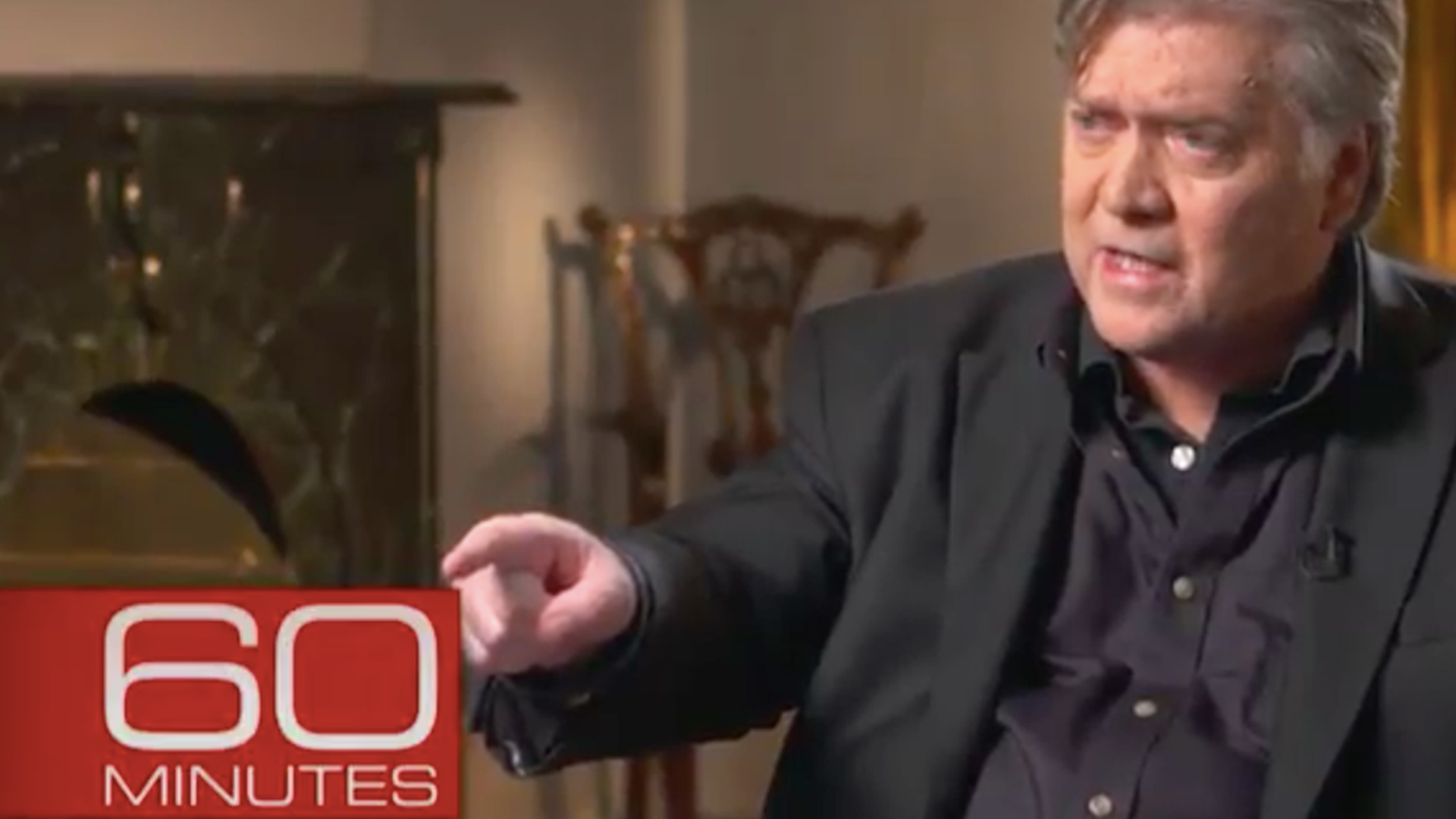
Steve Bannon's landmark 60 Minutes interview with Charlie Rose, broadcast on CBS on September 10, 2017, remains one of the most defining primary source documents of late-2010s American politics. Recorded shortly after Bannon’s departure as White House Chief Strategist, the interview articulated the core tenets of Trumpian economic nationalism, mounted direct attacks against the Republican establishment, and offered rare internal perspective on critical White House decisions.
Historical Context: Steve Bannon’s Departure from the White House
The September 2017 interview took place during a volatile transition period in executive politics. Steve Bannon had served as the Chief Executive Officer of Donald Trump’s 2016 presidential campaign before assuming the role of Assistant to the President and Senior Counselor/Chief Strategist in January 2017. During his seven-month tenure inside the West Wing, Bannon was widely seen as the primary ideological architect of the administration's populist policy platform, driving executive orders on trade, immigration, and regulatory rollback.
Following intense public scrutiny around cabinet dynamics and national security council structure, Bannon officially vacated his White House post on August 18, 2017. Within hours of his resignation, he rejoined Breitbart News as Executive Chairman, announcing his intent to fight what he categorized as an establishment Republican attempt to dilute the president's agenda.
CBS News secured the first extensive television interview with Bannon following his departure. Conducted by veteran journalist Charlie Rose, the interview was conducted in Washington, D.C., at Bannon's headquarters, colloquially known as the "Breitbart Embassy," as well as during televised broadcast segments. The interview served as Bannon's public manifesto, establishing his position outside the formal apparatus of government while maintaining aggressive media and political influence.
Key Quotes and Verbatim Statements from the 60 Minutes Interview
The 60 Minutes exchange produced several direct statements that reshaped political discourse around executive decision-making, intra-party warfare, and institutional policy. The core quotes from the interview fall into four primary categories: executive branch decisions, legislative leadership, religious institutions, and economic nationalism.
On the Firing of FBI Director James Comey
One of the most widely cited moments of the broadcast involved Bannon’s candid assessment of President Trump’s decision to dismiss FBI Director James Comey in May 2017.
Charlie Rose: "Somebody in the White House said firing James Comey was the biggest mistake in modern political history."
Steve Bannon: "If somebody said that, it might have been me. It might have been me. I think it's likely the biggest mistake in modern political history."
Bannon elaborated that firing Comey created the legal and administrative environment that led directly to the appointment of Special Counsel Robert Mueller by the Department of Justice. He argued that the institutional presidency was better served by allowing Comey to remain in place rather than triggering an independent special counsel investigation.
On the Republican Establishment and Congressional Leadership
Bannon directed severe criticism toward Senate Majority Leader Mitch McConnell and Speaker of the House Paul Ryan, accusing them of actively undermining the populist agenda that won the 2016 election.
Steve Bannon: "The Republican establishment is trying to nullify the 2016 election. Have no doubt about it... They do not want Donald Trump's populist, economic nationalist agenda to be implemented."
When asked by Rose whether congressional leaders were supporting the administration, Bannon stated:
Steve Bannon: "Mitch McConnell and Paul Ryan do not want Donald Trump's agenda implemented. It's obvious... They're not going to aid you unless they're put on notice. They're going to be put on notice."
On the Catholic Church and Immigration Policy
Addressing the opposition of Catholic leaders to administration policies on undocumented immigrants and the Deferred Action for Childhood Arrivals (DACA) program, Bannon made controversial remarks regarding the economic motivations of church leadership.
Steve Bannon: "The Catholic Church has been terrible in this... The bishops have been terrible. Do you know why? Because they need illegal aliens to fill the churches. It's obvious... They have an economic interest in unlimited immigration."
When Rose challenged Bannon on Cardinal Timothy Dolan's theological rationale for supporting immigrants, Bannon responded:
Steve Bannon: "I respect the Pope, and I respect the bishops and the cardinals on doctrine. This is not about doctrine. This is about the sovereignty of a nation. And in that regard, they're just another political interest group."
On Economic Nationalism vs. Ethno-Nationalism
Throughout the interview, Rose questioned Bannon regarding the optics of his movement and allegations that populist nationalism catered to racial grievances, particularly following the Charlottesville rally in August 2017.
Steve Bannon: "Economic nationalism is what's going to unite this country. It doesn't matter your race, your color, your creed, your sexual orientation. It matters whether you're an American citizen. It favors American workers over foreign labor."
On the topic of white supremacists and far-right extremists, Bannon stated:
Steve Bannon: "There’s no place in the movement for neo-Nazis, white nationalists, or Klansmen. They're a collection of clowns and losers... The media gives them a platform to try and tie them to Donald Trump and our movement."
Thematic Analysis of Bannon’s Populist Philosophy
The text of the 60 Minutes transcript reflects a coherent, strategic framework that Bannon termed "economic nationalism." Understanding this framework requires dissecting the key ideological pillars outlined during the broadcast.
- Bannon's Populist Framework
- Economic Sovereignty: Protect native manufacturing & restrict labor
- Governance War: Reject GOP/Dem elite consensus; primary incumbents
- Deconstruction: Reduce administrative state power & trade agreements
1. Rejection of the Post-Cold War Global Consensus
Bannon argued that both major American political parties had spent three decades enforcing a globalist consensus focused on free trade, open borders, and military interventions abroad. He asserted that this consensus devastated working-class manufacturing communities in the American Rust Belt while enriching international elites and administrative bureaucracies.
2. The Concept of the "Administrative State"
A recurring theme in Bannon's rhetoric—and explicit in the interview—was the necessity to "deconstruct the administrative state." Bannon posited that regulatory agencies, un-elected bureaucrats, and entrenched intelligence officials exercised power without democratic accountability. In his view, President Trump’s election represented a mandate to strip authority from these institutions and return it to elected leadership.
3. Weaponized Media Operations
In discussing his return to Breitbart News, Bannon emphasized the role of media as an offensive political tool. He described traditional news organizations as the "opposition party," arguing that conservative media had to operate with explicit political intent rather than attempting to emulate traditional journalistic objectivity.
Critical Confrontations: Rose vs. Bannon on Key Controversies
The interview was structured around active pushback from Charlie Rose, who systematically challenged Bannon's claims on constitutional norms, morality, and political reality.
| Issue Topic | Steve Bannon's Position | Charlie Rose's Counter-Argument | Political Significance |
|---|---|---|---|
| Comey Firing | Firing Comey was an administrative error that enabled the Mueller investigation. | The President had the constitutional authority, but the timing raised obstruction questions. | Highlighted internal White House division over legal strategy. |
| GOP Leadership | McConnell and Ryan were actively blocking the populist agenda. | Legislation requires 60 Senate votes; leadership must govern realistically. | Declared primary warfare against incumbent Republican senators. |
| Catholic Hierarchy | Catholic leaders support immigration primarily for church attendance and revenue. | Church support for immigrants is rooted in longstanding biblical doctrine and human dignity. | Sparked public condemnation from Catholic bishops and theologians. |
| Charlottesville Fallout | President Trump was right to condemn violence on all sides; media weaponized the event. | Moral clarity required immediate, unambiguous condemnation of white supremacists. | Exposed ongoing debate over presidential moral leadership. |
| China & Trade | The U.S. is in an "economic war" with China that requires aggressive tariffs. | Unilateral trade tariffs risk global trade wars and consumer price increases. | Foreshadowed 2018–2020 trade enforcement policies and tariffs. |
Long-Term Political Fallout and Media Legacy
The publication and broadcast of the interview triggered immediate ripples across Washington political institutions and media organizations:
- Escalation of GOP Primary Wars: Bannon used the platform to announce a war on the Republican establishment ahead of the 2018 midterm elections. He supported primary challengers against incumbent Republican senators, such as Roy Moore in Alabama, which severely strained his relationship with Senate leadership.
- Rebuttal from Religious Organizations: Cardinal Timothy Dolan and the U.S. Conference of Catholic Bishops issued formal responses repudiating Bannon’s characterization of church motives on immigration, reaffirming that immigration support stems from Catholic social teaching.
- Legal and Investigatory References: The transcript was cited by political analysts and legal commentators during the Mueller investigation as evidence of internal White House deliberations concerning the firing of James Comey and the handling of the Russia inquiry.
- Broadcast Historical Context: The interview was one of Charlie Rose’s last major political sit-downs for CBS News prior to his departure from the network in November 2017.
How to Access Official Transcripts and Archival Media
Researchers, historians, and students of political communication seeking the complete verbatim transcript or original video recordings can consult official secondary and primary repositories:
- CBS News Archival Databases: CBS News maintains transcript archives of major broadcast segments from 60 Minutes. Written excerpts and featured video clips remain available on the official CBS News Website.
- Vanderbilt Television News Archive: The Vanderbilt Television News Archive holds complete broadcast tapes of national network evening news and newsmagazines, including the September 10, 2017 episode of 60 Minutes.
- Internet Archive (TV News Archive): Closed-captioning transcripts and searchable audio-video clips for the broadcast are indexed on the Internet Archive’s Television News Archive under CBS station broadcasts for September 10, 2017.
- LexisNexis & Academic Databases: Academic institutions offering access to LexisNexis, ProQuest, or NewsBank can access the full broadcast text transcript filed under CBS News releases for September 2017.
Frequently Asked Questions
When did Steve Bannon's 60 Minutes interview air, and who conducted it?
The interview was broadcast on CBS on Sunday, September 10, 2017. It was conducted by veteran journalist Charlie Rose at Steve Bannon’s Washington, D.C. residence and studio locations shortly after Bannon left his White House post.
What did Steve Bannon say about James Comey's firing during the interview?
Bannon stated that President Trump’s decision to fire FBI Director James Comey in May 2017 was likely "the biggest mistake in modern political history." He argued that the firing directly facilitated the appointment of Special Counsel Robert Mueller, bringing unnecessary legal pressure onto the executive branch.
Why did Steve Bannon criticize the Catholic Church in the 60 Minutes segment?
Bannon claimed that U.S. Catholic bishops supported open immigration policies out of self-interest to preserve church attendance numbers and institutional revenue. His comments drew immediate, sharp pushback from Catholic leaders who noted that immigrant care is rooted in core Christian theology.
What was Steve Bannon's main argument regarding Mitch McConnell and Paul Ryan?
Bannon accused Senate Majority Leader Mitch McConnell and Speaker of the House Paul Ryan of attempting to "nullify" the 2016 election result. He claimed the Republican leadership actively blocked President Trump's economic nationalist agenda, prompting Bannon to declare political primary challenges against establishment Republicans.
Where can I find the official transcript and video recording today?
Full text transcript excerpts and video segments are archived by CBS News. Comprehensive academic transcripts and video files can be accessed through the Vanderbilt Television News Archive, the Internet Archive TV News collection, or university library databases such as LexisNexis.
Navigating Primary Sources in Modern Political Research
When analyzing political media transcripts such as the 60 Minutes Steve Bannon interview, researchers should apply standard primary source verification protocols. Transcripts generated from television broadcasts often omit vocal inflections, pauses, or cross-talk, making it essential to cross-reference written transcripts with original audio or video recordings whenever precision is required.
To conduct thorough primary source research on executive policy and political history:
- Verify Verbatim Accuracy: Compare broadcast transcripts against official database feeds (such as LexisNexis or network records) to ensure quotes are not truncated out of context.
- Examine Surrounding Timeline Events: Contextualize statements with contemporary reporting from August–September 2017, including White House staff reshuffles, congressional legislative calendars, and active Department of Justice inquiries.
- Evaluate Rhetorical Frameworks: Distinguish between personal political posturing, formal policy announcements, and strategic media positioning when citing political interviews in academic or analytical writing.