Prospective nurses in Ohio often look for accelerated practical nursing programs to enter the workforce as quickly as possible. While traditional Licensed Practical Nurse (LPN) programs typically require 10 to 12 months of full-time study, 6-month accelerated pathways exist primarily as hybrid bridge options for students with prior healthcare experience, such as State Tested Nursing Assistants (STNAs) or military corpsmen. Fully online LPN programs are not available because the Ohio Board of Nursing mandates hands-on clinical training, but hybrid programs allow students to complete didactic coursework online while attending required in-person clinical rotations and skills labs.
Understanding the Reality of 6-Month Online LPN Programs in Ohio
Searching for a 6-month online LPN program in Ohio requires distinguishing marketing claims from state educational requirements. Standard pre-licensure practical nursing programs accredited by the state are structured over two to three semesters. Achieving an LPN credential in six months is an aggressive timeline reserved almost exclusively for specialized fast-track or advanced-standing cohorts.
To complete a nursing curriculum in six months, institutions compress intense coursework into short terms. Students in these programs must handle heavy academic workloads without sacrificing comprehension, as every graduate must pass the National Council Licensure Examination for Practical Nurses (NCLEX-PN).
Furthermore, prospective students should be cautious of institutions advertising "100% online" LPN diplomas. The state of Ohio does not grant nursing licenses to graduates of purely online programs that lack physical clinical verification. Hybrid models resolve this requirement by moving lectures, quizzes, and discussions to learning management systems like Canvas or Blackboard, while physical attendance remains obligatory for laboratory simulations and clinical shifts at local healthcare facilities.
For individuals entering nursing without previous healthcare training or academic credits, standard full-time accelerated options usually range between 8 and 12 months. Candidates holding relevant certifications (such as certified medical assistants, STNAs, or emergency medical technicians) are the primary candidates eligible for true 6-month bridge pathways due to transferable credit hours and recognized prior learning.
Ohio Board of Nursing Mandates and Hybrid Learning Structure
The Ohio Board of Nursing (OBN) establishes strict standards for practical nursing education across the state. These rules ensure that all graduating nurses possess the clinical competence, safety knowledge, and practical skills necessary to deliver direct patient care in hospitals, long-term care facilities, and outpatient clinics.
Clinical and Laboratory Requirements
OBN regulations require practical nursing education programs to incorporate direct patient care clinical experiences alongside classroom instruction. These clinical hours cannot be satisfied purely through virtual simulations. In a typical hybrid LPN curriculum in Ohio:
Didactic Learning (Online): Anatomy and physiology, medical terminology, pharmacology fundamentals, and general nursing theory are delivered asynchronously or via live virtual lectures.
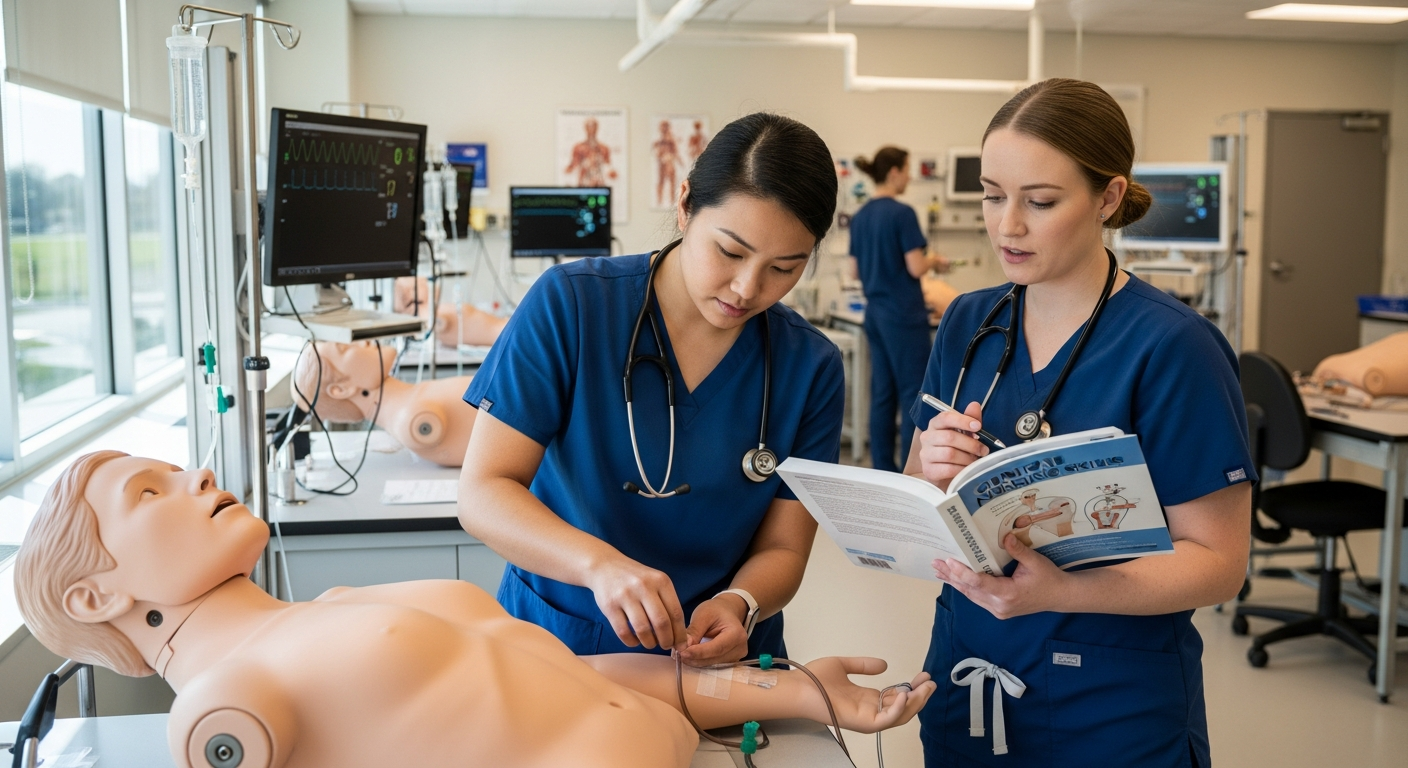
Skills Labs (In-Person): Students attend physical campus labs to master essential nursing skills, including IV insertion, wound care, catheterization, medication administration, and vital signs assessment.
Clinical Rotations (In-Person): Students complete supervised clinical hours in healthcare settings such as nursing homes, rehabilitation centers, and community hospitals throughout Ohio.
Hybrid LPN Education Structure
- Online Component
- Anatomy & Phys
- Pharmacology
- Nursing Theory
- In-Person Duties
- Skills Labs
- Patient Care
- Clinical Hours
- Online Component
Licensure Eligibility and Background Checks
Graduating from an OBN-approved program is mandatory to qualify for the NCLEX-PN examination. Additionally, state law requires all LPN candidates to undergo background checks.
Key Regulatory Point: Before receiving a nursing license in Ohio, applicants must submit fingerprints for Civilian Identification and Analysis (BCI) and Federal Bureau of Investigation (FBI) criminal records checks. Certain felony convictions or specific misdemeanor offenses can disqualify an applicant from receiving an LPN license, regardless of academic completion.
Comparison of Accelerated LPN Program Pathways in Ohio
When selecting a fast-track practical nursing program, understanding the structural differences between pathways helps align your personal schedule, budget, and prior education with the right school.
| Program Format | Typical Duration | Online Didactic Component | Required In-Person Hours | Ideal Candidate Profile | Prerequisites Needed |
|---|---|---|---|---|---|
| 6-Month Advanced Bridge | 6 Months (2 Terms) | High (70–80% of lectures online) | Intensive clinicals & weekend skills labs | Active STNAs, Military Medics, or Medical Assistants | STNA certification, Anatomy & Physiology credit, CPR card |
| 8–9 Month Fast-Track Hybrid | 8 to 9 Months | Moderate (50–60% of lectures online) | Weekday/evening labs & weekly clinical shifts | Full-time students seeking rapid entry without prior healthcare background | High school diploma/GED, TEAS or HESI A2 exam, CPR card |
| 12-Month Standard Hybrid | 12 Months (3 Semesters) | Moderate (40–50% online coursework) | Standard weekly labs and scheduled clinical rotations | Working adults balancing job responsibilities or childcare | High school diploma/GED, placement testing, prerequisite courses |
| Traditional On-Campus LPN | 12 to 15 Months | Low (primarily classroom lectures) | Regular campus attendance, lab, and clinical shifts | Learners who thrive in structured, face-to-face environments | High school diploma/GED, placement testing |
Eligibility Prerequisites and Admission Requirements
Gaining admission to an accelerated LPN program in Ohio requires planning. Because fast-track programs cover material at an elevated pace, admissions departments enforce rigorous entry criteria to ensure students can keep up with the coursework.
Core Admissions Criteria
Most vocational schools, community colleges, and career centers in Ohio mandate the following entry prerequisites:
- Educational Credentials: A high school diploma or recognized equivalent (GED).
- Entrance Examination: Qualifying scores on standardized pre-nursing entrance exams, such as the Assessment Technologies Institute (ATI) TEAS (Test of Essential Academic Skills) or the HESI A2 (Health Education Systems, Inc.).
- Basic Life Support Certification: Current Basic Life Support (BLS) for Healthcare Providers certification through the American Heart Association.
- Health Clearances: Proof of required immunizations (including Hepatitis B, MMR, Varicella, Tdap, annual Influenza, and Tuberculosis screening) along with a physical exam clearing the student for physical lab and clinical duties.
- Background Checks: Clean BCI and FBI background checks completed prior to enrollment.
Advanced Placement for Healthcare Workers
For a true 6-month pathway, institutions often evaluate prior experiential learning. Students who hold an active Ohio State Tested Nursing Assistant (STNA) credential or have finished college-level Anatomy & Physiology with a grade of "C" or higher may receive transfer credit. This waives introductory modules and allows students to join an accelerated advanced-standing cohort.
Accelerated Curriculum Breakdown: Coursework and Clinical Hours
An accelerated practical nursing curriculum moves quickly from basic concepts to advanced clinical management. The credit hours and clinical expectations are condensed into fewer weeks, requiring dedicated study time outside of lecture hours.
- Months 1-2: Foundations of Nursing & Pharmacology Basics
- Months 3-4: Medical-Surgical Nursing & Intermediate Clinicals
- Months 5-6: Specialty Care (Maternal/Pediatric), Advanced Clinicals & NCLEX-PN Prep
Phase 1: Foundations and Pharmacology (Months 1–2)
The initial phase focuses on core principles. Online lectures cover basic human anatomy, physiological systems, medical terms, and fundamental nursing theory. Simultaneously, pharmacology modules teach dose calculation, drug classifications, safe medication administration procedures, and practical side-effect monitoring. During this phase, students begin attending physical skills labs to practice patient transfer techniques, sterile glove handling, vital sign collection, and hygiene administration.
Phase 2: Medical-Surgical Nursing (Months 3–4)
The middle phase transitions into adult medical-surgical care. Online coursework explores cardiovascular, respiratory, gastrointestinal, and endocrine disorders. Students learn how to prioritize patient care, identify complications, and execute doctor-ordered care plans. In-person requirements scale up significantly, with students spending 12 to 24 hours per week at clinical sites under the supervision of a Licensed Practical Nurse or Registered Nurse clinical instructor.
Phase 3: Specialty Care and NCLEX Prep (Months 5–6)
The final phase covers mental health nursing, maternal-newborn care, and pediatrics. Online modules focus on leadership within practical nursing, legal delegation limits, nursing ethics, and Ohio nurse practice acts. Students complete their final clinical clock hours and take part in comprehensive NCLEX-PN preparation courses, using computer-adaptive practice exams to ensure readiness for national licensure testing.
Financial Considerations and Program Accreditation
Fast-track practical nursing programs vary widely in cost depending on the institutional structure. Evaluating tuition alongside accreditation ensures your financial investment yields a recognized credential.
Institutional Cost Breakdown
- Career Centers and Technical Schools: Public career centers in Ohio (such as adult education departments within vocational districts) frequently offer lower tuition rates, ranging from $8,000 to $14,000 for total program completion.
- Private Vocational Institutions: Private for-profit nursing colleges often charge higher tuition, ranging between $15,000 and $25,000. These programs may offer more frequent start dates per year, which appeals to students looking to enroll immediately.
- Community Colleges: Public community colleges typically charge per credit hour, averaging between $6,000 and $11,000 for local residents, though their timelines are more structured around traditional academic calendars.
Financial Aid Options
Students enrolled in accredited institutions may access federal financial assistance. To qualify for federal aid, ensure the program holds institutional accreditation recognized by the U.S. Department of Education.
- FAFSA Eligibility: Grants (such as the Federal Pell Grant) and federal student loans can be applied toward tuition at approved institutions.
- Workforce Development Grants: Ohio residents may qualify for state-funded workforce training funds, such as the Opportunities for Ohioans with Disabilities (OOD) programs or county-level Workforce Innovation and Opportunity Act (WIOA) grants designed for high-demand careers.
- Employer Tuition Assistance: Local healthcare systems, particularly nursing homes and assisted living facilities, sometimes offer tuition reimbursement or sponsorship programs for employees who agree to work for the facility for a specified period after earning their LPN.
Verification of Accreditation
Prior to enrolling or paying a deposit, candidates should verify two key operational statuses:
- Ohio Board of Nursing Approval: Confirm that the program maintains full or conditional approval on the official OBN Approved Nursing Education Programs List.
- Programmatic Accreditation: National accreditation from bodies such as the Accreditation Commission for Education in Nursing (ACEN) or the National League for Nursing Commission for Nursing Education Accreditation (CNEA) adds value if you plan to transition later from LPN to Registered Nurse (RN) through an LPN-to-BSN bridge program.
Step-by-Step Action Plan to Fast-Track Your Practical Nursing Career
To navigate the admissions process and start your training efficiently, follow this practical checklist:
- Verify Your Educational Background: Gather official high school transcripts or GED scores. If you hold an STNA license or prior college credits, request official transcripts immediately for evaluation.
- Research Approved Ohio Programs: Filter options using the Ohio Board of Nursing official portal to ensure the school is fully authorized to operate within the state.
- Register and Prepare for Entrance Exams: Schedule your ATI TEAS or HESI A2 exam. Dedicate 3 to 4 weeks to study mathematics, science, reading comprehension, and English language usage.
- Complete Background Checks and Health Clearance: Schedule your BCI/FBI fingerprinting services and update your immunization records. Obtain your BLS for Healthcare Providers CPR card.
- Submit Financial Aid Applications: Complete the Free Application for Federal Student Aid (FAFSA) using your chosen school's federal school code. Explore local WIOA healthcare education grants.
- Establish a Study Environment: Hybrid learning requires self-discipline. Set up a quiet study space, verify your computer meets software system requirements, and clear your weekly calendar to accommodate required clinical rotation hours.
Frequently Asked Questions
Can I complete an LPN program in Ohio entirely online?
No. The Ohio Board of Nursing requires all approved practical nursing programs to include mandatory, supervised in-person clinical experience and hands-on laboratory training. Online options are offered as hybrid formats, where lectures are delivered online while clinicals and labs take place in person in Ohio.
Is a 6-month LPN program feasible for someone with no prior healthcare experience?
It is very challenging. Most true 6-month pathways are bridge programs reserved for candidates with prior healthcare education, such as active STNAs, medical assistants, or military medics. Applicants without prior experience usually enroll in fast-track programs lasting between 8 and 12 months.
How much do fast-track LPN programs cost in Ohio?
Tuition generally ranges from $6,000 to $25,000 depending on the type of school. Public technical centers and community colleges are typically the most affordable ($6,000–$14,000), while private career colleges tend to sit at the higher end of the range.
What is the difference between an STNA and an LPN in Ohio?
An STNA (State Tested Nursing Assistant) provides fundamental patient care, such as bathing, dressing, feeding, and basic mobility assistance, under supervision. An LPN is a licensed nurse who can administer medications, perform sterile wound care, insert catheters, collect specimen samples, execute care plans, and monitor patient health statuses.
Will credits from a fast-track LPN program transfer into an RN program later?
Credit transferability depends on institutional accreditation and articulation agreements. Courses completed at regionally accredited community colleges typically transfer easily into LPN-to-RN bridge programs. Credits earned at non-accredited or specialized trade schools may not transfer as easily, which could require repeating general education courses later.
Choosing the Right Fast-Track Pathway for Your Nursing Goals
Selecting the ideal LPN pathway requires balancing speed with thorough academic preparation. If you hold prior healthcare certifications like an STNA, a 6-month hybrid bridge program offers an efficient route to advance your career and earning potential. If you are entering healthcare for the first time, an 8- to 12-month hybrid program provides the time needed to build strong clinical skills and prepare thoroughly for the NCLEX-PN.
Before signing an enrollment agreement, verify that your chosen institution is on the current list of Ohio Board of Nursing approved programs, review all tuition fees, and confirm that the hybrid clinical schedule fits your daily obligations. Taking these verification steps ensures a direct, legally sound path to becoming a Licensed Practical Nurse in Ohio.