In the professional sporting landscape of 2026, the 6'5" (196 cm) athlete occupies a unique "Goldilocks zone," offering a formidable blend of elite reach, mechanical leverage, and explosive power without the mobility limitations often found in taller "giant" archetypes. This height serves as the premier physical standard for modern NBA wings, NFL quarterbacks, and world-class sprinters, balancing high-velocity coordination with structural durability.
The Biomechanics of the 196 cm Frame
The 6'5" frame is often cited by kinesiologists as the upper limit for "traditional" human agility before the laws of physics—specifically the square-cube law—begin to significantly diminish relative strength and reaction time. At 196 cm, an athlete possesses long levers (limbs) that can generate immense torque. This is particularly evident in throwing motions and sprinting strides. However, these longer levers require a higher degree of neuromuscular control to manage the "moment arm" during rapid directional changes.
Physiological data from 2026 athletic combines suggests that 6'5" athletes frequently possess an "Ape Index" (arm span relative to height) that exceeds 1.05. This means a 6'5" athlete often has the reach of someone 6'8" or taller, providing a massive advantage in sports like basketball or tennis. The primary challenge for this physique is the center of gravity; being taller makes staying low in a defensive stance more metabolically demanding, requiring elite-level core stability and posterior chain strength to prevent lower back strain.
From a performance context, the 196 cm athlete must manage a larger "kinetic chain." Every movement, from a jump shot to a swim stroke, involves more distance for neural signals to travel and more joint surface area to stabilize. In 2026, training programs for this height class focus heavily on deceleration mechanics—teaching the body how to safely absorb the force generated by such a large, fast-moving frame.
Sport-Specific Performance Context for 6'5" Athletes
Different disciplines utilize the 6'5" stature in varied ways, ranging from tactical advantages in field sports to mechanical efficiencies in individual events.
American Football: The Quarterback and Edge Prototype
In the NFL, 6'5" remains the "prototypical" height for a pocket-passing quarterback. This height provides the necessary line-of-sight to scan over offensive and defensive linemen (who average 6'3" to 6'6") without sacrificing the mobility required for the modern "scramble" meta. Athletes like Josh Allen have redefined this profile, combining 6'5" height with 240+ lbs of mass to become dual-threat weapons. On the defensive side, 6'5" edge rushers utilize their reach to engage blockers' chests first, maintaining separation and using their long strides to close the "bend" toward the quarterback.
Basketball: The Positionless Wing
In 2026, the "6'5" Guard" has evolved into the "6'5" Positionless Wing." While historically this was the height of a shooting guard (like Kobe Bryant, who was often listed between 6'5" and 6'6"), modern basketball demands these athletes be able to switch defensively from 1 through 4. Their physique allows them to contest shots against taller forwards while remaining quick enough to stay in front of smaller, 6'1" point guards. The performance context here is versatility; the 6'5" frame is large enough to rebound effectively but streamlined enough to lead a fast break.
Athletics and Sprinting: The Bolt Legacy
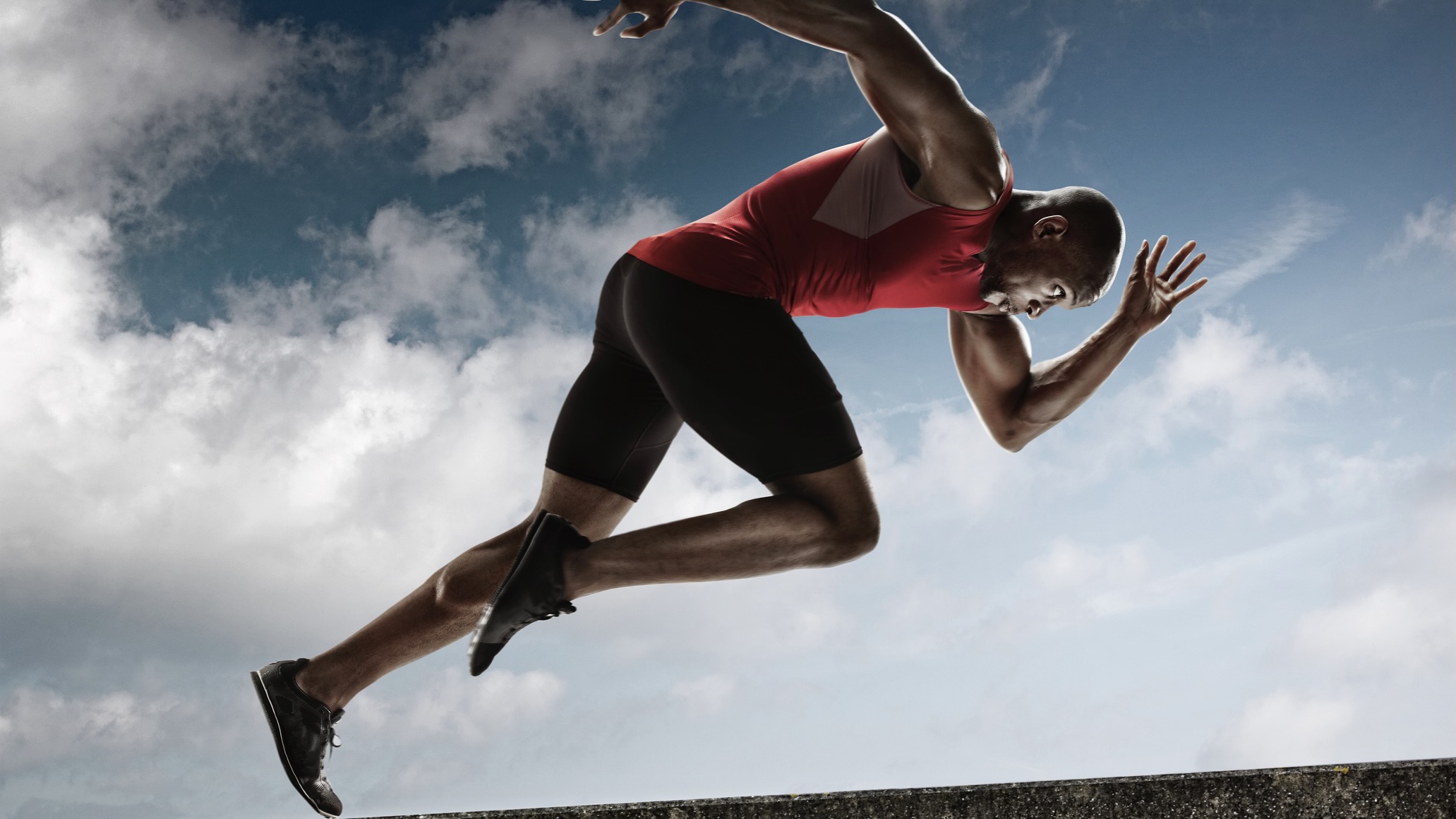
Before the era of Usain Bolt (who stood 6'5"), conventional wisdom suggested that sprinters should be shorter and more compact for better explosive starts. Bolt proved that once a 6'5" athlete reaches top-end speed, their stride length is an unbeatable advantage. A 6'5" sprinter can cover a 100m track in 40 to 42 strides, whereas a 6'0" sprinter may require 44 to 46. In 2026, track scouts actively look for this "tall-sprinter" profile, focusing on athletes who can master the technical "drive phase" despite their higher center of gravity.
Physique Traits and Morphological Variations
While height is the primary metric, the distribution of mass on a 6'5" frame dictates the athlete's ceiling. We generally see three distinct morphological profiles at this height:
- The Ecto-Mesomorph (The Speedster): Characterized by long, "dry" muscle bellies and a narrow waist. This is the profile of an elite high jumper or a wide receiver. They prioritize power-to-weight ratio over raw bulk.
- The Pure Mesomorph (The Powerhouse): This athlete carries significant muscle mass in the glutes, quads, and shoulders. Think of a CrossFit Games athlete or a Rugby Union flanker. At 6'5", this profile usually weighs between 225 and 245 lbs.
- The Endomorphic Power (The Anchor): Seen in heavyweights or offensive tackles, these athletes use their 196 cm frame to carry 300+ lbs. Their performance context is based on leverage and "heavy" hands rather than rapid displacement.
The physiological "cost" of being 6'5" is most felt in the cardiovascular system. A taller athlete's heart must work harder to pump blood to the extremities, particularly during vertical movements. Consequently, 6'5" athletes in endurance sports (like rowing) require massive lung capacities—often exceeding 6 or 7 liters—to oxygenate their large muscle mass.
Comparative Metrics: Performance Benchmarks at 6'5"
The following table outlines the typical physical benchmarks and performance advantages for elite 6'5" athletes across various disciplines as of 2026.
| Sport | Typical Weight Range | Primary Physical Advantage | Key Performance Constraint |
|---|---|---|---|
| Basketball (Guard/Wing) | 200–220 lbs | Defensive versatility & shot contest reach | Lateral quickness against 6'0" guards |
| Football (QB) | 225–240 lbs | Vision over the line & throwing leverage | Passing windows/Release speed |
| Sprinting (100m/200m) | 195–210 lbs | Massive stride length (2.5m+) | Slower "out of the blocks" acceleration |
| Tennis | 190–210 lbs | Serve trajectory and "court coverage" | Low-ball retrieval (bending at the knees) |
| Swimming (Freestyle) | 205–225 lbs | Distance per stroke (Reach) | Hydrodynamic drag (Surface area) |
| Rowing | 215–235 lbs | Longest possible oar stroke | Massive caloric and oxygen demand |
Training Considerations and Injury Risk Profiles
The 6'5" athlete faces specific orthopedic challenges. The most common "failure points" for this height are the L5-S1 vertebral discs and the patellar tendons. Because the "lever arm" of the femur is so long, the torque placed on the knee during a squat or a landing is significantly higher than that of a 5'10" athlete.
Specific Training Adaptations for 2026:
- Isometric Loading: To protect the tendons, 6'5" athletes spend more time in isometric holds (e.g., Spanish squats) to build tendon stiffness without the repetitive impact of heavy plyometrics.
- Unilateral Strength: Because a 196 cm frame can easily mask imbalances, single-leg work (Bulgarian Split Squats) is mandatory to ensure the pelvis remains stable during high-velocity movement.
- Mobility Focus: Ankle dorsiflexion is the "secret weapon" for the 6'5" athlete. Without it, they cannot get low enough to change direction effectively, leading to over-compensation in the lower back.
In professional environments, 6'5" athletes now utilize wearable biometric sensors that track "asymmetry in flight." If an athlete's 196 cm frame begins to tilt or favor one side during a jump, coaches intervene immediately to prevent the catastrophic injuries (like ACL tears) that have historically plagued taller players.
Notable Profiles: The 196 cm Standard-Bearers
Analyzing specific athlete profiles reveals how the 6'5" frame is utilized at the highest levels.
- Usain Bolt (Athletics): The quintessential 6'5" success story. His profile changed the biomechanical model of sprinting, proving that height-induced stride length can overcome the "slow start" penalty associated with long limbs.
- Josh Allen (NFL): Standing exactly 6'5", Allen represents the "Modern Titan" QB. His ability to absorb hits and throw 70+ yards is a direct result of the mechanical advantage his height provides.
- Daniil Medvedev (Tennis): Often listed near 6'6", his playstyle is a template for the 6'5" athlete: using "spidery" reach to retrieve balls and a high contact point on serves to create impossible angles.
- Jayson Tatum (NBA): Though sometimes listed at 6'8" in later years, his entry-level profile at 6'5"-6'7" showcased the elite "wing" archetype: smooth shooting mechanics that are difficult to block due to a high release point.
Strategic Recommendations for Taller Athletes
For athletes standing 6'5" who are looking to optimize their performance, the focus should shift from "getting bigger" to "getting more efficient." The natural tendency for a 196 cm individual is to bulk up, but excess weight can be the enemy of longevity at this height.
- Prioritize Relative Strength: Focus on pull-ups, dips, and single-leg squats. If you can move your 6'5" frame with the grace of a smaller athlete, you will be unstoppable in your niche.
- Master the "Hinge": Because of your long torso, learning to hinge at the hips rather than rounding the back is crucial for career longevity.
- Optimize Recovery: A 6'5" body has more soft tissue to repair. In 2026, elite athletes of this stature prioritize sleep and inflammation management (via nutrition and cold-water immersion) more than their shorter counterparts because their "mechanical wear and tear" is inherently higher.
- Footwear and Orthotics: Ensure your footwear accounts for the increased pressure a 196 cm frame puts on the arches of the feet. Proper force distribution at the ground level prevents "leaks" in your kinetic chain.
FAQ
Is 6'5" the best height for an athlete?
In many "power" and "field" sports, 6'5" is considered the ideal balance. It provides elite-level reach and leverage while still allowing for the coordination and cardiovascular efficiency that 7-footers often lack. It is "the best" for positions like NFL Quarterback or NBA Wing, but may be a disadvantage in sports requiring a low center of gravity, like Gymnastics or Wrestling (lower weight classes).
How does being 6'5" affect a person's speed?
While it can make the "start" or "acceleration" phase slower due to the effort required to move longer limbs, it significantly increases top-end speed. A 6'5" person has a longer stride, meaning they can cover the same distance in fewer steps than a shorter person, which is a major advantage in the middle and end of a race.
What is the ideal weight for a 6'5" athlete?
This depends entirely on the sport. A 6'5" sprinter or tennis player usually thrives between 195 and 210 lbs. A basketball player or football wide receiver might be 215–225 lbs, while a football quarterback or defensive end might weigh 240–260 lbs.
Are 6'5" athletes more prone to injury?
Statistically, yes, they face higher risks for joint-related issues. The "long levers" of their limbs create more torque on the knees and ankles. Additionally, taller athletes often struggle with lower back issues due to the long "moment arm" of their torso during lifting or contact.
Why are many 6'5" athletes successful in "positionless" sports?
The 6'5" frame is the "universal key." It is tall enough to compete with big men but agile enough to compete with small guards. This versatility is highly valued in the modern era of sports (2026), where coaches prefer athletes who can fill multiple roles on the field or court.