A person with a 6 2 height stands exactly 74 inches tall, which converts to approximately 187.96 centimeters in the metric system. In the year 2026, this stature remains significantly above the global average for men and is considered exceptionally tall for women, placing individuals in the upper percentiles of height distributions worldwide.
Being 6'2" (six feet, two inches) is often viewed as an "ideal" height in many Western cultures. It is tall enough to command a presence and offer advantages in various sports, yet it is not so tall that it makes navigating the modern world—designed largely for people of average height—excessively difficult. However, reaching this height comes with specific considerations regarding ergonomics, health, and lifestyle adjustments that are essential for maintaining long-term physical well-being.
Converting 6 2 Height to Metric and Imperial Units
To accurately understand a 6 2 height, one must be able to navigate between the imperial system used primarily in the United States and the metric system used by the rest of the world. Precision is important, especially in medical, tailoring, or athletic contexts.
In the imperial system, 6'2" is calculated as (6 × 12) + 2, resulting in 74 inches. To convert this to centimeters, we multiply 74 by the standard conversion factor of 2.54. This yields exactly 187.96 cm. In most casual settings, this is rounded to 188 cm. When expressed in meters, a person of this height is approximately 1.88 meters tall.
The following table provides a comparison of 6 2 height against other common heights in the "tall" category to provide perspective on where this measurement sits within the 2026 demographic landscape.
| Height (Imperial) | Height (Centimeters) | Total Inches | Status (Male - US/UK) |
|---|---|---|---|
| 6'0" | 182.88 cm | 72" | Tall |
| 6'1" | 185.42 cm | 73" | Very Tall |
| 6'2" | 187.96 cm | 74" | Top 5-6% Range |
| 6'3" | 190.50 cm | 75" | Top 2-3% Range |
| 6'4" | 193.04 cm | 76" | Exceptionally Tall |
Global Percentiles and Demographic Standing
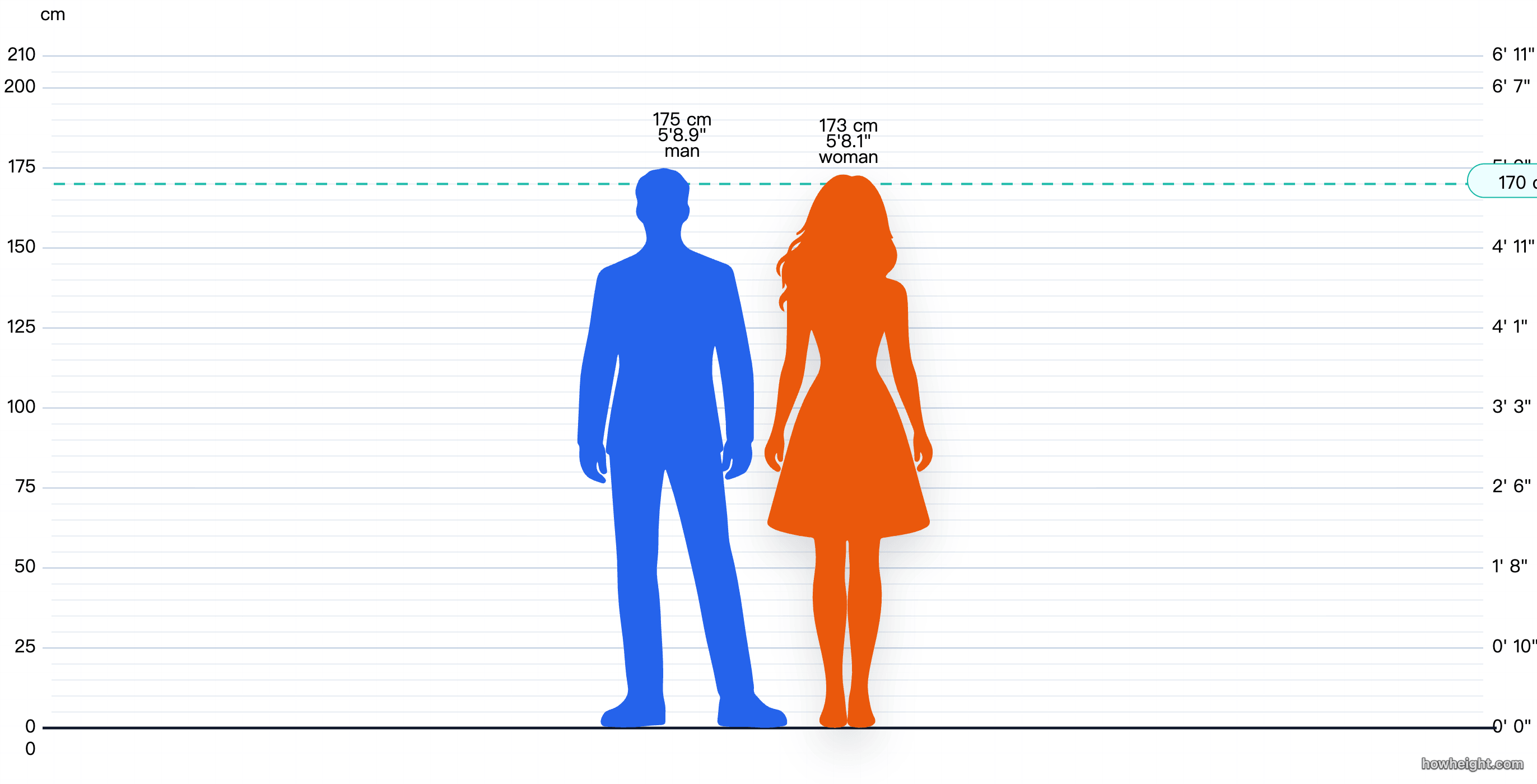
As of 2026, the average height for an adult male in the United States and United Kingdom hovers around 5'9" (175 cm). A 6 2 height puts an individual roughly five inches above that average. According to anthropometric data, a 6'2" male is in approximately the 94th to 95th percentile. This means they are taller than 95 out of 100 men they encounter.
For women, the statistical standing is even more pronounced. The average female height in these regions is approximately 5'4" (162.5 cm). A woman who is 6'2" is in the 99.9th percentile, making her taller than almost everyone in a standard population sample.
Regional variations also play a significant role. In countries like the Netherlands or Montenegro, where average male heights often exceed 6'0", a 6 2 height is considered "above average" but not necessarily "very tall." Conversely, in many parts of Southeast Asia or South America, where averages are lower, a 6'2" individual will be the tallest person in almost any room.
Practical Daily Challenges and Solutions
While many people aspire to a 6 2 height, the physical world is often built for those between 5'4" and 5'10". Navigating life at 74 inches requires specific adaptations to avoid discomfort or chronic pain.
Clothing and Footwear
Finding clothing that fits a 6'2" frame can be a hurdle. While standard "Large" or "Extra Large" sizes might fit the torso's width, they often lack the necessary length in the sleeves and hem. Individuals of this height frequently need to seek out "Tall" sizes (e.g., LT or XLT). For trousers, a 6 2 height usually requires an inseam of 34 to 36 inches, depending on whether the person has a long torso or long legs.
Travel and Transportation
Public transport and air travel pose significant ergonomic challenges. Standard economy seating on most 2026 airline fleets offers a "pitch" (the distance between seats) of 30 to 32 inches. For someone who is 6'2", their femurs alone may take up most of that space, forcing their knees against the seat in front. Booking exit row seats or premium economy is often a necessity rather than a luxury for 6'2" travelers to prevent deep vein thrombosis (DVT) or joint stiffness during long-haul flights.
Automotive Ergonomics
When purchasing a vehicle, headroom and legroom are the primary metrics. While most modern SUVs and trucks accommodate a 6 2 height easily, smaller sedans or sports cars with sunroofs can be problematic. Sunroof mechanisms often lower the interior ceiling by one to two inches, which can cause a 6'2" driver's head to touch the roof.
Health and Ergonomic Considerations
Maintaining a 6 2 height requires attention to posture and joint health. Because tall individuals often have to "hunch down" to use standard-height counters, sinks, and desks, they are at a higher risk for chronic back pain and postural kyphosis.
Desk and Workspace Setup
In a professional environment, a standard desk height of 29 inches is usually too low for a 6'2" person. Using a height-adjustable standing desk or a desk with leg extenders is highly recommended. The monitor should be raised so that the top third of the screen is at eye level, preventing the neck from craning downward.
Body Mass Index (BMI) Limitations
Traditional BMI calculations can be misleading for those with a 6 2 height. Because BMI scales weight against the square of the height, it often overestimates body fat in taller individuals who naturally have larger bone structures and more muscle mass. Medical professionals in 2026 often prefer the "New BMI" formula, which scales height to the power of 2.5, or better yet, waist-to-height ratios, to get a more accurate picture of a tall person's health.
Cardiovascular and Joint Health
Taller individuals have larger hearts that must pump blood over greater distances, particularly against gravity when returning blood from the legs. Maintaining strong calf muscles and a healthy cardiovascular routine is vital. Furthermore, the longer "lever arms" of the limbs at 6'2" can put more torque on the knees and hips, making low-impact exercises like swimming or cycling preferable to high-impact running for long-term joint preservation.
Professional and Athletic Advantages
There are undeniable social and professional advantages associated with a 6 2 height. Numerous studies in the fields of sociology and organizational behavior have noted a "height premium" in the workplace, where taller individuals are often perceived as more authoritative or leader-like.
In the world of sports, 6'2" is a highly versatile height. It is:
- Basketball: The standard height for "Point Guards" or "Shooting Guards" at the collegiate level.
- Soccer: An ideal height for goalkeepers and central defenders who need to win aerial duels.
- Rowing: Providing the long reach necessary for a powerful stroke.
- Modeling: Within the ideal range for high-fashion male models, who are typically expected to be between 6'0" and 6'3".
Frequently Asked Questions
Is 6'2" a good height for a man?
Yes, 6'2" is widely considered an ideal height for men in most cultures. It is tall enough to offer significant social and athletic advantages—such as being in the top 5% of the population—without the severe health or logistical complications (like finding specialized furniture or custom cars) that often affect men who are 6'6" or taller.
How many centimeters is a 6 2 height?
A 6 2 height is exactly 187.96 centimeters. This is calculated by converting the 74 total inches into centimeters using the multiplier of 2.54. In most medical and casual contexts in the metric system, this is rounded to 188 cm.
What is the percentile for a 6'2" woman?
A woman who is 6'2" is in the 99.9th percentile of height. This means she is taller than 999 out of 1,000 women. While this stature is prized in industries like professional basketball, volleyball, and high-fashion modeling, it often requires custom-ordered clothing and creates unique ergonomic challenges in daily life.
What is the ideal weight for someone who is 6'2"?
According to the CDC, a healthy weight range for a 6'2" adult is generally between 144 and 194 pounds based on standard BMI. However, for those with athletic builds or higher muscle mass, a weight between 195 and 215 pounds is often more realistic and healthy. Individual body composition should always be assessed by a healthcare professional.
Does 6'2" height affect life expectancy?
Statistically, some studies have suggested that very tall individuals may have a slightly lower life expectancy than those of average height due to increased risks of certain cardiovascular issues and cell division-related concerns. However, these risks are minimal at 6'2" compared to those over 6'6", and are largely offset by modern healthcare, diet, and lifestyle choices.
Optimizing Your Environment for a 6 2 Height
If you stand at a 6 2 height, the most effective next action you can take is to audit your physical environment to ensure it supports your frame rather than stressing it. Start with your primary seating: ensure your office chair has an adjustable seat depth so your thighs are fully supported. If your feet hang off the end of your bed, consider switching to a "California King" mattress, which offers 84 inches of length compared to the 80 inches of a standard King or Queen.
Small adjustments, such as raising your showerhead with an S-pipe or using a riser for your laptop, can prevent the cumulative "micro-stress" that leads to chronic pain. By proactively adapting your surroundings to your 74-inch stature, you can enjoy the social and physical benefits of being tall while mitigating the ergonomic drawbacks.