The 5th Edition (5e) rules for Dungeons & Dragons govern tabletop roleplaying through a core d20 framework: players roll a 20-sided die, add relevant ability modifiers and proficiency bonuses, and compare the total against a target number determined by the Dungeon Master (DM) or rulebook. This streamlined system balances heroic fantasy narrative with tactical play.
The Core Mechanics: The d20 System and Advantage/Disadvantage
At the heart of the 5e ruleset lies the fundamental engine known as the d20 Test. Whenever a character attempts an action with a chance of failure—whether swinging a sword, leaping across a chasm, or deciphering an ancient script—the resolution follows a three-step sequence:
- Roll a 20-sided die (d20).
- Add relevant modifiers. These typically include an Ability Modifier tied to one of the six core attributes, along with a Proficiency Bonus if the character is skilled in the task.
- Compare the result to a target number. If the total equals or exceeds the target, the attempt succeeds. If the total is lower, the attempt fails.
The target number changes based on the type of check. For physical or mental tasks against the environment, it is called a Difficulty Class (DC). For attack rolls against creatures, it is called Armor Class (AC).
Total Check = d20 Roll + Ability Modifier + Proficiency Bonus (if applicable) + Circumstantial Modifiers
Advantage and Disadvantage
Rather than relying on granular stackable numerical bonuses, 5e simplifies environmental and tactical benefits through the Advantage and Disadvantage mechanic:
- Advantage: Roll two d20s and use the higher result. Advantage represents favorable conditions, such as attacking an unseen target or researching a topic with a complete library.
- Disadvantage: Roll two d20s and use the lower result. Disadvantage represents adverse conditions, such as fighting while poisoned or climbing a muddy cliff during a torrential storm.
If multiple factors grant Advantage and Disadvantage simultaneously, they cancel each other out entirely—regardless of how many sources of each exist. You roll only a single d20. Furthermore, Advantage and Disadvantage do not stack; a character cannot roll three d20s under any standard rule scenario.
Character Abilities, Skill Checks, and Saving Throws
Every character and creature in 5e is defined by six core Ability Scores, ranging from 1 to 20 for typical mortals (and up to 30 for gods and monsters). Each score yields a calculated Ability Modifier, calculated using the formula:
$$\text{Modifier} = \lfloor \frac{\text{Score} - 10}{2} \rfloor$$
| Ability Score | Ability Modifier | Associated Primary Applications |
|---|---|---|
| Strength (STR) | -5 to +5 (standard) | Athletics, melee attack rolls with heavy weapons, carrying capacity |
| Dexterity (DEX) | -5 to +5 (standard) | Acrobatics, Sleight of Hand, Stealth, Armor Class, initiative |
| Constitution (CON) | -5 to +5 (standard) | Hit Points per level, Concentration checks, stamina |
| Intelligence (INT) | -5 to +5 (standard) | Arcana, History, Investigation, Nature, Religion |
| Wisdom (WIS) | -5 to +5 (standard) | Animal Handling, Insight, Medicine, Perception, Survival |
| Charisma (CHA) | -5 to +5 (standard) | Deception, Intimidation, Performance, Persuasion |
Ability Checks vs. Saving Throws
While both rely on the d20 system, their application depends on who initiates the action:
- Ability Checks: Proactive rolls initiated when a character actively tries to accomplish a task (e.g., picking a lock using Dexterity or recalling lore using Intelligence).
- Saving Throws: Reactive rolls forced upon a character to resist or avoid an incoming threat, spell, poison, or trap (e.g., rolling a Dexterity save to dodge a Fireball or a Constitution save against poison).
Proficiency Bonus scales uniformly by character level across all classes—starting at +2 at level 1 and progressing to +6 at level 17. Characters add their Proficiency Bonus only to skill checks and saving throws in which their specific class, background, or feats grant proficiency.
The Structure of Play: Combat Round and Action Economy
Combat in 5e is organized into rounds and turns. A single round represents approximately six seconds of in-game time, during which every participant takes one turn. Initiative order is determined at the start of combat by having all participants roll a Dexterity check.
Round Start ➔ Roll Initiative ➔ Turn Order (Highest to Lowest) ➔ Repeat until Combat Ends
The Turn Structure and Action Economy
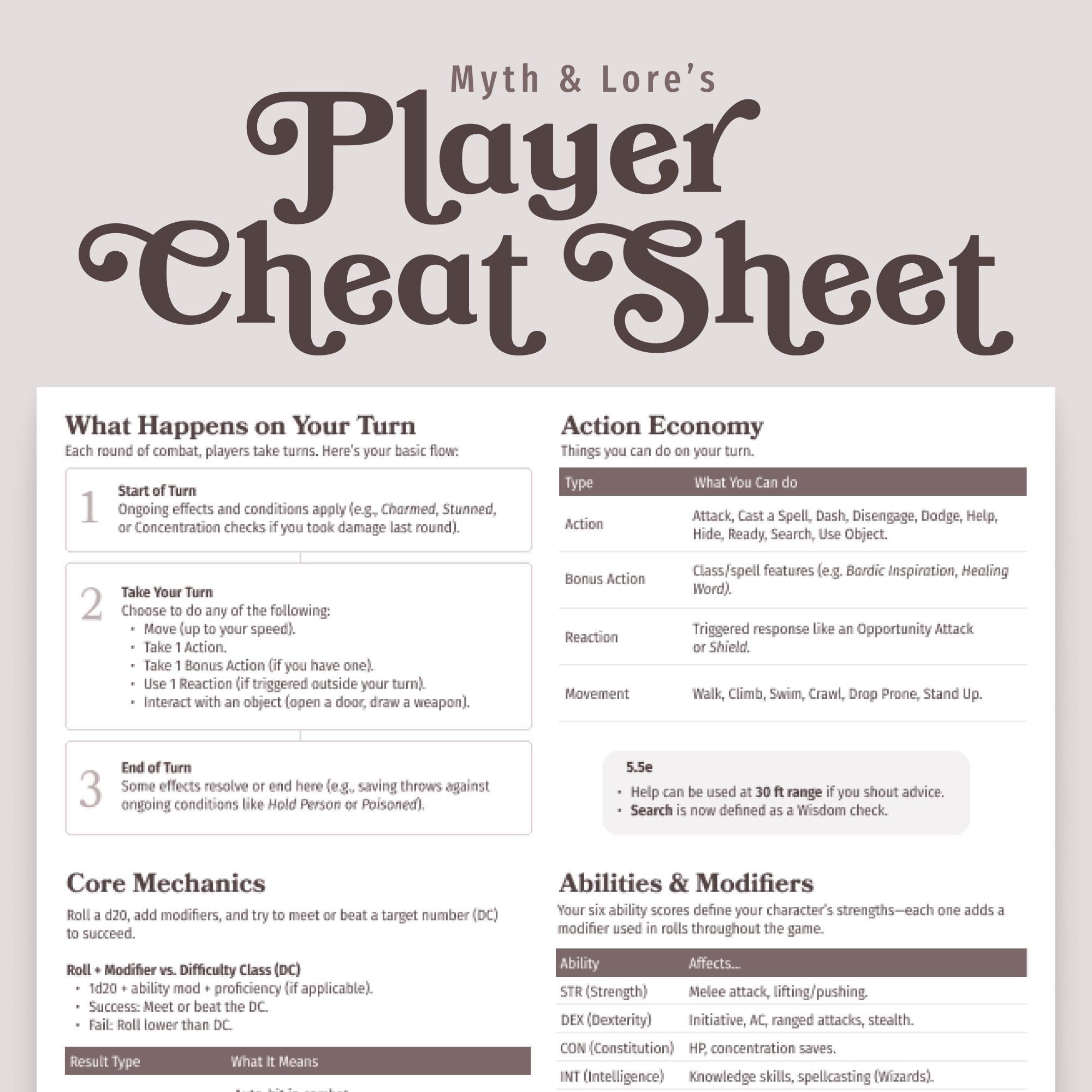
On their turn, a combatant has access to a specific budget of resources known as the Action Economy. Managing these options efficiently is critical to tactical survival:
- Movement: Characters can move up to their speed (measured in feet). Movement can be broken up before, between, and after actions. Moving through difficult terrain costs double movement (2 feet per 1 foot traveled).
- Action: The primary effort on a turn. Standard actions include:
- Attack: Perform one or more melee or ranged weapon attacks.
- Cast a Spell: Cast a spell with a casting time of 1 action.
- Dash: Double available movement speed for the current turn.
- Disengage: Prevent enemies from taking Opportunity Attacks when leaving their reach.
- Dodge: Impose Disadvantage on incoming attack rolls and gain Advantage on Dexterity saves until your next turn.
- Help: Give an ally Advantage on their next ability check or attack roll.
- Hide: Make a Stealth check to become unperceived.
- Ready: Prepare an action to trigger on a specific condition using your Reaction.
- Bonus Action: A secondary action available only if a specific feature, class ability (like a Rogue's Cunning Action), or spell explicitly grants one. A player cannot take more than one Bonus Action per turn.
- Reaction: A response action taken outside your turn in response to a specific trigger. Each combatant gets one Reaction per round, which resets at the start of their next turn. Common triggers include an enemy leaving melee range (Opportunity Attack) or casting Counterspell.
- Free Interaction: Interacting with one object or environment element without consuming an action (e.g., drawing a sword, opening an unlocked door).
Spellcasting Rules and Slot Management
Magic in 5e uses a spell slot system akin to expendable resources. Spells are categorized from Level 0 (Cantrips) to Level 9.
Cantrips vs. Leveled Spells
- Cantrips (Level 0): Simple spells that can be cast indefinitely without expending spell slots. Their power automatically scales at character levels 5, 11, and 17.
- Leveled Spells (1st–9th Level): Require expending a spell slot of the spell's level or higher. Casting a lower-level spell using a higher-level slot often boosts its effects (upcasting).
Key Spellcasting Constraints
- Spell Components: Spells require up to three component types: Verbal (V) (vocalizations), Somatic (S) (hand gestures), and Material (M) (specific physical items or a spellcasting focus like a wand or holy symbol).
- Concentration: Certain powerful spells require continuous focus to maintain. A spellcaster can maintain only one Concentration spell at a time. Taking damage while concentrating forces a Constitution saving throw (DC 10 or half the damage taken, whichever is higher) to keep the spell active.
- Bonus Action Spell Limitation: If you cast a spell using a Bonus Action, the only other spell you can cast on that same turn is a Cantrip with a casting time of 1 action.
Official Rulebooks, the SRD, and the 2024 Rule Updates
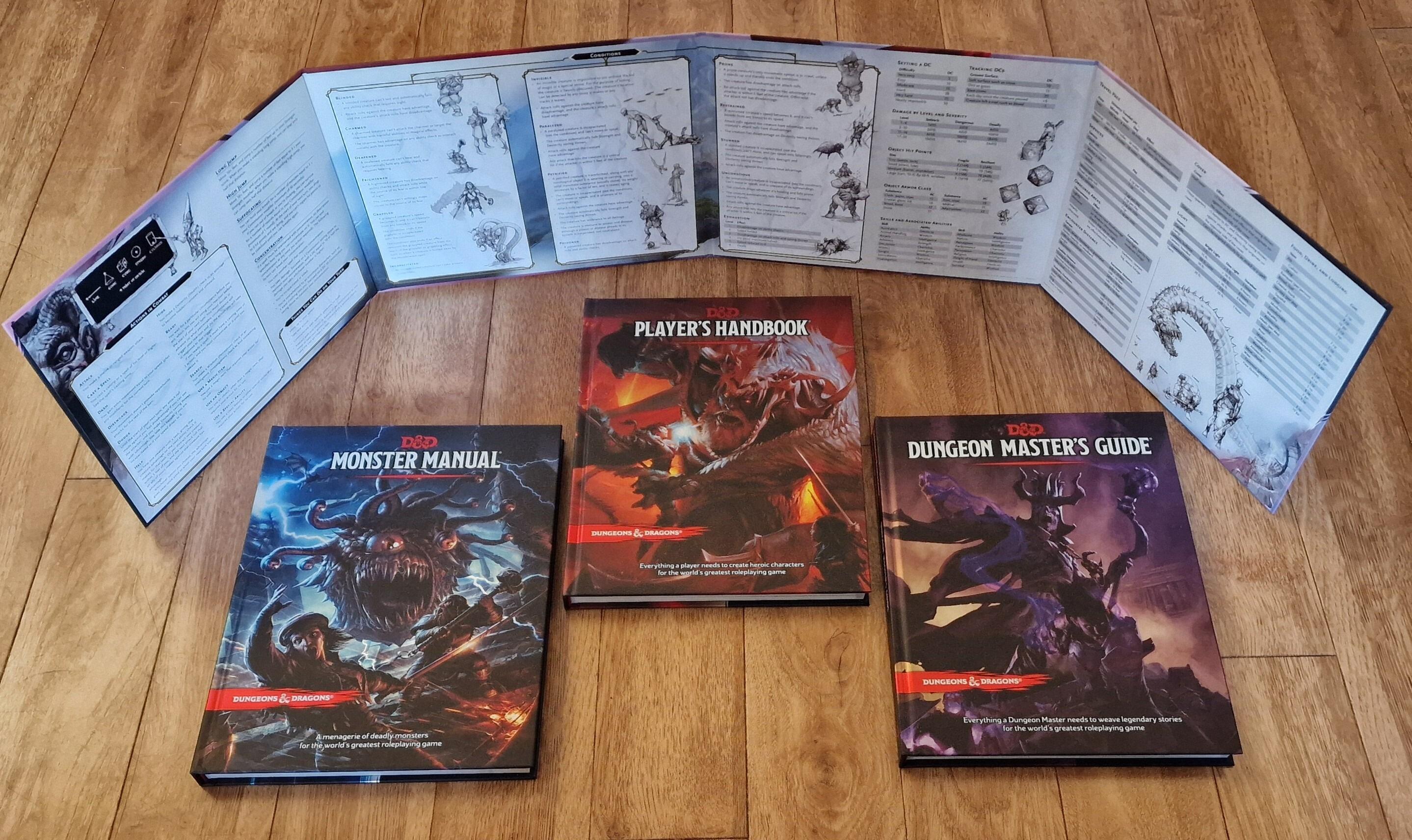
The core 5e rules system is documented across three primary standard rulebooks published by Wizards of the Coast:
- Player's Handbook (PHB): Details character creation, races/species, classes, equipment, and core mechanics.
- Monster Manual (MM): Contains statistics and lore for adversaries and allies.
- Dungeon Master's Guide (DMG): Provides tools for world-building, running campaigns, awarding treasure, and handling variant rules.
To support third-party creators and open-source development, Wizards of the Coast maintains the System Reference Document (SRD), which contains the core mechanics published under the open Creative Commons Attribution 4.0 International License.
The 2024 Rules Revision
Wizards of the Coast released an updated revision of the core rulebooks (the 2024 Player's Handbook, Dungeon Master's Guide, and Monster Manual). This revision maintains full backward compatibility with 2014 5e supplements while refining key mechanics:
- Terminological Standardization: Replaced terms like "Race" with "Species" and standardized "d20 Test" as the umbrella term for attack rolls, saving throws, and ability checks.
- Weapon Masteries: Martial classes gain special tactical effects (e.g., Push, Topple, Cleave) tied to specific weapons.
- Background Reorganization: Backgrounds now grant primary Ability Score increases and starting feats rather than species/race choice.
- Action Economy Adjustments: Clarified rules for potion consumption (now a Bonus Action) and standardized spellcasting interaction rules.
Core 5e Mechanics Quick Reference
The following table summarizes standard thresholds, action categories, and common parameters across standard 5e play:
| Category | Element | Standard Rule / Value |
|---|---|---|
| Task Difficulty | Very Easy / Easy / Medium | DC 5 / DC 10 / DC 15 |
| Task Difficulty | Hard / Very Hard / Nearly Impossible | DC 20 / DC 25 / DC 30 |
| Combat Turn | Standard Movement | Base speed (typically 30 ft.) |
| Combat Turn | Primary Actions | Attack, Cast Spell, Dash, Disengage, Dodge, Help, Hide, Ready, Use Object |
| Combat Turn | Limits per Turn | 1 Action, 1 Bonus Action (if granted), 1 Free Object Interaction |
| Resting | Short Rest | Minimum 1 hour; spend Hit Dice to recover Hit Points |
| Resting | Long Rest | Minimum 8 hours; restores all Hit Points and up to half max Hit Dice |
| Death & Dying | Death Saving Throws | Roll d20 at 0 HP: 10+ is success, 9 or less is failure (3 successes stabilize; 3 failures die) |
Common 5e Rule Pitfalls and How to Resolve Them
Even experienced groups encounter rules friction during sessions. Addressing these common misunderstandings keeps games running smoothly:
1. Stealth and Surprise
Misunderstanding: Rolling a high Stealth check makes a character invisible in plain sight.Rule Reality: Stealth requires total cover or heavy concealment. You cannot hide from a creature that can clearly see you. Surprise is not a separate combat phase; it is a condition applied to individual creatures during the first round of combat if their passive Perception is lower than the attackers' Stealth rolls.
2. Critical Hits Apply Only to Attacks
Misunderstanding: Rolling a natural 20 on an Ability Check or Saving Throw causes automatic critical success.Rule Reality: By base 5e rules, natural 20s and natural 1s guarantee automatic success or failure only on Attack Rolls. An ability check with a DC of 25 still fails on a natural 20 if the total modifier is only +3 (total 23).
3. Mixing Up Bonus Actions and Reactions
Misunderstanding: Players can save a unused Bonus Action to use later in the round as a Reaction.Rule Reality: Bonus Actions can only be taken during your own turn. Reactions can be taken during anyone's turn when triggered, but cannot be traded for unused Bonus Actions.
Frequently Asked Questions
What is the difference between an Ability Check and a Saving Throw in 5e?
An Ability Check is an action initiated by a player to accomplish a goal (e.g., lifting a portcullis or picking a lock). A Saving Throw is a reactive roll forced upon a character by an external force to avoid damage or negative effects (e.g., dodging a dragon's breath attack or resisting a spell).
How does Advantage work if I have two sources of Advantage and one source of Disadvantage?
Advantage and Disadvantage do not stack. If you have any number of sources granting Advantage and any number granting Disadvantage, they completely cancel each other out. You roll a single standard d20.
Can a character cast two spells on the same turn in 5e?
Yes, but only under specific circumstances. If you cast a spell with a casting time of a Bonus Action, the only other spell you can cast on that same turn is a Cantrip with a casting time of 1 action. However, if you use a feature like a Fighter's Action Surge, you can cast two leveled spells using two standard Actions, provided neither spell is cast as a Bonus Action.
What happens when a character drops to 0 Hit Points?
When a character reaches 0 Hit Points, they fall unconscious and must make Death Saving Throws at the start of each of their subsequent turns. Rolling a 10 or higher is a success; 9 or lower is a failure. Accumulating 3 successes stabilizes the character, while 3 failures results in character death. A natural 20 instantly restores 1 Hit Point.
How do Short Rests and Long Rests differ?
A Short Rest takes at least 1 hour of downtime, allowing characters to spend Hit Dice to heal. A Long Rest requires at least 8 hours (with no more than 2 hours of light activity), fully restoring lost Hit Points, refreshing spell slots, and recovering up to half of the character's total Hit Dice pool. A character can benefit from only one Long Rest per 24-hour period.
Next Steps for Players and Dungeon Masters
To run or play 5e effectively at your table, adopt an incremental approach to applying the rules:
- Start with the Basic Rules: If you are new, download the free System Reference Document or Basic Rules before diving into supplemental sourcebooks. Focus on understanding the d20 roll, ability modifiers, and action economy first.
- Establish Table Conventions: Establish how your group handles ambiguous edge cases before play starts. The DM serves as the final arbiter of rules interpretations to maintain session momentum.
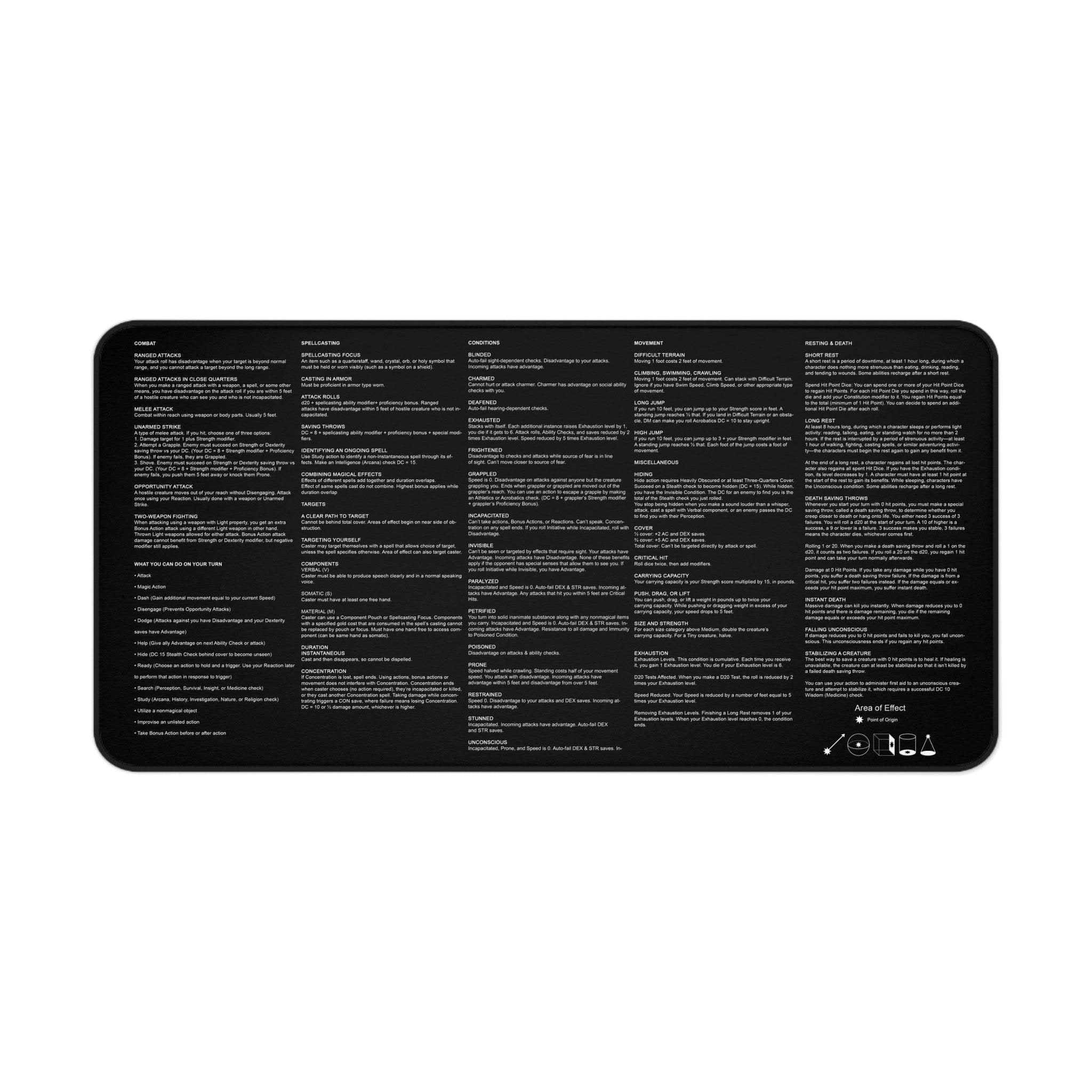
- Reference Tools: Keep digital rule references or physical reference cards handy for quick spell, condition, and status-lookup during combat rounds.