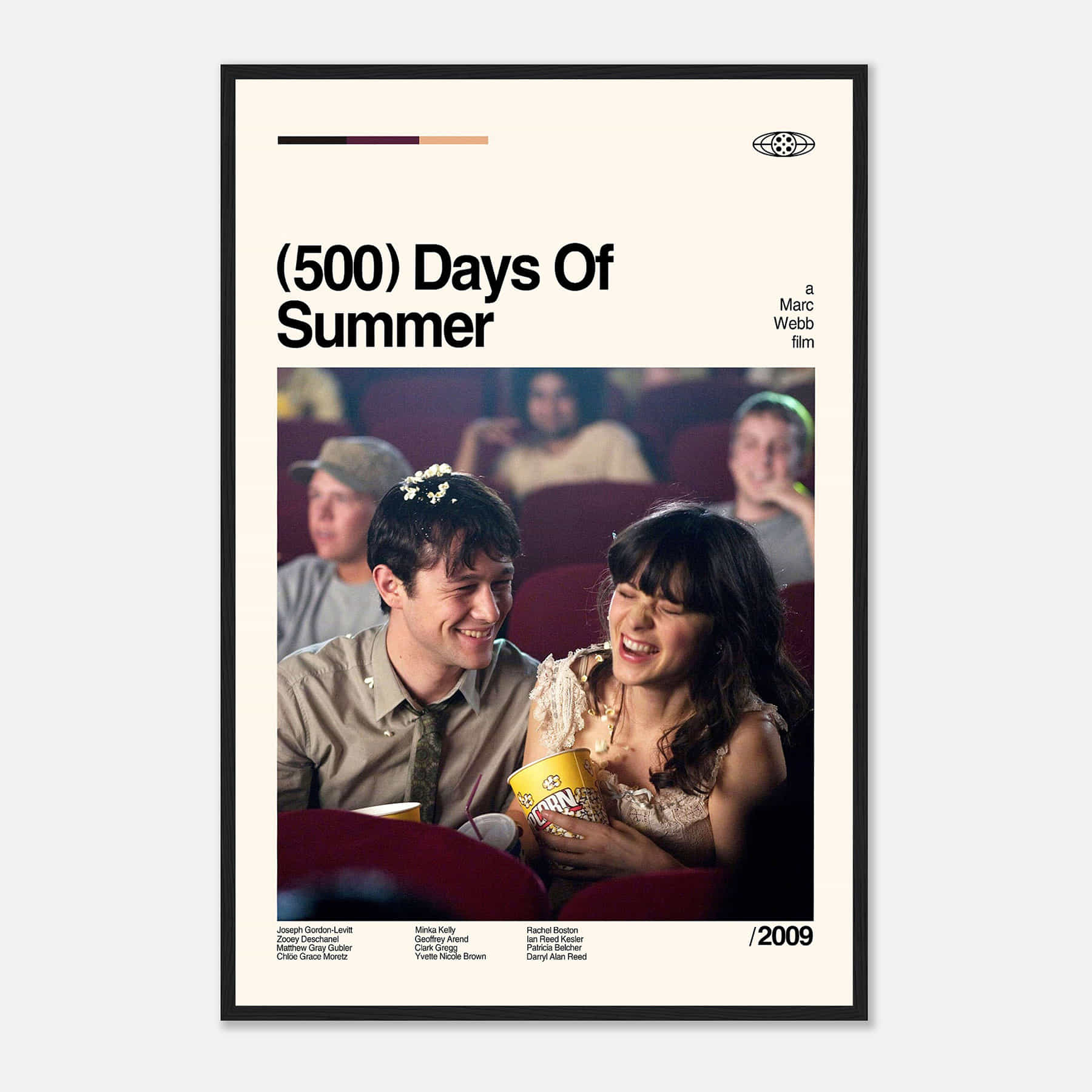
Directed by Marc Webb and released in 2009, (500) Days of Summer earned widespread critical acclaim and major awards recognition. The indie romantic comedy-drama secured two Golden Globe nominations, won the Film Independent Spirit Award for Best Screenplay, and received numerous critical accolades for its innovative non-linear narrative, direction, and lead performances.
Major Award Nominations: Golden Globes, Spirit Awards, and Beyond
When (500) Days of Summer debuted at the 2009 Sundance Film Festival, it immediately established itself as a standout title in modern independent cinema. Distributed by Fox Searchlight Pictures, the film successfully bridged the gap between niche art-house popularity and mainstream awards season contention. Its unique visual style, subversion of classical romantic comedy tropes, and grounded portrayals of modern relationships resonated strongly with critical bodies and voting academies alike during the 2009–2010 film awards cycle.
At the 67th Golden Globe Awards, the film achieved significant mainstream recognition by securing two major nominations in the Musical or Comedy categories: Best Motion Picture – Musical or Comedy and Best Performance by an Actor in a Motion Picture – Musical or Comedy for Joseph Gordon-Levitt. Competing alongside high-profile studio productions such as The Hangover and It's Complicated, these nominations affirmed that a modest $7.5 million independent film could command central focus during major Hollywood ceremonies.
| Award Body | Recognition Highlights |
|---|---|
| Golden Globes | 2 Nominations (Best Picture, Best Actor) |
| Spirit Awards | 1 WIN (Best Screenplay), 2 Nominations |
| Satellite Awards | 1 WIN (Best Original Screenplay), 1 Nomination |
| NBR Awards | Spotlight Award (Marc Webb), Top Ten Films |
The film achieved its greatest competitive triumph at the 25th Film Independent Spirit Awards, an institution dedicated to honoring autonomous filmmaking. (500) Days of Summer earned three major Spirit Award nominations: Best Feature, Best Male Lead for Gordon-Levitt, and Best Screenplay for screenwriters Scott Neustadter and Michael H. Weber. The screenwriting duo won the award, marking a decisive validation of the film's structural ingenuity and dialogue-driven character development.
In addition to the Golden Globes and Spirit Awards, the film garnered extensive honors across various regional critics associations and guild functions. The Critics' Choice Movie Awards nominated the screenplay for Best Original Screenplay, while the Satellite Awards awarded Neustadter and Weber top honors in the same category alongside a Best Actress nomination for Zooey Deschanel.
Screenplay Recognition: The Impact of Scott Neustadter and Michael H. Weber's Script
The critical foundation of (500) Days of Summer rests on its unconventional screenplay. Written by Scott Neustadter and Michael H. Weber, the script deliberately dismantles the traditional narrative arc of cinematic romance. Instead of relying on a standard three-act structure detailing courtship, conflict, and eventual reconciliation, the writers structured the story across a non-chronological timeline spanning the titular 500 days of Tom Hansen's relationship with Summer Finn.
This fragmented storytelling approach allowed the film to juxtapose early emotional highs directly against later romantic collapse, creating a bittersweet examination of memory, idealization, and heartbreak. Industry organizations recognized this narrative structural risk as a breakthrough for the romantic comedy genre, which had long suffered from formulaic predictability.
- Day 1: Initial Meeting
- Day 290: Separation
- Day 154: Honeymoon Phase
- Day 488: New Horizons
The writing team's victory at the Independent Spirit Awards for Best Screenplay beat out formidably written competitors, solidifying Neustadter and Weber's reputation as premier narrative stylists in Hollywood. Their work was further honored with the Satellite Award for Best Original Screenplay and nominations from the Broadcast Film Critics Association and the Washington D.C. Area Film Critics Association.
The success of the script extended to international writing bodies as well. Beyond its award wins, the screenplay became a benchmark study in film writing programs for its masterful use of voiceover narration, split-screen comparison sequences (most notably the famous "Expectations vs. Reality" sequence), and authentic dialogue that captured late-2000s young-adult existentialism.
Breakout Achievements: Marc Webb, Joseph Gordon-Levitt, and Zooey Deschanel
While the screenplay provided the architectural blueprint, the execution relied heavily on director Marc Webb and lead actors Joseph Gordon-Levitt and Zooey Deschanel. For Marc Webb, who had primarily established his career directing music videos for bands like Weezer, My Chemical Romance, and Green Day, (500) Days of Summer served as his feature film directorial debut.
Webb’s kinetic visual style, creative music integration, and precise comedic pacing earned him the prestigious Spotlight Award from the National Board of Review (NBR), which specifically recognizes outstanding directorial debuts. This industry validation played a key role in Webb subsequently securing high-profile studio projects, including directing The Amazing Spider-Man (2012).
| Key Talent | Recognition |
|---|---|
| Marc Webb | NBR Spotlight Award for Directorial Debut |
| Joseph Gordon-Levitt | Golden Globe & Spirit Award Nominee |
| Zooey Deschanel | Satellite & Teen Choice Award Nominee |
Joseph Gordon-Levitt's performance as the hopeless romantic Tom Hansen earned some of the strongest reviews of his career up to that point. Moving away from his child-actor origins on 30 Rock from the Sun and indie roles in films like Brick (2005), Gordon-Levitt proved his capability as a charismatic, vulnerable, and relatable comedic lead. His portrayal earned him nominations for Best Actor at both the Golden Globes and the Independent Spirit Awards, alongside nominations from the Detroit Film Critics Society and the People's Choice Awards.
Zooey Deschanel’s performance as Summer Finn was equally pivotal, presenting a nuanced figure who resists the traditional tropes of an idealized love interest. Deschanel earned a Satellite Award nomination for Best Actress in a Motion Picture – Musical or Comedy, as well as multiple nominations at the Teen Choice Awards. Her dynamic chemistry with Gordon-Levitt became a focal point of contemporary popular culture and earned the pair a nomination for Best Movie Chemistry at the MTV Movie Awards.
Comprehensive Awards Summary Table
The table below outlines the primary awards, nominations, and major recognitions received by (500) Days of Summer across international academies, critics associations, and industry guilds.
| Award Ceremony / Organization | Category | Nominee / Recipient | Result |
|---|---|---|---|
| 67th Golden Globe Awards | Best Motion Picture – Musical or Comedy | (500) Days of Summer | Nominated |
| 67th Golden Globe Awards | Best Actor – Motion Picture Musical or Comedy | Joseph Gordon-Levitt | Nominated |
| 25th Film Independent Spirit Awards | Best Screenplay | Scott Neustadter & Michael H. Weber | Won |
| 25th Film Independent Spirit Awards | Best Feature | Mason Novick, Jessica Tuchinsky, Mark Waters, Steven J. Wolfe | Nominated |
| 25th Film Independent Spirit Awards | Best Male Lead | Joseph Gordon-Levitt | Nominated |
| 14th Satellite Awards | Best Original Screenplay | Scott Neustadter & Michael H. Weber | Won |
| 14th Satellite Awards | Best Actress – Motion Picture Musical or Comedy | Zooey Deschanel | Nominated |
| National Board of Review (2009) | Top Ten Independent Films | (500) Days of Summer | Won |
| National Board of Review (2009) | Spotlight Award (Directorial Debut) | Marc Webb | Won |
| 15th Critics' Choice Movie Awards | Best Original Screenplay | Scott Neustadter & Michael H. Weber | Nominated |
| St. Louis Gateway Film Critics Association | Best Original Screenplay | Scott Neustadter & Michael H. Weber | Won |
| Detroit Film Critics Society | Breakthrough Artist | Marc Webb | Nominated |
| Teen Choice Awards (2010) | Choice Movie Screenplay | Scott Neustadter & Michael H. Weber | Won |
| Teen Choice Awards (2010) | Choice Movie Actor: Romantic Comedy | Joseph Gordon-Levitt | Nominated |
| Teen Choice Awards (2010) | Choice Movie Actress: Romantic Comedy | Zooey Deschanel | Nominated |
Box Office Performance vs. Award Season Impact
An essential context of the awards journey for (500) Days of Summer is its extraordinary commercial performance relative to its modest financial backing. Produced on an estimated budget of $7.5 million, the film went on to gross over $32 million domestically and more than $60 million worldwide. This commercial efficiency highlighted Fox Searchlight’s expertise in acquisition and platform distribution strategies during the late 2000s.
- $7.5M Production Budget
- $32.4M Domestic Box Office
- $60.7M Worldwide Box Office
- Extended Theatrical Run & Multi-Category Awards Push
The film's theatrical longevity directly reinforced its awards season visibility. Premiering in January 2009 at Sundance, Fox Searchlight carefully orchestrated a limited summer theatrical release in July 2009 that gradually expanded based on strong word-of-mouth and rave reviews. By the time fall and winter critics awards voting commenced, the film remained top-of-mind for voting members.
This financial success proved that original, non-franchise independent films focused on modern interpersonal relationships could achieve both high return-on-investment and prestigious awards consideration. The box office revenue provided the distributor with the necessary capital to run an extensive "For Your Consideration" campaign across print, trade publications, and guild screening events throughout late 2009 and early 2010.
Why (500) Days of Summer Was Snubbed by the Academy Awards
Despite its impressive run across the Golden Globes, Spirit Awards, and regional critics circuits, (500) Days of Summer received zero Academy Award nominations at the 82nd Oscars in 2010. This omission generated significant discussion among film journalists, critics, and audience members who anticipated a nomination for Best Original Screenplay.
Several industry factors contributed to the film's absence from the Oscar ballot:
- Genre Bias: Historically, the Academy of Motion Picture Arts and Sciences (AMPAS) has shown a marked hesitation toward nominating traditional or modern romantic comedies, often prioritizing intense dramas, historical epics, and social issues.
- Intense Screenplay Competition: The 2009 film year featured an exceptionally competitive field for Best Original Screenplay. The final Oscar nominees included Mark Boal for The Hurt Locker (which won), Quentin Tarantino for Inglourious Basterds, Mark Andrews and Pete Docter for Up, Joel and Ethan Coen for A Serious Man, and Bob Peterson and Pete Docter. Competing against established Oscar favorites made it difficult for an indie rom-com script to break into the final five.
- The Expansion of Best Picture: Although the 82nd Academy Awards famously expanded the Best Picture category from five to ten nominees to include more popular and accessible films (allowing titles like District 9 and Up to earn nominations), (500) Days of Summer did not make the final cut, narrowly missing out during a year dominated by heavy critical powerhouses like Avatar and Precious.
Despite missing out on Oscar nominations, the film’s exclusion did little to diminish its long-term reputation, with many contemporary analyses frequently listing it among the most notable Oscar-snubbed independent films of the 2000s.
Legacy and Lasting Cultural Acclaim
In the years since its 2009 release, the critical appreciation for (500) Days of Summer has evolved from initial awards validation to enduring cultural resonance. The film is widely cited by critics as a defining work of late-2000s cinema, helping to reshape how mainstream audiences evaluate narrative point-of-view and relationship ethics in film.
The film's visual and auditory design—specifically its practical Los Angeles architectural locations, color palettes (notably the intentional use of blue exclusive to Summer's wardrobe), and indie-pop soundtrack featuring The Smiths, Hall & Oates, and Regina Spektor—set aesthetic benchmarks for 2010s independent cinema.
- 2009: Sundance Breakthrough & Independent Spirit Award Win
- 2010: Golden Globe Nominations & Multi-Million Box Office Hit
- 2020s+: Re-evaluation of Tom Hansen's Unreliable Narrator Arc
Furthermore, modern critical analysis has shifted focus toward Tom Hansen’s role as an unreliable narrator. While initial 2009 audiences often sympathized unconditionally with Tom, contemporary viewers and critics emphasize the screenwriting's deliberate subtext: Tom projects an idealized fantasy onto Summer rather than listening to her stated desires. Both Joseph Gordon-Levitt and Zooey Deschanel have publicly discussed this thematic framing in retro reviews, praising the screenwriting for holding up so effectively to modern scrutiny.
Frequently Asked Questions
Did (500) Days of Summer win any Oscars?
No, (500) Days of Summer did not win or receive any nominations at the Academy Awards (Oscars). Despite strong predictions for Best Original Screenplay, the film was passed over by AMPAS during the 82nd Academy Awards in 2010.
What was the biggest award won by (500) Days of Summer?
The film's most prestigious competitive victory was winning Best Screenplay at the 25th Film Independent Spirit Awards, awarded to screenwriters Scott Neustadter and Michael H. Weber. It also won the Satellite Award for Best Original Screenplay and received a National Board of Review Spotlight Award for director Marc Webb.
Was Joseph Gordon-Levitt nominated for a Golden Globe for his performance?
Yes, Joseph Gordon-Levitt received a Golden Globe nomination for Best Performance by an Actor in a Motion Picture – Musical or Comedy at the 67th Golden Globe Awards for his portrayal of Tom Hansen.
Did Zooey Deschanel win any major awards for her role as Summer Finn?
Zooey Deschanel was nominated for Best Actress in a Motion Picture – Musical or Comedy at the Satellite Awards and earned nominations at the Teen Choice Awards and MTV Movie Awards, though she did not win the primary acting awards for the role.
Who wrote the award-winning screenplay for (500) Days of Summer?
The screenplay was co-written by Scott Neustadter and Michael H. Weber. The duo went on to write several other acclaimed adaptations and original screenplays, including The Fault in Our Stars (2014) and The Disaster Artist (2017), the latter of which earned them an Academy Award nomination for Best Adapted Screenplay.
What categories was the film nominated for at the Golden Globes?
(500) Days of Summer earned two Golden Globe nominations: Best Motion Picture – Musical or Comedy, and Best Actor – Motion Picture Musical or Comedy for Joseph Gordon-Levitt.
How to Explore the Legacy of (500) Days of Summer
For cinephiles, screenwriters, and film history enthusiasts interested in examining the award-winning elements of (500) Days of Summer, the following analytical steps provide a deeper understanding of its place in modern cinema:
- Study the Screenplay Structure: Read the original shooting script by Scott Neustadter and Michael H. Weber. Pay close attention to how the transitions between numbered days serve character motivation and dramatic irony rather than simple chronological progression.
- Examine the Directorial Debut Techniques: Watch Marc Webb’s director commentary on the home video release. Observe how camera lenses, color design (specifically the restriction of the color blue to Summer's character), and practical architectural settings in downtown Los Angeles enhance the emotional narrative.
- Compare 2000s Indie Rom-Com Competitors: Analyze (500) Days of Summer alongside contemporaneous late-2000s independent releases such as Juno (2007), Little Miss Sunshine (2006), and Nick & Norah's Infinite Playlist (2008) to evaluate how Fox Searchlight navigated awards campaigns for medium-budget independent titles.
- Analyze the Unreliable Narrator Framing: Revisit key sequences—such as the "Expectations vs. Reality" party sequence and the bench conversations—focusing on how the direction and editing reflect Tom’s internal subjectivity rather than objective truth.