A coffee chat is an informal 20- to 30-minute meeting used for networking, career exploration, or mentorship. To maximize this time, you should ask questions that transition from personal rapport-building to deep industry insights and specific actionable advice, ensuring the conversation feels organic rather than a rigid interrogation.
In 2026, the professional landscape has shifted toward hybrid environments and AI-augmented roles, making the "human element" of networking more valuable than ever. Whether you are a student looking for your first role, a mid-career professional seeking a pivot, or an entrepreneur building a referral network, the quality of your questions determines the quality of your outcomes. The following 50 questions are categorized to help you navigate these conversations with confidence and purpose.
The Strategy Behind a Successful Coffee Chat
Before diving into the questions, it is essential to understand the underlying framework of a successful coffee chat. In the modern professional world, these meetings serve as the primary vehicle for "hidden job market" access and high-level knowledge transfer. A successful chat is not about asking for a job; it is about building a bridge.
A well-structured conversation follows a specific trajectory:
- Setting the Atmosphere: Establishing a common ground and showing genuine interest.
- The Origin Story: Understanding how the person reached their current position.
- The Daily Reality: Moving past job titles to understand the actual work.
- Forward-Looking Insights: Discussing trends, technologies, and the future.
- Closing and Reciprocity: Ensuring the relationship continues and offering value in return.
Effective networking requires active listening. While you have a list of questions, the best conversations happen when you follow the "thread" of a story rather than jumping from one unrelated topic to another. Use these questions as a toolkit, not a script.
Building Initial Rapport: Icebreakers and Context Questions
The first five to ten minutes of a coffee chat are critical for setting a comfortable tone. If you dive too quickly into technical questions, the interaction can feel transactional. Instead, use these questions to understand the person behind the title.
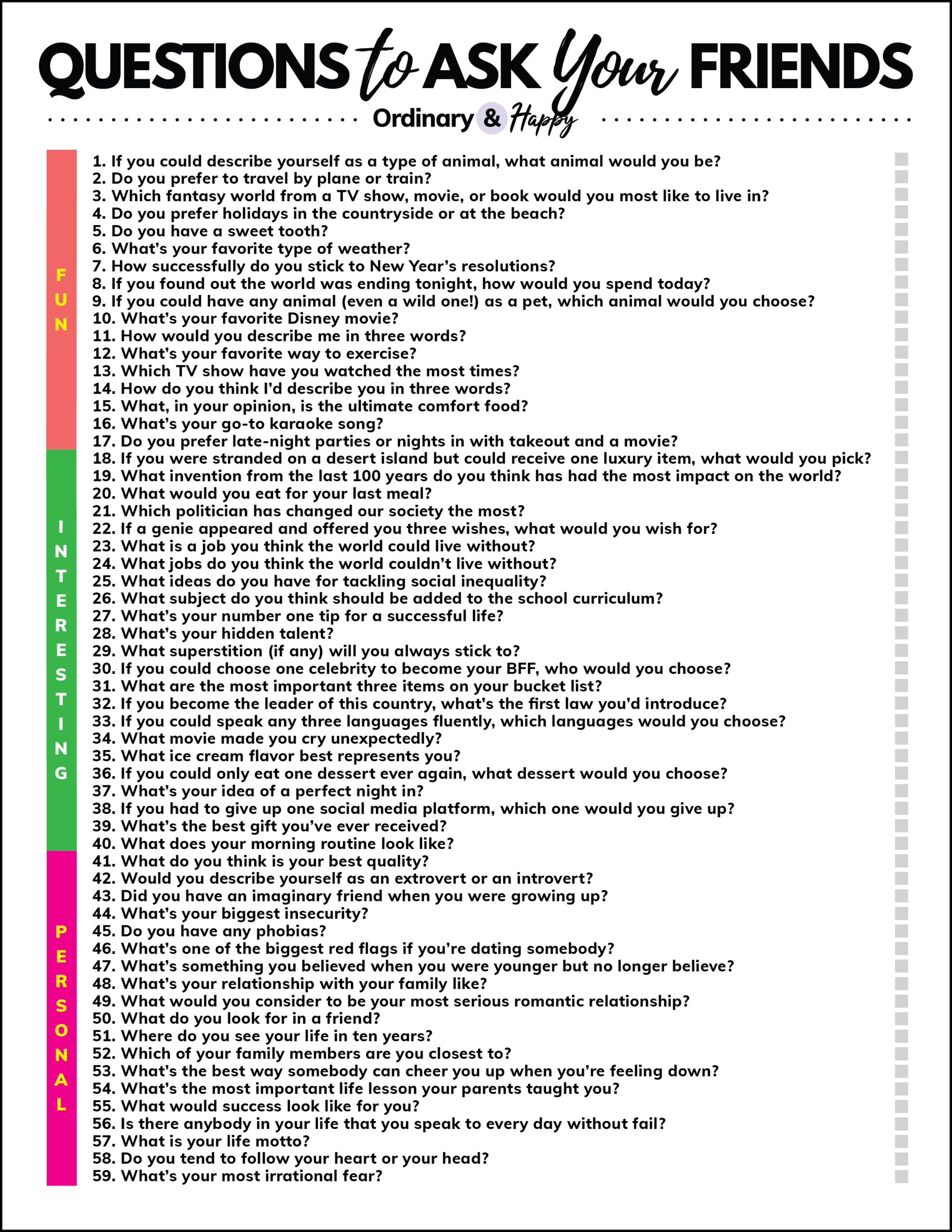
- What originally drew you to this field, and does that same thing still motivate you today?
- How do you typically spend your first hour of the workday in our current hybrid environment?
- What is a project you’re currently working on that you’re genuinely excited about?
- I saw your recent post/article on [Topic]; what inspired you to take that specific perspective?
- What’s one thing about your role that most people outside the industry would find surprising?
- How has your perspective on work-life integration changed over the last year?
- What’s a "hidden gem" or a professional resource you’ve discovered recently?
- If you weren’t in this industry right now, what other career path do you think you would have explored?
- What is the most rewarding part of being a [Job Title] at [Company Name]?
- How do you stay creative or inspired when dealing with the more routine aspects of your job?
Starting with these questions allows the interviewee to reflect on their own journey, which usually increases their willingness to share deeper insights later in the conversation.
Investigating the Career Journey: The "How" and "Why"
Understanding someone’s career path is more than just reading their LinkedIn profile. You want to uncover the pivots, the risks, and the luck that aren't visible on a resume. These questions help you map out potential paths for your own career.
- Looking back at your first year in this industry, what was the steepest learning curve you faced?
- What was the most pivotal "yes" or "no" of your career so far?
- How did you navigate the transition from [Previous Role] to [Current Role]?
- What skills did you think were important when you started that turned out to be less relevant?
- Who has been the most influential mentor in your life, and what did they teach you?
- How did you build your professional network when you were first starting out?
- What is a "soft skill" that you’ve found to be unexpectedly vital in your current seniority level?
- How do you decide when it is the right time to move on to a new challenge?
- What do you wish you had known about the corporate culture of this industry before you joined?
- Is there a specific certification or educational milestone that you feel truly changed your trajectory?
By asking about their journey, you often find that paths are rarely linear. This can provide immense relief and strategic clarity if you are currently feeling "stuck" in your own progression.
Navigating Industry Trends and Technology in 2026
In 2026, staying relevant means understanding the intersection of human expertise and technological advancement. These questions help you identify where the industry is heading so you can position yourself accordingly.
- How is the integration of generative AI specifically impacting the day-to-day operations of your team?
- What are the three most important trends you’re watching in the industry this year?
- Which emerging technologies do you think will be "table stakes" for new hires in the next two years?
- How has the definition of "success" changed in your department over the last five years?
- What are the biggest challenges your company is currently trying to solve?
- Are there any industry-specific publications or thought leaders you follow religiously?
- How is your team balancing the need for data-driven decisions with human intuition?
- What do you think is the biggest misconception people have about the future of [Industry]?
- How do you think the global shift toward [Specific Trend, e.g., Sustainability/Automation] is affecting your niche?
- If you were starting your career today, which area of the industry would you specialize in?
These questions demonstrate that you are a forward-thinking professional. They signal that you aren't just looking for a job, but that you are a student of the industry.
Growth, Challenges, and Navigating Failure
Resilience is a key theme in modern professional life. Asking about challenges provides a realistic view of a role and shows that you are mature enough to handle the "unpolished" side of the business.
- What has been your most significant professional setback, and what did it teach you?
- How do you handle high-pressure situations or tight deadlines within your team?
- What is a common mistake you see people make when they are trying to enter this field?
- How do you maintain your mental well-being while pursuing ambitious career goals?
- What is the most difficult conversation you’ve had to have as a leader or team member?
- How do you approach learning a new skill when you have very little time?
- What do you do when a project you’ve invested a lot of time in doesn't produce the expected results?
- How do you manage "imposter syndrome" at your current level of seniority?
- What is the most challenging part of managing stakeholders or clients in your role?
- How do you ensure your skills stay sharp as the industry evolves?
Vulnerability in these answers often builds the strongest bonds. When someone shares a failure, it humanizes them and provides you with a blueprint for avoiding similar pitfalls.
Seeking Direct Mentorship and Closing the Loop
The final segment of the coffee chat should focus on actionable advice and maintaining the connection. You want to leave the meeting with a clear sense of what to do next.
- Based on our conversation today, what is one area you think I should focus on improving?
- What are the top two or three qualities you look for when hiring someone for your team?
- Are there any specific professional organizations or groups I should join?
- What does a "high-performer" look like in your organization?
- Who else do you think I should talk to who might have a different perspective on this?
- What is the best piece of career advice you have ever received?
- How can I be of value to you or your team right now?
- If you had 30 minutes of free time this week, what would you spend it on?
- Would it be okay if I followed up with you in a few months to share my progress?
- What is one question I didn't ask you today that I probably should have?
Question 45—asking for another introduction—is the most important for expanding your network exponentially. One coffee chat should ideally lead to another.
Matching Your Networking Goal to the Right Question Set
To make your coffee chat as effective as possible, use the following table to select the most appropriate questions based on your current objective.
| Networking Goal | Primary Focus Area | Recommended Question Range |
|---|---|---|
| Career Exploration | Understanding the daily "grind" and requirements. | Questions 1, 5, 9, 14, 19, 33 |
| Skill Benchmarking | Assessing if your current skills meet market needs. | Questions 17, 20, 23, 27, 41 |
| Internal Networking | Building influence within your own company. | Questions 3, 25, 44, 47 |
| Mentorship Seeking | Looking for long-term guidance and wisdom. | Questions 15, 31, 38, 46, 49 |
| Industry Intelligence | Understanding market shifts and future risks. | Questions 21, 22, 26, 29, 30 |
Common Mistakes to Avoid During Professional Networking
Even with the best questions, certain behaviors can derail a coffee chat. Awareness of these common pitfalls is just as important as the questions themselves.
- Failure to Research: Asking a question that could be answered by a 30-second Google search (like "Where did you go to college?") signals a lack of preparation. Use your time for "insider" knowledge that isn't public.
- The Interrogation Vibe: Avoid firing off questions like a machine gun. Use "conversational bridges." For example, "That’s fascinating that you transitioned from marketing to product. It reminds me of my own interest in data; did you find that a data-driven approach helped you there?"
- Running Over Time: Respect is the foundation of networking. If you agreed to 20 minutes, at the 18-minute mark, say, "I want to be respectful of your time. I have a few more questions, but should we wrap up or do you have a few extra minutes?"
- Not Following Up: The chat is the beginning, not the end. Send a personalized thank-you note within 24 hours, mentioning a specific point they made.
Frequently Asked Questions
How long should a coffee chat actually last?
Ideally, aim for 20 to 30 minutes. This is short enough that busy professionals can say "yes" without rearranging their entire day, but long enough to dive deeper than surface-level pleasantries. If the conversation is going exceptionally well and the other person is leaning in, it may extend to 45 minutes, but you should always offer them an "out" at the original scheduled end time.
Is it okay to do a coffee chat virtually in 2026?
Yes, virtual coffee chats are the standard in 2026, especially with the prevalence of global teams and remote work. However, the etiquette remains the same. Ensure you have a professional background, a stable connection, and that you treat the video call with the same level of presence as an in-person meeting. If the person is local, offering an in-person meeting can provide a stronger personal connection, but always let them choose the format that is most convenient for them.
Should I pay for their coffee?
If the meeting is in person, yes, the person who initiated the chat should offer to pay. It is a small gesture of appreciation for their time and expertise. If the meeting is virtual, some networkers send a small digital gift card (e.g., $5 for coffee) a few hours before the meeting with a note saying, "Coffee is on me today!" While not mandatory, it is a memorable touch that sets a positive tone.
How do I ask for a coffee chat without sounding desperate?
Focus on curiosity rather than a request for a job. Instead of saying, "I’m looking for a job and want to talk to you," try: "I’ve been following your work on [Project/Topic] and I’m really impressed by your approach to [Specific Skill]. I’m currently looking to grow in that area and would love to hear about your experience for 20 minutes." People generally love sharing their expertise when they feel it is truly valued.
Establishing Your Post-Chat Workflow
The real value of a coffee chat is realized in the days and weeks following the meeting. Your next action should be to categorize the notes you took into three buckets: Immediate Actions (books to read, people to contact), Strategic Insights (trends to watch), and Relationship Maintenance (when to follow up next).
Log the interaction in a simple spreadsheet or CRM. Include the date, the main topics discussed, and any personal details they shared (e.g., "leaving for a vacation in Italy next week"). Following up three months later with an article relevant to their interests or an update on how you applied their advice is how you turn a one-time "coffee chat" into a lifelong professional relationship.